




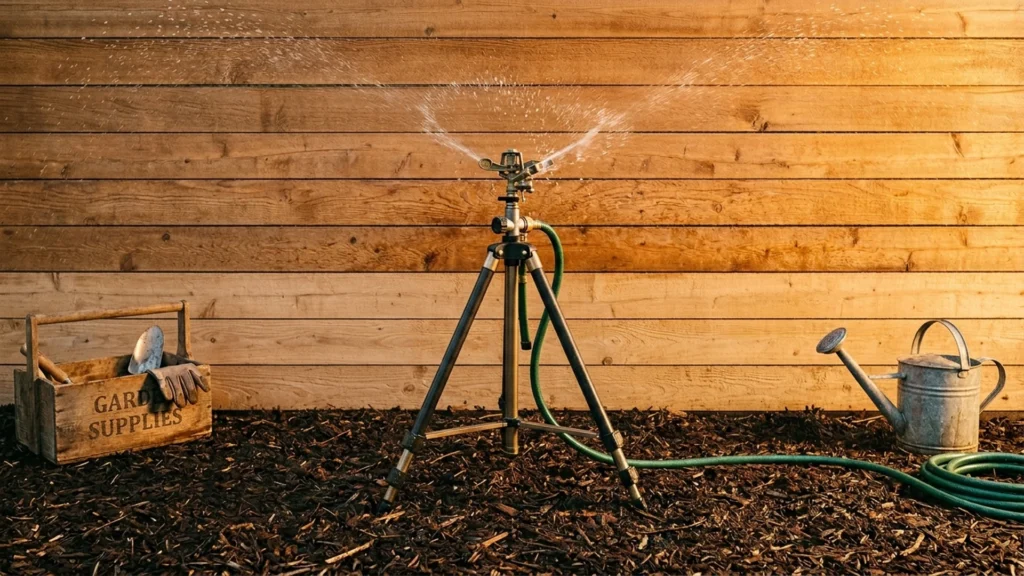
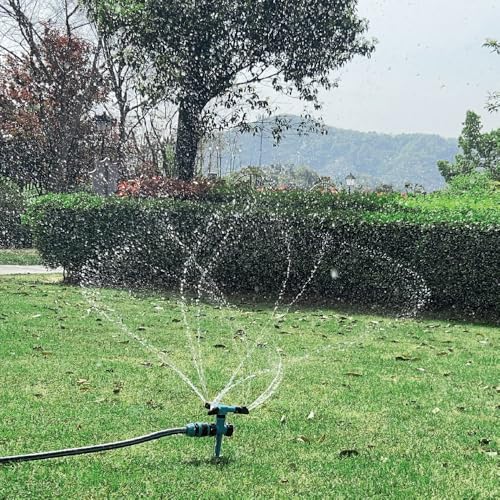
A 360-degree lawn sprinkler throws water in a full circle around the base. Buyers in this sub-category usually want one head that covers rounded areas, tree rings, or lawn corners without turning the sprinkler or moving hoses.
The hard part is the trade-off between reach and evenness. Full-circle heads can miss coverage at low water pressure, or create uneven watering if the nozzle clogs or the spray pattern shifts as the head rotates.
Use this guide to match a full-circle head to your yard size and water pressure, then compare the models in our lineup in the main buying post. Looking for all types? See our Best Lawn Sprinklers.
Quick Overview
Our Top Picks
#1. Orbit Brass Impact Lawn Sprinkler

Specifications
| Brand | Orbit |
|---|---|
| Sprinkler Type | Impact |
| Watering Pattern | Full Circle |
| Connection Size In | 0.5 in |
| Material | Brass |
Pros
- Consistent spray reach
- Durable metal construction
- Clog-resistant head
Cons
- Smaller 1/2 in connection
- Hose-leak risk
For 360-degree lawn watering, the Orbit Brass Impact Lawn Sprinkler stands out for how evenly it keeps water moving around the whole circle. In real use, it delivers consistent spray reach without frequent pattern changes. The impact style head also tends to stay stable as water pressure shifts, which helps avoid dry spots that can show up on rougher lawns.
The main trade-off is at the hose hookup. The 1/2 in connection can be a mismatch if your setup expects a different size, and that can increase hose-leak risk if fittings do not seat well. This is a solid pick for homeowners who want a full-circle sprinkler with dependable metal build and a clog-resistant head, and who are willing to double-check their hose adapters before watering.
#2. Orbit Tripod Impact Lawn Sprinkler

Specifications
| Brand | Orbit |
|---|---|
| Sprinkler Type | Impact |
| Spray Radius Ft | 42.5 ft |
| Watering Pattern | Full Circle |
| Connection Size In | 0.75 in |
| Material | Zinc |
Pros
- Worth every penny
- Longer throw distance
- Clog-resistant flow
Cons
- Post-setup tinkering
- Coverage variability
This Orbit tripod impact sprinkler stands out for full-circle watering in a 360-degree lawn sprinkler setup. It throws farther than many impact heads, reaching about 42.5 ft while keeping a full circle spray. The flow stays clog-resistant too, which matters when you want fewer stops to clean the nozzle.
The trade-off is that coverage can need some tweaking after setup. Some users report post-setup tinkering to fine-tune placement and spray consistency, so it is best for yards where you can spend a few minutes dialing it in. If you want steady reach and reliable rotation around a central point, this is a strong choice for regular lawn watering.
#3. GILMOUR Circle Pattern Spot Lawn Sprinkler

Specifications
| Brand | GILMOUR |
|---|---|
| Coverage Area Sq Ft | 900 sq ft |
| Watering Pattern | Full Circle |
| Flow Rate Gpm | 6-12 GPM |
| Connection Size In | 1.5 in |
| Material | Metal |
Pros
- Worth every penny
- Consistent spray
Cons
- Low water delivery
- Covers limited area
- Less flexible coverage
This GILMOUR Circle Pattern Spot Lawn Sprinkler stands out in 360-degree lawn sprinklers because it keeps the spray consistent as it rotates, which helps you hit the whole ring instead of leaving random gaps. In real use, reviewers describe an even, steady pattern, so coverage feels more predictable around the sprinkler head. The build uses metal construction, which also helps it stay put during operation on typical yard surfaces.
The main trade-off is water delivery and coverage size. Some users report low water delivery and that it covers a limited area for the footprint you expect from a full-circle head. This makes it a better match for small zones or spot watering than for large lawns that need heavy, fast irrigation. If you need flexible spacing or wide coverage, you may have to add more heads.
#4. Kadaon 360° Rotating Lawn Sprinkler

Specifications
| Brand | Kadaon |
|---|---|
| Sprinkler Type | Rotating |
| Coverage Area Sq Ft | 3000 sq ft |
| Watering Pattern | Full Circle |
| Operating Pressure Psi | 40-60 psi |
| Connection Size In | 0.75 in |
| Material | ABS Plastic |
Pros
- Worth every penny
- Covers more area
- Works at typical PSI
Cons
- Average wear over time
- Cheap plastic housing
This 360-degree rotating sprinkler is notable for its full-circle watering layout, which makes it easy to cover open lawn areas without turning or repositioning the sprinkler. With a stated range of 40 to 60 psi, it runs well at typical home water pressure and keeps the spray moving in a steady pattern as it rotates, which helps reduce dry corners around the head.
The main trade-off is durability. The plastic housing can wear over time, so it may not feel as solid as metal-based models after multiple seasons. It is a good fit for buyers who want consistent round coverage and do not mind treating the unit gently, especially during setup, repositioning, and cleaning.
What to Look For
360-degree spray pattern control: Confirm the head truly delivers Full Circle coverage, not a partial arc. Look for consistent rotation and a pattern that keeps its shape across the whole circle, so you avoid dry pockets near the edges of the wet zone.
Coverage area that fits your target: Check the stated coverage area sq ft and compare it to your lawn shape. A full-circle head that is rated for a larger area can still under-water if your water pressure drops, especially toward the outer ring.
Operating pressure behavior: Many 360-degree heads perform best within a common pressure band. If your spigot or system runs on the low end, prioritize models that can keep a steady spray rather than turning into mist or uneven arcs.
Durable materials for moving parts: Rotation adds wear at the nozzle and joints. Favor Brass or ABS Plastic construction, and avoid thin housings that can crack or loosen over multiple seasons of use outdoors.
Simple connection and easy cleanup: Verify the hose connection size and make sure it matches your setup. Also check how straightforward it is to clean the nozzle and remove debris, since clogs quickly break an even 360-degree pattern.
How We Picked
Products were identified through broad research across review sites and buyer forums, then filtered to only those that qualify as 360-Degree Lawn Sprinklers.
Scoring used the same objective pillar framework as the main Lawn Sprinklers post, allowing direct comparison of products within this sub-category.
Frequently Asked Questions
What is a 360 degree lawn sprinkler best for?
A 360 degree sprinkler waters in a full circle around the head. It works well for round areas like islands, trees, and corners that need even coverage. Use it when you want fewer sprinkler units and a simple layout.
How do I space 360 degree sprinklers to avoid dry spots?
Start by matching the coverage area and spray radius to your yard size. Place heads so their wet zones overlap slightly, especially near edges. If you see dry rings after one run, move the next head closer or reduce the zone spacing.
Will a 360 degree sprinkler work the same at different water pressures?
Not always. Lower pressure can reduce spray radius and make the pattern uneven. Higher pressure may increase reach but can also cause more mist and runoff. If your pressure varies, check coverage after the first few watering cycles.
How do I prevent clogs in a 360 degree sprinkler?
Flush the line before connecting the head, especially after seasonal storage. Keep the nozzle clean and remove debris from the small openings. If your water has sediment, use a basic inline filter to reduce clogging.
When should I choose another type of lawn sprinkler instead of a 360 degree model?
Choose an oscillating or rectangular type if you water long strips like side yards or driveways. A full circle head can waste water where you do not need it. If your yard layout is mostly straight lines, a directional type usually covers more efficiently.


