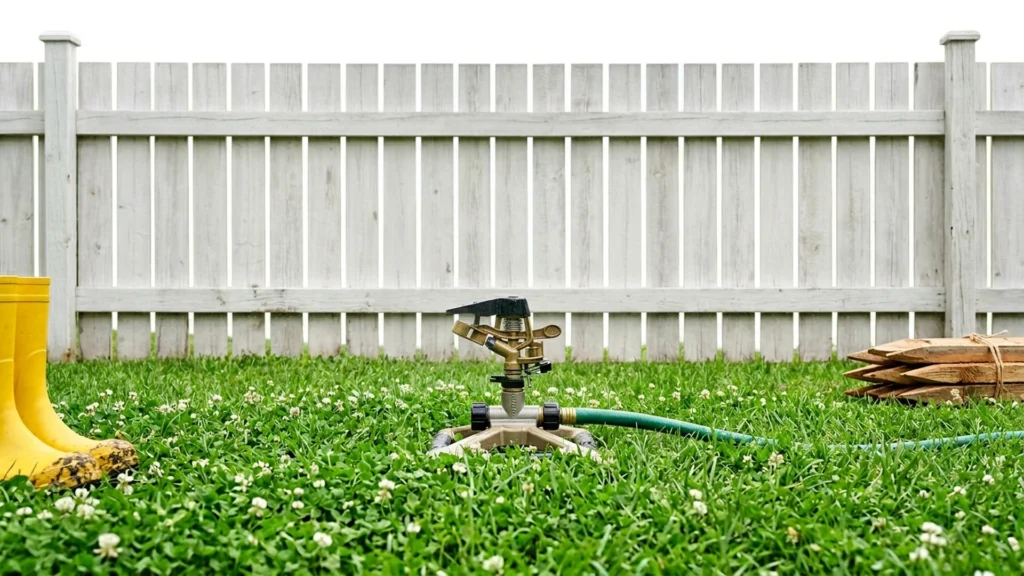
Lawn sprinklers attach to a garden hose or irrigation line to spread water across grass. They sit on the surface, rotate or oscillate, or spray upward for a set coverage area. The goal is simple: even watering with minimal waste.
Choosing one gets tricky because real performance depends on water pressure, nozzle design, and how the spray lands on your soil. Some listings also mix up specs, like reach and coverage area, or they list a large number that only works at ideal pressure. Extra settings can sound useful, but they often create more leaks, clogs, or fine-tuning work than you want.
This guide breaks down what matters and gives you a clear way to compare models. You will learn which specs connect to real results, how to read coverage and radius claims, and which sprinkler type fits common yard layouts.
Quick Overview
Top Picks
Best Overall

Specifications
| Brand | Gardena |
|---|---|
| Sprinkler Type | Oscillating |
| Coverage Area Sq Ft | 2300 sq ft |
Pros
- Consistent spray reach
- Sturdy, season after season
- Easy pattern adjustment
Cons
- Limited pressure spec data
This Gardena oscillating sprinkler is a strong fit for a Best Overall pick because it balances even lawn coverage with simple day to day adjustments. It is built for spreading water reliably across a large footprint, around 2,300 sq ft, without needing constant attention.
In real use, the spray reach stays consistent, which helps avoid dry edges and under-watered sections. The body feels sturdy, so it is easier to keep in place season after season. Pattern adjustment is also straightforward, letting you tune the arc without fighting the unit.
The main drawback is limited published pressure spec data, so you may need to rely on your own water pressure and small test runs. If you want one dependable oscillating sprinkler for broad coverage and easy tuning, this is a good choice.
Also ranked #1 in: Oscillating Lawn Sprinklers
Best with Rain Curtain

Specifications
| Brand | Rain Bird |
|---|---|
| Sprinkler Type | Pop-Up |
| Spray Radius Ft | 25-50 ft |
| Watering Pattern | Adjustable Arc |
| Operating Pressure Psi | 15-45 psi |
| Flow Rate Gpm | 0.73-9.63 GPM |
Pros
- Consistent spray reach
- Sturdy, season after season
- Easy pattern adjustment
Cons
- Low water delivery
- Nozzle mismatch risk
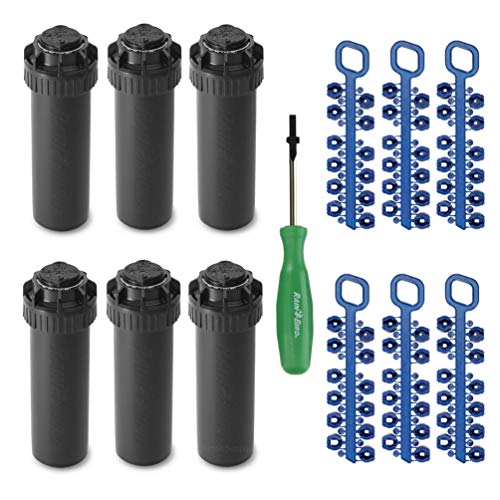
This Rain Bird 5000 Series pop-up rotor is a strong match for the Best with Rain Curtain category because it throws a steady, repeatable spray arc that helps spread water like a curtain. That consistent pattern makes it easier to manage where the water lands, especially when you want fewer gaps between zones.
In real use, it delivers consistent spray reach and holds up well across seasons. The arc is adjustable, so you can fine-tune coverage without making the sprinkler hard to live with. It also responds well across a common operating range of 15 to 45 psi, which helps when water pressure changes from one day to the next.
The main drawback is low water delivery, so lawns that need heavy soaking may feel like they run longer than expected. There is also some nozzle mismatch risk if you do not pair parts correctly. If you want a reliable rotor with an adjustable arc and dependable throw for medium-sized areas, this is a good choice.
Best for Large Yards

Specifications
| Brand | Nelson |
|---|---|
| Sprinkler Type | Stationary |
| Coverage Area Sq Ft | 13500 sq ft |
| Flow Rate Gpm | 40 GPM |
| Material | Cast Iron |
Pros
- Consistent spray reach
- Sturdy, season after season
- Easy pattern adjustment
Cons
- Low water delivery
- Speed setting fiddling
This Nelson Rain Train is built for large yards, with coverage rated up to 13,500 sq ft. Its most distinctive trait is the steady, consistent spray reach, which helps you irrigate bigger spaces without chasing missed spots.
In day-to-day use, it delivers a reliable pattern and maintains reach across the area it is meant to cover. The cast iron build feels solid, so it holds up through repeated seasons. Pattern adjustment is also straightforward, so you can fine-tune where the water lands.
The main drawback is low water delivery, so it may not feel as strong in heavier watering needs. You can also spend a bit of time fiddling with speed settings to get it just right. If you have a large lawn and want dependable, even coverage with stable construction, this is a good fit.
Best for High Pressure

Specifications
| Brand | Aqua Joe |
|---|---|
| Sprinkler Type | Oscillating |
| Coverage Area Sq Ft | 3600 sq ft |
| Watering Pattern | Adjustable Arc |
| Operating Pressure Psi | 120 psi |
| Flow Rate Gpm | 6.65 GPM |
| Material | Aluminum |
Pros
- Consistent spray reach
- Covers more area
Cons
- Requires very high PSI
- Low water delivery
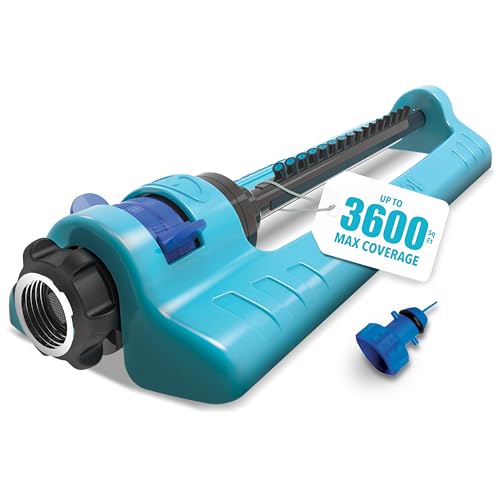
This Aqua Joe oscillating sprinkler fits the Best for High Pressure category because it is built to work at about 120 psi. When you have strong water pressure, the spray stays steady across its run and keeps its reach consistent.
In real use, it delivers even coverage over a large yard, with a coverage claim of 3,600 sq ft. The adjustable arc lets you fine tune where the water lands, and the oscillating motion helps prevent dry patches that can happen with simpler heads. Setup is also fairly straightforward, with clear controls for directing the pattern.
The trade-off is that it needs very high PSI to perform well, and users may see low water delivery if your water flow cannot keep up. If you have strong line pressure and want broad, uniform watering, this is a solid choice, especially for larger lawns.
Best 360-Degree

Specifications
| Brand | Orbit |
|---|---|
| Sprinkler Type | Impact |
| Watering Pattern | Full Circle |
| Connection Size In | 0.5 in |
| Material | Brass |
Pros
- Consistent spray reach
- Durable metal construction
- Clog-resistant head
Cons
- Smaller 1/2 in connection
- Hose-leak risk
This impact sprinkler fits the Best 360-Degree role thanks to its full-circle watering pattern. It swings and hits all directions, so it is easier to cover round areas with one placement instead of moving the sprinkler.
In real use, it delivers consistent spray reach and a steadier pattern than many basic impact models. The brass, metal construction feels solid, and the head is designed to resist clogging. That combination helps it keep moving water where you want it, without constant babysitting.
The main drawback is the 1/2 in connection, which can be awkward if your hose fittings are different. There is also some hose-leak risk if the connection is not tightened and sealed well. If you want a durable, full-circle sprinkler for general lawn watering, this is a good pick.
Best for Rotating Coverage

Specifications
| Brand | Orbit |
|---|---|
| Sprinkler Type | Rotating |
| Coverage Area Sq Ft | 5026 sq ft |
| Watering Pattern | Adjustable Arc |
| Operating Pressure Psi | 15-65 psi |
Pros
- Consistent spray reach
- Covers more area
- Easy pattern adjustment
Cons
- Dry-spot risk
If you want rotating coverage, this Orbit gear-drive sprinkler is a strong match. Its adjustable arc helps you dial in where the spray lands, so you can cover a large lawn zone without constantly moving the unit. That rotating design also keeps the water spread looking steady across the watering path.
In real use, it delivers consistent spray reach and covers more area than you might expect from a typical rotating head. Pattern changes are straightforward, which makes fine-tuning simple when you need to line up the spray with fence lines or garden edges. Setup is also quick, since the controls are easy to set and keep stable once you position it.
The main drawback is dry-spot risk, especially if your water pressure is not steady or if the arc is set too far. If you need reliable rotating coverage and easy arc adjustment for most of a lawn, this is a good pick. If you hate any chance of uneven watering, consider a model that is less sensitive to placement and pressure.
Best Value

Specifications
| Brand | GILMOUR |
|---|---|
| Coverage Area Sq Ft | 900 sq ft |
| Watering Pattern | Full Circle |
| Flow Rate Gpm | 6-12 GPM |
| Connection Size In | 1.5 in |
| Material | Metal |
Pros
- Worth every penny
- Consistent spray
Cons
- Low water delivery
- Covers limited area
- Less flexible coverage
This GILMOUR circle pattern spot sprinkler fits the Best Value spot because it keeps watering steady and predictable. The full-circle spray helps you hit the same area each time, which is useful when you are spot watering common lawn zones.
Setup is fairly straightforward, and it stays stable once you position it. In real use, users report a consistent spray pattern, and the coverage is rated up to 900 sq ft. The metal build also feels solid, supporting dependable day-to-day use across seasons.
The main drawback is low water delivery. It can cover only a limited area effectively, and that means you may need extra heads for larger sections. If you want reliable, even coverage from a metal full-circle spot sprinkler and you can work within smaller zones, this is a good choice.
What to Look For
Sprinkler Type: Pick the mechanism that matches how you water. Oscillating models suit rectangular lawns. Rotating and gear-driven heads fit larger round or irregular zones. Impact heads work well for steady, high-coverage spray. Stationary heads target tight spots.
Coverage Area Sq Ft: Use coverage area to plan how many sprinklers you need. Treat the listed square footage as a baseline, not a guarantee. If your yard has slopes, fences, or dense trees, expect to use more than the math suggests.
Spray Radius Ft: Check the radius for reach, not just the maximum distance. Measure from where the sprinkler will sit to the far edge you need to wet. Make sure the radius can cover the full width or length without gaps.
Watering Pattern: Match the pattern to your shape. Full Circle suits round areas. Half Circle and Quarter Circle help with borders and edges. Adjustable Arc is useful when you need a controlled segment without overspraying driveways.
Operating Pressure Psi: Confirm your household hose pressure or irrigation output fits the model. If the sprinkler needs high PSI and your pressure drops when another hose runs, you will see weak spray and dry spots.
Flow Rate Gpm: Flow rate tells you how much water the sprinkler uses. Compare it to your source so you do not starve multiple zones. If GPM is too high for your setup, coverage will shrink and run times will stretch.
Connection Size and Material: Check the hose connection size so you do not need extra adapters. Choose durable materials like ABS Plastic, Brass, or Stainless Steel for fewer leaks and better resistance to corrosion and wear at the nozzle.
How We Selected These Products
Products were discovered through broad web searches across review sites, buyer forums, and best-of lists, then narrowed to models that appeared repeatedly for the same use cases. I did not rely on one publication or one retailer page.
A large volume of customer reviews was read to spot real issues, like uneven coverage, sputtering spray, clogging, and cracking at the base or nozzle. Availability and specs were then verified directly against Amazon listing details, including pressure, flow, coverage, radius, connection size, and stated spray pattern.
Each model was scored across the pillar names from the buying framework: Performance, Durability, Setup, and Value. Final selection focused on picking sprinklers that clearly excel in distinct roles, such as edge-friendly arc watering, large-yard rotating coverage, or high-pressure suitability, rather than ranking everything by a single score.
Frequently Asked Questions
Which type of lawn sprinkler works best for a large open yard?
A traveling sprinkler fits large open areas best. The Nelson Rain Train 13,500 sq ft Lawn Sprinkler covers huge space while you run one hose line. This can cut down on the number of zones you need.
What is the main difference between oscillating, rotating, and impact sprinklers?
Oscillating sprinklers sweep back and forth, which can cover medium areas evenly if you set the range right. Rotating gear-drive sprinklers spin in a controlled pattern and often handle adjustable arcs well. Impact sprinklers throw water using a hammer action, which can reach far but may need more careful placement and height.
Why do some lawn sprinklers need more setup time than others?
Some models require tuning to match your lawn shape and water pressure. Rotating and impact heads often need arc and radius changes. If you do not tune them, you may see dry spots or uneven watering.
Is a higher price always better for lawn sprinklers?
No. You can get strong results at lower prices when the design is stable and the spray stays consistent. In this set, Aqua Joe Oscillating 3,600 sq ft Lawn Sprinkler scores high on value, even though it costs far less than premium rotor options.
Do most lawn sprinklers struggle with setup, or is it usually a performance problem?
In this set, setup is a common sticking point, not performance alone. Several models score well on watering, but you still need correct tuning for range, arc, or nozzle setup. The Rain Bird 5000 Series Rotor Lawn Sprinkler is a good example, because it performs best after you configure the right settings.
Why does durability vary so much between sprinkler types?
Durability often comes down to materials and moving parts. Brass and metal builds tend to handle wear better than thin plastic, and gear-driven designs can reduce impact stress. Models that depend on more exposed tuning parts may also need extra care to keep coverage consistent over time.


