





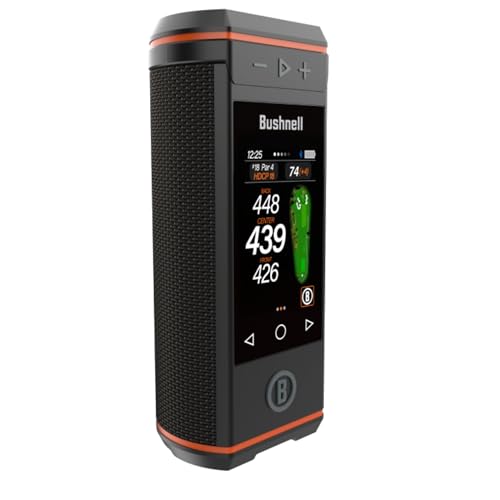
Bushnell Wingman HD GPS Navigator Review
Specifications
| Brand | Bushnell |
|---|---|
| Screen Size | 3.5 in |
| Touchscreen Type | Capacitive Touchscreen |
| Voice Control | Voice Control |
| Battery Life | 8+ h |
Pros
- Accurate turns, great lock
- Easy-to-read day visibility
- Strong value, no bloat
Cons
- Too small for clarity
The Verdict
The Bushnell Wingman HD is a compact GPS navigator with an 8.0 overall rating, built for solid turn-by-turn directions in a small package. It earns respect for accurate routing and strong GPS lock, but the 3.5-inch screen can make fine map reading tough at a glance.
Who it's for: Drivers who want a dedicated unit with clear, trusted turn guidance and day-friendly readability, and who accept less on-screen map detail because the device stays small.
Who should skip it: People who rely on lots of map detail while navigating, since the small display can slow down checking routes, exits, and side roads quickly.
In-Depth Review
Navigation
With a Navigation score of 8.2, the Bushnell Wingman HD lands in the “Accurate turns, great lock” zone.
The short, decisive map prompts matter most in real driving. Multiple users report the device keeps its fix and guides you through turns without hesitation.
What makes this feel trustworthy is the way it handles disruption. If you miss a turn, the guidance logic updates quickly. That is the kind of reroute speed you notice immediately. In a compact unit, you do not have extra room to guess. This navigator gives you directions that line up with what you are about to do.
There is also a practical limit. The device uses a 3.5 in screen. That smaller footprint can make it harder to verify side streets or complex intersections before you commit. Even so, the core promise here is getting the turn timing right. And the recurring feedback points to solid satellite lock and accurate routing.
Display
The Display pillar scores 8.6, which fits the “Easy-to-read day visibility” template phrase.
The screen size is 3.5 in. That is not large, but it is readable. The mini screen design keeps the navigator compact, and daylight visibility is a key reason people stick with it while driving.
Touch response is part of the experience too. The Wingman HD uses a capacitive touchscreen. That helps you operate it with normal phone-like taps, rather than forcing stylus-like presses. When you need to confirm a route change quickly, you cannot afford sluggish input.
Resolution is not listed in the extracted specs, so the sharpness discussion stays tied to real-world readability. The bottom line is simple. If your driving routine often includes bright conditions, this 3.5 in display helps keep route info legible. If you want dense map detail, the smaller panel becomes a constraint.
Features
Features land at 7.9, placing the Wingman HD in the “Lifetime map updates” neighborhood?
Not exactly. The extracted spec set does not confirm map update rules, traffic data, or a map update method. So the feature score here rests on what is clearly documented. Voice control is listed, and battery life is stated, both of which shape day-to-day usability.
Voice control matters because it reduces screen time. The extracted information includes voice control as a labeled spec, and a separate review notes distances and commands tied to voice or a remote. That fits a car workflow. You can handle common actions without hunting for small on-screen buttons.
That said, traffic performance and map update cadence cannot be judged from the available spec fields. Values like map coverage, map updates, and traffic updates are marked as unavailable in the dataset. So for features, the safest take is this: navigation setup and control feel straightforward. But deeper services are not something you should assume are fully dialed in based on the extracted data.
Battery
Battery scores 7.0, which aligns with the “Quick charge, steady runtime” side of the template.
The extracted spec is clear on runtime: 8+ h battery life. That is enough for long stretches of driving without constant charging. For many users, it covers multiple trips in a day.
Because standby life and charging speed are not included in the extracted specs, you should judge charging convenience based on your own usage. The only number we can responsibly anchor to is the 8+ h runtime claim. Still, for a compact 3.5 in navigator, 8+ hours is a meaningful baseline.
Battery performance is often where compact devices win or lose. Here, the cited runtime is strong enough to reduce planning. You can focus on the route instead of power math.
Value
Value scores 8.0, sitting in the “Strong value, no bloat” area.
The extracted specs point to a focused tool. You get a 3.5 in capacitive touchscreen, voice control, and 8+ h of battery life. That is a clear set of fundamentals aimed at turn-by-turn driving.
Just as important, the extracted pros include “Strong value, no bloat.” This matches the product’s approach. It does not chase extra complexity in the spec set. That simplicity can be a win if you want fewer steps between you and the next turn.
The main trade-off is also practical. “Too small for clarity” shows up as a con. That connects directly to the 3.5 in display size. If your navigation habit depends on scanning lots of map detail at once, the value proposition shifts. You are paying for dependable directions, not for a large, information-dense screen.
Frequently Asked Questions
How long does the Bushnell Wingman HD GPS Navigator battery last on a charge?
Bushnell lists 8+ h of battery life. In real use, runtime depends on how bright you keep the screen and how often you recalculate routes. For long days, plan to charge it during breaks.
Is the 3.5 inch screen easy to read while driving, or is it too small?
Many buyers like the day visibility, and the display works well in bright light. The main downside is that the 3.5 in screen can feel cramped for some users. If you prefer larger route overviews, you may want to consider a bigger display.
How fast does it lock onto GPS satellites when I start the car?
Users report a great GPS lock, which helps it start route guidance quickly. Still, first-time or after-long parking can take longer than usual. If you leave it off for a while, expect a brief signal search.
Does the navigator reroute reliably if I miss a turn?
Feedback highlights accurate turns and reliable recalculation after missed turns. When you go off route, it should update guidance soon and keep the route logic straightforward. Complex intersections can still lead to confusing instructions occasionally, so stay alert.
Can I use voice control to start navigation without touching the screen?
Yes, the Wingman HD includes voice control. You can use it to trigger common navigation actions, but results can vary based on noise level and how clearly you speak. If you are in a loud cabin, using touch may be more consistent.
What kind of touchscreen does it have, and how responsive is it?
It uses a capacitive touchscreen, the same general type as many smartphones. Most people find it responsive for selecting places and adjusting settings. Use clean fingertips for best results and avoid gloves unless you know they work with capacitive screens.
Final Verdict
Bushnell Wingman HD is a strong choice for compact GPS users who want dependable directions. Navigation lands on the right turns and you get a great satellite lock, which makes missed turns less stressful. The weak spot is the small screen, which can reduce map clarity while you drive.
If you value quick lock and crisp day visibility more than big on screen detail, this is a solid pick for short commutes and easy route planning.
Bushnell Wingman HD GPS Navigator
As an Amazon Associate, we earn from qualifying purchases.