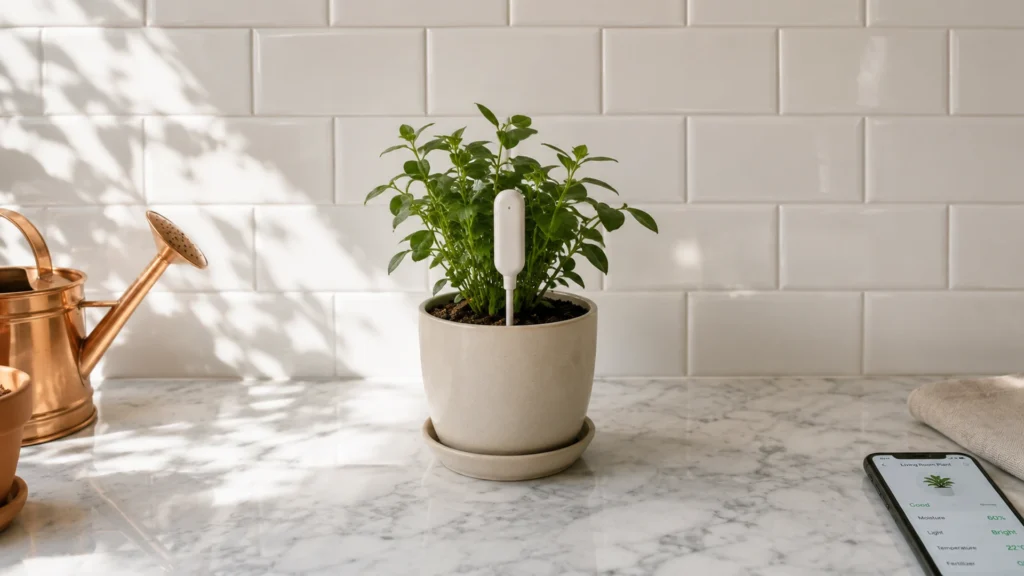
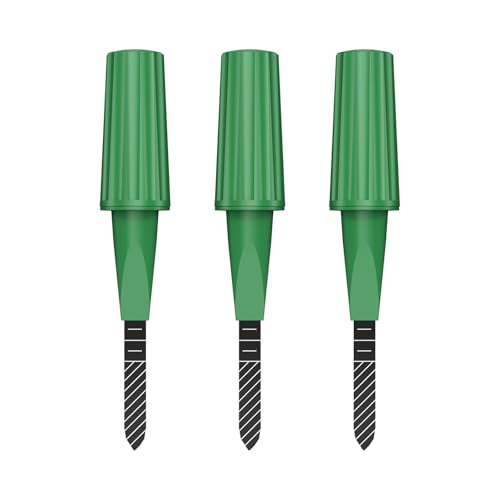
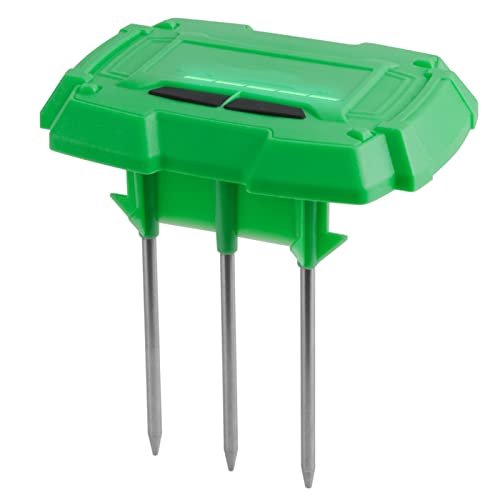
Wireless Smart Plant Sensors are moisture, light, and other plant-focused probes that send data to an app without a hardwired hub. For this sub-category, you care about consistent measurements, a connection that does not drop during use, and battery life that matches how many sensors you plan to place.
Picking the right one is harder than it sounds. Many models trade accuracy for price, or they work well only close to the router or phone. You also have to match the sensor type to your plant and your grow setup, especially if you want EC or pH readings instead of just moisture.
If you want a broader list that covers every style of smart plant sensor, see our Best Smart Plant Sensors.
Quick Overview
Our Top Picks
#1. ECOWITT WH51 Plant Sensor

Specifications
| Brand | ECOWITT |
|---|---|
| Supported Measurements | Moisture |
| Connectivity | Wi-Fi |
| Power Source | Solar, USB-C |
| Battery Life | 12 months |
| Wireless Range | 328 ft |
| Water Resistance Rating | IP66 |
| Compatibility | Home Assistant |
Pros
- Consistent, well-calibrated data
- Accurate battery reporting
- Intuitive app and calibration
Cons
- Limited sensing
- Single connectivity type
- Gateway dependency
ECOWITT WH51 stands out for wireless smart plant monitoring that stays trustworthy over time. Users tend to report stable moisture results, and it also tracks EC and pH alongside the basics for plant care. With Wi-Fi communication, it syncs data to the app and works with Home Assistant for whole-garden dashboards. Solar power plus USB-C backup keeps it running for about 12 months, and the battery level updates are generally reliable.
The main trade-off is that it focuses on fewer measurements than some broader probes, so it may not fit people who want lots of different sensors in one body. It also uses a single connectivity path, so there is dependency on the gateway or ecosystem you set up. If you want consistent moisture plus nutrient-style readings like EC and pH, and you already plan to use Wi-Fi and Home Assistant, it is a strong pick.
#2. THIRDREALITY Gen2 3-Pack Plant Sensor

Specifications
| Brand | THIRDREALITY |
|---|---|
| Supported Measurements | Moisture |
| Connectivity | Zigbee |
| Battery Life | 36 months |
| Compatibility | Home Assistant,Hubitat,SmartThings |
Pros
- Multiple connection methods
- Long-lasting battery
- Broad ecosystem support
Cons
- Limited sensing
- Hub-dependent reporting reliability
- Occasional sensor freezes
The THIRDREALITY Gen2 3-Pack stands out because it is built for hub-based plant monitoring using Zigbee. That matters in the wireless smart plant sensor world since sensors that work through Zigbee can stay reliable in the background, even when your phone is not nearby. You get a set of three moisture sensors for different pots or zones, and long battery life rated at about 36 months helps reduce the maintenance loop that often comes with smaller monitoring systems.
The main trade-off is what it does not measure. It focuses on moisture, so you will not get light, temperature, humidity, pH, or EC data. It also depends on your hub for smooth reporting, and there are occasional reports of sensor freezes, which can be annoying if you expect fully hands-off automation. This is a good pick if your goal is consistent soil moisture tracking across multiple plants, and you already run a Zigbee home automation setup.
#3. Gardena Soil Moisture Sensor Plant Sensor

Specifications
| Brand | Gardena |
|---|---|
| Supported Measurements | Moisture |
| Connectivity | Bluetooth |
| Power Source | AA Battery |
| Battery Life | 12 months |
| Compatibility | Gardena Water Control systems Flex, Select, Bluetooth, Master |
| Dimensions | 6 x 3 x 3.3 in |
Pros
- Long-lasting battery
- Automatic irrigation control
- Seamless ecosystem setup
Cons
- Limited sensing
- Single connectivity type
- Hard-to-maintain power
Gardena's soil moisture sensor stands out because it is built to work inside Gardena's irrigation ecosystem, not just as a one-off reading. If you use Gardena Water Control systems Flex, Select, Bluetooth, or Master, the sensor can feed decisions for automatic irrigation control. In the Wireless Smart Plant Sensors category, that matters because it turns moisture data into action, so you are not stuck manually checking an app.
The main trade-off is its narrow sensing scope and Bluetooth-only connection. You get moisture monitoring, but fewer measurements than multi-sensor models. Power is another practical point: it runs on AA batteries with an advertised 12-month life, but the design is less convenient if you expect frequent moves or easy access for battery changes. This is a strong pick for users who want hands-off watering for a few plants, and already plan to stay in the Gardena system.
#4. Gardena Smart Control Sensor Plant Sensor

Specifications
| Brand | Gardena |
|---|---|
| Supported Measurements | Moisture, Temperature, Light |
| Power Source | AA Battery |
Pros
- Watering automation support
- Root-zone placement accuracy
- Intuitive app and calibration
Cons
- Needs more frequent charging
- Limited sensing
- Ecosystem dependency
Gardena Smart Control Sensor is notable in the Wireless Smart Plant Sensors category because it focuses on root-zone moisture and ties that to simple watering automation. In everyday use, that means you are not guessing. You get light, temperature, and moisture data that is meant to support better timing for when plants dry out. The app flow and calibration are also straightforward, so you can place the probe and adjust it without turning the setup into a long project.
The trade-off is power and scope. Expect more frequent battery charging than you would like, since it runs on AA batteries. Also, its sensing is limited to a smaller set of measurements compared with broader garden platforms, so it may feel too narrow if you want deeper soil analysis. Finally, it depends on the Gardena ecosystem for the full smart control experience, which can be limiting if you plan to mix many device brands.
#5. THIRDREALITY Gen2 Plant Sensor

Specifications
| Brand | THIRDREALITY |
|---|---|
| Supported Measurements | Moisture |
| Connectivity | Zigbee |
| Power Source | AA Battery |
| Compatibility | Home Assistant,Hubitat,SmartThings |
| Dimensions | 7.2 x 1 x 1 in |
Pros
- Reliable value for gardeners
- Multiple connection methods
- Quick app integration
Cons
- Average longevity indoors
- Hard-to-maintain power
- Early battery drain
THIRDREALITY Gen2 is a strong pick if you want wireless plant monitoring that fits into a smart home system. It uses Zigbee, so it can work with hubs like Home Assistant, Hubitat, and SmartThings instead of relying only on a phone connection. Setup is also fairly straightforward, and most gardeners are mainly buying it for practical soil moisture tracking plus indoor comfort checks like light, temperature, and humidity.
The main trade-off is power and indoor longevity. Users report early battery drain and describe maintenance as a bit harder than expected, so plan on periodic battery swaps for regular monitoring. Durability is good enough for normal indoor use, but if your goal is long runs in harsher indoor conditions, you may want to look at options known for steadier battery life.
#6. RAINPOINT WiFi Plant Sensor

Specifications
| Brand | RAINPOINT |
|---|---|
| Supported Measurements | Moisture, Temperature |
| Connectivity | Wi-Fi |
| Water Resistance Rating | IPX5 |
| Compatibility | Google Assistant, Alexa |
| Dimensions | 5.6 x 5.5 x 4 in |
Pros
- Reliable value for gardeners
- Outdoor resilience
- Schedule continuity
Cons
- Needs more frequent charging
- WiFi pairing failures
- Hub dependency
RAINPOINT WiFi Plant Sensor stands out because it targets outdoor use with an IPX5 water-resistant build and a simple two-measurement set: moisture and temperature. That makes it a practical wireless choice for gardeners who want ongoing checks without placing delicate electronics inside the soil. It also fits common smart-home routines, since it supports Alexa and Google Assistant, so you can set reminders or automate based on readings when your plants need attention.
The main trade-off is power and setup stability. Users report that Wi-Fi pairing can fail, and the sensor can need more frequent charging than you might expect for wireless outdoor monitoring. It also has a hub dependency, so it is best for people who already plan to use a compatible smart-home setup and do not mind occasional reconnecting or recharging during the growing season.
#7. RAINPOINT Smart Soil Moisture Meter Plant Sensor

Specifications
| Brand | RAINPOINT |
|---|---|
| Supported Measurements | Moisture |
| Connectivity | Wi-Fi |
| Wireless Range | 853 ft |
| Water Resistance Rating | Water Resistant |
| Dimensions | 2.2 x 1.4 x 8.3 in |
Pros
- Reliable value for gardeners
- Multiple connection methods
- Long wireless reach
Cons
- Needs more frequent charging
- Limited sensing
- Setup hub dependency
The RAINPOINT Smart Soil Moisture Meter stands out in the wireless smart plant sensor space by focusing on one thing and doing it well: soil moisture. It pairs through Wi-Fi and is built for distance, with a stated range of 853 ft, which helps if your plants are spread out across a room or garden area. In day-to-day use, that long reach and straightforward moisture-only approach make it easier to manage watering without adding extra sensor noise from other measurements you might not need.
The trade-off is power and scope. Users should expect more frequent charging than many alternatives, and the sensor measures moisture rather than multiple conditions like temperature or pH. Setup also has a hub dependency, so it is best for people who already plan to run a small smart plant setup instead of those who want a quick, standalone install.
#8. Soildrops Smart Moisture Sensor Plant Sensor

Specifications
| Brand | Soildrops |
|---|---|
| Supported Measurements | Moisture |
| Power Source | Battery |
| Battery Life | 24 months |
| Dimensions | 4.7 x 2.1 x 1.9 in |
Pros
- Reliable value for gardeners
- Long-lasting battery
- Compact sensor size
Cons
- Average longevity indoors
- Limited sensing
- Sensor sold separately
This sensor stands out because it focuses on one job: wireless soil moisture tracking for plants. In a sub-category that often mixes multiple measurements, Soildrops keeps things simple and compact, so you can place it in pots and get a clearer picture of when the soil is actually drying out. Battery life is listed at about 24 months, which helps it act more like an install-and-forget tool rather than a device you recharge often.
The main trade-off is sensing limits. The product covers moisture, but it does not cover the broader condition checks that some smart plant sensors include, like light, temperature, or humidity. It is also noted that indoor longevity is only average, and the sensor is sold separately, so you may need extra setup to match your garden or controller workflow.
What to Look For
Measurement coverage: Confirm the sensor measures what you plan to act on, not just what the product markets. Look for supported readings like moisture, light, temperature, humidity, pH, and EC, and avoid models that miss your key metric.
Reading consistency: Prioritize sensors with stable moisture and environmental values over time. If users report noisy moisture swings or app readings that do not match a real probe, the data will be hard to trust for watering decisions.
Wireless reliability: Check which protocol it uses, typically Bluetooth or Wi-Fi. Wireless Smart Plant Sensors should sync quickly and stay connected long enough to matter, especially if sensors sit far from a phone or through walls.
Battery life and power fit: Choose based on where you will mount sensors. If you dislike frequent charging, pick a model with longer battery life or one that offers easier recharging, then verify the stated battery life in months.
Outdoor and soil exposure durability: Look for an IP rating or a clear water resistance term. Soil and watering schedules expose sensors to splashes and humidity, so durability matters as much as the probe itself.
How We Picked
Products were identified through broad research across review sites and buyer forums, then filtered to only those that qualify as Wireless Smart Plant Sensors. This means the sensor sends data over wireless connections to an app and is meant to be placed in real garden or indoor grow locations without hardwiring.
Scoring used the same objective pillar framework as the main Smart Plant Sensors post, allowing direct comparison of products within this sub-category. We weighted accuracy most, then connectivity, battery, durability, ease, and value to rank sensors that deliver trustworthy readings over time, not just quick setup.
Frequently Asked Questions
How do wireless plant sensors stay connected to the app?
Most wireless smart plant sensors use Bluetooth or Wi-Fi to send readings to your phone or home network. Bluetooth models usually work best within a shorter distance. Wi-Fi models can still send updates when you are away, but they need a stable home network.
What should I look for in soil moisture sensor accuracy?
Look for sensors that support calibration or at least clear guidance for adjusting readings. Stable results over time matter more than one fast reading. If possible, compare early measurements against a manual test so you learn the sensor's range for your plant type.
Do I need to worry about battery life and charging?
Wireless sensors with frequent reporting usually need more power. Check the stated battery life and whether it uses replaceable batteries or charging. Also note how often you get alerts, since notifications can shorten runtime on some models.
How do I place the sensor for the most useful readings?
Insert the probe far enough to reach active roots, not just loose top soil. Keep the sensor position consistent when you move plants. For light sensors, place them near the plant but avoid direct heat from windows or artificial lights if you want stable averages.
When should I choose a different type of smart plant sensor instead?
Choose another sensor type if you need fully hands-off monitoring or automated irrigation control. Also switch if you want measurements that wireless sensors do not support, like advanced nutrient testing beyond basic pH or EC. If you have poor Wi-Fi coverage, a Bluetooth-first model may be more reliable than a cloud-based setup.
How do wireless smart plant sensors compare to other smart plant sensors?
Wireless models focus on easy remote alerts and app dashboards. They are best when you want updates from anywhere or multiple plants in one place. Other smart plant sensors may require closer viewing or more direct automation, but they can reduce reliance on phone connectivity.


