




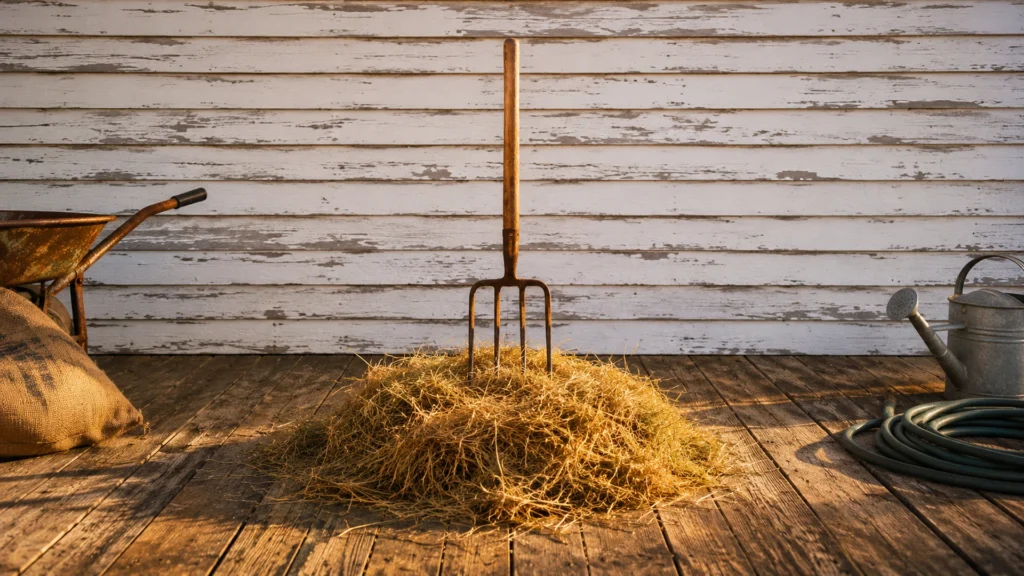
4-Tine pitchforks use four main tines to dig in, lift material, and turn piles with less drag than wider multi-tine forks. This sub-category fits buyers who work in tight rows, handle compost or manure loads by hand, or want good control when loosening soil.
Picking the right one is hard because 4 tines change how loads move. With fewer tines, spacing and tine shape matter for penetration and for avoiding clogging. You also trade off between a heavier tool that drives in well and a lighter one that reduces fatigue over long sessions.
For more options beyond this 4-tine focus, start from the full roundup and then narrow by job and size. Looking for all types? See our Best Pitchforks.
Quick Overview
Our Top Picks
#1. Fiskars Ergonomic Garden Fork 48" Pitchfork

Specifications
| Brand | Fiskars |
|---|---|
| Fork Type | Pitchfork |
| Tine Count | 4 |
| Tine Material | Boron steel |
| Handle Type | D-Handle |
| Overall Length | 49 in |
| Weight | 4.6 lb |
Pros
- Welds hold tight, stays straight
- Secure D-handle grip
- Rust-resistant steel
Cons
- Grip plastic durability
Fiskars Ergonomic Garden Fork 48 stands out in the 4-tine pitchfork lane thanks to its straight, tight build. The welded joints stay firm, and the boron steel tines hold their shape instead of flexing under load. In real yard work, that means cleaner lifts and less time fighting material when moving compost, manure, and soil clumps. With a 49 in overall length and a 4.6 lb head and shaft, it also gives good leverage for turning and loosening without feeling awkward.
The main trade-off is the D-handle grip. The steel frame and secure hold feel solid, but the plastic grip may not last as long as metal or wood for heavy daily use. This fork fits best for gardeners and small farms that want reliable 4-tine performance and can replace or care for the grip if needed.
#2. Seymour Forged 4-Tine Spading Pitchfork

Specifications
| Brand | Seymour |
|---|---|
| Fork Type | Digging Fork |
| Tine Count | 4 |
| Tine Material | Forged Steel |
| Handle Material | Fiberglass |
| Handle Type | D-Handle |
| Overall Length | 42 in |
| Weight | 3.6 lb |
Pros
- Strong penetration, steady load pickup
- Welds hold tight, stays straight
- Secure grip, easy, controlled leverage
Cons
- Hard-to-use length
For digging and turning through soil, manure, or compost with a 4-tine setup, the Seymour Forged 4-Tine Spading Pitchfork stands out for how consistently the tines bite and lift. The forged steel tines stay straight under load, and the head design grabs material without much slipping. Welds hold tight over repeated use, so you get predictable penetration and steady load pickup instead of the usual wiggle that slows work down.
The main trade-off is its length. At 42 in overall, some users may feel it is awkward for deeper digging or for taller people who want more reach. If you want a compact, controlled digging fork that feels solid in the hands, this is a strong fit. If you regularly work at a bent-forward posture for long sessions, you may prefer a longer shaft for comfort.
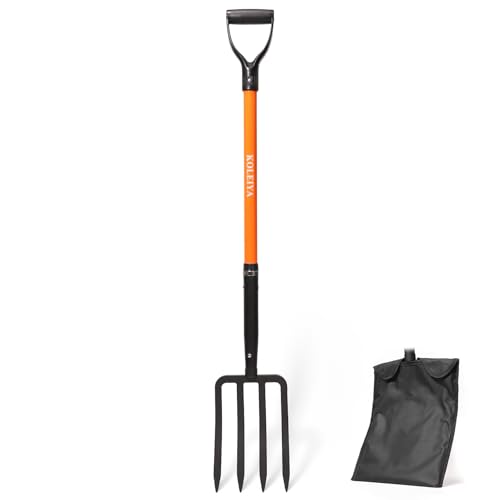
#3. KOLEIYA Digging Fork 45" Pitchfork

Specifications
| Brand | KOLEIYA |
|---|---|
| Fork Type | Pitchfork |
| Tine Count | 4 |
| Tine Material | Forged Steel |
| Handle Material | Fiberglass |
| Overall Length | 45 in |
| Weight | 4.4 lb |
Pros
- Strong penetration, steady load pickup
- Welds hold tight, stays straight
- Secure grip, easy, controlled leverage
Cons
- Hard-to-use length
KOLEIYA Digging Fork 45 stands out among 4-tine pitchforks for how well it bites and carries material. The forged steel tines push in with steady penetration and pick up loads without much slipping. Welds stay tight and the head tends to stay straight under real work, which matters when you are turning compost, lifting manure, or loosening soil clumps.
The main trade-off is the 45 in overall length, which can feel hard to use for taller users or when you want to work from farther back. It suits gardeners who can work close to the pile or bed, and it is a good fit if you value controlled leverage and a secure, easy grip during repeat scoops.
#4. Dikuyeel Heavy Duty Garden Fork 45" Pitchfork

Specifications
| Brand | Dikuyeel |
|---|---|
| Fork Type | Pitchfork |
| Tine Count | 4 |
| Tine Material | Steel |
| Handle Material | Wood |
| Handle Type | D-Handle |
| Overall Length | 45 in |
| Weight | 4.4 lb |
Pros
- Welds hold tight, stays straight
- Secure grip, easy, controlled leverage
- Strong penetration, steady load pickup
Cons
- Wood handle variability
- Fit/reach limitation
- Limited long-term proof
This 4-tine garden pitchfork stands out for steady, straight digging and pickup. Users report welds that stay tight and tines that hold alignment, which matters when you are lifting wet compost, hay, or manure and need consistent bite. In the 4-tine pitchfork category, that dependable penetration is the difference between quick load handling and repeated re-pokes.
The main trade-off is the wood D-handle. Since wood can vary, some handles may feel slightly different in reach and feel. It is also a bit limited in working distance at 45 in overall length, so taller users may want a longer option. Best fit: gardeners who want a simple 4-tine tool for regular manure and compost moving, and who do not mind watching how the specific handle shape suits their grip over time.
#5. COSITA Fiberglass Spading Fork 44" Pitchfork

Specifications
| Brand | COSITA |
|---|---|
| Fork Type | Pitchfork |
| Tine Count | 4 |
| Tine Material | Steel |
| Handle Material | Fiberglass |
| Handle Type | Ergonomic Handle |
| Overall Length | 44 in |
Pros
- Welds hold tight, stays straight
- Secure grip, easy, controlled leverage
- Reliable performance for the cost
Cons
- Handle less traditional
This COSITA fiberglass spading pitchfork stands out among 4-tine pitchforks for how straight it stays under real yard work. The welded joints hold firm, and users report it does not wobble or bend when lifting and turning manure, compost, or dense soil. At 44 in overall length with a steel 4-tine head, it grips material in a controlled way, so loads move without much skidding or sudden drop.
The main trade-off is the handle feel. The fiberglass ergonomic handle works well for steady leverage and a secure grip, but it is less traditional than the curved wooden handle style some people expect. This makes it a strong pick for gardeners who want a stable, dependable 4-tine tool for regular digging and moving, but less ideal for anyone who prefers a more familiar hand position.
What to Look For
Penetration for your material: Four tines need enough bite to work through compost, manure, and loose soil. Choose models that feel like they enter with steady force and do not require repeated jabs to get started.
Tine spacing and load pickup: Wider spacing helps move chunky material, while tighter spacing can reduce slipping with fine soil. Watch for how well the fork carries a typical scoop without dropping contents or trapping debris.
Head to tine durability: Check that the tines feel firmly attached to the head. A good 4-tine build resists loosening at the connection point and stays aligned, especially when you pry or turn heavy compost.
Handle material and grip style: Handle comfort affects your wrists and back. A straight handle is simple, while a D-handle or ergonomic-style grip gives more control when you lift and pivot.
Working size and weight you can use daily: Overall length and head width change your leverage in beds and piles. Pair that with tool weight so you can work longer without hand fatigue or losing tine control.
How We Picked
Products were identified through broad research across review sites and buyer forums, then filtered to only those that qualify as 4-Tine Pitchforks. The shortlist also stayed focused on tools buyers use for lifting, turning, and digging tasks with compost, manure, and soil.
Scoring used the same objective pillar framework as the main Pitchforks post, allowing direct comparison of products within this sub-category. Performance led the ranking, followed by build quality, ergonomics, and value, so each pick holds up in real use rather than on specs alone.
Frequently Asked Questions
What do 4-tine pitchforks work best for?
4-tine pitchforks work best for heavier, chunkier jobs like turning compost, moving manure, and loosening soil. The tines grab material well without overpacking. They also work well for digging in beds when you need lift and break-up.
How do 4-tine pitchforks differ from 5 or 6 tine pitchforks?
Fewer tines usually mean less clogging when you lift wet compost or manure. A 4-tine head also creates wider openings between tines. That can help loads pass through instead of sticking.
How should I clean and maintain a 4-tine pitchfork after use?
Brush off dirt right after you use it. Rinse only if the manufacturer allows it, then dry fully to prevent rust. If your tool has steel tines, wipe on a light coat of oil to protect the surface.
When should I choose a different type of pitchfork instead of a 4-tine model?
Choose a different pitchfork type if you often work with very fine material. More tines can help you lift lighter, smaller scraps without losing material. Pick based on what tends to stick for you.
How does head width and overall length affect how well a 4-tine pitchfork performs?
A wider head usually moves more material per lift. A longer overall length helps you use more leverage with less bending. If the tool feels hard to drive in, a slightly different length or tine spread may fit your body and ground type better.


