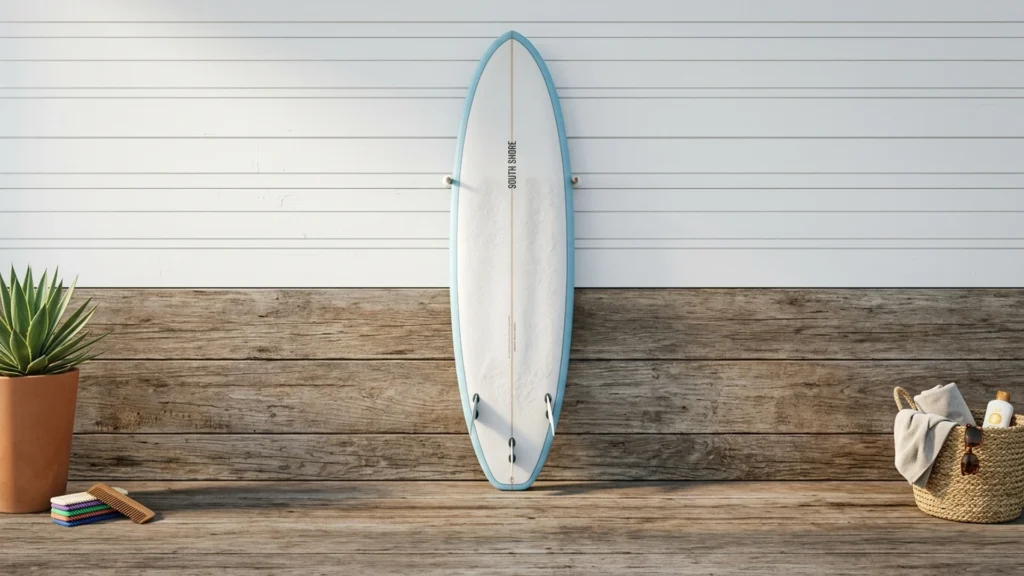
Foam surfboards use soft, foam cores with a thicker, more protective outer skin. In this sub-category, buyers usually want easier takeoffs, more stability when they are learning, and a board that handles beginner wipeouts with less damage than hard boards.
Choosing one gets tricky because the same foam that makes boards easy on dings can also limit sharp turns and steep-wave control. Length and volume help you catch waves, but they also change how the board pivots. Fin setup and fin system also affect how well the board tracks and how much grip it feels on the rail.
To match your goals to the right style and size, use this foam-focused guide, then compare it to broader board choices in the main rankings; Looking for all types? See our Best Surfboards.
Quick Overview
Our Top Picks
#1. WaveStorm Classic Longboard 8' Surfboard

Specifications
| Brand | WaveStorm |
|---|---|
| Length | 96 in |
| Width | 22.5 in |
| Thickness | 3.25 in |
| Volume | 86 L |
| Board Type | Longboard |
| Construction | EPS |
| Fin Setup | Thruster |
Pros
- Holds up with daily use
- Strong value for specs
Cons
- Squirrelly loose feel
- Near-limit capacity
The WaveStorm Classic Longboard 8' stands out in the Foam Surfboards category because it is built to take daily hits while still letting most riders feel in control. At 96 in long with 86 L of volume, it sits higher on the water and makes getting speed and staying on a line easier than many foam boards. The EPS build and thruster setup give it a steady, predictable feel for cruising, practicing trim, and working up to longer turns.
The trade-off is that the board feels loose once you are near its comfort limit, especially when you push hard in steeper, faster surf. It also has less margin for very strong riders who want quick, snappy pivoting. This one fits best for beginners through intermediate longboarders who want a forgiving foam longboard that can handle frequent use and learning sessions.
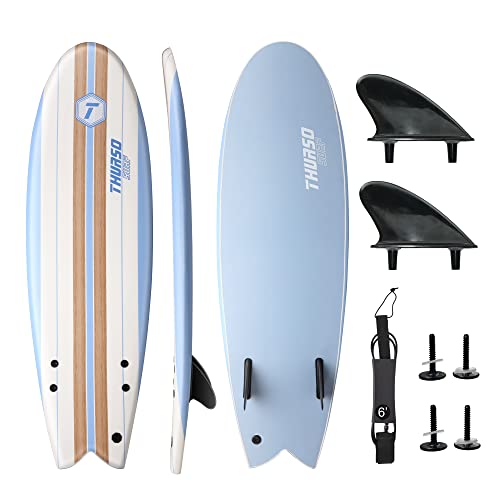
#2. THURSO SURF Lancer 5'10" Soft-Top Surfboard
Specifications
| Brand | THURSO SURF |
|---|---|
| Length | 70 in |
| Width | 20 in |
| Volume | 42 L |
| Board Type | Fish |
| Construction | EPS |
| Fin Setup | Twin Fin |
| Fin System | Twin Fins |
Pros
- Well-shaped, precise build
- Strong value for specs
Cons
- Hot-sand tail-pad failure
- Limited heavy-surf authority
The THURSO SURF Lancer 5'10 soft-top stands out in the foam board category because it rides with more control than most beginner friendly shapes. Its well-shaped, precise build helps it track predictably for a fish style board, and the twin fin setup keeps turns feeling fast and readable. At 70 in long and 20 in wide with 42 L of volume, it is easy to paddle for its size while still feeling lively once you are up and driving.
The main trade-off is not wave type, it is board protection and pace. There is a hot-sand tail-pad failure noted by owners, so you will want to watch wear where your back foot lands. It also has limited authority in heavy surf, so it fits best in smaller to mid sized waves where you can work the line. This makes it a strong pick for progressing surfers who want a forgiving foam board that still turns cleanly.
#3. Softech Roller 6'6" Soft Top Surfboard

Specifications
| Brand | Softech |
|---|---|
| Length | 78 in |
| Width | 22.2 in |
| Thickness | 3 in |
| Volume | 61 L |
| Board Type | Funboard |
| Fin Setup | Tri (x3 VFS Fin Setup) |
| Fin System | VFS |
Pros
- Well-shaped, precise build
- Proper length range
Cons
- Unstable width
- Too thin for comfort
- Mis-matched volume
The Softech Roller 6'6" stands out in the Foam Surfboards category because it is a true funboard shape with a precise, well-shaped feel for learning and progressing. Its 61 L volume and 78 in length help you get into waves early without fighting the board, and the tri-fin VFS setup makes it easier to turn without feeling overly loose. The build quality also comes through as consistent shaping, which matters on soft tops where most people are worried about stability and control.
The main trade-off is how the numbers translate on the water. At 22.2 in wide and 3 in thick, the board can feel a bit unsettled for some riders, especially if you want a softer, more forgiving glide. It is also described as too thin for comfort and has mismatched volume, so it may not suit heavier beginners or anyone who prefers a more buoyant, planted feel. This is best for riders in the right length range who want steady progression and manageable turning from a soft top.
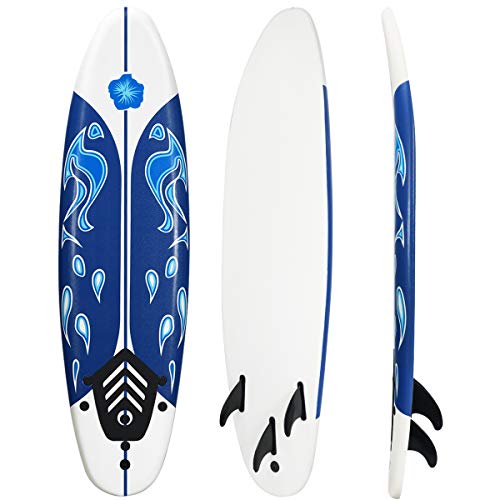
#4. Giantex 6' Foam Surfboard
Specifications
| Brand | Giantex |
|---|---|
| Length | 72 in |
| Width | 20 in |
| Thickness | 3 in |
| Construction | EPS |
| Fin Setup | 2+1 |
Pros
- Strong value for specs
- Durable composite build
- Beginner traction
Cons
- Somewhat sluggish underfoot
- Tends to feel limited
- Turn initiation effort
For foam boards, the standout here is the Giantex 6' built for easy, stable starts. With a 20 in width and 3 in thickness in an EPS foam construction, it gives beginners solid traction and a forgiving feel. The 2+1 fin setup helps it track straighter than many softer boards, so you can focus on pop-ups and basic turns without fighting the rail.
The trade-off is how it feels once you push for more speed and sharper maneuvers. Some riders will find it a bit sluggish underfoot, and turn initiation can take a little extra effort. This makes it best for learners and casual improvement in mellow, shoulder-high to smaller surf, not for anyone chasing quick, snap-heavy progressions.
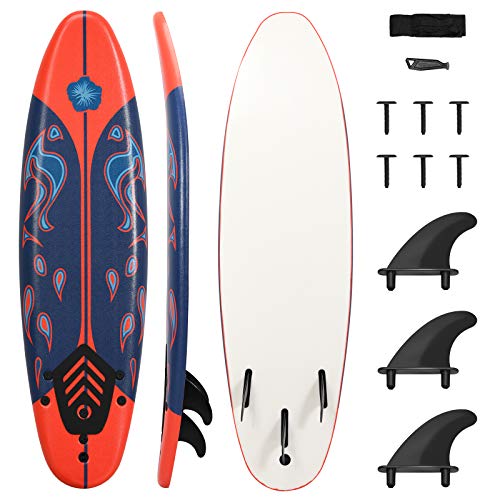
#5. GYMAX 6' Body Board
Specifications
| Brand | GYMAX |
|---|---|
| Length | 72 in |
| Width | 20 in |
| Thickness | 3 in |
| Construction | Foam |
| Fin Setup | 3-Fin |
Pros
- Strong value for specs
- Beginner-friendly handling
Cons
- Chips and dents sooner
- Inconsistent unit quality
- Somewhat sluggish underfoot
The GYMAX 6' Body Board stands out in the foam category for how easy it is to handle for new riders. At 72 in long and 20 in wide, it gives a stable platform that helps you get up sooner and stay balanced while you learn basic turning and line control. The 3-fin setup also makes it feel more predictable once you are gliding, rather than twitchy.
The main trade-off is build consistency. Some units chip and dent sooner than you would like, and there can be small quality differences from one board to the next. It can also feel a bit sluggish underfoot, especially if you want quick response in steeper or punchier waves. This is a good pick for beginners who want forgiving foam handling, and for riders who do not mind being a little careful with impacts.
What to Look For
Stability for your level: Prioritize foam boards with enough length and volume for early wave-catching. If you feel like you are always losing balance, size up rather than switching to a board that relies on perfect technique.
Wave range and wave speed: Soft tops typically feel best in small to medium surf and on days with messy sections. If the forecast is weak, lean toward a longer outline. If you want faster direction changes, look for a shorter length within your skill range.
Fin setup that matches how you turn: Most foam surfboards come with simple setups that trade top-end maneuvering for safer control. Choose the layout that gives you the drive you want. More fins usually feel steadier on rail, while simpler setups can feel freer but less locked in.
Construction that resists water damage: Look for consistent shaping and a well-finished outer skin. Foam boards should show no signs of loose edging, thin patches, or sloppy lamination. Bad finishes often turn into water intrusion after repeated sessions.
Value for daily use: Foam boards work because they tolerate mistakes. Compare the board construction and size to the price. Pay attention to where you can save money without losing core stability or fin hardware quality.
How We Picked
Products were identified through broad research across review sites and buyer forums, then filtered to only those that qualify as Foam Surfboards. That filter focuses on soft-top foam construction built for easier paddling, beginner stability, and day-to-day durability.
Scoring used the same objective pillar framework as the main Surfboards post, allowing direct comparison of products within this sub-category. Performance, versatility, construction, durability, and value each received weighted scores based on how the boards behave in real surf conditions and how they hold up to frequent use.
Frequently Asked Questions
What is a foam surfboard best for?
Foam surfboards are best for learning and relaxed cruising. They help you stay afloat and make wipeouts less risky. They also work well for casual sessions in small to medium waves.
How do soft-top foam boards compare with hard fiberglass boards for performance?
Foam boards usually feel slower and less snappy on turns. They also tend to track more easily when you are a beginner. Hard fiberglass boards can give more speed and control once you progress.
How should I clean and dry a foam surfboard after surfing?
Rinse it with fresh water right after use. Let it dry flat in shade, not direct sun all day. Avoid storing it wet, because salt water can damage the foam skin over time.
Are foam surfboards durable, and what damages them fastest?
They handle impacts better than many other board types. The biggest threats are deep cuts, hard impacts on the rails, and leaving the board in extreme heat. Use a board bag for travel and keep fins and straps from rubbing.
When should I switch from a foam surfboard to another surfboard type?
Switch when you can paddle well, pop up cleanly, and control your turns. If you want faster acceleration and sharper rail work, a harder board may fit better. Most riders move on after they can consistently catch and ride unassisted.
How do foam surfboards compare to other surfboards for beginner-friendly size and volume?
Foam boards often come longer and thicker for extra float. Higher volume helps you sit up sooner and reduces the effort to catch waves. If you feel you sink or struggle to paddle, choose more length or thickness for your weight.