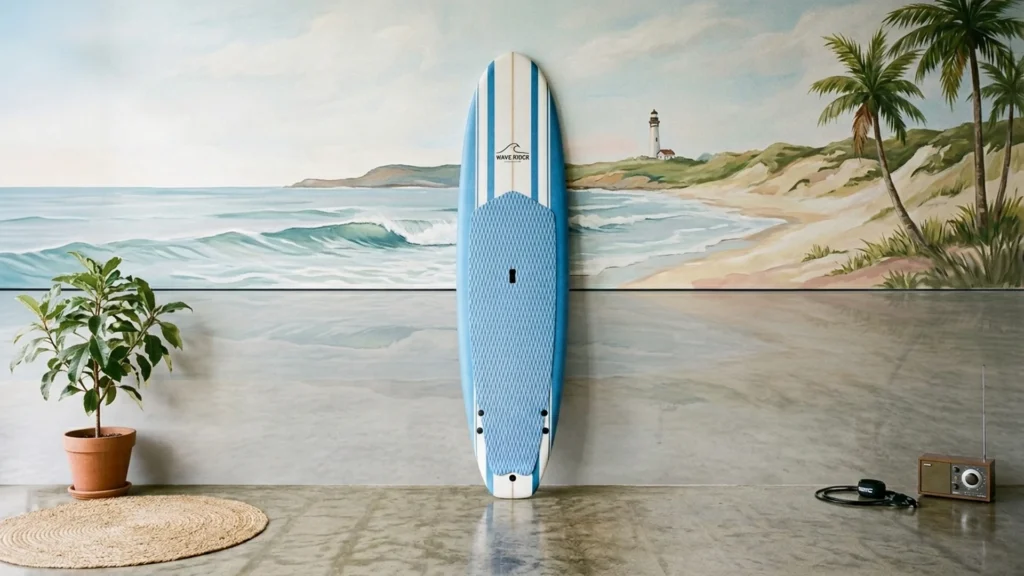
Beginner surfboards are boards designed to make your first sessions easier. Most buyers in this sub-category need faster paddling, stable standing, and predictable turns. They also need a board that survives drops on sand and quick trips to the water.
Picking the right one gets hard fast because stability usually trades against speed and sharp turns. Larger boards paddle easier but can feel clumsy when you learn to turn on rail. Softer tops are friendly to beginners, but they can limit how tightly you drive down the line compared with harder boards.
Looking for all types? See our Best Surfboards. If you stay in this guide, you will match your level and wave size to a board shape and build that actually fits daily practice.
Quick Overview
Our Top Picks
#1. Catch Surf Beater 54" Surfboard

Specifications
| Brand | Catch Surf |
|---|---|
| Length | 54 in |
| Width | 20 in |
| Thickness | 2.5 in |
| Volume | 35L |
| Board Type | Funboard |
| Construction | Epoxy |
| Fin Setup | Twin Fin |
| Fin System | Twin Fin |
Pros
- Well-shaped, precise build
- Good stability width
- Good float for type
Cons
- Mismatch fin layout
- Control difficulty
- Easy nosedive tendency
Catch Surf Beater 54 stands out in beginner surfboards thanks to its easy-to-stay-on balance. At 54 in long, 20 in wide, and 2.5 in thick (35L), it gives new riders plenty of float while keeping the board shape friendly for learning turns. The epoxy build also feels well put together, which helps when you are still finding your pop-up and line choice. In practice, the wide platform makes takeoffs simpler and helps beginners keep control as they progress from straight glides to basic rail turns.
The main trade-off is feel and stability when you try to go faster. The twin-fin setup can limit how predictable the board feels on certain angles, and some riders may struggle to get smooth control once the wave gets steeper. There is also a tendency toward easy nosedives if you lean too far forward. This board fits best for beginners who want an approachable funboard and learn in smaller, softer surf where stability matters most.
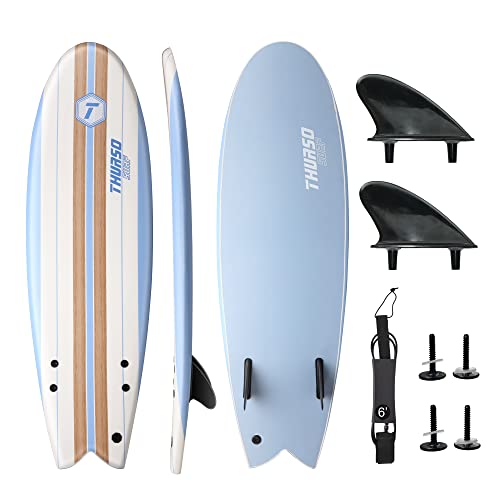
#2. THURSO SURF Lancer 5'10" Soft-Top Surfboard
Specifications
| Brand | THURSO SURF |
|---|---|
| Length | 70 in |
| Width | 20 in |
| Volume | 42 L |
| Board Type | Fish |
| Construction | EPS |
| Fin Setup | Twin Fin |
| Fin System | Twin Fins |
Pros
- Well-shaped, precise build
- Strong value for specs
Cons
- Hot-sand tail-pad failure
- Limited heavy-surf authority
Built for new surfers, this 5'10" soft-top stands out for how easy it is to get into waves and stay in control. The EPS core and EPS foam-soft deck help it feel forgiving, while the twin fin setup makes it simple to turn from a relaxed stance. In weak, shoulder-high surf, it has enough glide to keep you moving and enough stability to learn trims on rail without feeling jumpy.
The main trade-off is that it has limited authority in heavier, faster surf. It can get overwhelmed when waves get steep and powerful, and there is also a known weak point at the hot-sand tail-pad area. This board fits best for beginners who are mostly practicing in mellow conditions and who want a confidence-building fish shape that prioritizes easy paddling and clean, repeatable turns.
#3. Softech Roller 6'6" Soft Top Surfboard

Specifications
| Brand | Softech |
|---|---|
| Length | 78 in |
| Width | 22.2 in |
| Thickness | 3 in |
| Volume | 61 L |
| Board Type | Funboard |
| Fin Setup | Tri (x3 VFS Fin Setup) |
| Fin System | VFS |
Pros
- Well-shaped, precise build
- Proper length range
Cons
- Unstable width
- Too thin for comfort
- Mis-matched volume
Softech Roller 6'6 Soft Top stands out for beginner use thanks to its funboard shape and approachable size. At 78 in long and 61 L, it gives many new surfers easier paddle priority and smoother takeoffs than shorter boards. The tri fin setup helps it feel more predictable when you are learning to stand up and make basic turns, especially for riders who want a board that stays calmer as speed builds.
The trade-off is stability. At 22.2 in wide and 3 in thick, it can feel a bit wobbly for some beginners, and the thin feel may come up short for comfort in weaker, bouncier surf. This one fits best if you already have some confidence popping up and you want a step up from a very forgiving shape, rather than a soft first board for anyone still struggling to balance.
#4. Paragon Retro Fish 6' Surfboard

Specifications
| Brand | Paragon Surfboards |
|---|---|
| Length | 72 in |
| Width | 21 in |
| Thickness | 2.5 in |
| Volume | 38.5 L |
| Board Type | Fish |
| Construction | Epoxy |
| Fin Setup | Twin Fin |
| Fin System | Quad FCS plugs |
Pros
- Durable composite build
- Good stability width
- More user-friendly thickness
Cons
- Water seepage risk
- Early tail cracking
The Paragon Retro Fish 6' stands out for beginners because its fish shape is built to help you get in and stay stable. At 72 in long, 21 in wide, and 2.5 in thick, it carries easy paddle power and a steady stance, so you spend less time fighting balance. The epoxy composite feel also helps the board stay lively when you start turning, and the twin fin plus quad FCS plug setup supports smoother, more forgiving ride paths for early learners.
The main trade-offs are durability and water control. There is a water seepage risk, and some riders report early tail cracking, so it is smart to treat it carefully during transport and avoid hard impacts on the beach. This board fits best for beginners who want a fun, fast-feeling shape in smaller to punchier waves and plan to progress their turns at a steady pace.
#5. Giantex 6' Foam Surfboard
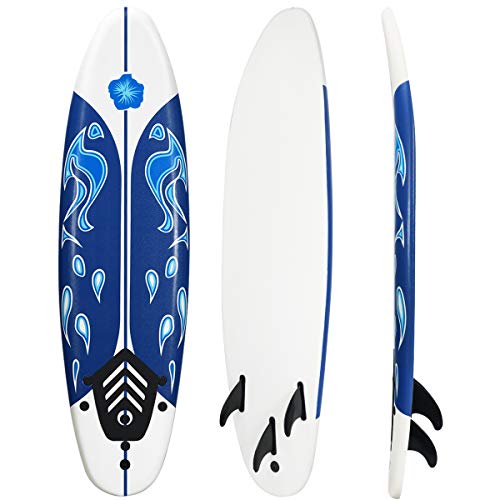
Specifications
| Brand | Giantex |
|---|---|
| Length | 72 in |
| Width | 20 in |
| Thickness | 3 in |
| Construction | EPS |
| Fin Setup | 2+1 |
Pros
- Strong value for specs
- Durable composite build
- Beginner traction
Cons
- Somewhat sluggish underfoot
- Tends to feel limited
- Turn initiation effort
With its 6 ft foam-style build and beginner-friendly 2+1 fin setup, the Giantex 6' Foam Surfboard stands out as an easy first surfboard. The extra width (20 in) helps most new surfers paddle and pop up with less effort. Traction is also a plus for learning trimming and basic turning without your feet sliding around.
The main trade-off is feel. It can feel a bit sluggish underfoot, and turn initiation may take more work than faster, more responsive beginner boards. This board is best for calm, forgiving waves and for riders who want stability first, then improvement in control as they get more comfortable.
#6. GYMAX 6' Body Board
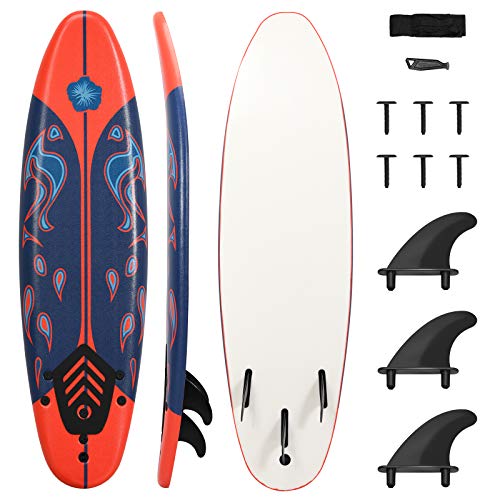
Specifications
| Brand | GYMAX |
|---|---|
| Length | 72 in |
| Width | 20 in |
| Thickness | 3 in |
| Construction | Foam |
| Fin Setup | 3-Fin |
Pros
- Strong value for specs
- Beginner-friendly handling
Cons
- Chips and dents sooner
- Inconsistent unit quality
- Somewhat sluggish underfoot
For beginners who want an easy way to get in the water, the GYMAX 6' Body Board stands out for its beginner-friendly handling and simple 3-fin setup. At 72 in long and 20 in wide, it is a wider platform that helps new riders stay stable and try turns without feeling twitchy. The foam construction also keeps it more forgiving when you are learning how to hold a line and adjust your stance.
The main trade-off is durability and feel. The board can chip and dent sooner than more premium builds, and some riders may notice it feels a bit sluggish underfoot when waves get steeper. This makes it a better match for learning basics in smaller, gentler surf, and for riders who do not mind babying the board a little during transport and use.
What to Look For
Board stability for early pop-ups: Choose a longer, wider board with enough volume for your body weight. For most beginners, more surface area helps you stand sooner and keeps your feet from slipping during the first turns.
Wave range and how the board starts turns: Match the board style to the waves you will surf most. Bigger, easy-planing shapes work best in weaker, smaller surf. If your local surf is often weak, prioritize a design that holds speed with simple line changes.
Soft-top protection and handling: Look for beginner-focused soft-top or foam-style builds when you expect frequent wipeouts. Soft tops add safety and reduce damage during learning. They also make transport and board care simpler.
Construction material that matches your use: For everyday beginner use, aim for boards that use common beginner materials like epoxy-over-EPS or foam-style cores. Avoid “lightweight” claims that do not tie to real durability for beginner impacts and frequent travel.
Fin setup that supports control: Expect different handling based on fin layout. Many beginner-friendly boards pair more stability with a thruster or similar predictable setup, which helps you steer while you learn to set your rail and avoid stalling.
How We Picked
Products were identified through broad research across review sites and buyer forums, then filtered to only those that qualify as Beginner Surfboards.
Scoring used the same objective pillar framework as the main Surfboards post, allowing direct comparison of products within this sub-category. Performance, versatility, construction, durability, and value were weighed to rank boards that make early progress while holding up to real beginner use.
Frequently Asked Questions
What makes a beginner surfboard easier to ride than other boards?
Beginner boards usually have more width and volume. That helps you paddle faster and stay up when you catch small waves. Many also use a soft-top or foam style that is easier on you and safer during wipeouts.
How do soft-top and foam boards differ for a new surfer?
Soft-top and foam boards both focus on stability and safer falls. Soft-tops typically handle common surf days and take bumps better. Foam boards can be good for learning, but performance on turns may feel less lively in bigger waves.
Do I need wax and a leash on beginner boards?
Yes, you should use surf wax on the deck for grip. You also need a leash so the board does not drift away after a wipeout. If your board has a fin box, check that the fins are tight before you surf.
How should I choose length, width, and thickness for my first board?
Pick more volume if you are still learning to stand and paddle. Wider boards like around 20 to 22 inches usually feel steadier for beginners. If you feel off-balance, choosing a slightly thicker board often helps more than going shorter.
When should I switch from a beginner surfboard to a different surfboard type?
Switch when you can consistently pop up and ride past the whitewater. You should also feel comfortable turning without fighting the board. If you want more speed and sharper turns, a more performance-focused board can make sense.
How do beginner surfboards compare to shortboards for speed and control?
Beginner boards usually trade top speed for easy control. They help you plane earlier and stay stable on smaller waves. Shortboards feel faster in clean surf, but they need more skill to paddle, balance, and turn well.