




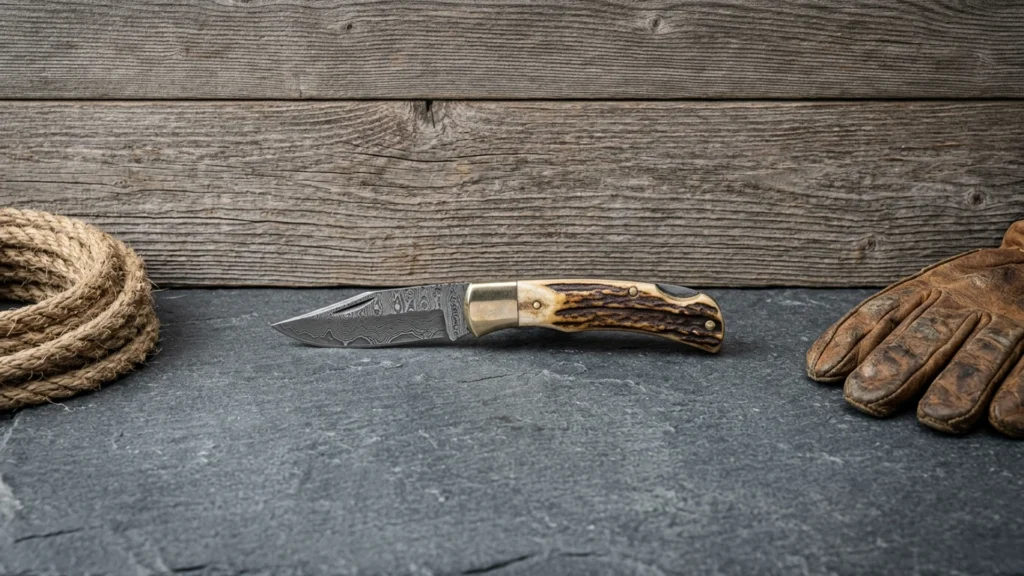
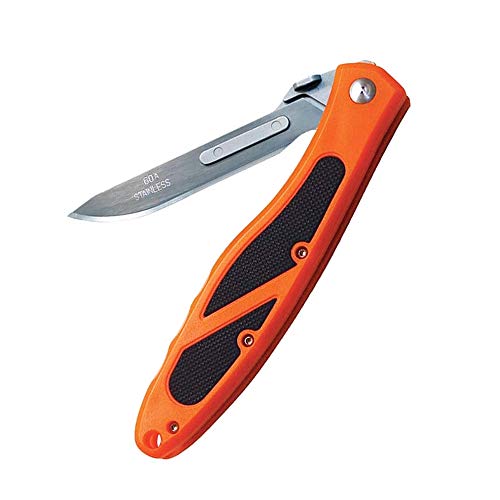
Folding hunting knives are the fixed-position workhorse you want in your kit, but in a pocketable form. In this sub-category, your knife has to handle skinning, field dressing, and careful slicing without fighting your grip or dulling too fast.
The hard part is trade-offs. A thin folder can cut well, but may not tolerate rough prying. A sturdier build can feel heavier. Edge types also matter, since some hunting folders prioritize toothy cuts over smooth slicing.
If you want guidance across blade styles and folding and fixed options, see our Best Hunting Knives.
Quick Overview
Our Top Picks
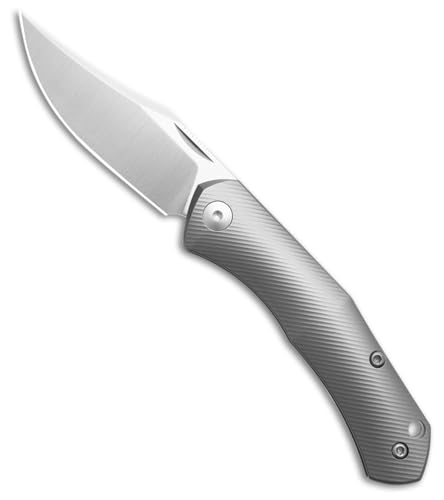
#1. GiantMouse Ace Jutland Hunting Knife
Specifications
| Brand | GiantMouse |
|---|---|
| Knife Type | Folding |
| Blade Length | 3.35 in |
| Overall Length | 8.15 in |
| Blade Material | S90V Stainless Steel |
| Blade Style | Clip Point |
| Handle Material | Titanium |
| Weight | 4.4 oz |
Pros
- Clean, effortless skinning
- Balanced for precise control
- High-performance steel
Cons
- Slippery/maintenance-sensitive
- Stiff action tuning
The GiantMouse Ace Jutland stands out for how cleanly it skins and slices in real field work. With a 3.35 in clip point and S90V stainless, it tracks well through hide and stays controlled during the short, precise cuts you make during dressing. At 4.4 oz and with a titanium handle, it feels balanced for detail work, not just general cutting.
The main trade-off is grip and action feel. The handle can feel slippery when wet or bloody, so you will want good hand discipline. Also, the action needs some tuning since it is on the stiff side, which can slow down deployment until you get used to it.
#2. Buck 110 Folding Hunter Hunting Knife

Specifications
| Brand | Buck Knives |
|---|---|
| Knife Type | Folding |
| Blade Length | 3.8 in |
| Overall Length | 8.63 in |
| Blade Material | 420HC Stainless Steel |
| Blade Style | Clip Point |
| Handle Material | Ebony |
| Weight | 7.2 oz |
Pros
- Clean, effortless skinning
- Tight fit and finish
- Balanced for precise control
Cons
- Dated materials
- Variant-dependent comfort
This folding hunter stands out for its user-friendly cutting feel when you are skinning and doing fine work in the field. The 3.8 in clip point blade comes ready to use and stays controlled through careful pulls and short slicing strokes. Fit and finish are tight, and the balance at about 7.2 oz helps you steer the tip without over-gripping or fighting the handle.
The trade-off is that the 420HC stainless steel is more old-school than newer super steels, so edge longevity may not match premium options. Handle comfort can also vary by hand, since the ebony scales and shape can feel better for some users than others. Best for hunters who want a straightforward folding knife that is easy to handle and straightforward to maintain.
#3. Havalon Piranta-Edge Hunting Knife

Specifications
| Brand | Havalon |
|---|---|
| Knife Type | Folding |
| Blade Length | 2.8 in |
| Overall Length | 7.3 in |
| Handle Material | Polymer |
| Weight | 1.52 oz |
Pros
- Clean, effortless skinning
- Strong results for cost
- One-handed controllability
Cons
- Low-grade/unknown steel
- Too short for tasks
- Limited re-sharpening
This folding skinner stands out for how it handles real skinning cuts. The short 2.8 in blade and one-handed control make it easy to steer along hide and around joints without fighting the knife. In practice, it delivers clean, low-drag results that feel simple to manage, even when you are working fast in messy conditions.
The trade-off is blade substance and length. The steel is not clearly defined, and the knife is too short for longer slicing jobs or deeper reach. It also has limited real-world re-sharpening options, so it suits hunters who want a reliable field-dressing tool and plan to retire or replace it once performance drops.
#4. Buck 112 Ranger Hunting Knife

Specifications
| Brand | Buck Knives |
|---|---|
| Knife Type | Folding |
| Blade Length | 3 in |
| Blade Material | 420HC Stainless Steel |
| Blade Style | Clip Point |
| Handle Material | Ebony |
| Weight | 5.6 oz |
Pros
- Clean, effortless skinning
- Tight fit and finish
- Strong results for cost
Cons
- Factory sharpening variance
- Bulkiness for carry
In the folding hunting knife space, the Buck 112 Ranger stands out for how smoothly it handles real skinning work with a 3.0 in clip point blade. Users get clean cuts and good control during field dressing, and the fit and finish feel tight when you open and close it. The 420HC stainless blade is also practical for the outdoors, with enough edge performance for typical game processing and a shape that works well for careful slicing.
The main trade-off is not cutting ability, but consistency. Factory sharpening can vary, so some owners may want to touch up the edge right away. It also carries a bit bulky at 5.6 oz, which matters if you want a slim pocket profile for long days in the woods. This is a solid pick for hunters who prioritize dependable cutting in a folding format and do not mind a quick sharpening check.
#5. OPINEL No. 08 Carbon Hunting Knife

Specifications
| Brand | OPINEL |
|---|---|
| Knife Type | Folding |
| Blade Length | 3.3 in |
| Overall Length | 7.5 in |
| Blade Material | Carbon Steel |
| Handle Material | Wood |
| Weight | 1.6 oz |
Pros
- Tight fit and finish
- Strong results for cost
- Good corrosion-aware durability
Cons
- Low-grade/unknown steel
- Slow one-handed opening
- No clip carry
This Opinel No. 08 stands out among folding hunting knives for its tight fit and clean, simple build. The carbon steel blade around 3.3 in gives solid feel for up-close work like skinning and careful slicing, while the wood handle keeps the knife light at about 1.6 oz. Fit and finish are tidy, so it feels controlled even when your hands get slick.
The main trade-off is the opening speed and steel choice. Expect a slow one-handed opening, which matters when you are managing gloves or gear during field dressing. The steel is described as low-grade or unknown, and that limits confidence in long edge life compared with better defined carbon or stainless options. This one fits hunters who want a classic, easy-to-resharpen carbon folder and do not need fast one-hand deployment.
#6. Outdoor Edge RazorPro L Hunting Knife

Specifications
| Brand | OUTDOOR EDGE |
|---|---|
| Knife Type | Folding |
| Blade Length | 3.5 in |
| Overall Length | 8 in |
| Blade Material | Stainless Steel |
| Blade Style | Drop Point |
| Weight | 6.4 oz |
Pros
- Clean, effortless skinning
- Secure blade lock-in
- Grip in wet conditions
Cons
- Low-grade/unknown steel
- Bone snagging risk
- Maintenance buildup at pivot
This folding skinner-style knife stands out for how easily it moves through hide during field work. The 3.5 in drop point blade stays controllable, and the lock-in feels secure when you are pulling and trimming close to the carcass. In use, it delivers clean skinning with low drag, which matters when you are trying to keep cuts tight and avoid tearing.
The main trade-off is blade material and upkeep. Steel quality is listed only as stainless, and that shows up in the downsides reviewers note, including a risk of bone snagging and buildup around the pivot during heavy sessions. It is a solid pick for hunters who want a dependable folding option for dressing and light skin work, but plan to clean and dry the pivot area often and accept that edge maintenance may not be as effortless as with higher-end steels.
What to Look For
Cutting performance: Look for a blade that slices with steady control. For skinning and dressing, a drop point profile and a sharp plain edge usually keep the work smooth and precise. Prioritize knives that are reported to arrive sharp and that keep a usable edge for repeated cuts.
Steel and edge maintenance: Choose blade steel you can realistically maintain where you hunt. Stainless steels work well for wet conditions, while carbon steels can sharpen easily and take a keen edge. If you carry a stone or field sharpener, pick the knife that matches your sharpening habits.
Lock strength and build quality: Folding hunting knives must lock up solid during push cuts and controlled pulls. Check for a reliable lock mechanism and clean fit at the pivot. Loose parts or weak action will show up when you work through hide and connective tissue.
Handle grip in real conditions: Your hands get wet, oily, and bloody. Favor a handle material that stays grippy and does not create hot spots during long dressing sessions. Balance matters too, since a blade-heavy knife can tire you out faster.
Practical carry: The knife should fit your pocket or pack without fuss. Check overall length and weight so it stays usable after a full day. A lighter folder can be easier to keep on you, but make sure it still feels stable for fine control.
How We Picked
Products were identified through broad research across review sites and buyer forums, then filtered to only those that qualify as Folding Hunting Knives.
Scoring used the same objective pillar framework as the main Hunting Knives post, allowing direct comparison of products within this sub-category.
Frequently Asked Questions
Are folding hunting knives easy to sharpen in the field?
Most folding hunting knives use a simple plain or slightly curved edge that you can touch up quickly. Look for steels labeled as stainless if you want faster wipe down after skinning. Bring a small sharpening stone or a field sharpener and a blade-safe sheath for quick cleanup.
What edge type works best for skinning and field dressing?
A plain edge usually cuts skin and meat cleaner and stays easier to resharpen. Some models use partial serrations that can help with tough, dirty cuts. Choose based on how often you deal with hide and bone versus clean slicing.
How do I keep a folding knife reliable after repeated blood and grime use?
Rinse off blood and hair with clean water, then dry the blade and pivot area. Use a light oil on the hinge and lock parts to reduce rust and grinding. Always lock the blade fully before use and check the lock feels solid before cutting.
When should I choose a fixed blade instead of a folding hunting knife?
Choose a fixed blade if you want maximum safety during heavy tasks like prying or tougher field work. Fixed blades also tend to stay stable for long skinning sessions. Pick a folding knife when pack size and quick access matter more than maximum strength.
How do folding hunting knives compare to fixed blades for blade length and control?
Folding knives often run shorter and more compact, which helps in a tight pack and on the move. Fixed blades can offer longer blade lengths for smoother, continuous cuts. For fine control, a shorter, precise blade can feel easier while dressing game.


