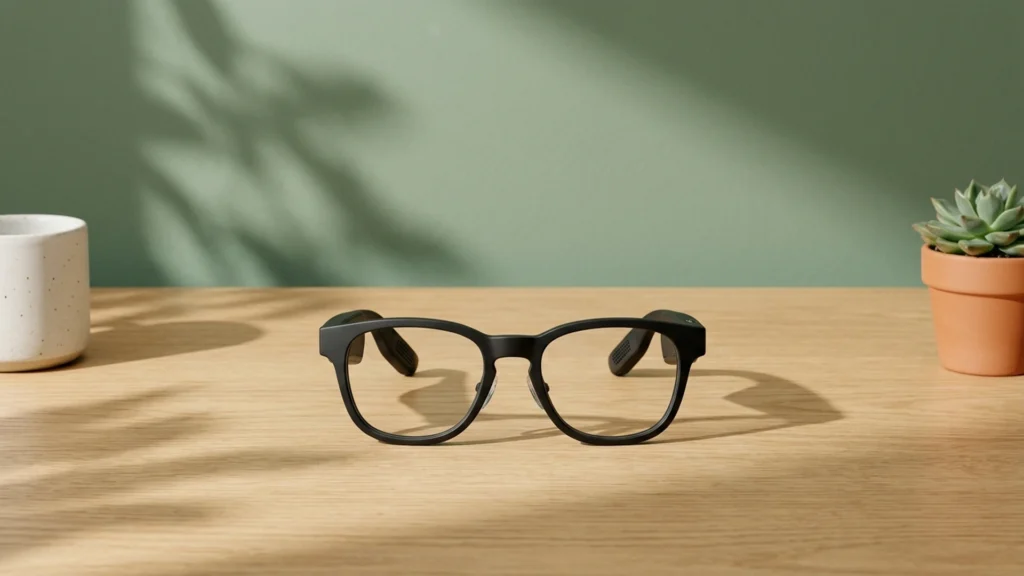
Audio smart glasses pair open-ear sound with smart features. Buyers in this sub-category usually want usable audio for calls, music, and voice prompts while keeping their hands free. You also need dependable controls for calls and audio playback, plus stable app and voice behavior that does not break mid-day.
Picking the right pair is hard because audio performance trades off against comfort, battery, and stability. Louder audio can mean more weight or heat near the frame. Smarter AI and translation can add more connection and latency issues. And some models focus on one feature set while audio, controls, or reliability lag when you walk, commute, or talk for hours.
If you want help across every style of smart glasses, see our Best Smart Glasses.
Quick Overview
Our Top Picks
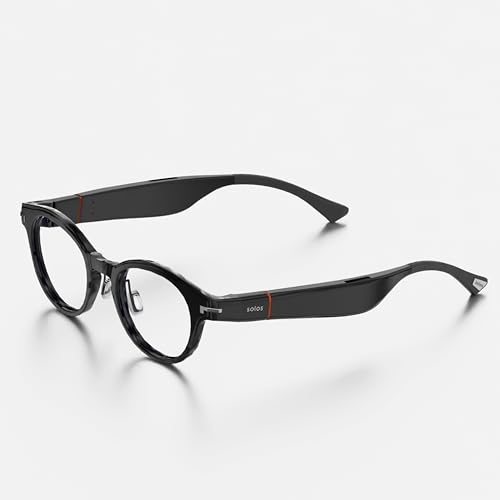
#1. SOLOS AirGo A5 Hydro 8 Smart Glasses
Specifications
| Brand | SOLOS |
|---|---|
| Form Factor | Audio Glasses |
| Connectivity | Bluetooth 5.2 |
| Battery Life | 10 hr |
Pros
- Long-lasting battery
- Modern wireless support
- Worth it for daily use
Cons
- Audio-only glasses
- Not airtight
- Unfinished build feel
SOLOS AirGo A5 Hydro 8 stands out in audio smart glasses because the focus stays on sound first. With Bluetooth 5.2 support and up to 10 hr of battery life, it is built for day-long listening, calls, and casual notifications without the fuss of a display. It also keeps the experience modern by staying wireless, so you can move around and still get audio that stays connected.
The main trade-off is that it is audio-only. If you want on-lens visuals or heavy smart assistant interaction, these will not fit that goal. The fit is also not airtight, and the build can feel a bit unfinished, so this is best for people who want comfortable, practical audio in a glasses form rather than a fully sealed, premium-feeling hardware experience.
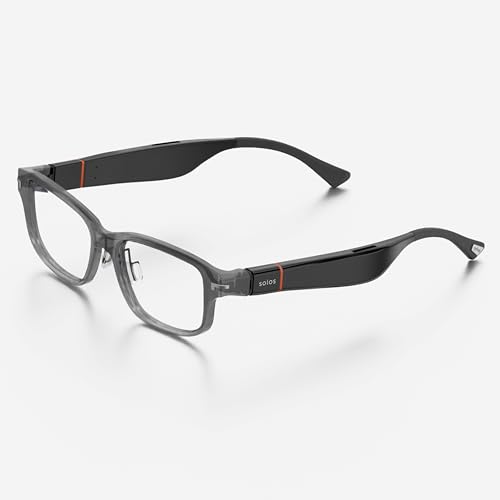
#2. SOLOS AirGo A5 Hydro 7 Smart Glasses
Specifications
| Brand | SOLOS |
|---|---|
| Form Factor | Audio Glasses |
| Camera Resolution | 16 MP |
| Battery Life | 10 hr |
| Weight | 0.9 oz |
Pros
- Lightweight and stable
- Higher-resolution camera
- IP67 durability
Cons
- Dies early with mixed use
- Occasional lag, minor glitches
- Audio-only glasses
SOLOS AirGo A5 Hydro 7 stands out as an Audio Smart Glasses pick that does not force you into a display-first experience. You get an audio-focused setup with a 16 MP camera, and the frame feels light at 0.9 oz. It also earns trust for daily use with an IP67 durability rating, so it can handle splashes and dust better than many audio-only designs.
The trade-off is battery and smoothness. With mixed use, it can die earlier than expected, and you may notice occasional lag or small glitches. This makes it best for short, audio-led sessions like quick calls and hands-free listening, rather than all-day camera and voice workflows.
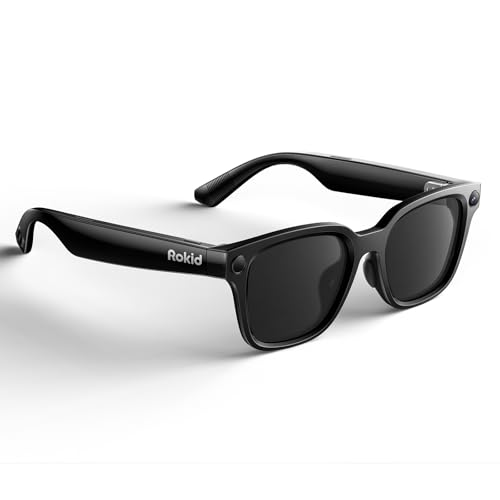
#3. Rokid 2026 AI Glasses Style Smart Glasses
Specifications
| Brand | Rokid |
|---|---|
| Form Factor | AI Glasses |
| Camera Resolution | 12 MP |
| Battery Life | 6 hr |
| Weight | 0.1 lb |
Pros
- Worth it for daily use
- Lightweight and stable
- Real-time translation
Cons
- Dies early with mixed use
- Display-free interaction limits
- Reported performance boundaries
Rokid 2026 AI Glasses are notable in audio smart glasses because they focus on day-to-day audio help plus real-time translation. In use, voice prompts feel fast enough for casual conversations, and the translation flow works well when you are moving around. The design stays light and stable, so the speakers and mic do not feel distracting during short commutes or errands. A 12 MP camera sits in the background, but the main draw is hands-free audio plus spoken translation.
The biggest trade-off is battery life. With mixed use, it can die early, so you may need a mid-day charge if you plan to rely on translation and voice interaction all day. Also, the interaction feels more audio-first than display-first, so if you want quick visual cues, you may feel limited. This is best for people who want audio guidance and translation in a comfortable, low-profile frame, and who can manage charging habits.
What to Look For
Call and media audio quality: Check whether vocals stay clear at normal street noise. Look for stable volume control and low background hiss during calls.
Voice assistant accuracy and latency: Test how fast the glasses respond to voice commands. Reliable audio smart glasses should understand short phrases without long pauses or repeated prompts.
Comfort for long wear: Favor models that distribute weight evenly and do not pinch the nose. If the frame feels front-heavy or shifts during walking, you will avoid using the audio feature.
Battery that lasts mixed use: Plan around real call and listening time, not standby numbers. Also check recharge speed so you can top up between errands.
Build fit and frame stability: Audio speakers sit close to the frame, so loose hinges or flex can affect sound and comfort. Look for a rigid fit that stays consistent over the day.
How We Picked
Products were identified through broad research across review sites and buyer forums, then filtered to only those that qualify as Audio Smart Glasses. Each candidate was judged on how well it supports audio tasks like calls and listening while still delivering the expected smart functions.
Scoring used the same objective pillar framework as the main Smart Glasses post, allowing direct comparison of products within this sub-category. The focus stayed on core audio and smart responsiveness, plus comfort, battery reliability, build quality, and value for the price.
Frequently Asked Questions
What makes audio smart glasses different from normal smart glasses?
Audio smart glasses focus on delivering sound through built-in open-ear speakers or bone-conduction style audio. This lets you hear calls, music, and prompts while still hearing the world around you. Many also support voice control and AI audio alerts.
Do audio smart glasses leak sound to other people nearby?
Open-ear and directional audio designs aim to reduce sound spill. Still, volume and your surroundings matter. In quiet rooms, others may hear some audio at higher volume.
How do I set up audio smart glasses for calls and voice assistant use?
You usually pair them to your phone over Bluetooth first. Then enable microphone permissions in your phone settings. After that, test a call and adjust volume until the mic sounds clear on the other end.
What should I look for in battery life for audio use?
Audio use drains power faster than standby. Look for real mixed-use time, not just talk time. If you want all-day use, choose models that hold up for several hours with steady notifications and calls.
When should I choose a different type of smart glasses instead of audio smart glasses?
Choose AR or AI glasses if you want more visual alerts or a real display for prompts. Choose audio smart glasses when your main goal is calls, music, and spoken directions with minimal screen focus. If you need translation on screen, audio-only may feel limiting.
How do audio smart glasses compare to AR glasses for everyday tasks?
Audio glasses are better for hands-free listening, like calls, navigation audio, and voice commands. AR glasses are better for quick visual info like messages or in-view instructions. Many people prefer audio first if they mainly want a low-glance experience.