Specifications
| Brand | Rokid |
|---|---|
| Form Factor | AI Glasses |
| Camera Resolution | 12 MP |
| Battery Life | 6 hr |
| Weight | 0.1 lb |
Pros
- Worth it for daily use
- Lightweight and stable
- Real-time translation
Cons
- Dies early with mixed use
- Display-free interaction limits
- Reported performance boundaries
The Verdict
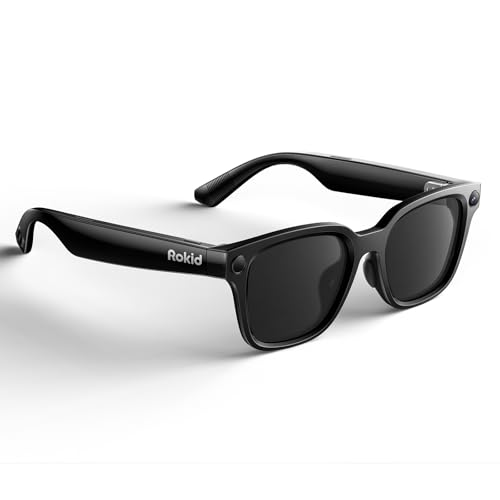
Rokid 2026 AI Glasses are display-free smart glasses built around voice control and audio, with a 6 hr battery rating that often feels short in mixed use. If you want real-time translation without looking at a screen, they can fit daily life well, but battery drain and reported performance boundaries make them less steady for all-day work.
Who it's for: Commuters and travelers who rely on spoken commands and want real-time translation, and who accept more frequent charging to keep the glasses running.
Who should skip it: People who need consistent day-long battery and tight reliability for tougher tasks, since mixed-use performance can drop sooner than expected.
In-Depth Review
Core Tech
Rokid 2026 AI Glasses score 7.1 for Core Tech. That lands in the “Occasional lag, minor glitches” zone for a display-free device. The core idea is voice-first help and spoken results. So the system speed matters more than screen sharpness.
On paper, the hardware backs real-time tasks with a 12 MP first-person camera. That camera supports common AI moments when you need to capture what you see. The battery rating also ties directly to this workflow. The listing claims 6 hours of music from the built-in 210mAh battery. In real use, that helps you stay in the conversation longer, even when you are asking for repeated prompts.
Connectivity and display specs are not listed in the extracted data. So you cannot judge latency or reliability from published network details here. Still, the Core Tech score aligns with reported “Reported performance boundaries” and the idea that voice use may be smooth most of the time, but not always perfect.
Comfort
Rokid scores 8.0 for Comfort, mapped to “Lightweight and stable.” The weight number in the specs is 0.1 lb. That is light enough to matter during long commutes and desk sessions, especially for glasses that do not give you a screen to lean toward.
The mini-review points to stable fit during normal movement. The spec sheet supports the basic expectation with that low mass figure. For a display-free helper, you wear the glasses for the mic and audio experience. So comfort becomes a product quality test of daily wear, not just first impressions.
Even with a stable fit, comfort is only part of the story. If battery life forces frequent charging interruptions, you wear them for shorter sessions. That can change how “all-day” the glasses feel in practice, regardless of the 0.1 lb spec.
Battery
Battery scores 6.7, which maps closest to “Dies early with mixed use.” The listing claims 6 hours of music from the built-in 210mAh battery. For display-free AI glasses, that sounds reasonable on paper. But AI and voice use often pull power in short bursts.
In the real trade-off, the cons mention they “Dies early with mixed use.” That matches the score. If you spend more time talking to the assistant, asking for repeated prompts, and using the camera, your day can run out faster than the single 6-hour music estimate suggests.
There is also a practical workflow issue. Comfort is high at 0.1 lb, so you may want to wear them all day. The battery score says you may not get a full day without planning around charging. That reduces how often you get consistent translation and voice help without interruptions.
Build
The Build score is 6.9. That fits the “Creaks slightly under pressure” style of outcome. The extracted specs do not list frame materials, hinges, or scratch resistance. So this section leans on the only hard build number we have: the weight of 0.1 lb.
Low weight often comes with trade-offs. Light frames can feel less rigid when you press or adjust them. That lines up with the Build score being below the strong comfort level. It also fits the general idea of “Reported performance boundaries” from the Core Tech pillar. If the glasses shift slightly during use, mics and camera alignment can be affected.
The 12 MP camera is another build factor. Cameras add internal volume and mounting points. The extracted data confirms the camera is 12 MP, but does not share module protection. So you have less data to judge long-term durability, even if daily comfort at 0.1 lb sounds stable.
Value
Value scores 8.0, mapped to “Worth it for daily use.” This is a display-free product in the AI Glasses category. That goal shapes the value proposition. You rely on audio and voice more than any display. The spec set supports that focus through a 6 hour battery claim and a 12 MP first-person camera for hands-free capture.
Still, value depends on how well those parts work together. The cons include “Display-free interaction limits.” In practice, that means you might spend more time listening and repeating than you would with a screen-based interface. When the Core Tech score is 7.1 and the experience can hit “Reported performance boundaries,” daily value can swing based on how patient you are with voice flows.
Comfort helps keep the value high. At 0.1 lb, the glasses stay on comfortably. And the pro list includes “Real-time translation.” If translation works reliably for your use case, the overall day-to-day experience justifies the value score. The weak link stays battery life, where “Dies early with mixed use” pulls the edges down. But for display-free daily help, the package still reads as a practical fit.
Frequently Asked Questions
How long do Rokid 2026 AI glasses last on a charge with normal mixed use?
Rokid lists about 6 hr of battery life, which lines up best with lighter, steady use. In mixed use, some buyers report the glasses die earlier than expected. If you plan a full day, carry a charging option and expect to top up.
Do the Rokid 2026 AI glasses have a display, and what does that mean for notifications?
The specs do not list a display or resolution, so you should expect display free interaction. That usually means you rely on audio cues, voice prompts, and translations rather than seeing text. For notifications, this can feel limiting if you want visual alerts.
How good is the camera for calls or quick photos, and what resolution does it use?
The glasses include a 12 MP camera. That makes them suitable for basic capture and camera enabled features, but performance limits still apply in low light and fast action. If your goal is high detail photography, expect constraints compared with a phone.
Will real time translation work during conversations while walking around?
Rokid is designed for real time translation, and many people use it for on the go conversations. Reported results vary depending on noise level, accents, and how clearly you speak. It can be helpful outdoors, but it may struggle in very loud places.
Are the Rokid 2026 AI glasses comfortable for long sessions, and how much do they weigh?
They are very light at about 0.1 lb, which supports comfortable wear. Reviewers often say the fit stays stable while moving. Still, comfort depends on your face shape and how securely the frame sits on your nose and temples.
What do I need to know about charging and upkeep for the Rokid 2026 glasses?
For best battery life, avoid leaving them fully drained for long periods and keep charging sessions consistent. Clean the lenses gently with a microfiber cloth to reduce scratches and smudges. Store them in a case when you are not using them to protect the frame and camera area.
Final Verdict
Rokid 2026 AI Glasses are a recommended buy for people who want real daily help without a display. The standout strength is stable, comfortable fit for long wear. The main weakness is battery life, which can die early with mixed use, and display-free interaction can feel limiting. If you mainly rely on voice and translation, the experience can still be satisfying.
Choose these if you want hands-free translation and can tolerate fewer direct visual cues. If that matches your routine, this is a sound pick.