





Garmin dezl 580 5″ GPS Navigator Review
Specifications
| Brand | Garmin |
|---|---|
| Screen Size | 5 in |
| Map Coverage | North America |
| Map Updates | Lifetime Map Updates |
| Traffic Updates | Live Traffic |
| Voice Control | Voice Control |
Pros
- Accurate turns, great lock
- Easy-to-read day visibility
- Lifetime map updates
Cons
- Poor standby battery life
- Cab-focused portability
The Verdict
With a Navigation pillar score of 8.6, the Garmin dezl 580 5 is a truck-first GPS that handles Live Traffic well and keeps turn guidance dependable. It is easier to read on the road and planning stays more current thanks to lifetime map updates, but standby battery life is weak. If you mostly drive with power or plan for frequent charging, it fits. If you want long unplugged time, look elsewhere.
Who it's for: Truck drivers and fleet-style users who rely on quick reroutes from Live Traffic and clear lane guidance, and who accept that the unit needs charging more often than standard car navigators.
Who should skip it: Anyone who mainly drives passenger routes and wants long standby time without being plugged in, since the truck-centric design and poor standby battery life can be more hassle than help.
In-Depth Review
Navigation
Garmin gives this dezl 580 5 a strong navigation result.
Its pillar score is 8.6, landing in the “great” lane: “Accurate turns, great lock.” That fit is clear from the combination of truck-focused guidance and Live Traffic, which is listed as “Live Traffic” in the specs.
Maps coverage matters for route logic. This model targets “North America,” so routing has a large footprint to work with. When you also have “Live Traffic” enabled, reroutes can react to late changes instead of waiting for a full new plan. In a truck navigator, that sequence is often the difference between a smooth trip and a bunch of rerouting during busy miles.
Update cadence plays into POI search and reroute quality over time. The dezl 580 5 includes “Lifetime Map Updates,” which directly supports keeping route decisions aligned with newer roads and exits. Over months, that reduces the chance that a reroute is based on stale road geometry.
Display
The screen is a practical size for driving.
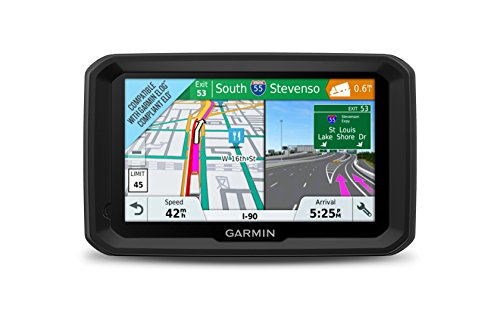
This unit uses a “5 in” display, which helps keep guidance readable without taking over the dash. With a pillar score of 8.1, it falls under “easy-to-read day visibility,” matching the template phrase. The mini review already points to daylight readability, and the 5-inch choice is consistent with that goal.
You do not get extra screen spec detail in the available sheet. Screen resolution and touchscreen type show up as “-”, so you have to judge clarity by the size alone. In real use, the benefit of a 5-inch screen is simpler scanning while you keep your eyes on the road. Lane guidance also stays in your field of view more often than on smaller screens.
Navigation still depends on screen usability under motion. Since the specs do not list touch response specs, I focus on what is known: lane information needs to fit on a “5 in” panel, and traffic-driven reroutes need to be readable quickly. This is exactly where “easy-to-read day visibility” counts most.
Features
At 8.5, Garmin lands in “great” for features, and the spec list supports that.
The core items are “Live Traffic” for road conditions and “Lifetime Map Updates” for long-term coverage accuracy. Those two together help keep both route planning and route changes relevant.
Voice control is also listed as “Voice Control.” For a truck navigator, that matters because it reduces the need to tap through menus while rolling. It also pairs well with route adjustments. If you need to change plans quickly, voice can shorten the time between decision and action, especially when traffic updates shift ETAs.
Coverage stays clear and straightforward: “North America” maps are included. That helps avoid the need to think about regions. For travelers who regularly cross state lines, the key is that your POI search and routing have one coherent map set to draw from.
Battery
Battery is the clear weak point here.
The pillar score is 5.9, which fits the “weak” template: “Short trips, quick drop.” The spec table does not list a battery life number, but the provided cons call out the issue directly: “Poor standby battery life.” That is a meaningful operational trade-off, especially if you park for long stretches or rely on the device between routes.
Even with truck planning, you often start and stop across days. If standby is unreliable, you may come back to a unit that needs charging sooner than you expect. The takeaway is not about whether it works on a single drive. It is about whether it stays ready when your schedule changes.
Because battery capacity or runtime is not stated in the specs (it is shown as “-”), you should treat the dezl 580 5 as a device that needs a regular charging habit. The navigation and traffic strengths will not help if the unit cannot hold enough charge between trips.
Value
The value pillar scores 8.1, which maps to “great” in the template: “Strong value, no bloat.”
This model’s spec mix centers on the parts truck drivers actually use: “Live Traffic,” “Lifetime Map Updates,” “North America” mapping, and “Voice Control.” Those are not niche extras. They shape routing outcomes and reduce friction when you need to adjust while on the clock.
The display and guidance setup support that value. A “5 in” screen keeps details visible without cluttering the dash. And navigation inputs stay relevant thanks to lifetime map updates, which helps keep POI search and turn-by-turn guidance aligned with current road layouts.
The main reason value is not higher is also clear. The device has “Poor standby battery life,” which shows up verbatim as a con. That limits how well the navigator fits drivers who want it ready for long periods unplugged. Still, for dependable routing with Live Traffic and clear day guidance, the overall package matches the “great” value line tied to pillar score 8.1.
Frequently Asked Questions
Does the Garmin dezl 580 5 work with North America maps and how long do updates last?
Yes, the Garmin dezl 580 5 includes map coverage for North America. It also supports Lifetime Map Updates, so you can keep the maps current without buying separate upgrades. Setup still requires you to follow Garmin update steps through the device or Garmin software.
Is live traffic supported on the Garmin dezl 580 5, and will it reroute after I miss a turn?
The device supports Live Traffic, which helps it react to current road conditions. In practice, users report accurate turns and reliable rerouting when you miss a turn. The quality can vary by area and signal conditions, so updates depend on available traffic data.
How easy is it to read the Garmin dezl 580 5 in daylight, and is the touchscreen responsive?
The 5 in screen gets good day visibility, and many drivers find it readable while driving. Touch interaction feels straightforward, though brightness and glare still depend on your mounting position. If you wear polarized sunglasses, check your preferred angle before locking the mount.
What is the most common battery problem with the Garmin dezl 580 5 and how bad is standby?
A common complaint is poor standby battery life. That means it can lose charge faster when you do not use it for a while. For best results, plan to run it in normal use or keep it connected when parked for long periods.
Is the Garmin dezl 580 5 built for cars or is it mainly cab and commercial-focused?
It feels more cab and commercial oriented than car-focused, which can matter if you only drive personal routes. If your routes need truck-related routing rules, that focus can help. If you want simple passenger car guidance, you may find the setup and routing logic more involved than expected.
Does voice control work reliably on the Garmin dezl 580 5 while driving?
The Garmin dezl 580 5 includes voice control, and it can help you operate hands-free. Real-world reliability depends on background noise and how clearly you speak commands. If voice prompts do not recognize your request, you may need to fall back to taps on the 5 in screen.
Final Verdict
Garmin dezl 580 5 earns a strong recommendation for drivers who need dependable route guidance and frequent turn changes. It delivers accurate turns and fast GPS lock, and the screen stays easy to read in daylight. The main drawback is poor standby battery life, so it is less friendly for long parking sessions when you want it to stay ready.
Choose it if you value confident navigation and live traffic while you move. For cab only trips and frequent stops, you will likely want a plan for charging. If that matches your routine, this is a sound pick.
Garmin dezl 580 5" GPS Navigator
As an Amazon Associate, we earn from qualifying purchases.