





Choosing the Right Blender for Your Lifestyle
Walk into any kitchenware store or browse an online marketplace, and you will be met with a dizzying array of blenders. Some look like sleek spaceships, while others resemble heavy-duty industrial tools. It is easy to assume that a blender is just a blender—a motor with some blades that spins things around. However, the reality is that the wrong choice can lead to a dust-gathering appliance or, worse, a smoky motor halfway through a tough recipe. Finding the right fit is about matching the machine's capabilities to your daily rhythm.
Whether you are a fitness enthusiast looking for a quick post-workout shake, a culinary explorer experimenting with nut butters and hot soups, or a parent trying to hide vegetables in a picky eater’s smoothie, the "perfect" blender varies from person to person. In this guide, we will break down everything you need to know to make an informed decision that you won't regret six months down the line.
Defining Your Blending Personality
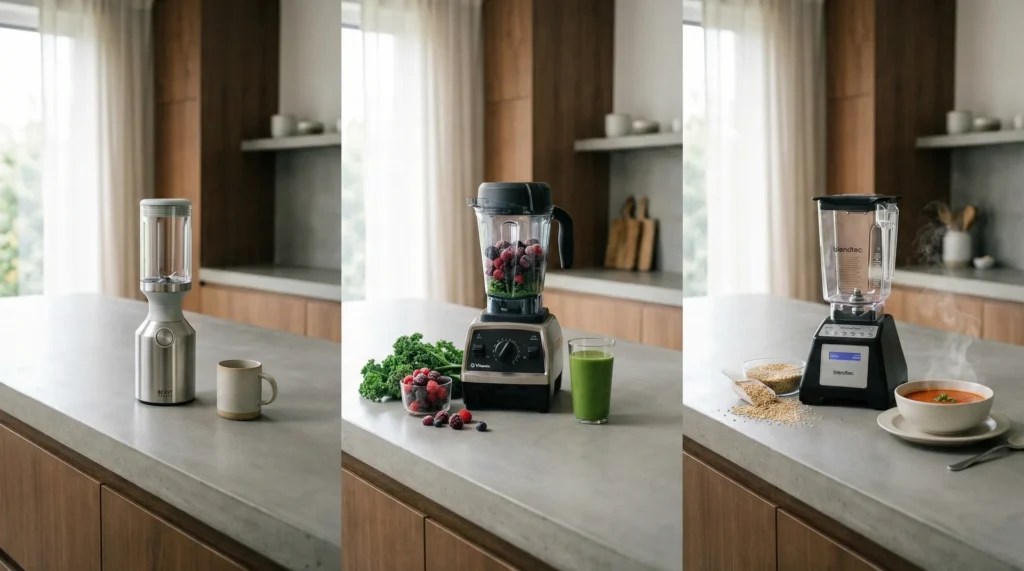
Before looking at spec sheets, you need to look at your countertop. How often will you actually use this thing? If you only make a margarita once a month, your needs are vastly different from someone who starts every morning with a kale and frozen berry blast. We like to categorize users into three main buckets: the minimalist, the daily ritualist, and the culinary powerhouse.
The minimalist usually wants something small that hides away in a cabinet. They prioritize ease of cleaning over raw power. The daily ritualist needs reliability; they need a machine that can handle frozen fruit day in and day out without the motor giving up. Finally, the culinary powerhouse is looking for a machine that replaces other appliances. They want to make flours from grains, churn out hot soups through friction, and emulsify delicate sauces. Identifying where you fall on this spectrum is the first step toward narrowing down your search. If you want to see how different models stack up for various needs, check out our list of the best blenders currently available.
Understanding Blender Types
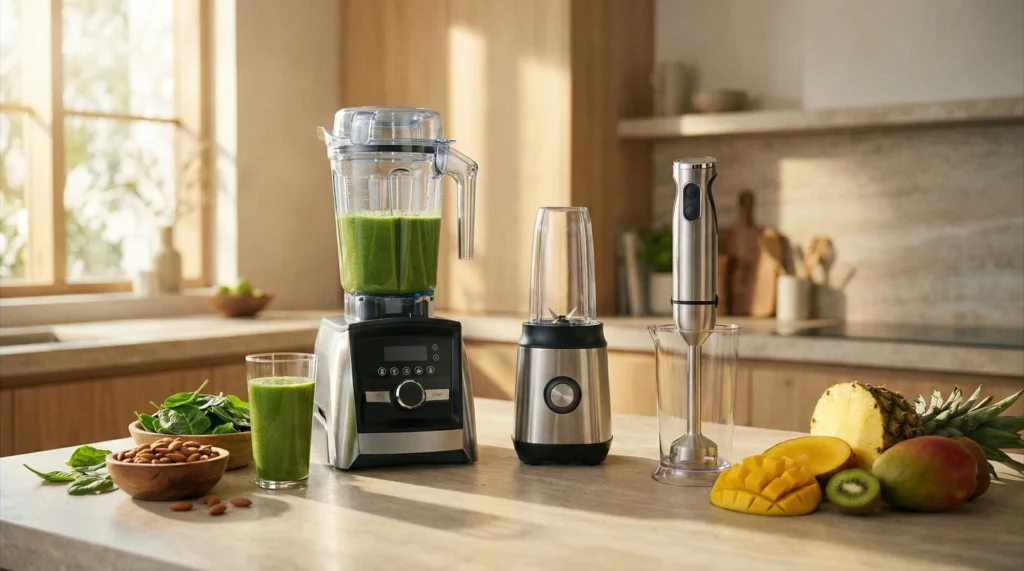
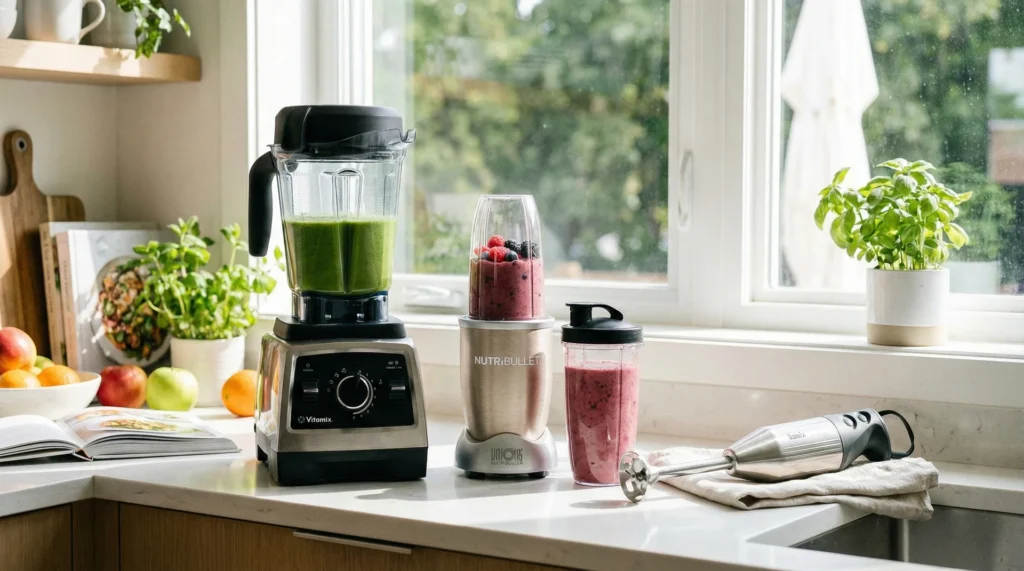
Blenders are generally categorized into three main formats: personal, countertop, and immersion. Each has a specific role in the kitchen, and understanding these roles will prevent you from overspending on features you might never use.
Personal and Bullet Blenders
Personal blenders have exploded in popularity over the last decade. These are typically compact units where the blending jar doubles as a travel cup. You fill the cup, screw on the blade assembly, flip it upside down, and blend. Once finished, you swap the blade for a travel lid and head out the door.
These are perfect for individuals or couples who focus on single-serve smoothies. They are easy to store and usually much more affordable. However, they struggle with heavy-duty tasks like crushing large amounts of ice without liquid or making thick mixtures like hummus. If your lifestyle is fast-paced and your diet is smoothie-heavy, this is likely your best bet.
Full-Size Countertop Blenders
This is the classic blender most of us grew up with, but modern versions are significantly more powerful. These units feature a large motor base and a jar that typically holds between 48 and 72 ounces. Within this category, you have standard household models and high-performance professional models.
A standard countertop blender is great for family-sized batches of milkshakes or frozen drinks. High-performance models, however, are the gold standard. They can pulverize seeds, turn almonds into butter, and even heat up soup through the sheer speed of the blades. When people talk about the best blenders for versatile cooking, they are almost always referring to these high-performance workhorses. They are an investment, but for many, they become the most-used tool in the kitchen.
Immersion or Hand Blenders
Immersion blenders are long, wand-like devices that you submerge directly into a pot, bowl, or beaker. They are the ultimate tool for soup lovers. Instead of transferring boiling liquid into a blender jar (which can be dangerous if not vented properly), you can blend right in the stockpot. They are also excellent for small tasks like whisking a single egg or making a quick vinaigrette. While they can't replace a high-powered countertop unit for frozen smoothies, they are a fantastic secondary tool for any home cook.
Key Technical Specifications
Once you have decided on the type of blender, it is time to look under the hood. It is easy to get caught up in marketing jargon, but a few specific metrics actually matter for performance and longevity.
Power and Wattage Explained
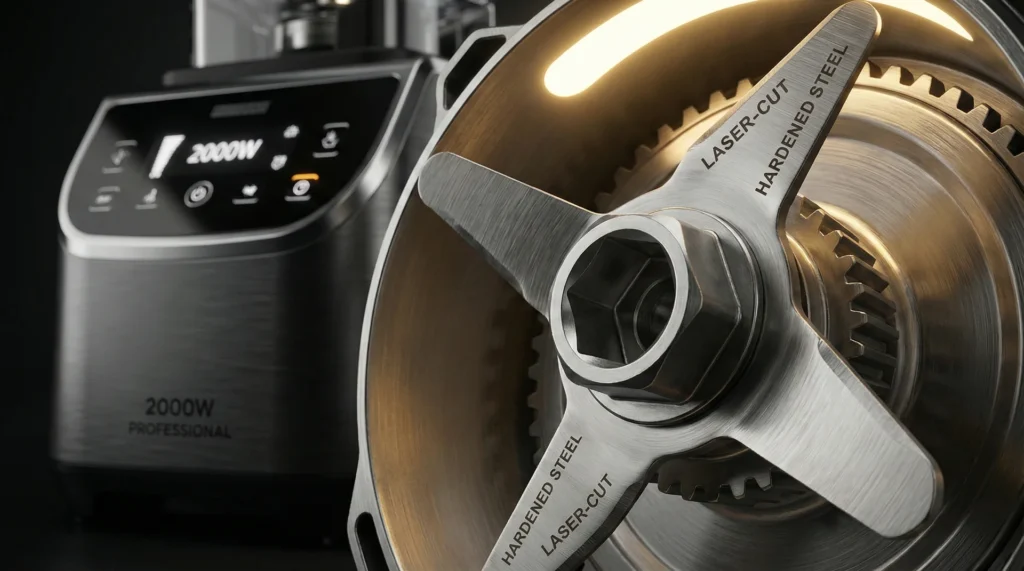
Wattage is the most common way manufacturers measure power, but it can be misleading. A higher wattage usually means a more powerful motor, but efficiency matters too. Generally, for a countertop blender, you want at least 500 to 700 watts for basic tasks. If you plan on crushing ice frequently or blending tough greens like kale into a smooth liquid, you should look for something in the 1,000 to 1,500-watt range.
High-performance blenders often measure power in horsepower (HP). A 2.0 or 3.0 HP motor provides the torque necessary to keep the blades spinning even when the jar is packed with dense ingredients. This prevents the motor from overheating, which is the number one killer of cheaper blenders.
Blade Design and Material
You might think sharper is better, but in the world of high-speed blending, blunt force is often more effective. High-end blenders use thick, stainless steel blades that are designed to pulverize rather than slice. The durability of the blade and the quality of the bearing assembly (the part that connects the blade to the motor) are critical. Look for all-metal drives; plastic gears tend to strip over time under heavy loads.
Jar Capacity and Composition
Blender jars are typically made of glass, plastic, or stainless steel. Glass is heavy and won't scratch or absorb odors, but it can shatter if dropped. Plastic is the most common, specifically BPA-free Tritan copolyester. It is lightweight, virtually indestructible, and clear. However, it can become cloudy over time if you frequently blend abrasive ingredients like grains or nuts. Stainless steel is the most durable and great for temperature retention, but you can't see what's happening inside while you blend.
User Interface and Features
The way you interact with your blender can make or break the experience. Some people prefer the tactile feel of a physical toggle switch, while others love the modern look of a touchscreen. Beyond aesthetics, consider the functionality of the controls.
Speed Settings and Pulse
Variable speed control is a game-changer. It allows you to start slow to incorporate ingredients and then ramp up to high speed to achieve a silky texture. The pulse button is equally important for tasks that require precision, like chopping vegetables for salsa without turning them into a puree.
Pre-Programmed Settings
Many modern blenders come with "Walk-Away" convenience. These are pre-set cycles for smoothies, hot soups, or frozen desserts. You press the button, and the blender automatically varies its speed and duration before shutting itself off. While not strictly necessary, it is a fantastic feature for busy mornings when you are trying to get the kids ready while the blender handles your breakfast.
Cleaning and Maintenance
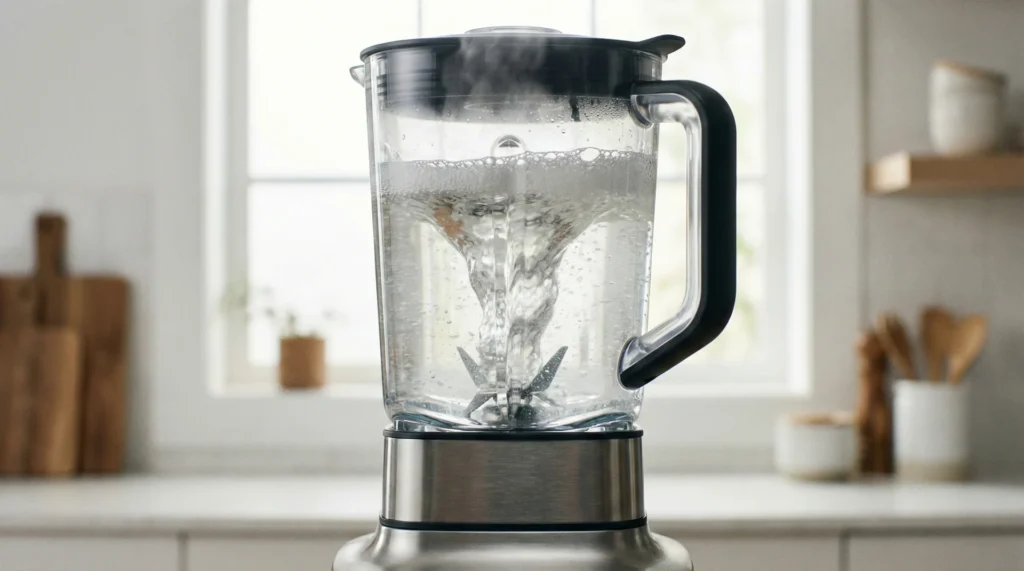
If a blender is hard to clean, you won't use it. Period. Many high-performance blenders feature a self-cleaning cycle: you simply add a drop of dish soap and some warm water, then run it on high for thirty seconds. This is often more effective than putting the jar in the dishwasher, as the high-speed vortex reaches under the blades where food particles tend to hide.
Check if the blade assembly is removable. While some prefer this for deep cleaning, it can also introduce more points of failure for leaks. Fixed-blade designs are generally more leak-proof and are easily cleaned using the soapy water method mentioned above.
Noise Levels and Footprint
Let's be honest: blenders are loud. If you live in a small apartment or have early-rising family members, a high-decibel motor can be a major deterrent. Some premium models offer noise-reduction enclosures (clear plastic domes that sit over the jar), but these significantly increase the footprint of the machine. Always check the height of the blender with the jar attached to ensure it will fit under your kitchen cabinets.
Final Verdict on Your Purchase
Choosing the right blender is an exercise in balancing power, convenience, and cost. Do not feel pressured to buy the most expensive model on the market if you only plan on making occasional fruit smoothies. Conversely, don't skimp on a budget model if you know you want to explore the world of homemade nut butters and flours. A high-quality blender is one of the few kitchen tools that can truly change how you eat, making it easier to consume whole fruits and vegetables in delicious ways. Take the time to assess your habits, measure your space, and choose a tool that will serve you for years to come.