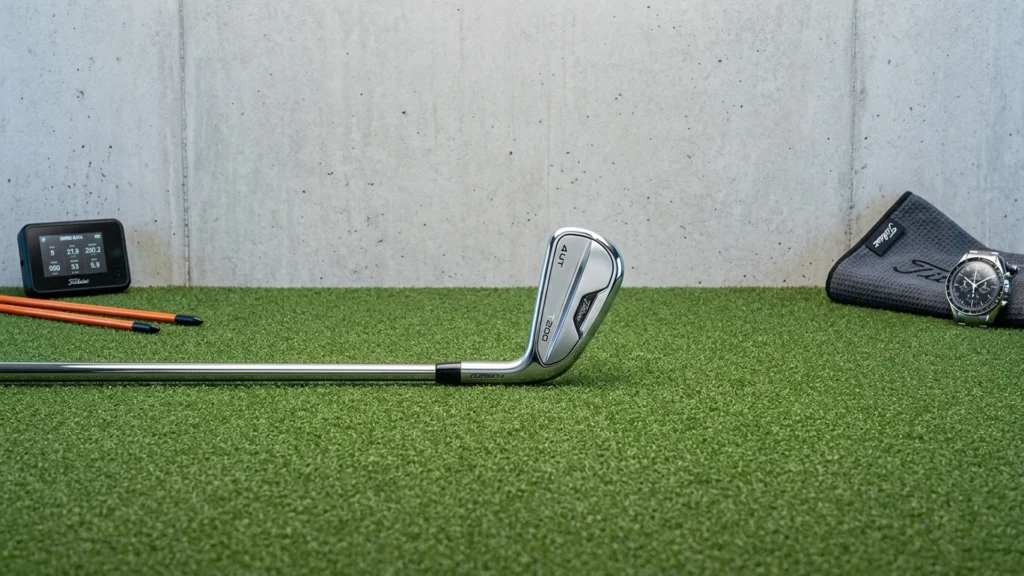
Golf Irons for Utility are the mid and long iron replacements that sit between your fairway woods and your regular irons. They are built to keep your ball moving on shots that do not match a perfect lie. Buyers in this sub-category usually want playable turf interaction, reliable launch from rough or tight grass, and yardage overlap they can trust.
The hard part is trade-offs. Utility heads are often more compact than game improvement irons, so face contact quality still matters. Higher flight designs can help carry, but they can also change how spin and descent feel at different lofts. You also need to think about gapping, because one wrong loft or shaft choice can leave you with hard-to-hit carry distances.
Use this guide to narrow your options to utility irons that fit your swing and your set gaps, then compare them using the same factors as the main list: Looking for all types? See our Best Golf Irons.
Quick Overview
Our Top Picks
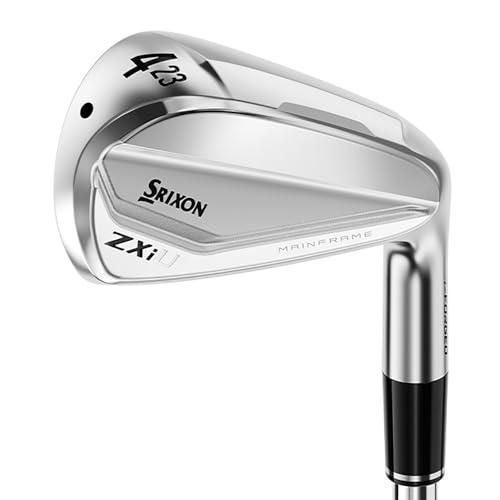
#1. Srixon ZXiU Utility (2025) Utility Iron
Specifications
| Brand | Srixon |
|---|---|
| Iron Type | Utility |
| Set Makeup | #4 |
| Head Design | Hollow Body |
| Shaft Material | Graphite |
| Shaft Flex | Regular |
| Hand Orientation | Right Hand |
Pros
- Reliable launch and carry
- Clean sound and feedback
- Cavity-back forgiveness
Cons
- Limited set coverage
- Hollow feel
Srixon ZXiU Utility (2025) Utility Iron is a standout choice for golfers who want easy launch from a utility iron without giving up consistent ball flight. The hollow-body design helps keep carry steady, even when contact is not perfect, and the set stays fairly usable for gapping. Impact feedback is also a strong point, with a clean sound and solid feel that many players find more satisfying than harsh or hollow-sounding utilities.
The main trade-off is coverage. The set makeup focuses on a utility slot, not a full iron progression, so pairing it with the rest of your irons matters. It also has a more hollow feel than traditional cavity backs, which some players will like and others may find less connected. This is best for mid to higher swing speed golfers who want a dependable utility option for longer second shots and tighter lies.
#2. TaylorMade P-UDI Utility Iron

Specifications
| Brand | TaylorMade |
|---|---|
| Iron Type | Utility |
| Set Makeup | #2 |
| Head Design | Hollow Body |
| Shaft Material | Graphite |
| Shaft Flex | X-Stiff |
| Hand Orientation | Right Hand |
Pros
- Reliable launch and carry
- Cavity-back forgiveness
- Worth the price tag
Cons
- Too stiff for most
- Setup-dependent performance
- Off-center sound penalty
The TaylorMade P-UDI Utility Iron stands out for utility players because it blends a hollow-body design with cavity-back style help for easier launch and carrying distance. In this niche, that matters because you are often hitting these clubs from tighter lies or under pressure. The result is a more consistent ball flight and solid gapping feel through the set, even when your strike is not perfect.
The trade-off is fit and timing. The X-stiff graphite build can feel too boardy for many golfers, and the performance can vary when your setup is off. Toe and heel contact are still more forgiving than a more blade-like utility option, but center strikes still sound and feel best. If you play with a faster tempo and like a controlled, repeatable setup, this is a strong utility choice; if you need something softer to help you launch, look elsewhere.
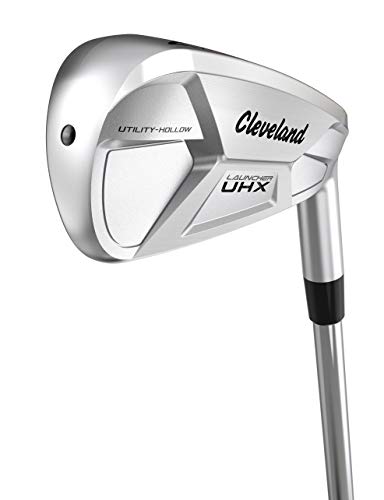
#3. Cleveland Golf 11191956 Utility Iron
Specifications
| Brand | Cleveland Golf |
|---|---|
| Iron Type | Utility |
| Head Design | Hollow Body |
| Hand Orientation | Right Hand |
Pros
- Reliable launch and carry
- Durable finish and alignment
- Worth the price tag
Cons
- Short-iron fliers
- Limited model evidence
The Cleveland Golf 11191956 Utility Iron stands out in the utility-iron space because it delivers dependable launch and carry without feeling like a specialty club. The hollow-body design helps the ball come out on a consistent trajectory, and golfers tend to get steady gapping across the utility span. Build quality also looks solid, with durable finish work and alignment that stays true at address.
The main trade-off shows up higher in the set. Short-iron fliers can happen when contact is not crisp, and the design seems less forgiving than the longer-iron feel. This makes it a better fit for players who want help from tough lies or occasional longer approaches, but who still want enough control to shape shots when they need to.
#4. Titleist U-505 (2023) Utility Iron

Specifications
| Brand | Titleist |
|---|---|
| Iron Type | Utility |
| Head Design | Hollow Body |
| Shaft Flex | Stiff |
| Hand Orientation | Right Hand |
Pros
- Reliable launch and carry
- Clean sound and feedback
- Worth the price tag
Cons
- Some dispersion on misses
- Learning curve risk
- Shaft-dependent feel
The Titleist U-505 Utility Iron stands out in this utility-iron space for how dependable it feels on full swings. You get a clean, repeatable launch and solid carry, which matters when the club is meant to cover gaps from the rough fringe to the middle of the fairway. Impact sound and feedback are also tidy and clear, so it is easier to tell when you struck the face well and when you did not.
The main trade-off is miss forgiveness. You can see some dispersion on toe and heel strikes, so you still need decent contact to keep distance tight. There is also a learning curve if you are used to more traditional, more forgiving hybrids or easier utility irons. Shaft choice affects feel too, so the wrong flex can make it feel less smooth and more demanding than expected.
#5. TaylorMade P?UDI Utility Iron

Specifications
| Brand | TaylorMade |
|---|---|
| Iron Type | Utility |
| Set Makeup | #3 |
| Shaft Material | Graphite |
| Shaft Flex | Stiff |
| Hand Orientation | Right Hand |
Pros
- Worth the price tag
- Graphite launch boost
- Penetrating trajectory
Cons
- Clicky mishits
- Strike-dependent feel
The TaylorMade PUDI Utility Iron stands out in the Golf Irons for Utility category because it mixes a graphite build with a utility-style, penetrating launch. That combination helps you get the ball airborne without needing a perfect strike. In a set where long irons can feel hard to control, the result is steadier distance gapping and a lower, more forward ball flight that holds up well through the turf.
The main trade-off is feel. Off-center hits can come across clicky, and the feedback gets less useful when your strike varies. That makes it best for golfers who want help with launch and carry, but who still can repeat their contact. If you mostly hit from the toe or heel, a more forgiving utility iron may be the smoother choice.
#6. TaylorMade Stealth DHY Utility Iron

Specifications
| Brand | TaylorMade |
|---|---|
| Iron Type | Utility |
| Set Makeup | #4 |
| Shaft Flex | Regular |
| Hand Orientation | Right Hand |
Pros
- Worth the price tag
- Iron-like feel
- Clear feedback
Cons
- Inconsistent peak performance
- Mixed test results
- Limited set coverage
In a utility iron category where players want one club to do more jobs, the TaylorMade Stealth DHY stands out for its iron-like feel and clear strike feedback. Shots tend to launch with a predictable start, and the impact sensation makes it easier to judge where the face met the ball. That combination is useful when you need consistent results from tight lies, fairway rough, or distance gaps between your irons.
The trade-off is that results can swing from one shot or testing session to the next. That shows up as mixed peak performance and limited set coverage, so it may not be the best choice if you want one model to cover every gap from your lower long iron down through your mid irons. If you want a utility iron for specific distances and you are comfortable matching it with the rest of your iron set, it fits the job well.
#7. Cobra R6811RGS3 Utility Iron

Specifications
| Brand | COBRA |
|---|---|
| Iron Type | Utility |
| Head Design | Hollow Body |
Pros
- Worth the price tag
- Cavity-back forgiveness
Cons
- Less forgiving for high-handicaps
- Limited model-specific data
Cobra R6811RGS3 Utility Iron stands out for a utility category trait: hollow-body cavity-back help. It uses that more forgiving shape to keep distance more stable when contact is not perfect. On shots from average lies, the ball tends to launch with less fight, and gapping feels more consistent than you would expect from a more specialized utility-style iron.
The main trade-off is forgiveness. This is not the best pick for high-handicap golfers who miss the face often and need maximum help on off-center strikes. It also has limited model-specific data, so fitting and shaft choice matter if you want it to perform like a reliable part of your scoring setup.
What to Look For
Distance gapping across lofts: Utility irons are a bridge, not an extra-long replacement. Check how the model stacks through the set and make sure it closes the gap between your last fairway wood carry and your next regular iron carry.
Launch that fits your swing speed: Look for a head and shaft combo that gets the ball up without ballooning. If you struggle to carry, prioritize easier launch and higher playable trajectory. If you already launch high, favor a flatter, more controlled flight option.
Face-to-path forgiveness on mishits: On off-center strikes, utility irons should lose less speed and keep the ball from peeling sideways. Favor models known for stable ball speed and tighter dispersion on toe and heel contact.
Spin and stopping power: Your utility iron still needs to hold greens on shorter shots and stop on firmer approach conditions. Choose based on how the iron performs for your usual swing and turf, not just carry distance.
Build consistency and adjustable fit: Utility clubs often cover big yardage ranges, so loft and lie consistency matters. If the model offers fitting support, use it to match lie angle and shaft flex to your strike pattern for more repeatable results.
How We Picked
Products were identified through broad research across review sites and buyer forums, then filtered to only those that qualify as Golf Irons for Utility. That means clubs positioned as long-iron or hybrid-like iron replacements, aimed at bridging set gaps with better launch and more reliable contact than traditional long irons.
Scoring used the same objective pillar framework as the main Golf Irons post, allowing direct comparison of products within this sub-category. Performance, forgiveness, feel, build quality, and value were weighted to reflect what utility buyers care about most: stable distance, dependable direction on imperfect contact, and a set build that stays consistent from one loft to the next.
Frequently Asked Questions
What is a utility iron, and where does it fit in my bag?
A utility iron is built to replace hard-to-hit long irons. Most golfers use it from about 2 iron to 5 iron range. It helps you get more consistent distance and easier launch on tougher shots. It also smooths the yardage gaps between your fairway woods and your regular irons.
How do utility irons differ from traditional long irons?
Utility irons usually use a more forgiving head shape and stronger help for launch. Many also offer better distance gapping because the flight is easier to control. You will often see designs that focus on ball speed across more parts of the face. That means less drop off on toe and heel strikes.
Do utility irons need the same swing speed as my regular irons?
No. Utility irons are designed to work for a wider range of swing speeds. They tend to be easier to get airborne, which helps even when you do not generate perfect speed. Still, pick the loft and shaft flex that match your typical iron ball flight.
How should I choose the right loft for a utility iron?
Start with your current longest iron and your most common distances from the course. Many golfers choose utility lofts that land around the yardage of a 2 to 4 iron. If you gap too close, you will lose scoring chances. If you gap too far, you will face uncomfortable carries.
How do utility irons compare to game improvement irons?
Game improvement irons help across the whole set, especially mid irons. Utility irons focus on the long end where launch and consistency get harder. If you struggle from the fairway with 4 to 7 irons, game improvement may fit better. If your main issue is long iron distance and height, utility irons usually make more sense.
When should I switch to a different iron type instead of a utility iron?
Consider a different type if you already hit your long irons high and straight. If you struggle more with approach distance control from wedges and short irons, you may need a more forgiving short iron model. If you need maximum help launching from the rough, hybrids or fairway woods may work better. Pick utility when you want iron-like feel with easier distance in the long clubs.