




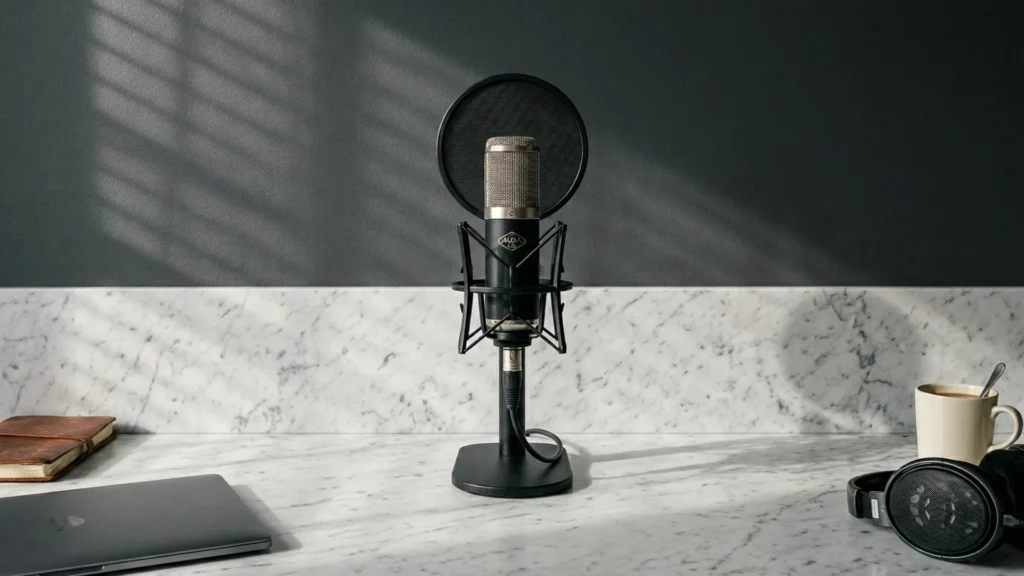
Microphones turn your voice and instruments into audio you can record, stream, or amplify. In practice, the best choice depends on how the mic picks up sound, how it connects to your gear, and how it behaves under loud or close-up sources. Good mics stay clear and steady, even when the room is noisy.
Picking one is hard because specs can mislead. Frequency response ranges do not tell you how harsh the highs will feel or how well the mic controls s, p, and t sounds. Max SPL helps, but only if you use the right microphone type for the job. Sensitivity and self-noise also matter, yet many listings skip the details or bury them in charts. On top of that, power needs, connector types, and mounting choices can make a “simple” purchase turn into frustrating setup.
This guide helps you sort microphone options by what actually affects results. You will learn what to look for, how to compare mics with consistent criteria, and how we selected models that cover distinct roles. The end result is a short list you can match to vocals, podcasting, streaming, or instruments without guessing.
Quick Overview
Top Picks
Best Overall

Specifications
| Brand | Shure |
|---|---|
| Microphone Type | Dynamic |
| Form Factor | Handheld |
| Polar Pattern | Cardioid |
| Connector Type | XLR |
| Sensitivity | -56 dBV/Pa |
Pros
- Balanced, detailed and clean
- Sturdy metal and secure cable
- Plug-and-play with stable mounting
Cons
- Low sensitivity
- Technique-dependent sound
- Placement variability
As a Best Overall pick, the Shure SM57 fits because it nails the basics of recording loud, real-world sources with a steady, dependable sound. It uses a classic cardioid dynamic design, which helps keep unwanted room noise under control while still sounding natural up close.
Sound quality stays balanced and detailed, with a clean mid-forward character that works well for many voices and instruments. The build feels road-ready, with a sturdy metal body and a secure cable connection that resists handling noise. It is also straightforward in daily use, with plug-and-play behavior and stable mounting so you can set it and move on.
The main downside is low sensitivity, so you may need more gain than with higher-output mics. It can also be technique dependent, meaning small changes in distance and angle can shift tone. If you want one reliable dynamic XLR mic for everyday vocals, amps, and general recording without a fussy setup, this is the one to get.
Also ranked #1 in: Dynamic Handheld Microphones
Best Premium

Specifications
| Brand | Neumann |
|---|---|
| Microphone Type | Condenser |
| Polar Pattern | Omnidirectional / Cardioid / Figure-8 |
| Power Source | Phantom Power |
| Sensitivity | 20/28/22 mV/Pa |
| Max Spl | 127 dB SPL |
Pros
- Crystal-clear, natural vocals
- Sturdy metal and secure cable
- Plug-and-play with stable mounting
Cons
- Phantom power dependence
- Struggles with loud sources
- Untreated-room sensitivity
This is the kind of studio condenser that fits the Best Premium slot for one big reason, its natural, crystal-clear vocal sound. The Neumann U87 AI is also multi-pattern, with selectable pickup options that help you shape tone without swapping mics.
You get detailed, clean results with strong transient response, which helps vocals stay present and readable. The build feels serious, with a sturdy metal body and a secure cable connection. Day to day use is also smooth, since it is plug-and-play with stable mounting, so positioning tweaks are quick.
The trade-off is sensitivity to real rooms. It can also struggle with loud sources, and it depends on phantom power to work. If you record in a controlled space and want a top-tier vocal mic that stays natural, this is the one to get.
Best XLR Condenser

Specifications
| Brand | AKG |
|---|---|
| Microphone Type | Condenser |
| Polar Pattern | Cardioid |
| Connector Type | XLR |
| Power Source | Phantom Power |
| Frequency Response | 20 Hz - 20000 Hz |
| Sensitivity | 20 mV/Pa |
| Max Spl | 156 dB SPL |
Pros
- Balanced, detailed and clean
- Flexible pattern for varied use
- Plug-and-play with stable mounting
Cons
- No included shock mount
- Limited low-cut frequency
- Brightness tonal tilt
This AKG C214 fits the Best XLR Condenser role because it is a classic cardioid studio condenser with clean, detailed vocal sound. The cardioid pattern helps focus on the front of the mic, which makes it easier to record speech and singing without as much room noise.
You get a balanced, detailed, and clean tone with strong clarity in the mids and highs. It also holds up well for louder sources, with a max SPL rating of 156 dB SPL. Setup is straightforward since it uses standard XLR and runs on phantom power, and the mounting is stable enough to stay put once positioned.
The main downside is that it can lean bright, and the low-cut option is not very flexible, since the low-cut frequency range is limited. If you want an XLR condenser for vocals and speech with a focused cardioid pickup, this is a strong choice, especially if you can control distance and EQ to tame the top end.
Best USB Condenser

Specifications
| Brand | Rode |
|---|---|
| Microphone Type | Condenser |
| Form Factor | Desktop |
| Polar Pattern | Cardioid |
| Connector Type | USB-C |
| Power Source | USB Bus Power |
| Frequency Response | 20 Hz - 20000 Hz |
| Max Spl | 118 dB SPL |
Pros
- Balanced, detailed and clean
- Plug-and-play with stable mounting
- Broad frequency response
Cons
- Struggles with loud sources
- Room-noise pickup
This RØDE NT-USB+ fits the Best USB Condenser slot for one main reason, it is truly plug-and-play. You get a cardioid desktop mic that works through USB-C power, so it is easy to start recording vocals or voice chat without an audio interface.
The sound stays balanced and detailed, with a clean, natural tone that works well for speech and singing. It also has a broad frequency response from 20 Hz to 20000 Hz, so you get more low-end weight than many budget USB mics. Build and day-to-day use are strong too, with stable mounting and setup that stays consistent from session to session.
The catch is that it struggles with very loud sources, and it can pick up more room noise than you might want. If you record in a reasonably quiet space and need a straightforward USB cardioid condenser for podcasts, streaming, or home vocals, this is a solid choice.
Best for Vlogging

Specifications
| Brand | Shure |
|---|---|
| Microphone Type | Condenser |
| Polar Pattern | Multi-Pattern |
| Connector Type | USB-C / Lightning |
| Frequency Response | 20 Hz - 20000 Hz |
| Max Spl | 120 dB SPL |
Pros
- Balanced, detailed and clean
- Plug-and-play with stable mounting
- Flexible pattern for varied use
Cons
- Struggles with loud sources
- App dependency friction
- Cable selection hassles
For vlogging, this kit shines because it pairs a multi-pattern condenser mic with plug-and-play USB-C and Lightning use. That combo makes it easy to switch pickup behavior based on your framing, whether you are close to the camera or talking across a room.
The sound stays balanced and detailed, with clear vocal capture and strong overall cleanliness. In use, the mounting is stable, so the mic does not feel like a constant adjustment job between takes. You also get pattern flexibility from the multi-pattern design, which helps when you want one setup for talking, another for interviews, or a different angle while walking.
Loud sources are a weak point, and the mic can struggle when you push it hard. There is also some app dependency, plus cable selection can take a little trial and error. If you want a crisp, flexible on-camera mic for speech and interviews, and you can keep volume controlled, this is the one to get.
Best for Podcasting

Specifications
| Brand | Shure |
|---|---|
| Microphone Type | Dynamic |
| Connector Type | USB-C / XLR |
| Frequency Response | 50 Hz - 16000 Hz |
| Sensitivity | -55 dBV/Pa |
| Max Spl | 128 dB SPL |
Pros
- Balanced, detailed and clean
- Plug-and-play with stable mounting
- Professional XLR connection
Cons
- Low sensitivity
- Struggles with loud sources
This is a strong match for podcasters who want one mic that works right away on a computer, but also keeps the door open for a more pro chain. The standout trait is its dual USB-C and XLR connection, so you can record clean speech in a simple setup, then switch to XLR later without replacing the mic.
The sound stays balanced and detailed for voice. It is a dynamic mic design that tends to stay steady and controlled at typical talking distances, and it avoids the harsh, splashy highs that can make long recordings feel fatiguing. Build and day-to-day use are both solid, with plug-and-play USB behavior and stable mounting so it is harder to introduce extra handling noise during takes.
The main downside is lower sensitivity, which can make quieter voices feel a bit demanding on gain. It also struggles when the source gets too loud, so you may need closer mic technique or careful levels. If you need a podcast mic that can do USB now and XLR later, without giving up clean, professional voice tone, this is the one to get.
Best with USB-C

Specifications
| Brand | SE ELECTRONICS |
|---|---|
| Microphone Type | Condenser |
| Form Factor | Desktop |
| Polar Pattern | Cardioid |
| Connector Type | USB-C |
| Power Source | USB Bus Power |
| Frequency Response | 20 Hz - 20000 Hz |
Pros
- Balanced, detailed and clean
- Sturdy metal and secure cable
- Plug-and-play with stable mounting
Cons
- Windows ASIO dependency
- Monitoring sounds better
This is a strong choice for the Best with USB-C slot because it is a simple USB-C condenser that works straight from your computer. No interface box is needed for everyday recording, streaming, and calls.
The sound lands in a good place, with balanced detail that keeps speech and vocals clear. Build feels solid, with a sturdy metal body and a secure USB-C cable connection. Setup is also smooth thanks to plug-and-play behavior and stable desktop mounting, so you can get consistent results with basic positioning.
The main catch is Windows ASIO dependency, which can complicate routing and low-latency use on some systems. Monitoring also sounds better on the output than on what you hear in the mic itself. If you want a clean, reliable USB-C desktop mic for vocals and podcast-style speech, and you are fine checking your Windows audio path, this is the one to get.
Best Value

Specifications
| Brand | Marengo |
|---|---|
| Microphone Type | Dynamic |
| Form Factor | Handheld |
| Polar Pattern | Cardioid |
| Connector Type | 1/4-inch jack / 1/4" to 1/8" TS connector |
| Power Source | Plug-In Power |
Pros
- Strong bundle, worth every dollar
- Comfortable handling
- Rugged feel
Cons
- Adapter incompatibility
- Output detection issues
- Less reliable consumer connection
This Marengo handheld wired mic earns a spot in the Best Value group because it focuses on practical use, with a comfortable grip and a straightforward, cardioid setup. It is a solid pick when you want one dependable mic for everyday speech and performance, without turning setup into a project.
Sound stays clear enough for vocals and speech, landing in the midrange for tonal detail and naturalness. Build quality feels sturdy, with a rugged body that should handle regular transport and handling noise. Usability is also strong, since it is plug-in powered and uses a 1/4-inch jack that works with common audio setups, plus its bundle support makes it easier to get rolling.
The main drawback is connection reliability, including adapter incompatibility and output detection issues on some consumer devices. If you need a rugged, comfortable wired handheld mic for live voice work and basic recording, and you can match the right adapter and cable, this is the one to get.
What to Look For
Sound Quality: Judge clarity and tonal balance, not just frequency range. Look for low self-noise, clean transients, and controlled sibilance and plosives. Also check how it sounds off-axis, because most recordings do not point straight at the capsule.
Build Quality: A microphone should handle daily handling and travel. Focus on the firmness of the grille, sturdy housing, and reliable connector. For wired models, pay attention to strain relief and how well the cable fits or locks.
Usability: Setup should fit your workflow. Confirm the form factor you want, the connector you need, and whether it requires phantom power or runs from USB. If you stream or record at home, prioritize stable mounting and straightforward gain control.Versatility: Choose pickup style and connectivity that match your environment. Cardioid and supercardioid help reject room noise for close talking. Omnidirectional or multi-pattern designs can be useful for small groups, but they pick up more room sound. Also make sure the connector and power source match your interface or mixer.
Microphone Type: Condensers tend to be more detailed and sensitive, which helps with quiet vocals and nuanced instruments. Dynamics often handle loud sources and rough rooms more easily. Ribbon mics deliver a distinct, smooth character, but they are more niche and setup-sensitive.
Polar Pattern: Use polar pattern to predict what gets captured. Cardioid focuses on one direction and reduces side noise. Supercardioid tightens that focus for louder or busier rooms. Omnidirectional captures evenly, which works for natural room sound but exposes more background noise.
Max SPL and Sensitivity: Max SPL tells you how much sound the mic can take before it distorts. Sensitivity affects how hot the mic output will be, which changes how hard you must drive your preamp. Pair these with your source volume so you do not clip your interface or add unnecessary gain noise.
How We Selected These Products
Products came from broad web searches across review sites, buyer forums, and best-of lists. We did not rely on a single source because lists often repeat the same models and ignore context.
We read a large volume of real customer reviews to learn what problems buyers actually hit, like noisy gain, harsh highs, weak off-axis rejection, fragile cables, or annoying power requirements. We also verified availability and key specifications directly against Amazon listings.
Each microphone was scored across the pillar names in this guide using an objective framework. Final curation favored models that perform in distinct roles, such as a clear vocal option, a strong USB choice, or a reliable option for instruments, rather than simply ranking by a single overall score.
Frequently Asked Questions
Which microphone is best for an instrument recording, like a guitar amp or snare?
A dynamic cardioid mic usually fits this job best. It handles loud sources well and does not pick up as much room sound. The Shure SM57 Instrument Microphone stands out in this category because users consistently praise its punch and clarity on amps and drums.
What is the main difference between a budget USB microphone and a premium XLR condenser?
Budget USB mics are easiest to plug in and start recording. Premium XLR condensers usually deliver more detail and more control over studio sound. You also often need phantom power and an audio interface for XLR condensers.
Do microphones need maintenance or special care to keep them sounding good?
Yes, simple care helps a lot. Keep the grille clean and avoid blowing dust into the capsule. Store the mic safely, and use a pop filter for vocals to reduce spit and plosives.
Is a higher price always better for microphones?
Not always. Higher prices often improve sound polish and build, but you still might not get the right sound for your use. For example, the Shure SM57 Instrument Microphone delivers top results for instruments at a much lower price than flagship studio condensers.
Why do many microphones score differently for sound quality versus value?
A mic can sound great but still cost a lot. Premium models may also require extra gear like an interface, and that lowers overall value. Meanwhile, some strong performers cost less and still deliver clear, usable audio.


