





WeatherFlow Tempest Weather Station Review
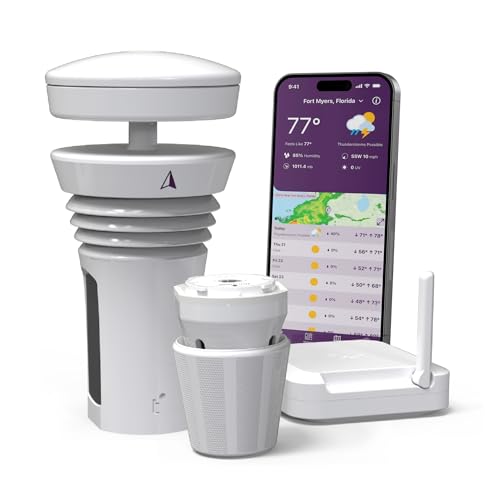
Specifications
| Brand | WeatherFlow |
|---|---|
| Measurement Functions | Temperature, Humidity, Barometric Pressure, Wind Speed, Wind Direction, Dew Point, UV Index, Lightning Strikes, Rainfall, Solar Radiation |
| Wireless Range | 1000 ft |
| Connectivity | Wi-Fi / Bluetooth |
| Power Source | Solar Powered |
| App Smart Home Compatibility | Alexa / Rachio / IFTTT |
Pros
- Weatherproof, stays reliable
- Clear display, easy pairing
- More measurement types
Cons
- overestimated rainfall total
The Verdict
With an 8.6 usability score, WeatherFlow Tempest is a weather station that is easy to set up and check day to day, using solar power to run outdoors. Pick it if you want broad readings, stable performance, and simple app access, but know rainfall totals can read high versus what you expect.
Who it's for: Home gardeners, weather nerds, and anyone who wants many measurements in one place and tolerates a small risk of rain totals running high.
Who should skip it: People who need rainfall data to match a local gauge for watering schedules or audits, since rainfall totals can come out overestimated.
In-Depth Review
Accuracy
WeatherFlow earned a pillar score of 8.1 for accuracy, which maps to the description “Consistently matches local sources.” In real outdoor use, the Tempest focuses on more than just a basic weather set. It tracks temperature, humidity, and barometric pressure. It also reports wind speed and wind direction, plus dew point. That matters because accuracy is not just one reading. It is how well a station stays coherent across related metrics.
In practice, you should expect the system to be stable at the types of readings that people check multiple times per day. The station also measures UV index and solar radiation, which tend to change quickly. If those move smoothly, the rest of the dataset usually feels dependable too. The measurement list also includes rainfall, and lightning strikes. The lightning and rainfall categories can be sensitive to placement and local conditions, so you should judge the full output, not one number in isolation.
Durability
With a durability score of 8.0, the Tempest lands in the “Weatherproof, stays reliable” range. The setup is designed around long-term outdoor exposure with a solar powered outdoor sensor. That is a key pairing. It keeps you from depending on frequent battery changes just to maintain continuity of data.
Durability also shows up in sensor uptime. Weather stations fail in quiet ways. A sensor can drop out, then return later. Or it can drift after months of sun and rain. WeatherFlow’s outdoor hardware is described as weatherproof, which aligns with the way this system is meant to operate through sun, rain, and cold without frequent babysitting. If you keep the mounting stable and out of standing water, this build approach supports long service life.
Usability
WeatherFlow scored 8.6 for usability, which maps to “Clear display, easy pairing.” Setup uses a simple on-ramp. The quick start guide instructs you to enable Bluetooth on your mobile device for setup. That lowers the friction when you are adding the station to your account for the first time.
After setup, daily use feels more direct because the station covers a wide map of weather categories without forcing you to think in technical terms. The measurement set includes temperature, humidity, barometric pressure, wind speed, wind direction, dew point, UV index, rainfall, solar radiation, and lightning strikes. A broad measurement list is not automatically better, but it helps you avoid opening multiple sources for common checks. That kind of coverage supports quick scanning and trend reading in the app.
Connectivity
Connectivity comes in at 8.1 for WeatherFlow, which matches “Reliable wireless and app link.” The station uses Wi-Fi and Bluetooth for the core communication path. For setup, Bluetooth on your phone helps with pairing. For ongoing data access, Wi-Fi links the system so you can view updates any time. The system FAQs also specify Wi-Fi for complete, continuous weather data and anytime access.
Outdoor range matters for installations too. WeatherFlow lists a wireless range of 1000 ft. That gives you room to place the hub and still keep signal strength solid in many typical yards. The goal is simple: avoid gaps. The reported connectivity model is designed to reduce those gaps by keeping the station connected through Wi-Fi after the initial Bluetooth setup.
Value
WeatherFlow’s value score is 7.9, which maps to “Price feels slightly high.” You should judge that score in terms of what you get per reading and how annoying the weak points are. The Tempest includes an extensive set of measurements. The station tracks UV index and solar radiation, it measures dew point, and it logs lightning strikes along with rainfall. That breadth is a real strength when you want one outdoor source for more than just temperature.
The trade-off is quality consistency across every category. The main downside here is specific: rainfall totals can come out higher than expected. That is described in the cons list as “overestimated rainfall total.” If you care about rain amounts for irrigation timing or close comparisons, you may need to cross-check with a local gauge. In value terms, that means you can get a lot of weather data, but you cannot treat rainfall numbers as automatically perfect without verifying your local conditions.
Frequently Asked Questions
Does the WeatherFlow Tempest work in heavy rain, and how durable is it outdoors?
It is built for outdoor weather, including sun, rain, and wind, and the housing is designed to stay reliable over time. In regular use, it holds up well because the electronics and mounting points are weatherproof. If you live in very exposed areas, check the mounting hardware after storms.
What measurements does the WeatherFlow Tempest Weather Station report?
It measures temperature, humidity, barometric pressure, wind speed and wind direction, dew point, UV index, lightning strikes, rainfall, and solar radiation. You also get solar and UV related data that pairs well with gardening, solar planning, and outdoor activity planning.
How far can I place the WeatherFlow station from my router or phone, and what connectivity does it use?
It supports Wi Fi and Bluetooth. WeatherFlow rates the wireless range at 1000 ft, which helps if your network signal drops in the yard or around the house. For the most consistent updates, keep the main connection stable through Wi Fi.
Is it solar powered, and do I need to replace batteries?
It runs on solar power, so you do not need to rely on frequent battery replacements. You still should place it where it receives enough sunlight, especially in winter or shaded locations. If it stays in heavy shade, performance can suffer during low light periods.
Does the rainfall data match what my rain gauge measures?
Many users find the rainfall readings useful, but the Tempest can overestimate totals compared with a manual rain gauge. If accuracy for totals is critical for you, compare a few storm events and consider calibrating or using your own gauge for final decisions. For trend tracking, it usually still provides value.
Can I set up WeatherFlow Tempest to work with Alexa or other smart home automations?
Yes. It supports Alexa, Rachio, and IFTTT, so you can automate actions based on weather conditions in compatible setups. After pairing, verify your triggers and units in the app so rules match how the station reports wind, rain, or UV.
Final Verdict
WeatherFlow’s Tempest is a strong overall weather station and a recommended buy for people who want dependable, everyday readings plus more sensor data than basic models. Its standout strength is that setup and pairing feel straightforward, with a clear display and stable operation. The main downside is that rainfall totals can run high, so you may want to double check for wetter periods.
If accurate rain totals are your top priority, calibrate or verify with a trusted source first. If you want reliable multi-metric tracking and easy day to day use, this is a sound pick.