




Smart ovens are built around more than basic heat. They add connected controls, guided cooking programs, or temperature sensing that helps you keep results stable across multiple cooks.
Choosing one is hard because the biggest differences show up in the details. Smart features can improve convenience, but they also add settings complexity. Convection and air flow matter more than marketing names. Broil strength, heat recovery, and clean-up design still decide whether the oven fits your weekly routine.
To keep the scope right for this page, this guide focuses on smart controls plus real cooking performance. Looking for all types? See our Best Ovens.
Quick Overview
Our Top Picks
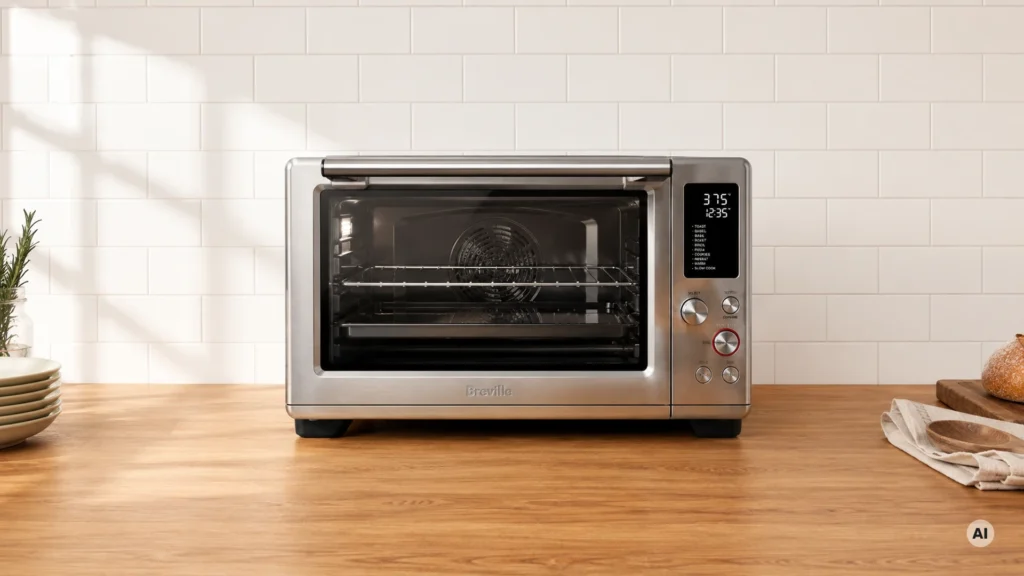
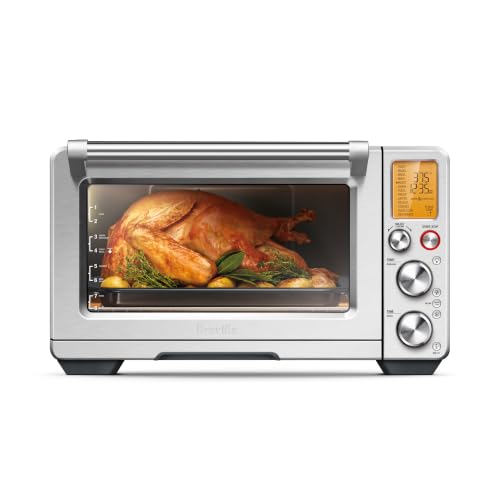
#1. Breville Smart Oven Air Fryer Pro Oven
Specifications
| Brand | Breville |
|---|---|
| Oven Type | Countertop Oven |
| Fuel Type | Electric |
| Capacity | 1 cu ft |
| Cooking Modes | Toast, Bagel, Broil, Bake, Roast, Warm, Pizza, Proof, Air Fry, Reheat, Cookies, Slow Cook, Dehydrate |
Pros
- Accurate temps, steady cooking
- Sturdy parts, tight seals
- Great value for the build
Cons
- Limited capacity
- Not full-size capability
- Air-fry airflow mismatch
When you want a countertop smart oven that behaves like a real oven, this Breville stands out. It keeps set temperatures steady and cooks evenly, so baking, roasting, broiling, and reheating feel predictable. The Air Fry mode is also easy to use, and it pairs well with everyday presets like Toast, Bagel, Pizza, Proof, and Dehydrate.
The main trade-off is size. With about 1 cu ft of space, you have to cook smaller batches, and it is not a full-size replacement for a range oven. Some users also notice airflow mismatch for air frying, so results can vary depending on what you cook and how you load the tray.
#2. CHEF iQ MiniOven 11" Toaster Oven

Specifications
| Brand | CHEF iQ |
|---|---|
| Oven Type | Toaster Oven |
| Fuel Type | Electric |
| Temperature Range | 70-500 °F |
| Cooking Modes | Bake, Broil, Air Fry, Dehydrate, Roast, Proof, Toast, Slow Cook |
Pros
- Accurate temps, steady cooking
- Great value for the build
- More versatile modes
Cons
- Not full-size capability
- WiFi setup friction
- Probe stabilization lag
The CHEF iQ MiniOven 11 stands out in the smart toaster-oven lane because it keeps temperature steady while cooking. That matters when you rely on automatic timing and consistent results for everyday meals like toast, roast, and slow cook. In real use, it holds set temps well and heats evenly, so you spend less time tweaking rack position or checking early. The set of modes is also a strong fit for small-space cooking, including Air Fry, Dehydrate, Proof, Bake, Broil, and Roast.
That said, it is not full-size, so big sheet pans and larger roasts may not fit comfortably. Smart setup can also be a hurdle if you do not want to deal with WiFi pairing, and the included probe can take a moment to stabilize before you can trust the readings. This oven works best for people who cook for one to a few people and want reliable temperature control more than they want a large cavity.
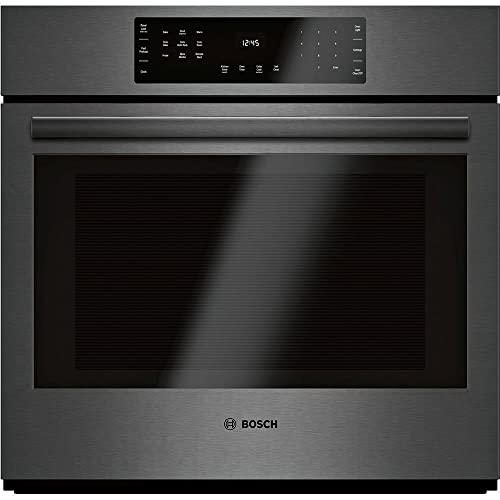
#3. Bosch 800 Series 30 30" Wall Oven

Specifications
| Brand | Bosch |
|---|---|
| Oven Type | Wall Oven |
| Fuel Type | Electric |
| Oven Cavities | 1 |
| Dimensions | 29 x 23.5 x 29.8 in |
| Cleaning Type | Self-Cleaning |
Pros
- Accurate temps, steady cooking
- Low-effort cleaning
- QuietClose door
Cons
- Single-cavity limitation
- Display concerns
- Satin finish mismatch
The standout trait here is cooking stability. The Bosch 800 Series 30 30 Wall Oven holds set temperatures accurately and tends to deliver even results across the cavity. In day-to-day use, that steadiness matters more than fancy settings, because you can repeat baking and roasting without constant guesswork. It also feels smooth to live with thanks to a QuietClose door that shuts gently, plus self-cleaning for lower effort maintenance.
The main trade-off is space. This is a single-cavity wall oven, so bigger meal prep or running two dishes at once usually requires better timing or simpler menu choices. Usability is also slightly uneven, since some buyers report display concerns, and the satin finish may not match every kitchen style as well as expected.
#4. GE Profile 30" Wall Oven

Specifications
| Brand | GE |
|---|---|
| Oven Type | Wall Oven |
| Fuel Type | Electric |
| Oven Cavities | 1 |
| Capacity | 10 cu ft |
| Dimensions | 29.75 x 26.75 x 28.625 in |
| Cleaning Type | Self-Cleaning |
| Cooking Modes | No Preheat, No Preheat Air Fry |
Pros
- Accurate temps, steady cooking
- More cooking space
- Low-effort cleaning
Cons
- Okay build, mild rattling
- Basic-only modes
- Single-cavity limitation
This GE Profile 30 wall oven stands out for smart-oven shoppers who care most about predictable cooking. It holds set temperatures steadily and cooks evenly across its 10 cu ft, single-cavity space. That makes it a good fit for day-to-day baking and roasting when you want fewer surprises after the door opens.
The trade-off is that it is more basic than many modern wall ovens. Mode options read as limited, and there is only one cavity to work with, so you cannot run two different meal schedules at once. Build quality feels okay, with some mild rattling, so it is best for buyers who prioritize reliable results and low-effort self-cleaning over lots of cooking modes or multi-tasking.
#5. Samsung BESPOKE 30" Gas Range

Specifications
| Brand | Samsung |
|---|---|
| Oven Type | Range Oven |
| Fuel Type | Gas |
| Capacity | 6 cu ft |
| Cleaning Type | Self-Cleaning |
| Cooking Modes | Air Fry, Air Sous Vide |
Pros
- More cooking space
- More versatile modes
- Low-effort cleaning
Cons
- Service delays
- Parts availability gaps
The Samsung BESPOKE 30 Gas Range stands out in smart ovens by mixing a larger 6 cu ft oven with practical, app-friendly cooking modes like Air Fry and Air Sous Vide. In daily use, that larger cavity helps when you cook for more people, or when you need more room for sheet pans. Self-Cleaning also cuts down on the upkeep time that usually comes with richer, more frequent roasting and baking.
The main trade-off is support. This model can run into service delays, and parts availability gaps may slow repairs if something fails. It is best for buyers who want modern cooking modes and extra capacity, but who are comfortable planning around potential long repair timelines.
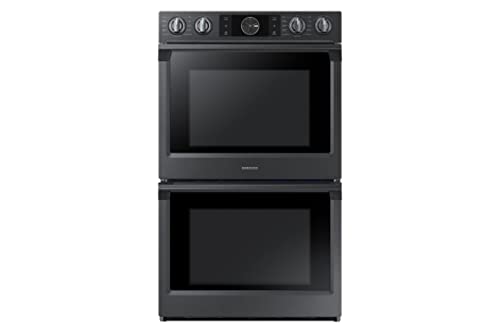
#6. Samsung Flex Duo 30" Double Wall Oven

Specifications
| Brand | Samsung |
|---|---|
| Oven Type | Wall Oven |
| Fuel Type | Gas |
| Oven Cavities | 2 |
| Capacity | 5.1 cu ft |
| Dimensions | 27.2 x 23.5 x 28.5 in |
| Cleaning Type | Self-Cleaning |
| Cooking Modes | Convection Bake, Steam Cook |
Pros
- More versatile modes
Cons
- Okay build, mild rattling
- Serviceable interface, minor friction
Samsung Flex Duo 30 stands out in the Smart Ovens space thanks to its double-cavity Flex Duo approach, which makes it easier to handle two cooking plans at once. A 5.1 cu ft total interior size helps you fit real meal portions without constant switching. Convection Bake and Steam Cook modes also broaden day-to-day results, especially for people who want both browned bakes and more gentle moisture-based cooking.
The trade-off is a mixed impression on build and day-to-day feel. There is mild rattling, and the interface has a bit of friction when you change settings. This makes it a decent pick for shoppers who care more about multitask cooking and mode variety than about the most solid-feeling hardware or the smoothest controls.
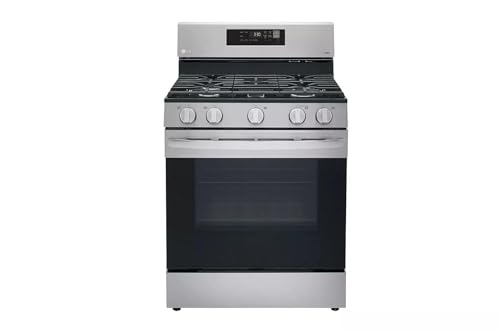
#7. LG Studio 30" Gas Range Oven

Specifications
| Brand | LG |
|---|---|
| Oven Type | Range Oven |
| Fuel Type | Gas |
| Oven Cavities | 1 |
| Capacity | 5.8 cu ft |
| Cleaning Type | Easy Clean |
Pros
- More cooking space
- Low-effort cleaning
- Convenient warming drawer
Cons
- Early glass shattering
- Some hot spots, uneven
- Single-cavity limitation
The LG Studio 30 is notable among smart ovens for pairing a sizable 5.8 cu ft oven with real convenience features, including a warming drawer for holding food without reheating. It also uses LGs easy-clean approach, which matters in day-to-day use when you want less time on scrubbing. In practice, it feels built for regular cooking, not just occasional bake days, and the extra space helps when you need more room for roasting or bigger pans.
The main trade-off is uneven baking and some hot spots, so you may need to rotate dishes for best browning. Build complaints also exist, with reports of early glass shattering, which is serious enough to check closely if you are considering it. And since it is a single-cavity range oven, multitasking is limited if you often cook two different dishes at once.
What to Look For
Heat stability and even cooking: Prioritize ovens that hold your set temperature closely and cook evenly across the cavity. When you check test notes or owner feedback, look for consistent browning on trays and fewer hot spots near the back or corners.
Convection and smart cooking modes that you will actually use: Choose smart ovens with modes that map to common meals, like Convection Bake, Air Fry, and standard Bake and Broil. If the oven buries key settings behind menus, it will slow you down more than it helps.
Clear controls and readable displays: Smart ovens should make it easy to set temperature, time, and mode without guessing. Favor models with straightforward interfaces, good interior lighting, and quick access to commonly used adjustments.
Reliable build and sealed access: Look for solid hinges, a stable door, and door seals that close tightly. For daily use, smooth rack glides and durable knobs or dependable touch controls reduce frustration, especially after frequent cleaning.
Value for smart features: Compare the smart add-ons against cooking results. A premium-connected oven only makes sense if it improves usability or consistency, not if it adds cost while the basics like broiling and heat recovery lag.
How We Picked
Products were identified through broad research across review sites and buyer forums, then filtered to only those that qualify as Smart Ovens.
Scoring used the same objective pillar framework as the main Ovens post, allowing direct comparison of products within this sub-category.
Frequently Asked Questions
What makes an oven “smart,” and what can I expect it to do while cooking?
A smart oven typically uses sensors and guided programs to help you hit the right cook temperature. Some models also offer app control and alerts for start, finish, or temperature changes. In practice, this helps with repeat results like even browning and fewer temperature swings.
How do smart ovens compare for cooking performance like baking, roasting, and broiling?
Look for good temperature accuracy and fast heat recovery after the door opens. Convection modes often improve roasting and baked goods by moving hot air more evenly. For broiling, you want strong top heat and stable settings, not just a basic broil option.
What features should I prioritize in a smart oven to make it feel worth it every day?
Choose controls that are easy to read and quick to use, plus useful modes you will actually cook with. Convection and air fry can cover a lot of common meals. If you cook meat often, a probe thermometer helps avoid undercooked or overcooked results.
How much effort is there for cleaning and maintenance on smart ovens?
Many smart ovens still need manual wipe-downs for spills and splatter. If it has a self-cleaning or steam cleaning option, use it based on how dirty the oven gets. Keep racks in good shape by using the recommended rack positions and avoiding harsh cleaners on the interior coating.
When should I choose a different type of oven instead of a smart oven?
Choose a simpler oven if you want the lowest cost and you rarely need sensor help or extra cooking modes. You may also prefer a countertop toaster oven if you cook small meals often and want faster warm-up for limited space. If you need steam cooking, a steam oven may work better than general smart features.
How do smart ovens compare with standard ovens in terms of setup and long term reliability?
Smart ovens can require extra setup like Wi-Fi pairing and software updates if you use app features. Over time, reliable heating parts and durable door seals matter more than the smart features themselves. When you shop, check build quality and warranties, since electronics can fail even when cooking performance stays good.


