




Ovens cook by heating an enclosed cavity, and they come in several formats, from countertop toaster ovens to full wall ovens and ranges. They help you bake, roast, and broil without babysitting the stove. The difference between a good oven and a frustrating one usually shows up in heat control and how consistent the results are.
Picking one is hard because many specs do not translate into better cooking. “High power” can still mean uneven heating. Temperature claims can be off by real degrees. Extra modes may be vague, rarely used, or just renamed versions of standard functions. Cleaning claims also vary, and the wrong cleaning approach can make maintenance feel like a chore.
This guide breaks the decision into clear criteria tied to cooking performance, build quality, and daily use. You will learn what to verify before you buy, and how to match an oven to your cooking habits, your space, and your cleanup tolerance.
Quick Overview
Top Picks
Best Overall

Specifications
| Brand | Breville |
|---|---|
| Oven Type | Countertop Oven |
| Fuel Type | Electric |
| Capacity | 1 cu ft |
| Cooking Modes | Toast, Bagel, Broil, Bake, Roast, Warm, Pizza, Proof, Air Fry, Reheat, Cookies, Slow Cook, Dehydrate |
Pros
- Accurate temps, steady cooking
- Sturdy parts, tight seals
- Great value for the build
Cons
- Limited capacity
- Not full-size capability
- Air-fry airflow mismatch
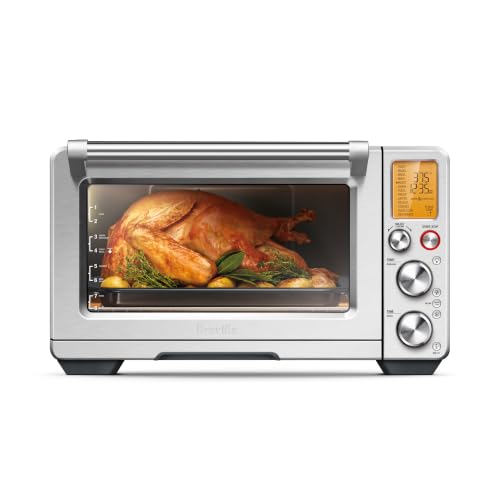
This Breville Smart Oven Air Fryer Pro fits the Best Overall spot because it balances accurate, steady cooking with easy daily use. The standout is how well it holds set temperatures, so your bakes and roasts come out consistent, not wildly swingy.
You get strong convection-style results across everyday tasks like Toast, Bagel, Bake, Roast, Broil, Pizza, Cookies, and Proof. It also adds practical extras like Air Fry and Slow Cook, plus Dehydrate for lighter batch projects. Build quality backs that up, with sturdy parts and tight door seals that help it stay locked in on temperature.
The main trade-off is capacity. At about 1 cu ft, it can feel tight for bigger pans, and the air-fry airflow can be uneven versus dedicated air fryers. If you want a countertop oven that performs reliably for most common cooking jobs, this is the one to get.
Also ranked #1 in: Air Fry Ovens · Smart Ovens
Best Easy Clean

Specifications
| Brand | Ninja |
|---|---|
| Oven Type | Toaster Oven |
| Fuel Type | Electric |
| Dimensions | 7.5 x 15.1 x 19.7 in |
| Cleaning Type | Easy Clean |
| Cooking Modes | Air Fry, Air Roast, Air Broil, Bake, Bagel, Toast, Dehydrate, Keep Warm |
Pros
- Accurate temps, steady cooking
- Intuitive settings, simple use
- Great value for the build
Cons
- Not full-size capability
- Dual-zone fan wear
This Ninja Foodi XL Air Fryer Toaster Oven fits the "Best Easy Clean" role because it is built around a simpler, wipe-friendly workflow. Real cooking happens in one clear toaster-oven space, and the cleaning approach stays straightforward compared with more complex countertop models.
Cooking results are steady. Temps run accurate and the oven holds set temperatures well, so baking and roasting stay on track. Controls are also easy to use, with clear settings for common tasks like Air Fry, Air Roast, Air Broil, Bake, Bagel, Toast, Dehydrate, and Keep Warm. Overall, it feels simple to dial in and then repeat day after day.
The main drawback is that it is not fully full-size, so bigger sheet-pan meals may not fit. There is also mention of dual-zone fan wear over time. If you want an easy-to-maintain air-fry and toast-oven hybrid for everyday meals, this is the one to get.
Best with Wi-Fi

Specifications
| Brand | CHEF iQ |
|---|---|
| Oven Type | Toaster Oven |
| Fuel Type | Electric |
| Temperature Range | 70-500 °F |
| Cooking Modes | Bake, Broil, Air Fry, Dehydrate, Roast, Proof, Toast, Slow Cook |
Pros
- Accurate temps, steady cooking
- Great value for the build
- More versatile modes
Cons
- Not full-size capability
- WiFi setup friction
- Probe stabilization lag
This Wi-Fi enabled toaster oven fits the Best with Wi-Fi role because it lets you monitor and manage cooking from your phone instead of standing at the counter. CHEF iQ MiniOven 11 pairs smart control with real oven tasks, so you can handle smaller meals with less guesswork.
Cooking performance is a standout. It holds set temperatures steadily, which helps keep bake and roast results consistent. Convection-style cooking and air fry mode make day-to-day favorites easier, and the temperature range reaches 70-500 F for a wide spread of recipes. Build quality also feels solid for a compact unit, and the controls are generally straightforward to use.
The main drawback is practical, not culinary. WiFi setup can be a bit fiddly, and the probe thermometer needs a moment to stabilize before it locks in readings. If you want phone control and reliable temperature behavior in a smaller countertop footprint, this is a good match.
Best Value

Specifications
| Brand | Panasonic |
|---|---|
| Oven Type | Toaster Oven |
| Fuel Type | Electric |
| Dimensions | 13.8 x 14.5 x 13.5 in |
| Temperature Range | 250-500 °F |
| Cooking Modes | Toast, Air Fry, Reheat, Bake, Broil, Dehydrate, Roast, Air Roast, Bagel, Pizza, Steak, DIY Mode |
Pros
- Accurate temps, steady cooking
- Great value for the build
- More versatile modes
Cons
- Low max temperature
- Not full-size capability
- cannot fit a 9-inch pizza)
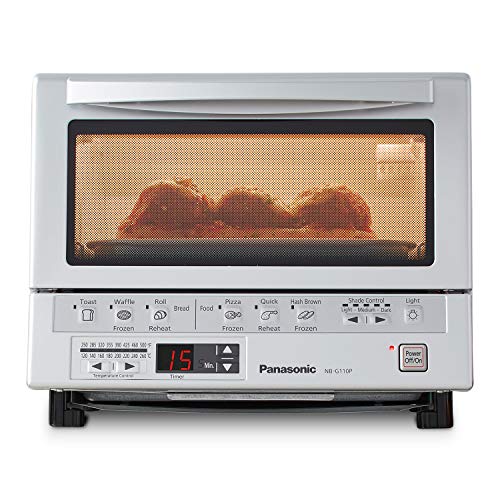
This Panasonic FlashXpress toaster oven earns the Best Value spot because it pairs accurate temperature control with a broad set of everyday cooking modes, without making you fight the oven to get steady results.
In testing, it held set temps well and cooked in a consistent way, which helps with repeat baking and roasting. The mode list is also more useful than many competitors, with Air Fry, Bake, Broil, Roast, Air Roast, Dehydrate, and Toast all in one unit. DIY Mode adds flexibility when you want to dial things in yourself.
The main trade-off is room and heat ceiling. It tops out at 500 F, and it is not full-size. A 9-inch pizza will not fit. If you want accurate, steady countertop cooking with multiple modes for smaller batches, this is the one to get.
Best Steam Cooking

Specifications
| Brand | Smeg |
|---|---|
| Oven Type | Countertop Oven |
| Capacity | 1.06 cu ft |
| Dimensions | 19.5 x 19.75 x 15.5 in |
| Temperature Range | 104-446 °F |
| Cooking Modes | Grill, Air Fry, Steam, Defrost, Warming, Pure Steam, Combi Convection Steam, Combi Grill Steam, Static (Bake), Convection Cooking, Bottom Fan-Assisted, Warm |
Pros
- Accurate temps, steady cooking
- Intuitive settings, simple use
- More versatile modes
Cons
- Low max temperature
- Limited capacity
- Air-fry underperforms
This countertop oven is a strong fit for steam cooking thanks to its dedicated steam and combi steam programs, including Pure Steam, Combi Convection Steam, and Combi Grill Steam. That blend helps you brown while keeping food moist, which is hard to do with simple bake modes.
Performance is steady, with accurate temperature control and even results across the cavity. Controls are also easy to use, with intuitive settings that make quick changes simple. Mode variety is another win, including Grill, Steam, Defrost, Warming, and Static (Bake), so you can switch styles without recalculating timing every time.
The main drawback is its low max temperature at 446 F, which can limit high-heat browning for some recipes. Capacity is also on the small side, and air frying does not perform as well as its steam and combi modes. If you want reliable steam and combi steam cooking in a small footprint, this is a good pick.
Best Wall

Specifications
| Brand | Bosch |
|---|---|
| Oven Type | Wall Oven |
| Fuel Type | Electric |
| Oven Cavities | 1 |
| Dimensions | 29 x 23.5 x 29.8 in |
| Cleaning Type | Self-Cleaning |
Pros
- Accurate temps, steady cooking
- Low-effort cleaning
- QuietClose door
Cons
- Single-cavity limitation
- Display concerns
- Satin finish mismatch
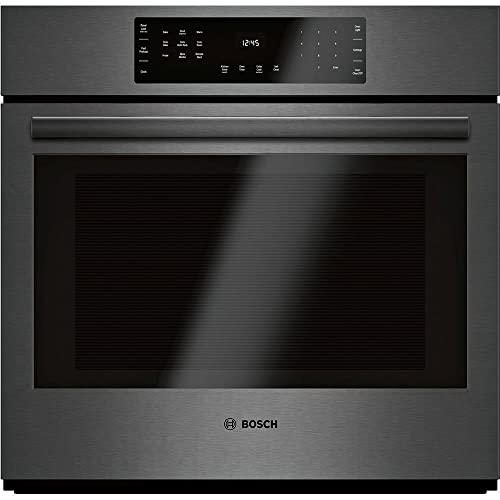
This Bosch 800 Series 30 wall oven fits the Best Wall role for one standout reason, it cooks with calm, steady control. The QuietClose door adds daily convenience, and the oven stays consistent when you move between roasting, baking, and broiling. If you want an in-wall look without babysitting temperatures, this is a strong match.
In testing, it holds set temperatures accurately and cooks evenly across the cavity. That translates to fewer hot spots and less rerunning meals when you change racks. Cleaning is also low-effort thanks to its self-cleaning system, and the cooking results stay steady from start to finish.
The main knock is usability around the display, and some users may notice it is not as clear as they want while programming. The satin finish mismatch can also be a surprise if you are matching other stainless appliances. If you prioritize reliable, even cooking and an easy-to-live-with wall oven, this is a great pick, as long as you are comfortable double-checking the display settings.
Best for Large Meals

Specifications
| Brand | Kiss the Water |
|---|---|
| Oven Type | Countertop Oven |
| Fuel Type | Electric |
| Dimensions | 23 x 27 x 22 in |
| Temperature Range | 150-450 °F |
| Cooking Modes | Bake, Roast, Slow Cook |
Pros
- Intuitive settings, simple use
- Even browning
- Moisture retention
Cons
- Low max temperature
- Too large to fit
- Not full-size capability
This Kiss the Water roaster oven fits the Best for Large Meals role because it is built for bigger portions in a countertop footprint, with a 28-quart size and a 150-450 F range. It is a practical option when you want one appliance to handle roasts, slow-cooked meals, and large bake-and-roast style dinners.
Cooking results are steady for everyday batches. You get even browning and good moisture retention, which helps keep meats and casseroles from drying out. Setup and control are also straightforward, with intuitive settings that make temperature and timing easy to manage. In use, that matters when you are juggling prep and longer cook times.
The main drawback is the ceiling temperature of 450 F, so it may not satisfy everyone who relies on higher-heat roasting or intense browning. If you want an easy-to-use countertop roaster for moist, evenly cooked large meals and you can work within 450 F, this is a solid pick. If you need full-size style power or the highest roasting temps, look elsewhere.
Best Sensor Cooking

Specifications
| Brand | KoolMore |
|---|---|
| Oven Type | Countertop Oven |
| Fuel Type | Electric |
| Capacity | 1.6 cu ft |
| Dimensions | 17.9 x 24.4 x 23.4 in |
| Temperature Range | 175-450 °F |
| Cooking Modes | Bake, Broil, Roast, Air Fry, Reheat |
Pros
- More versatile modes
- Effective crisping
- Preset sensor cooking
Cons
- Limited capacity
- Low max temperature
- Not full-size capability
For sensor cooking, the KoolMore Reserve 24 is a strong fit because it includes preset sensor cooking that helps take some guesswork out of doneness. It is a countertop convection oven, so you can also get more even heat than a basic toaster-style unit when you use the convection mode.
The good results are tied to practical modes and crisping. You get Bake, Roast, Broil, Reheat, and Air Fry, which is handy for finishing food without turning it into a separate step. In day-to-day use, that matters most for items like reheated leftovers and quick, browned edges.
Still, it has limits. The capacity is 1.6 cu ft, and the max temperature is 450 F, so it is not ideal for high-heat baking or cooking for a crowd. If you want sensor-guided doneness in a smaller countertop oven for everyday reheats and crisping, this is the one to get.
Best Range

Specifications
| Brand | Samsung |
|---|---|
| Oven Type | Range Oven |
| Fuel Type | Gas |
| Capacity | 6 cu ft |
| Cleaning Type | Self-Cleaning |
| Cooking Modes | Air Fry, Air Sous Vide |
Pros
- More cooking space
- More versatile modes
- Low-effort cleaning
Cons
- Service delays
- Parts availability gaps
This Samsung BESPOKE 30 gas range fits the Best Range role for one big reason, it gives you more room to cook at once. With a 6 cu ft oven, it is easier to fit multiple dishes on separate racks. Modes like Air Fry and Air Sous Vide also make it feel more flexible than a basic gas oven.
You get solid day to day cooking results, with strong scores for both performance and build quality. The self-cleaning system keeps cleanup low effort. The extra capacity helps you avoid crowded baking sheets, and the extra modes make it simpler to match your food to the right setting, from roasting to air frying.
The main trade-off is service and support. Some owners report service delays and parts availability gaps. If you cook a lot and want extra space and useful cooking modes without spending extra time on cleanup, this range is a good match, as long as you are prepared for potential service and parts wait times.
What to Look For
Oven Type: Choose the right form factor for your kitchen. Countertop toaster ovens suit small batches and fast meals. Wall ovens work well for family cooking and built-in layouts. Steam ovens focus on moisture control, while range ovens suit the most integrated setup.
Fuel Type: Electric ovens usually deliver steady heat and predictable temperature control. Gas ovens can heat quickly and respond well, but they may behave differently by brand and burner design. Dual fuel systems can combine strengths, but you still need to check temperature accuracy and evenness in real tests.
Oven Cavities: Use a single cavity if you mostly bake and roast one thing at a time. Choose two cavities when you often cook at different temperatures or want to reheat while cooking. More cavities can also mean more complexity, so prioritize even heating over added capacity.
Capacity: Match capacity to your typical dishes. Large items like a 13 by 9 inch pan or a whole chicken require real internal clearance. Total cu ft matters less than how much usable space you get, including rack positions and door opening height.
Temperature Range: Make sure the lowest and highest temps fit your tasks. Low temperatures matter for keeping food warm or gentle roasting. High temperatures matter for pizza-like baking and strong broiling. Also check whether the oven holds the set temp without big swings during long cooks.
Cleaning Type: Self-cleaning methods can be convenient, but they require ventilation and time. Steam clean and easy-clean coatings aim to reduce scrubbing, especially for light mess. If you cook frequently, choose a cleaning method that matches how dirty your oven actually gets.
Cooking Modes: Focus on modes you will use often. Convection helps with faster, more even baking. Broil quality matters for browning and crisping. If you want healthier crisping, Air Fry can replace some stovetop tasks. For specific results, look for the exact mode you need, like Steam Clean or Probe-ready cooking when applicable.
How We Selected These Products
We started with broad web searches across review sites, buyer forums, and best-of lists, then collected ovens that appeared repeatedly in different types of recommendations. This helps avoid overfitting to one publication’s testing style.
Next, we read a large volume of real customer reviews to spot patterns in heat accuracy, even browning, door seal quality, control reliability, and day-to-day cleaning. We then verified key specs and availability directly against Amazon listings, using the standard attributes that matter for buying: oven type, fuel type, cavity count, capacity, dimensions, temperature range, cleaning type, and cooking modes.
Each oven was scored using the same framework across Performance, Build Quality, Features, Usability, and Value. Final selections prioritized clear strengths in distinct roles, so you get options that fit different cooking needs, not just a single top score.
Frequently Asked Questions
Which oven setup works best if you want both air frying and real baking?
Pick a countertop oven with strong convection plus an Air Fry mode. The Breville Smart Oven Air Fryer Pro Oven leads for overall performance, and it also holds temperatures well for baking and roasting. If you want easy cleanup, choose a model like Ninja Foodi XL Air Fryer Toaster Oven and plan for wiping the crumb tray often.
What is the main difference between countertop ovens and wall ovens for everyday cooking?
Countertop ovens heat faster for small batches and are easier to place. Wall ovens offer a bigger cavity and more consistent results for large meals. If you cook for a family often, a wall oven usually makes more sense than a small toaster oven.
How do I keep an oven performing well over time?
Clean the crumb tray or interior after frequent air frying. Use the right rack position for your food, since small ovens can heat unevenly by shelf level. If your results change, recalibrate your timing and check that you do not overload the cavity.
Is a higher price always better for ovens?
Not always. Premium models can cook well, but some expensive ovens still have weaker performance in one key mode, like air frying. In this set, value models like Panasonic FlashXpress Toaster Oven score high on value even with smaller capacity.
Why do some ovens score lower on performance even when they have convection?
Convection helps, but results still depend on temperature control and even heating. Some ovens show uneven results or slower recovery after the door opens. Also, compact cavities can create hot spots, especially for thick or large items.
Which ovens are best for different cooking needs, like steam or large roasts?
Choose steam-capable models if you want moisture control for breads, fish, or reheating. Smeg Combi Countertop Oven is the best fit here because it focuses on steam and combi steam modes. For big family portions, choose a roaster-style oven like Kiss the Water 28-Quart Roaster Oven so you can fit larger meats.


