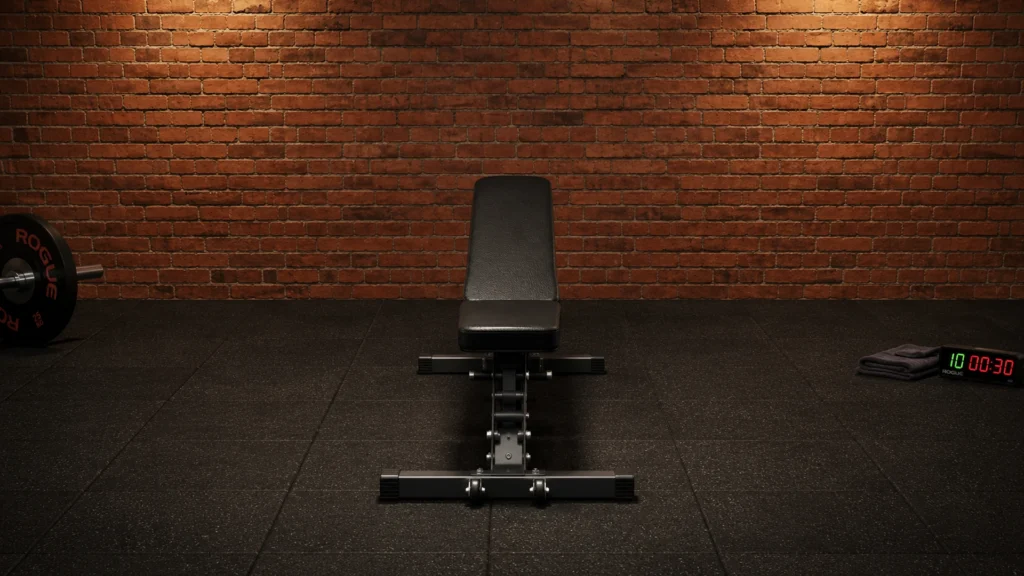
Weight benches let you press, row, and train your upper body with stable support. They range from flat benches for basic barbell work to adjustable benches for incline and decline sessions.
Picking the right one gets tricky fast. Specs like “max capacity” can hide weak links like frame welds or thin legs. Backrest and seat position counts look useful, but poorly designed adjustment systems make them slow to change mid-workout. Foldable designs can save space, yet some trade rigidity for convenience.
This guide breaks the category down into clear, real-world checks. You will learn what to measure, what to ignore, and how to match bench type and adjustability to your routine. Then you can compare top picks using the same criteria, not marketing labels.
Quick Overview
Top Picks
Best Overall

Specifications
| Brand | REP |
|---|---|
| Bench Type | FID |
| Weight Capacity Lb | 1000 |
| Backrest Positions | 8 Positions |
| Seat Positions | 5 Positions |
| Foldable | Yes |
| Overall Dimensions In | 17.1 x 56.6 x 25.8 in |
| Pad Thickness In | 2.5 in |
| Frame Material | Steel |
Pros
- Rugged frame, quality hardware
- Minimal wobble, secure stance
- Smooth adjustments, solid locks
Cons
- Taller-user fit issues
- Leg-roller setup sensitive
This REP AB-3000 2.0 FID Adjustable Weight Bench fits the Best Overall spot because it pairs FID training with a sturdy, stable build. The most distinctive trait is the FID setup, built to support hamstrings and glutes while keeping the bench feel solid during heavier work.
You get strong build quality and stability at the same time. The steel frame and quality hardware create a secure stance, with minimal wobble when you press, row, or change angles. Adjustments also feel dependable, with smooth movement and solid locks for the 8 backrest positions and 5 seat positions. The 2.5-inch padding stays comfortable for long sessions without feeling overly soft.
The main trade-off is fit. Taller users can find the bench feels tight, and the leg-roller setup needs careful setup to stay in the right place. If you want one adjustable bench for most lifting, including FID work, without dealing with a shaky base, this is the one to get.
Best Foldable

Specifications
| Brand | REP |
|---|---|
| Bench Type | Adjustable |
| Backrest Positions | 7 Positions |
| Seat Positions | 4 Positions |
| Foldable | Yes |
| Overall Dimensions In | 16.7 x 51 x 25.8 in |
| Pad Thickness In | 2.5 in |
| Frame Material | Steel |
Pros
- Rugged frame, quality hardware
- Minimal wobble, secure stance
- Comfortable padding, stays firm
Cons
- Locking precision unknown
- Fit limitations possible
This foldable adjustable bench fits the Best Foldable role because it breaks down for storage while still giving multiple training angles. With 7 backrest positions and 4 seat positions, you can run flat to incline work without needing a separate bench setup.
The build feels sturdy, with a steel frame and solid hardware that supports pressing and supported movements. It also stays planted, with minimal wobble and a secure stance when you change angles. The 2.5 in thick padding is firm enough to stay stable, and it does not feel like it will quickly bottom out.
The main downside is that locking precision is not clear from the available details, so you will want to check that each position feels tight to you. Fit can also be a concern depending on your space. If you want a space-saving adjustable bench for regular home lifting, and you value a stable, comfortable setup, this is a good match.
Best 1000-lb
Specifications
| Brand | MAJOR FITNESS |
|---|---|
| Bench Type | Adjustable |
| Weight Capacity Lb | 1500 |
| Backrest Positions | 12 Positions |
| Seat Positions | 4 Positions |
| Overall Dimensions In | 18.1 x 52.7 x 13.8 in |
| Frame Material | Steel |
Pros
- Rugged frame, quality hardware
- Minimal wobble, secure stance
- Smooth adjustments, solid locks
Cons
- Less rigid than premium
- Limited wear evidence
- Unquantified adjustment precision
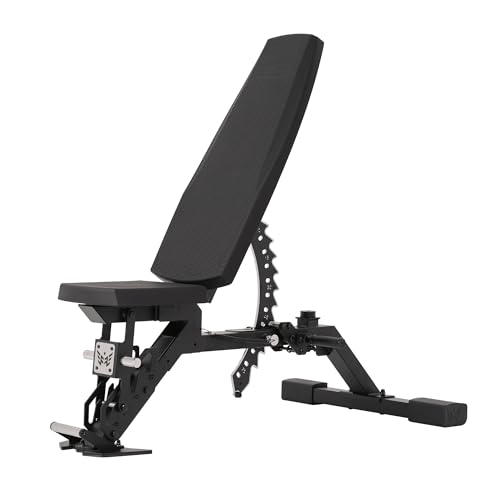
This adjustable bench fits the Best 1000-lb role because it feels built for heavy training with a steel frame and a very high listed capacity. The bench also stays planted when you change angles, which matters for heavier presses and rows.
Stability and build quality are standout strengths. It has a secure stance with minimal wobble, plus quality hardware and sturdy construction that feels solid in use. Adjustments are also a plus, with smooth movement and solid locks for the 12 backrest positions and 4 seat positions.
One weak spot is that it feels slightly less rigid than top-tier premium benches. There is also limited wear evidence, and the adjustment precision is not clearly quantified. If you want a dependable, heavy-duty adjustable bench for regular strength training without second-guessing stability, this is a strong choice.
Best for Taller Lifters
Specifications
| Brand | Fitness Reality |
|---|---|
| Bench Type | Adjustable |
| Weight Capacity Lb | 850 |
| Backrest Positions | 7 Positions |
| Seat Positions | 3 Positions |
| Foldable | Yes |
| Overall Dimensions In | 53.5 x 24 x 10.8 in |
| Pad Thickness In | 2 in |
| Frame Material | Steel |
Pros
- Rugged frame, quality hardware
- Smooth adjustments, solid locks
Cons
- Wheel cap popping
- Extreme-angle clearance
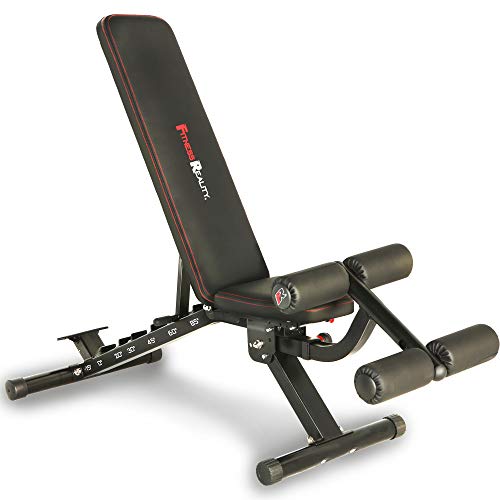
This adjustable bench fits taller lifters thanks to its sturdy, steel-heavy build and multi-angle setup. The 7 backrest positions and 3 seat positions let you dial in pressing angles without feeling like you are fighting the layout.
In day-to-day use, it feels solid. The frame and hardware are rugged, and the adjustments move smoothly. Locking is also dependable, which helps when you switch between flat and incline work. Comfort stays decent for supported training, with a 2-inch pad that gives enough cushioning for regular sets.
One annoyance is the wheel cap that can pop during movement, so handle it carefully when you reposition the bench. It can also have extreme-angle clearance limits if you try the most aggressive backrest settings. If you want a stable adjustable bench with secure adjustments for long sessions, this is a strong pick for taller lifters who train presses and rows.
Best for Heavy Lifting

Specifications
| Brand | MAJOR LUTIE |
|---|---|
| Bench Type | Adjustable |
| Weight Capacity Lb | 1300 |
| Backrest Positions | 9 Positions |
| Seat Positions | 4 Positions |
| Foldable | Yes |
| Pad Thickness In | 2.5 in |
| Frame Material | Steel |
Pros
- Rugged frame, quality hardware
- Firm padding
Cons
- Smoothness issues
- Difficult assembly
- Imperfect cable feel
This Major Lutie bench is a strong match for heavy lifting because it is built like a serious steel station, rated up to 1300 lb. The all-in-one design also keeps you set up for presses and rows without moving to another bench.
Build quality stands out, with a rugged frame and quality hardware that feels solid when you load it up. Comfort is also solid for long sets, thanks to 2.5 in padding that stays firm and does not feel overly squishy. For versatility, it gives 9 backrest positions and 4 seat positions, with a foldable layout for easier storage.
The main downside is that adjustments and handling can feel imperfect, with smoothness issues and difficult assembly. If you want a heavy-duty, multi-position bench and you do not mind taking time to put it together, this is the one to get.
Best Double Locking

Specifications
| Brand | FLYBIRD |
|---|---|
| Bench Type | Adjustable |
| Weight Capacity Lb | 800 |
| Backrest Positions | 8 Positions |
| Seat Positions | 4 Positions |
| Foldable | Yes |
| Frame Material | Steel |
Pros
- Rugged frame, quality hardware
- Fully adjustable design
- More backrest angles
Cons
- Less rigid adjustment feel
- Fit-dependent geometry
This FLYBIRD WB5 is a strong fit for the “Best Double Locking” weight bench role because its adjustments lock down with more than one secure step. That matters when you switch from flat to incline work, or when you set the seat and backrest for rows and presses. You get 8 backrest positions and 4 seat positions, so you can dial in your angle without guessing.
The build feels solid, with rugged steel and quality hardware that stays tight during setup. Stability holds up well for most movements, supported by a sturdy base and rubber feet. Comfort is also above average for a home bench, with padding that gives firm support across your bench time and upholstery that does not feel slippery.
The main trade-off is that the adjustment action can feel slightly less rigid, so it may not feel as rock-hard when you move between settings. Also, the bench geometry can feel fit-dependent, depending on your height and how you sit. If you want a double-locking adjustable bench for steady incline training, this is a good pick when you value secure position changes over a super-smooth feel.
Best Value

Specifications
| Brand | NICEPEOPLE |
|---|---|
| Bench Type | Adjustable |
| Weight Capacity Lb | 660 |
| Backrest Positions | 10 Positions |
| Seat Positions | 3 Positions |
| Foldable | Yes |
| Frame Material | Steel |
Pros
- Comfortable padding, stays firm
- Great features at fair cost
- Secure adjustment positioning
Cons
- Seat-back gap discomfort
This adjustable bench fits the Best Value spot because it balances comfort and practical settings with a straightforward build. The padding stays firm during presses, and the adjustment layout feels easy to use once you set it up.
Solid steel construction and a secure adjustment feel score well for day to day training. It has 10 backrest positions and 3 seat positions, so you can dial in your angle without guessing. Stability is also a strong point for pressing and supported work, with no obvious rocking as you change positions.
The main downside is a seat-back gap that can feel awkward for some users, especially during long sets. If you want an adjustable bench for regular home lifting and you care more about comfort and easy setup than a perfectly flush pad, this is a good match.
Best Flat

Specifications
| Brand | Vulcan Strength Training Systems |
|---|---|
| Bench Type | Flat |
| Weight Capacity Lb | 2000 |
| Overall Dimensions In | 48 x 12 x 17.5 in |
| Pad Thickness In | 3 in |
| Frame Material | Steel |
Pros
- Minimal wobble, secure stance
- High lifting capacity
- Thick, comfortable padding
Cons
- Limited workout style
This flat bench fits the Best Flat slot because it stays focused on one job, pressing with a solid base. The standout trait is its secure stance, with minimal wobble when you set up and drive through your reps. If you want a bench that feels locked in from day one, this is the kind to look at.
Build quality is strong, with a steel frame and thick 3-inch padding that feels supportive without being mushy. Stability scores well too, thanks to a wide, grounded setup and rubber feet that help it stay put. It is also rated for up to 2000 lb, which is reassuring for heavier lifters and frequent hard sets.
The trade-off is limited workout style. This is not built for lots of different angles or exercise variety. If you mostly do flat presses and want one dependable bench that stays steady under load, this is the one to get.
Best for Small Spaces

Specifications
| Brand | YOLEO |
|---|---|
| Bench Type | Adjustable |
| Weight Capacity Lb | 827 |
| Backrest Positions | 7 Positions |
| Seat Positions | 4 Positions |
| Foldable | Yes |
| Overall Dimensions In | 42 x 12.2 x 34.6 in |
| Pad Thickness In | 2.4 in |
| Frame Material | Steel |
Pros
- Fully adjustable design
- More backrest angles
- Great features at fair cost
Cons
- Limited 90-degree angle
This adjustable bench fits the “Best for Small Spaces” role because it folds and keeps its footprint compact. With overall dimensions of 42 x 12.2 x 34.6 in, it is easier to tuck away between workouts than bulkier models. That foldable design matters if your home gym shares space with living areas.
In use, the build feels solid enough for serious training, and it supports up to 827 lb. The padding is 2.4 in thick, and the seat and backrest give you 4 and 7 positions, respectively, so you can dial in incline work without swapping benches. Adjustments are practical, and you still get multiple backrest angles for presses and rows.
The main drawback is the limited 90-degree angle, which can matter if you want a very upright backrest for specific exercises. If you want a foldable, multi-angle adjustable bench for home workouts where space is tight, this is a strong choice.
What to Look For
Bench Type: Start here because it limits your exercise menu. Choose Flat for flat pressing only. Choose Adjustable when you need multiple backrest or seat settings. Choose FID only if the bench is explicitly built for flat, incline, and decline training. Pick Incline or Decline only when those are truly the supported modes.
Weight Capacity lb: Capacity should reflect the whole bench, not just the frame rating. If you lift heavy, pick a bench with a higher published limit so you do not have to “trust” the bench under peak loads. If you are near the top end, stability and frame stiffness matter as much as the number.
Backrest Positions: More settings can be helpful, but they must be usable. Look for a backrest adjustment range that matches your planned pressing angles. Also consider how quickly you can move between angles, and whether the locking feels secure when you load the bar.
Seat Positions: Seat height and position can affect your setup for pressing and rows. If you switch between exercises often, more seat settings give you room to find the right body position. If you only do one style of benching, fewer settings can still work.
Stability: Stability shows up when you press hard or change angles. Check for a wide base, solid feet, and minimal wobble when someone sits and when you rack weight. Benches that rock, flex, or shift during adjustments will feel annoying fast.
Comfort: Pad thickness and firmness should match your body weight and the length of your sessions. Thin pads force you to fight discomfort. Overly soft pads can feel unstable, especially when you plant your upper back. Upholstery should not feel slick or grabby against your skin.
Frame Material: Most quality benches use steel for stiffness and long-term durability. Frame strength affects both stability and comfort over time because it reduces bounce and keeps adjustments aligned. Pair the material with good hardware and well-finished joints.
How We Selected These Products
We discovered weight benches through broad web searches across review sites, buyer forums, and best-of lists. We did not rely on a single publication, because benches often get reviewed with different standards than what owners experience.
Next, we read a large volume of real customer reviews. We looked for repeat problems like wobble, slow adjustments, pin or ladder wear, upholstery splitting, and frame flex. We also tracked what owners valued most, such as easy angle changes and a stable base on common floor types.
Then we verified availability and core specs directly against Amazon listings. Each bench was scored using the same pillar framework, Build Quality, Stability, Adjustability, Comfort, and Value. Final picks were curated to cover distinct roles, like foldable space savers, higher capacity options, and benches that suit flatter pressing versus multi-angle training.
Frequently Asked Questions
Which weight bench is best if I want decline and FID training at home?
Look for a bench that clearly supports FID-style work, not just incline. The REP AB-3000 2.0 FID Adjustable Weight Bench stands out in the set because it offers true flat, incline, and decline angles. It also tends to score well for stability and comfort during supported pressing.
What is the difference between budget, mid-range, and premium weight benches?
Budget benches often cut cost using thinner steel, fewer angles, or simpler locking. Mid-range models usually improve stability, padding, and the number of positions. Premium benches tend to use stronger frames, tighter hardware, and more repeatable adjustments.
Why do some adjustable benches feel wobbly, even if they have a high weight rating?
A rating is about maximum load, not day-to-day wobble control. Wobble usually comes from loose locking points, narrower bases, or flex in the frame under side forces. Solid designs reduce movement when you change angles, like incline and decline.
Do I really need an adjustable bench, or is a flat bench enough?
A flat bench works great if your training focuses on barbell and dumbbell pressing. You can still grow without incline, but an adjustable bench helps you target different muscle angles. If you plan on incline work, choose a bench with enough backrest and seat positions to find a comfortable setup.
Is a higher price always better for weight benches?
Not always. In this set, some lower or mid-priced benches still score strongly on value. You often pay more for smoother adjustments, better comfort, and more rigid frames.
Why do many weight benches score lower on adjustability than on build quality or stability?
Adjustability involves more moving parts, like pins, ladders, and locking systems. If those parts feel awkward or do not cover key angles, the experience drops. A bench can be sturdy but still feel inconvenient when you switch between flat, incline, and decline.