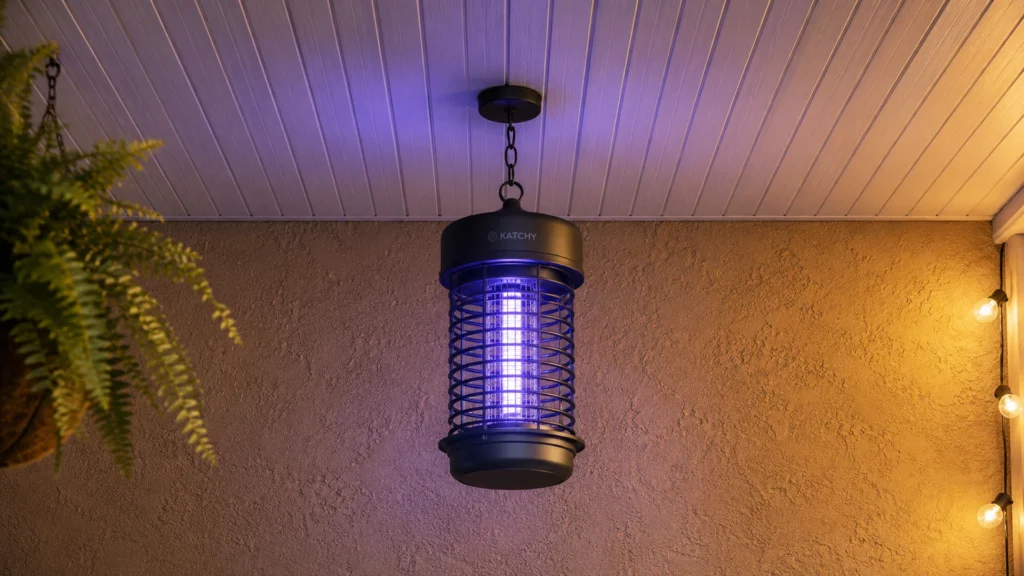
UV Light Mosquito Repellent Devices use ultraviolet light to lure flying insects into a trap or killing zone. For this sub-category, you are buying for real indoor or outdoor bug reduction, not scent or lotion habits. Many models also include a fan to pull insects toward the light and internal capture system.
Choosing is hard because UV light devices often trade coverage for placement. A larger claimed area can still underperform if your airflow, room layout, or outdoor placement does not bring insects into the device. Also check maintenance load, since emptying trays, cleaning grates, and replacing parts can decide whether the unit stays effective week after week.
Looking for all types? See our Best Mosquito Repellent Devices.
Quick Overview
Our Top Picks
#1. DynaTrap Large Mosquito & Flying Insect Trap Mosquito Repellent

Specifications
| Brand | DynaTrap |
|---|---|
| Device Type | Trap |
| Repellent Technology | UV Light |
| Use Location | Indoor/Outdoor |
| Coverage Area | 43560 sq ft |
| Power Source | Plug-In |
| Dimensions | 20 x 13 x 13 in |
| Weight | 7 lb |
Pros
- Strong real-world coverage
- Cool-running and protected
- Quick controls, low hassle
Cons
- Ultrasonic-only approach
- Heavy and bulky
- Non-mosquito bycatch
This DynaTrap trap stands out in the UV Light Mosquito Repellent Devices category because it is built for wide coverage and real airflow movement. It is rated for up to 43560 sq ft, which is far beyond the small-room expectations most UV-based units have. Setup is simple, and the controls are quick to use, so it fits well when you need mosquito reduction across open indoor spaces or an outdoor perimeter.
The main trade-off is that it is a trap, not a simple repellent cloud. That means you may still see some non-target insects around it, which shows up as bycatch. It is also heavier and bulkier, so it is not ideal if you want something you can move room to room or store in a small space.
#2. Flowtron Bug Zapper Mosquito Repellent

Specifications
| Brand | Flowtron |
|---|---|
| Device Type | Bug Zapper |
| Repellent Technology | UV Light |
| Use Location | Outdoor |
| Coverage Area | 43560 sq ft |
| Power Source | Plug-In |
| Runtime | 6 hrs |
| Dimensions | 13.5 x 8.5 x 8.5 in |
| Weight | 4.9 lb |
Pros
- Rechargeable or plug power
- Wide coverage area
- Reliable parts, solid fit
Cons
- Short runtime
- Heavy and bulky
- Limited placement flexibility
Flowtron Bug Zapper stands out in the UV Light mosquito repellent category because it uses a bug-zapping light approach for outdoor use and targets a large area, rated up to 43560 sq ft. In practice, it is a straightforward option for yards where you want fewer mosquitoes near patios and walkways, without dealing with sprays or sticky refills. The unit is also built solidly for an outdoor plug-in model, with reliable parts and a sturdy feel.
The trade-off is run time and placement. It is meant to run about 6 hrs, so you may need to plan your sessions on evening use. It is also heavy and bulky at 4.9 lb, which limits how easily you can move it around the yard. Overall, it is best for people who want a set location solution and are okay with light coverage that depends on where you place it.
#3. BLACK+DECKER Bug Zapper & Fly Trap Mosquito Repellent

Specifications
| Brand | BLACK+DECKER |
|---|---|
| Device Type | Bug Zapper |
| Repellent Technology | UV Light |
| Use Location | Indoor/Outdoor |
| Coverage Area | 2000 sq ft |
| Power Source | Plug-In |
Pros
- Wide coverage area
- No harsh chemical odor
- Quick controls, low hassle
Cons
- Ultrasonic-only approach
- Temporary deterrent
- Placement cord limitation
This BLACK+DECKER bug zapper stands out in the UV Light Mosquito Repellent Devices group because it uses UV light with a plug-in design for Indoor/Outdoor use, targeting a stated 2000 sq ft area. That makes it easier to place near common entry points than many chemical options. It also stays relatively low-odor, so you can run it indoors without the sharp smells some repellent methods rely on.
The main trade-off is effectiveness. An ultrasonic-only approach would be a miss here, but this model still depends on where mosquitoes fly in relation to the unit. Users can see results, yet the deterrent effect can be temporary, and placement matters. It is best for people who want a simple, low-hassle device and can keep it aimed at airflow paths, doorways, or patios rather than expecting it to solve every corner of a room.
#4. KATCHY Duo Indoor Flying Insect Trap Mosquito Repellent

Specifications
| Brand | KATCHY |
|---|---|
| Device Type | Trap |
| Repellent Technology | Fan |
| Use Location | Indoor |
| Runtime | 24 hrs |
| Dimensions | 0.2 x 4.3 x 4.3 in |
| Weight | 1.4 lb |
Pros
- Worth it, low ongoing cost
- Long-lasting operation
- Lightweight and easy
Cons
- Lighting dependent performance
- Glue humane concerns
- Placement sensitivity
This indoor flying insect trap stands out in the UV light mosquito repellent device space because it relies on a fan to pull mosquitoes toward its lure. For smaller rooms, hallways, and other closed spaces, that gives it a more direct path than passive traps. It also runs around the clock, with long, steady operation that can keep a room feeling calmer over time.
The main trade-off is lighting dependent performance and placement sensitivity. If you set it in a spot where bugs do not naturally move through, results can slow down. There are also humane concerns tied to how trapped insects are handled, so it is not a fit for everyone. Best for people who want an indoor trap-style solution and can place it thoughtfully where mosquitoes travel.
#5. ASPECTEK 20W Bug Zapper Mosquito Repellent

Specifications
| Brand | ASPECTEK |
|---|---|
| Device Type | Bug Zapper |
| Repellent Technology | UV Light |
| Use Location | Indoor/Outdoor |
| Coverage Area | 5000 sq ft |
| Power Source | Plug-In |
| Dimensions | 3.1 x 15 x 10.9 in |
| Weight | 3.9 lb |
Pros
- Wide coverage area
- Effective indoor pests
- Worth it, low ongoing cost
Cons
- Weaker outdoor use
- Ultrasonic-only approach
- Surprisingly loud noise
This ASPECTEK bug zapper is notable in UV Light mosquito repellent devices because it mixes UV lighting with a true plug-in kill approach, targeting mosquitoes in a claimed 5000 sq ft space. In real-world indoor use, it can cut down on the flying pests without dealing with sprays or refills. For people who want something that just stays on, the setup is straightforward and the ongoing upkeep tends to stay low.
The trade-off is how it handles tougher outdoor conditions. Reviews point to weaker results outside, and the noise can be surprising compared with quieter indoor units. If you mainly need help in bedrooms, living rooms, or other enclosed areas, this is a practical choice. If you expect patio-level performance in open air, it is safer to look for a device built around stronger outdoor control.
#6. DynaTrap Portable Outdoor Bug Trap Mosquito Repellent

Specifications
| Brand | DynaTrap |
|---|---|
| Device Type | Trap |
| Repellent Technology | UV Light |
| Use Location | Outdoor |
| Coverage Area | 43560 sq ft |
| Power Source | Rechargeable Battery |
| Runtime | 5 hrs |
| Dimensions | 9.9 x 8.2 x 8.2 in |
| Weight | 2.4 lb |
Pros
- Quick controls, low hassle
- Worth it, low ongoing cost
- Wide coverage area
Cons
- just doesn't work.”
- Short runtime
- Inconsistent bite reduction
DynaTrap Portable Outdoor Bug Trap stands out in the UV Light Mosquito Repellent Devices set because it is a real outdoor trap, not just a UV light gadget. With a stated 43560 sq ft coverage area, it is built for yard scale use, and the controls are simple enough to run without much thought. In practice, people tend to like how low hassle it feels for outdoor evenings.
The main trade-off is mixed real-world bite reduction. Some reviews complain that it just does not work, and others mention short runtime and inconsistent results. This makes it a better pick for small outdoor zones where you can reposition it and run it for a few hours, rather than expecting one device to protect every corner all night.
#7. Gardner iFly UV Fly Light Trap Mosquito Repellent

Specifications
| Brand | Gardner |
|---|---|
| Device Type | Trap |
| Repellent Technology | UV Light |
| Use Location | Indoor |
| Coverage Area | 1500 sq ft |
| Dimensions | 9 x 11 x 2.5 in |
| Weight | 8.7 lb |
Pros
- Reliable parts, solid fit
- Wide coverage area
- Chemical-free operation
Cons
- Glueboard mess
- No quantified results
- Heavy and bulky
As a UV Light trap for indoor use, the Gardner iFly stands out for being chemical-free while still targeting mosquitoes with UV light and a trap mechanism. It is rated for up to 1500 sq ft, and the build feels solid with reliable parts and a sturdy fit. In this sub-category, that combination matters because many chemical-free options either do not cover much space or feel flimsy, and this one is heavy and bulky enough to feel like a real appliance.
The main trade-off is the glueboard style catch, which can turn messy and requires cleanup when you collect the trapped insects. Also, there is no clear quantified proof of results, so you have to judge effectiveness by what you see over time. This is best for larger indoor rooms where you want a UV-based, non-chemical approach, and you are okay handling the occasional trap maintenance.
What to Look For
Coverage area that matches where you will place it: Check the stated coverage area in square feet and pick one sized for your room or patio. If you plan to run it in one corner, you need coverage that fits that footprint, not the whole home.
Use location fit: Indoor, Outdoor, or Indoor/Outdoor: UV light traps designed for indoor use may not handle weather. Outdoor models should be built to survive moisture and temperature swings, especially if you run them on a patio or near doors.
Power type and practical runtime: Many devices run on plug-in power, while some offer battery or USB options for portability. Choose the setup that matches your outlet access, and confirm the stated runtime if it relies on a battery mode.
Capture and maintenance effort: Look for details that affect upkeep, like how you access the collection area and how often you must clean. If the device requires frequent cleaning to stay effective, it will feel worse after the first week.
Airflow and device form factor for better lure consistency: UV light works best when insects can reach the unit easily. Favor designs that use a fan or well-directed airflow, and choose a size you can place at the right height and distance from doorways and windows.
How We Picked
Products were identified through broad research across review sites and buyer forums, then filtered to only those that qualify as UV Light Mosquito Repellent Devices.
Scoring used the same objective pillar framework as the main Mosquito Repellent Devices post, allowing direct comparison of products within this sub-category.
Frequently Asked Questions
How do UV light mosquito repellent devices work?
Most UV light mosquito devices use an ultraviolet light to lure flying insects. The device then traps them with a fan, sticky surface, or an internal capture system. Some models also use a heat or airflow boost to pull insects closer. Results usually improve when you place the unit near where mosquitoes enter a room or gather.
What size room or patio area can UV light mosquito devices cover?
Coverage depends on the stated square footage and the local air movement. A unit rated for 500 sq ft can miss mosquitoes in a drafty space. If you have multiple rooms or a large open area, use more than one unit. Place them so insects can reach the light without strong airflow from fans or open doors.
How should I place a UV light device for best results?
Put the device at night and near likely entry points such as doorways, windows, and vents. Keep it away from bright indoor lights that compete with the UV glow. Use a flat, stable surface at around waist height for many plug in units. If the device has a fan, avoid pointing it into a strong draft.
How often do UV light mosquito devices need cleaning?
You should clean the trap area regularly to keep airflow working well. Many devices require emptying collected insects and wiping the intake or grid. If you see reduced attraction, clean the lens and the capture area first. Check the manual for how often to replace filters or trays.
When should I choose a different mosquito repellent device type instead of UV light?
Choose another type if you need protection for people while you sleep or sit outside. UV light devices mainly reduce insects around the unit. If mosquitoes keep biting you in one spot, you may get better results with a fan based repeller, a chemical-free deterrent, or a repellent treated method. Also consider weather and safety needs for outdoor use.
How do UV light devices compare to bug zappers for mosquito control?
UV light traps focus on luring insects and capturing them with a trap mechanism. Bug zappers use UV light to attract insects, then kill them with an electrified grid. Both can help, but effectiveness varies by model and placement. Traps can be less messy, while zappers often need regular cleaning of the kill grid.


