Skip to content

The 5 Best USB Power Hub Camping Lanterns in 2026

September 18, 2026-By The Top Zone

Transparency Note: This post contains affiliate links. As an Amazon Associate, we earn from qualifying purchases at no extra cost to you.

USB power hub camping lanterns combine campsite lighting with a USB output for charging phones, GPS units, and other small devices. Buyers need useful brightness, steady runtime, a clear battery indicator, and enough capacity to provide backup power without making the lantern hard to carry.

Choosing one involves real trade-offs. A brighter lantern may drain its battery faster, while a large battery can add weight and bulk. USB charging speed also varies, and some models offer useful power sharing while others only provide basic emergency charging. Water resistance, controls, and hanging options matter when the lantern stays outside overnight.

We compared these features across the leading models in this category. Looking for all types? See our Best Camping Lanterns.

Quick Overview

BioLite Alpenglow 500 Camping Lantern
#1 BioLite Alpenglow 500 Camping Lantern
Goal Zero Lighthouse 600 Lantern
#2 Goal Zero Lighthouse 600 Lantern
Streamlight Siege X USB Lantern
#3 Streamlight Siege X USB Lantern
LuminAID Max 2-in-1 Lantern
#4 LuminAID Max 2-in-1 Lantern
Coleman Rugged Rechargeable Lantern
#5 Coleman Rugged Rechargeable Lantern

Our Top Picks

#1. BioLite Alpenglow 500 Camping Lantern

BioLite Alpenglow 500 Camping Lantern
Our Score
8.3 / 10
hover for details
Performance
8.6
Battery Life
8.5
Durability
8.2
Portability
8.1
Value
7.9
BrandBioLite
Brightness Lumens500 lumens
Runtime Hours200 hrs
Power SourceUSB Rechargeable
Battery Capacity Mah6400 mAh
Water Resistance RatingIPX4
Weight Lb0.5 lb
Dimensions In3.8 x 5.4 x 3.8 in
  • Even, useful brightness
  • Reliable runtime consistency
  • High-capacity rechargeable battery
  • Few lighting options
  • More expensive than competing options
  • Limited user-friendliness

For USB power hub camping, the BioLite Alpenglow 500 stands out with its large 6400 mAh rechargeable battery. It delivers up to 500 lumens with even light that works well around a campsite. Its USB charging setup also suits trips where you want one lantern to stay useful throughout several nights. Runtime is consistent in typical use, while the compact 0.5 lb body is easy to pack or hang.

The trade-off is a less user-friendly control setup and fewer clearly defined lighting options than some rivals. Its IPX4 rating handles light rain and splashes, but it is not built for soaking. Choose it when steady campsite lighting and dependable USB operation matter more than advanced controls.

→ Read full review

#2. Goal Zero Lighthouse 600 Lantern

Goal Zero Lighthouse 600 Lantern
Our Score
7.8 / 10
hover for details
Performance
8.7
Battery Life
7.6
Durability
6.8
Portability
7.6
Value
7.9
BrandGoal Zero
Brightness Lumens600 lumens
Runtime Hours180 hrs
Power SourceUSB Rechargeable / Solar / Hand Crank
Battery Capacity Mah5200 mAh
Weight Lb0.2 lb
Dimensions In5 x 4 x 4 in
  • Even, useful brightness
  • Long-lasting illumination
  • Rechargeable or off-grid power
  • Cracks or wobble over time
  • No water-resistance rating
  • Few lighting options

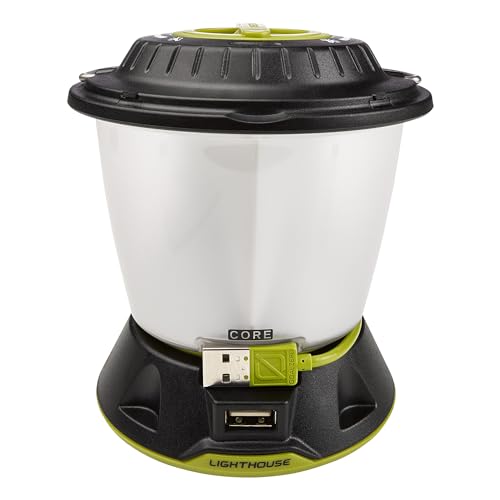
For USB power hub camping, the Goal Zero Lighthouse 600 stands out as a flexible off-grid light. Its 600-lumen output spreads evenly around camp, while the 5,200 mAh battery supports long use between charges. You can recharge it by USB, solar power, or hand crank, which helps when outlets are not available. It can also serve as a useful backup power source for small USB devices.

This lantern suits campers who value dependable light and several ways to keep it running. Its 180-hour maximum runtime is strongest at low output, not full brightness. The design is light and easy to carry, but cracks or wobble may appear over time. There is also no stated water-resistance rating, so it needs protection in wet weather.

→ Read full review

#3. Streamlight Siege X USB Lantern

Streamlight Siege X USB Lantern
Our Score
7.7 / 10
hover for details
Performance
7.6
Battery Life
7.4
Durability
8.1
Portability
8.2
Value
7.6
BrandStreamlight
Brightness Lumens325 lumens
Runtime Hours25 hrs
Power SourceUSB Rechargeable
Light Modes3 Modes
Battery Capacity Mah2600 mAh
Weight Lb1.9 lb
Dimensions In7.8 x 3.8 x 3.8 in
  • Sturdy housing, dependable switches
  • Long-lasting illumination
  • Rechargeable or off-grid power
  • Firmer side switch
  • External battery charging

USB power hubs need more than a charging port, and the Streamlight Siege X USB Lantern stands out for its sturdy build and dependable campsite light. Its 325-lumen output spreads light evenly across a camp table or shelter, while three modes help control brightness. The 2,600 mAh rechargeable battery runs for up to 25 hrs, making it useful through several nights of low or medium use.

The firm side switch can take extra effort, and charging the external battery adds a step. At 1.9 lb, it is not the lightest option for backpacking, but its solid housing suits car camping, emergency kits, and rough campsite use. Choose it when reliable illumination and rugged handling matter more than the smallest packed size.

#4. LuminAID Max 2-in-1 Lantern

LuminAID Max 2-in-1 Lantern
Our Score
7.6 / 10
hover for details
Performance
7.2
Battery Life
7.6
Durability
7.6
Portability
8.5
Value
7.8
BrandLuminAID
Brightness Lumens200 lumens
Runtime Hours50 hrs
Power SourceSolar / USB Rechargeable
Battery Capacity Mah2000 mAh
Water Resistance RatingIP67
Weight Lb0.6 lb
Dimensions In9.4 x 8.2 x 2 in
  • Rechargeable or off-grid power
  • Waterproof for rain
  • Phone charging enabled
  • Too dim for camping
  • Max-mode dimming
  • UV cosmetic yellowing

As a USB power hub lantern, the LuminAID Max 2-in-1 stands out by combining off-grid charging with a phone-charging USB port. Its 2,000 mAh battery supports up to 50 hrs of use, while solar and USB charging help keep it useful away from outlets. At 200 lumens, it spreads gentle light well for a tent or small camp area, but it is not especially bright for lighting a larger campsite.

The IP67 waterproof design and 0.6 lb weight suit rainy trips and compact packing. Its main drawback is output: the highest setting can dim during use, and some units may develop yellowing from UV exposure. Choose it for emergency backup, tent lighting, and basic phone charging rather than as your main camp light.

#5. Coleman Rugged Rechargeable Lantern

Coleman Rugged Rechargeable Lantern
Our Score
7.5 / 10
hover for details
Performance
7.9
Battery Life
6.6
Durability
7.7
Portability
7.9
Value
7.8
BrandColeman
Brightness Lumens400 lumens
Runtime Hours20 hrs
Power SourceUSB Rechargeable
Water Resistance RatingWater & Impact-Resistant
Weight Lb1.5 lb
Dimensions In5 x 5.5 x 10.5 in
  • Long-lasting illumination
  • Inconsistent runtime
  • Low price-value balance

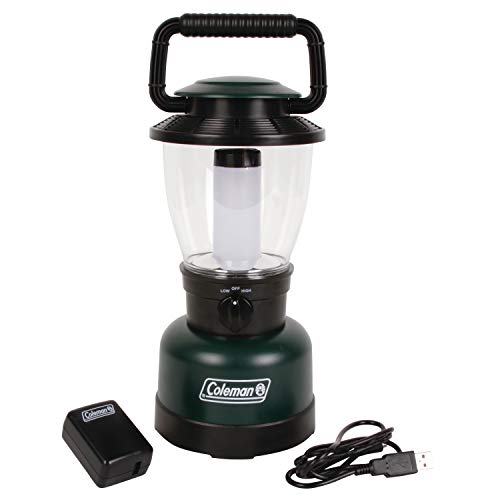
For USB power hub camping setups, this Coleman stands out as a sturdy light source with useful long-lasting illumination. Its 400-lumen output can light a table, tent, or small campsite without feeling overly harsh. The rechargeable USB power system also suits camps where you want to limit disposable batteries. At 1.5 lb, it remains manageable to carry, while its water- and impact-resistant build fits rough outdoor use.

The main trade-off is runtime consistency. Coleman rates it for up to 20 hrs, but actual results can vary with use, so it is best for campers who value a dependable, rugged lantern more than precise battery planning. Its 5 x 5.5 x 10.5 in body is easier to pack in a vehicle than a small backpack. Keep a charging plan ready for longer trips.

What to Look For

Brightness and light control: Check maximum lumens, beam spread, and the number of light modes. A good USB power hub lantern should light a table or tent evenly, with low settings for reading and longer overnight use.

Battery capacity and runtime: Look for a stated capacity in mAh and a realistic maximum runtime. Longer low or medium settings matter more than a short high-output claim. A battery indicator also helps prevent unexpected shutdowns while charging another device.

USB power performance: Confirm that the lantern can charge external devices from its USB port. Check the output type, charging speed, and whether using the power hub sharply reduces lamp runtime. Treat emergency charging as a backup, not a replacement for a dedicated power bank.

Weather protection and build quality: An IP rating gives a clearer measure of water resistance than a general rain claim. Also check the housing, switch, charging-port cover, and resistance to drops or rough packing.

Packability and value: Compare weight and dimensions with battery size and brightness. A compact lantern with a stable base, handle, or hanging point is easier to use at camp. The best value comes from reliable lighting and useful device charging, not from extra modes alone.

How We Picked

We identified products through broad research across review sites and buyer forums, then filtered the results to models that qualify as USB power hub camping lanterns. Each product had to combine a rechargeable lantern with a USB output for charging external devices.

Scoring used the same objective pillar framework as the main Camping Lanterns post. We assessed performance, battery life, durability, portability, and value, allowing direct comparison among products in this USB power hub category.

Frequently Asked Questions

What makes a USB power hub camping lantern useful at camp?

It lights your campsite and can recharge phones or other small USB devices. This helps when you have limited outlets in a tent, car, or cabin. Check the battery capacity before relying on it for several devices.

How do these lanterns differ in brightness and runtime?

Brightness ranges from about 200 to 600 lumens among common models. Higher output lights a larger area but usually drains the battery faster. Low and medium settings often provide the longest practical runtime.

What should I check before using the USB charging port outdoors?

Keep the port cover closed when the lantern is exposed to rain. Do not charge devices if water has entered the port. After a wet trip, dry the lantern fully before connecting a cable.

Are USB power hub lanterns better than regular camping lanterns?

They are better when you need emergency phone charging along with campsite lighting. Regular lanterns may offer longer runtime or simpler controls because they lack charging hardware. Choose a basic lantern if you rarely carry USB devices.

When should I choose a solar or hand crank lantern instead?

Choose solar or hand crank power for long trips without reliable access to outlets or spare batteries. USB rechargeable models charge faster and usually provide steadier output. Solar charging also depends heavily on clear sunlight.

See Also