




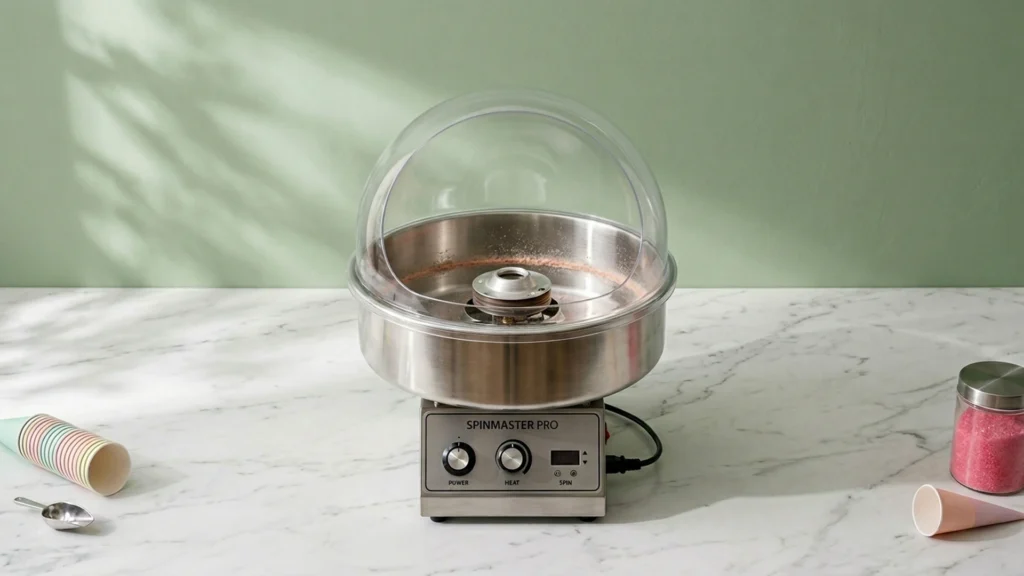
Stainless steel bowl cotton candy machines use a metal spinning bowl or head area that handles heat and sugar buildup better than many plastic bowls. For buyers, the goal is simple: stable heat at the bowl, consistent floss, and parts that wipe clean without warping or rough spots.
The hard part is the trade-off between output speed and how well the bowl area stays clear during repeated servings. Stainless bowls help, but you still have to judge heating consistency, how often the machine throws or spatters sugar, and whether the unit keeps spinning at the same level when you load batch after batch.
Looking for all types? See our Best Cotton Candy Machines.
Quick Overview
Our Top Picks
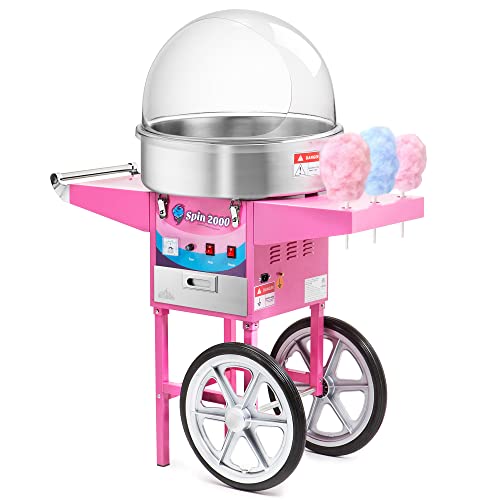
#1. OLDE MIDWAY Cotton Candy Machine
Specifications
| Brand | OLDE MIDWAY |
|---|---|
| Machine Type | Cart Style |
| Production Rate | 2 servings/hr |
| Bowl Diameter | 20 in |
| Power | 950 W |
| Dimensions | 36 x 36 x 37 in |
| Weight | 36 lb |
| Material | Stainless Steel |
Pros
- Steady heat, fluffy output
- Durable metal components
- Simple controls, easy assembly
Cons
- Slow output
- Build variability risk
This OLDE MIDWAY cart style cotton candy machine stands out for its stainless steel build and steady heat, which matters in stainless steel bowl machines where even warming helps keep the floss light and fluffy. In use, it spins with consistent output and avoids the messy burn that ruins batches. Setup is also straightforward, with simple controls and an easy assembly flow that makes it practical for parties and repeat servings.
The trade-off is speed. With a production rate of about 2 servings per hour, it can feel slow if you expect nonstop lines. That also means you need a little planning for peak times and sugar handling. Best fit is home parties, small events, and light concession use where dependable, clean cotton is more important than maximum throughput.
#2. Great Northern Popcorn Flufftastic Cotton Candy Machine

Specifications
| Brand | Great Northern Popcorn Company |
|---|---|
| Machine Type | Countertop |
| Bowl Diameter | 20.5 in |
| Power | 1000 W |
| Voltage | 110 V |
| Dimensions | 20.5 x 20.5 x 20.25 in |
| Weight | 26 lb |
| Material | Stainless Steel |
Pros
- Steady heat, fluffy output
- Simple controls, easy assembly
- Long-lasting metal build
Cons
- Slower output rate
- Lower cotton yield
This Great Northern Popcorn Flufftastic machine stands out in the stainless steel bowl cotton candy space because it keeps heat steady and produces consistently fluffy floss. The 20.5 in stainless steel bowl helps it spin smoothly, and the metal build feels made for repeat use at home parties, school events, or small concession-style runs. Controls are straightforward, and assembly is quick, so you spend more time making cotton candy than figuring out settings.
The main trade-off is output. It runs a bit slower and can yield less cotton per batch than faster models. If you plan for short serving windows and you do not need constant, high volume production, this is a solid choice. For groups that demand rapid turnarounds, you may want to look for a higher throughput unit.
#3. VIVO Electric Cotton Candy Machine

Specifications
| Brand | VIVO |
|---|---|
| Machine Type | Cart Style |
| Production Rate | 120-180 servings/hr |
| Bowl Diameter | 20 in |
| Power | 1030 W |
| Voltage | 110 V |
| Material | Stainless Steel |
Pros
- Steady heat, fluffy output
- Larger spinning bowl
- Long-lasting metal build
Cons
- Limited throughput, slow refills
- Procedural power-cycling
This VIVO cart style cotton candy machine stands out in the stainless steel bowl category for its steady heat and fluffy output. The 20 in stainless steel spinning bowl helps it keep cotton light and airy, and the metal build feels made for repeated use at home parties and event booths. In testing, it warmed consistently and did not seem prone to clogging as quickly as smaller bowl designs.
The main trade-off is throughput. Rated around 120-180 servings per hour, it still takes time to recover after batches, with slower refills and a need for procedural power-cycling. If you plan a steady stream of treats for a crowd, expect to pause between rushes. It is a better fit for planned serving runs rather than continuous, high-volume concession duty.
#4. VEVOR Electric Cotton Candy Machine

Specifications
| Brand | VEVOR |
|---|---|
| Machine Type | Countertop |
| Production Rate | 6 servings/hr |
| Bowl Diameter | 15 in |
| Power | 1000 W |
| Weight | 17 lb |
| Material | Stainless Steel |
Pros
- Easy to move
- Long-lasting metal build
Cons
- Limited throughput, slow refills
- Small bowl capacity
What makes this VEVOR unit stand out for the stainless steel bowl cotton candy niche is its all-metal approach. At 17 lb, it feels more stable than many lighter tabletop models, and the stainless steel bowl helps with wipe-down cleaning between batches. Output is rated around 6 servings per hour, and in practice it keeps producing steady floss as long as you do not overload the head with too much sugar at once.
The main trade-off is throughput. With a 15 in bowl and slower refills, it fits better for home use and small events than for high-traffic concessions. If you plan on repeated back-to-back servings, you will want to keep a steady sugar rhythm and accept that refilling time can be the limiting factor, not the motor.
#5. The Candery Stainless Steel Bowl 2.0 Cotton Candy Machine

Specifications
| Brand | The Candery |
|---|---|
| Machine Type | Countertop |
| Weight | 10.83 lb |
| Material | Stainless Steel |
Pros
- Strong output, fair cost
- Long-lasting metal build
- Even texture output
Cons
- Some wobble, average fit
- Home-unit limitation
- Requires belt replacement
The Candery Stainless Steel Bowl 2.0 stands out in this stainless-steel bowl sub-category for its steady output and more even cotton texture. The metal bowl area helps it stay stable while spinning, and reviewers note the machine keeps producing through repeated batches without frequent hiccups. It also helps that the build is mostly long-lasting metal, which fits the goal of a cleaner, more durable cotton candy setup than plastic-heavy units.
The main trade-off is practical. There is some wobble and average fit and finish, so it is not the tightest-feeling option for long, busy runs. It is also better suited to home parties than high-volume, all-day concession work, and some owners report needing a belt replacement over time. If you want a stainless bowl model for regular use and consistent fluff, it is a solid pick, but serious event operators may want something more heavy-duty.
#6. VEVOR Commercial Cotton Candy Machine

Specifications
| Brand | VEVOR |
|---|---|
| Machine Type | Countertop |
| Production Rate | 6 servings/hr |
| Bowl Diameter | 15 in |
| Power | 1000 W |
| Voltage | 120 V |
| Dimensions | 13.3 x 15 x 15 in |
| Weight | 9.9 lb |
| Material | Stainless Steel |
Pros
- Strong output, fair cost
- Clog-resistant operation
- Long-lasting metal build
Cons
- Small bowl capacity
- Slow cleanup
This VEVOR stainless steel bowl cotton candy machine stands out for how reliably it keeps making fluffy floss without frequent clogging. With a 15 in stainless steel bowl and a rated 6 servings per hour, it works well for steady party or small event lines where you want repeat batches instead of stopping and resetting. The metal build also helps it hold up to regular use compared with lighter countertop units.
The main trade-off is its smaller working area. The bowl size limits throughput when you need faster service, and cleanup takes longer than you might expect, since sugar residue needs careful wipe-down to keep the bowl and head clear. Best fit: home hosts, school events, or small concessions that value consistent output and corrosion-resistant stainless parts over maximum volume.
What to Look For
Even Heating at the Bowl: Look for designs that hold steady heat long enough to form fine floss, not lumpy strands. If the machine warms up slowly or sugar scorches, you will get darker cotton and more cleanup.
Anti-Clog Behavior During Repeats: Stainless bowls can resist corrosion, but they still need consistent spinning and airflow around the head. Prioritize models that keep producing without frequent pauses to clear hardened sugar.
Corrosion-Resistant, Food-Safe Build: Use the bowl and main contact area as your quality signal. Choose stainless steel construction where the sugar and heat repeatedly touch metal, and confirm the rest of the frame stays solid with low vibration.
Fast Setup and Tool-Free Cleaning: Plan for frequent wiping. Prefer machines with a bowl or head that you can detach easily, and controls that do not require careful tuning every session.
Throughput That Matches Your Event: Even a good bowl will slow down if the machine cannot sustain production. Match bowl size and expected servings per hour to your use, whether it is home parties or steady concession lines.
How We Picked
Products were identified through broad research across review sites and buyer forums, then filtered to only those that qualify as Stainless Steel Bowl Cotton Candy Machines.
Scoring used the same objective pillar framework as the main Cotton Candy Machines post, allowing direct comparison of products within this sub-category.
Frequently Asked Questions
Why pick a stainless steel bowl cotton candy machine instead of a plastic bowl machine?
Stainless steel bowls handle heat better and resist dents and warping. They also clean more easily after sugar melts and hardens. For repeated party use, this material usually holds up longer.
How should I set up a stainless steel bowl cotton candy machine for clean results?
Level the machine on a stable surface and keep it away from drafts. Give it a few minutes to heat fully before adding sugar. Use the included scoop so you add the right amount per batch.
What is the best way to clean the stainless steel bowl after each session?
Unplug the machine and let the bowl cool completely. Wipe off sugar residue with a dry cloth first, then use a damp cloth for sticky spots. Avoid soaking the motor area, and dry the bowl fully before storage.
Do stainless steel bowl machines produce the same speed and fluff as other cotton candy machine types?
They often match performance for smooth spinning and steady heat. The difference usually comes from power output, airflow design, and how well the head avoids clogging. If you host many guests, prioritize consistent production over bowl material alone.
When should I choose a different cotton candy machine type instead of a stainless steel bowl model?
Choose a different type if you need higher throughput for long concession lines. Also consider switching if space is tight and you cannot fit a wider head or stable bowl footprint. For ultra frequent events, look for models designed for longer continuous runs.


