Shopping for the best Skiss shouldn’t feel like a chore, and we’re here to make it simple and trustworthy. We know there are countless options out there and that a single misleading spec or a handful of bad experiences can ruin a purchase. That’s why we take a careful, people-first approach: we’ve analyzed thousands of customer reviews and compared features across the market so you don’t have to spend hours digging through conflicting opinions.
Our process is straightforward but thorough. We read real owner feedback to spot patterns—what users praise, what they complain about, and how products hold up over time. Then we line those findings up against the technical details and features offered by competing models, looking for genuine differences that affect everyday use. Durability, ease of use, value for money, and manufacturer support are the sorts of things we pay extra attention to because they actually matter once the product is in your hands.
You can trust that our recommendations aren’t pulled from thin air. We focus on highlighting Skiss options that deliver consistently high-quality performance and a strong track record with buyers. Our goal is to help you make a confident choice quickly, whether you’re buying your first Skiss or upgrading to something better. Read on and we’ll walk you through the best choices based on real-world feedback and thoughtful comparison, so you end up with a product that really works for you.
Quick Overview
Top Picks
Best Overall

Specifications
| Brand | Völkl |
|---|---|
| Flex Rating | 6/10 |
| Camber Profile | Rocker-Camber-Rocker |
| Sidecut Radius | 10 m |
| Terrain Type | all-mountain |
| Dimensions | 5.5 x 3.8 x 4.8 in |
| Weight | 10 lb |
Pros
Cons
The Völkl Mantra M7 earns Best Overall because it handles hard‑charging skiing with confidence. Its multi‑layer woodcore and Tailored Titanal Frame create a damp, powerful platform that smooths chop and delivers strong edge hold on firm snow, while Tailored Carbon Tips reduce swing weight so the ski snaps into and out of turns with quick response. The 4D sidecut and moderate taper let you lay down short or long arcs without fighting the ski, and full sidewalls plus a P‑Tex 2100 base add durability and dependable glide. In the ~96 mm M7 96 you get groomer‑friendly precision that still tracks well in variable conditions, ideal for advanced to expert skiers seeking a responsive, performance‑focused tool.
It isn’t a float specialist in deep blower or the lightest option for long skin tracks, so backcountry purists may want lighter, wider skis. For aggressive resort skiers who value control, speed and longevity, it’s tough to beat.
Best Elite Carver

Specifications
| Brand | Fischer |
|---|---|
| Camber Profile | Camber |
| Sidecut Radius | 12.5–15.5 m |
| Terrain Type | piste, race |
| Dimensions | 4.4 x 2.6 x 4 in |
| Weight | 4.5 lb |
Pros
Cons
Built from World Cup DNA, the Fischer RC4 Noize feels like a ski that knows exactly how to go fast and hold a line. Its race‑tuned, firm flex and M‑Plate compatibility translate skier input into immediate, rock‑solid responses, so big GS arcs come through with precision and explosive power. The NOIZE vibration‑management tech is genuinely useful — it quiets chatter on hard snow and at speed, which makes turn initiation cleaner and gives you the confidence to push harder without worrying about unpredictable feedback.
That focus on performance is also why it’s a specialist rather than an all‑rounder. The ski isn’t forgiving for relaxed cruising or soft, variable snow, and its heavy, aggressive character demands strong technique. For experts and racers hunting maximum dynamics, control and stability on long, high‑speed carves, the RC4 Noize is a top-tier choice; for everyone else, it’s a bit overbuilt.
Best Playful All-Mountain

Specifications
| Brand | Blizzard |
|---|---|
| Flex Rating | 9/10 |
| Camber Profile | Rocker-Camber-Rocker |
| Sidecut Radius | 18.4 m |
| Terrain Type | all-mountain, freeride |
| Dimensions | 4 x 69 x 6 in |
| Weight | 4.1 lb |
Pros
Cons
The Rustler 10 earns its spot as a playful all‑mountain because it blends surfy off‑piste fun with real on‑piste precision. Its Rocker‑Camber‑Rocker shape gives lively tip and tail float for soft snow and easy, forgiving turn initiation, while the camber underfoot keeps the ski planted and responsive when you step on edge.
Underneath that personality, the TrueBlend Free wood core and Ti‑Sandwich full sidewall provide a smart mix of pop, dampening and edgehold. You get enough snap for playful rebounds off features and enough stiffness to feel stable at speed—especially useful when conditions vary across a day.
Where the Rustler 10 really shines is as a one‑ski quiver: it lets you surf chutes and pillow lines without feeling like you’ve compromised groomer precision. If you’re after a dedicated big‑mountain bomber or the very deepest powder specialist, there are more extreme options, but for most freeride-minded skiers this is a brilliantly balanced, fun choice.
Best Powder Performance

Specifications
| Brand | Blizzard |
|---|---|
| Flex Rating | 9/10 |
| Camber Profile | Rocker-Camber-Rocker |
| Sidecut Radius | 20.5 m |
| Terrain Type | freeride, powder |
| Dimensions | 5.6 x 4.5 x 5.2 in |
| Weight | 9.1 lb |
Pros
Cons
The Rustler 11 truly shines where it matters in deep snow: its full rocker up front and camber underfoot make it feel like it’s on top of the pow, while the camber section gives predictable bite and spring when you want to carve or pop off features. The mixed poplar/beech/paulownia core keeps the ski lively without feeling buzzy, and the Titanal layer adds reassuring stability at speed — so you get floatiness and confidence in equal measure. Sandwich sidewalls tighten up turn initiation and edge grip compared with softer powder boards, which helps when the terrain gets variable.
A couple of things are pretty middle-of-the-road: at about 2,100 g per ski it’s not featherlight, and the 20.5 m radius with a 142/114/132 outline trades extreme slush-plow behavior for more versatile maneuverability. Overall, for riders who want a playful, stable powder tool that still slices through firmer snow, the Rustler 11 is a top pick.
Best Aggressive Freeride

Specifications
| Brand | Dynastar |
|---|---|
| Flex Rating | Playful |
| Camber Profile | Rocker-Camber-Rocker |
| Sidecut Radius | 17 m |
| Terrain Type | all-mountain, freeride |
| Dimensions | 5.4 x 4.2 x 5 in |
| Weight | 4.7 lb |
Pros
Cons
The Dynastar M‑Free 108 feels built for someone who wants to charge without compromise. That 108 mm waist gives genuine float in fresh snow, while the ski’s tuning keeps edges crisp and predictable when you slam onto firmer or variable snow. It’s lively and agile for its width, so pop-offs and tight technical lines feel confident rather than cumbersome, and landings stay composed thanks to a stable yet responsive platform.
A few practical notes: the model comes in sensible lengths (~162–192 cm) to suit different riders, and the one-year warranty is standard for the category. It isn’t trying to be a lightweight touring tool—this is a committed freeride/all‑mountain weapon—so if you want pure backcountry minimalism, look elsewhere. For aggressive skiers who split time between steep powder and on-trail carving, the M‑Free 108 strikes a compelling balance of float, edgehold, and playful control.
Best Lightweight Stability

Specifications
| Brand | Head |
|---|---|
| Camber Profile | Rocker-Camber-Rocker |
| Sidecut Radius | 17.2 m |
| Terrain Type | all-mountain, freeride |
| Dimensions | 5.2 x 3.9 x 4.8 in |
| Weight | 4.2 lb |
Pros
Cons
The Head Kore 100 Ti earns its spot for lightweight stability by striking a neat balance: the ski stays lively and playful underfoot but gains real composure from the Titanal laminate. That Ti layer brings dampening and stronger edge grip, so when you push into harder groomers or pick up speed through mixed snow the ski feels more planted than a typical ultralight freeride board. The sandwich construction and rocker–camber–rocker profile also help — they keep turn initiation nimble while giving enough camber underfoot for reliable carve hold.
The 2026 geometry tweaks make sense for this category too, improving float in softer conditions without turning the ski into a one‑trick powder stick. Specs like the 100 mm waist and 17.2 m radius are fairly middle‑of‑the‑road, which keeps the Kore 100 Ti versatile rather than specialized. In short, it’s a great pick if you want a single, relatively light ski that won’t feel nervous at speed.
Best Versatile All-Mountain
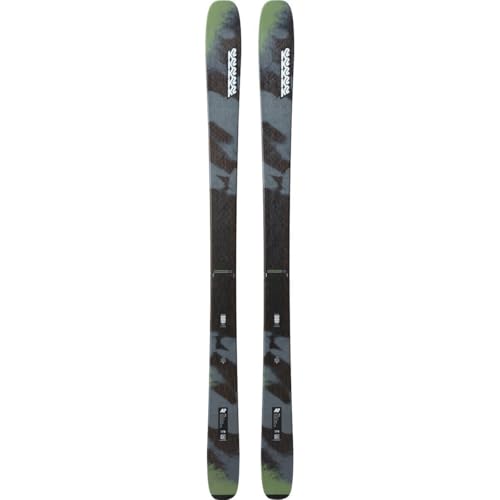
Specifications
| Brand | K2 |
|---|---|
| Flex Rating | 7/10 |
| Camber Profile | Rocker-Camber-Rocker |
| Sidecut Radius | 16.7 m |
| Terrain Type | all-mountain |
| Dimensions | 5.2 x 3.8 x 4.7 in |
| Weight | 7 lb |
Pros
Cons
K2’s Mindbender 96C feels like a genuine do‑everything ski. The carbon reinforcement and Spectral Braid with variable‑angle fibers translate directly to a snappy, precise feel underfoot — turns come together without dead spots, and the ski responds cleanly when you bend it into a carve. The Uni‑Directional flax strap is a subtle but noticeable touch: it soaks up chatter on rough snow, adds a bit of pop when you want to ollie or release out of a turn, and helps the edges bite when the surface gets mixed. At 96 mm underfoot it’s surprisingly playful in tighter terrain yet composed enough to hold a line at speed, which is why it earns its “one‑ski” reputation.
It’s worth noting the compromises: 96 mm isn’t a float champion in deep, wet powder, and it’s not the lightest option for long skinups. For most resort days — groomers, chop, short soft patches and confident variable lines — the Mindbender 96C delivers the balanced, confident performance that makes it an excellent versatile all‑mountain choice.
What To Look For
Choosing the right Skiss comes down to matching its design and capabilities with how you plan to use it; focus on practical traits that affect daily enjoyment and long-term value.
- Build quality and materials: Look for sturdy construction and high-quality materials because they determine durability, feel and how the product performs under regular use.
- Fit and comfort: Comfortable ergonomics or sizing are essential since an otherwise great Skiss can be ruined by poor fit, pressure points or awkward handling.
- Size and dimensions: Choose the size that fits your space and intended use, as dimensions affect portability, storage and the way you interact with the product.
- Performance and intended use: Match the model to your goals—some are optimized for speed, precision or versatility—so performance characteristics align with how you'll actually use it.
- Weight and portability: Consider how often you'll move it; lighter options are easier to transport while heavier builds may offer more stability or premium materials.
- Durability and warranty: A solid warranty and reputation for longevity reduce long-term costs and give peace of mind if components fail or wear out.
- Ease of maintenance: Check how simple it is to clean, service or replace parts because low-maintenance designs save time and money over the lifetime of the product.
- Compatibility and accessories: Evaluate available accessories, parts and compatibility with other gear to ensure you can customize, upgrade or repair it without headaches.
- User reviews and brand reputation: Read real-world feedback to learn about reliability, common issues and owner satisfaction, and favor brands with responsive customer support.
- Price and long-term value: Balance upfront cost with expected lifespan and features to determine which option offers the best value over years of regular use.
Prioritize the few features that matter most to your lifestyle to find a Skiss that delivers reliable performance and lasting satisfaction.
How We Select Our Products
Picking the top Skiss models for this post wasn’t a quick scroll-and-pick exercise — we treated it like a small research project. First, we gathered data from multiple reliable sources: verified retailer ratings, manufacturer specs, independent review sites, and real customer feedback. We looked for consistency across those channels, giving more weight to reviews with substantive detail and larger sample sizes instead of one-off five-star bursts. Where possible, our team also ran hands-on checks to confirm how features felt in everyday use.
From there we applied a clear set of criteria. Customer ratings were translated into an aggregate score, but we went deeper — analyzing written reviews to spot recurring strengths and weaknesses (durability, ease of use, comfort, etc.). We compared features side-by-side: materials, battery life, connectivity, and warranty terms, then matched those attributes to common use cases. Value for money was assessed by tracking recent market prices and comparing the feature set to similarly priced alternatives. We also considered brand reputation, after-sales support, update history, and safety or certification information when relevant. Each factor received a weighted score so the final recommendations reflected not just popularity, but practical performance and long-term value.
Above all, our goal is to give you recommendations you can trust. That means being transparent about what we measured, why it mattered, and where trade-offs exist. If you’re looking for reliability over hype, this selection reflects careful comparison, real-world testing, and an emphasis on honest, useful guidance.
Final Thoughts
Picking the right skis does more than just make a run feel smoother — it tailors your entire day on the mountain to what you actually want to do. When your skis match your ability, preferred terrain and local snow conditions, you get noticeably better control, efficiency and confidence. That means cleaner turns, fewer surprises in variable snow and less fatigue by the end of the day. For beginners, forgiving, stable skis reduce the learning curve and the risk of tumbles; for intermediates and experts, purpose-built shapes help you push harder and refine technique.
Comfort and safety are tightly linked to equipment fit. Skis that work with your bindings and boots — and are sized appropriately — improve balance and reduce strain on knees and ankles. Having the right gear for powder, groomers or park features also lowers the chance of accidents because you’re not forcing skis into uses they weren’t designed for. Long-term, making a smart pick saves money: durable, well-matched skis retain value better and often need fewer costly adjustments or replacements.
Choosing wisely is about thinking ahead. Consider how often you ski, how you want to progress, and where you ride most. Demo days, honest reviews and professional boot/binding fitting will pay off. In short, the right pair amplifies fun, supports development and keeps you safer — so invest a little time in the decision and you’ll get more satisfying seasons on the mountain.