




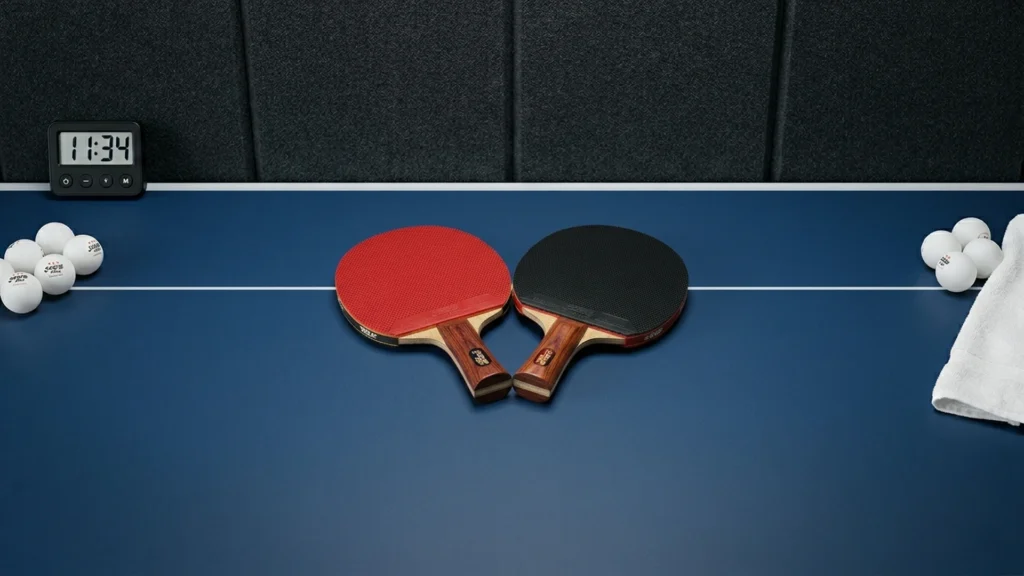
Ping pong paddles are the two-part system that drives your whole game, blade plus rubber. The blade sets the rebound and feel. The rubber sets how much grip you get on the ball for spin. Pick them wrong and you will fight your paddle on basic serves, returns, and blocks.
Choosing is harder than it sounds because many specs get simplified or misread. Speed claims can hide a loss of control. A high spin rating can mean the paddle grabs the ball on perfect hits, but turns sloppy on off-center contact. Rubber terms like inverted, pips-out, and anti-spin also matter, yet listings sometimes use the wrong label. Sponge thickness and blade material then shape the dwell time, power, and how stable your shots feel under pressure.
This guide separates what matters from what does not. You will get a practical checklist and a scoring lens that focuses on how paddles feel on serves, drives, and loops. It also accounts for durability and comfort so you can buy once and keep playing.
Quick Overview
Top Picks
Best Overall

Specifications
| Brand | Butterfly |
|---|---|
| Weight Oz | 3.2 |
| Blade Material | Composite |
Pros
- Fast, controllable, spinny
- Reliable bounce and control
- Sturdy blade, durable rubber
Cons
- Beginner-demanding learning
This paddle earns the Best Overall spot because it hits a rare sweet spot, strong spin with usable control. The Butterfly Timo Boll ALC ALC setup responds crisply on serves and drives, while still giving you enough dwell time to grab the ball on loops. It feels lively without becoming wild when you change pace.
On the table, you get fast, controllable shots that stay predictable. The blade feels sturdy, and the rubber bounce is reliable from point to point. That blend of speed and spin makes it easier to set up your next ball, not just blast the first one.
The main downside is that it can be a bit demanding for newer players. If your technique is still inconsistent, you may find it harder to place shots where you want them. If you can already return and rally with steady strokes, this is a great step up for players who want spin and control from one paddle.
Also ranked #1 in: Carbon Blade Ping Pong Paddles · Shakehand Ping Pong Paddles
Best Tournament Approved

Specifications
| Brand | STIGA |
|---|---|
| Rubber Type | Inverted |
| Sponge Thickness In | 0.08 |
| Handle Shape | Flared |
| Speed Rating | 96 |
| Spin Rating | 94 |
| Control Rating | 90 |
Pros
- Fast, controllable, spinny
- Reliable bounce and control
- Strong spin potential
Cons
- Durability uncertainty
- Backspin slightly weaker
This STIGA paddle fits the Best Tournament Approved slot because it balances speed with real spin and dependable control. The crisp touch helps on serves, drives, and looping shots. With an inverted rubber setup and an 0.08 in sponge, it keeps enough dwell time for you to grab the ball and shape it.
The best strength is how controllable it stays when you get aggressive. Performance scores land at 8.6, backed by the feel described as fast, controllable, and spinny. The bounce and shot response are consistent enough to trust your placement, while the 90 control rating supports controlled counters and steady rally play. Build and consistency also look solid, with an 8.1 build score and an 8.2 consistency score that points to repeatable response from swing to swing.
One weakness shows up in longevity, with durability uncertainty noted by reviewers. Backspin is also described as slightly weaker, so heavy backspin battles may take extra clean technique. If you want a tournament-style inverted paddle that is easy to control while still generating strong topspin and loop speed, this is the one to get.
Best Waterproof

Specifications
| Brand | Cornilleau |
|---|---|
| Blade Material | Composite |
Pros
- Fast, controllable, spinny
- Reliable bounce and control
- Great power-control value
Cons
- X90 performance gap
This Cornilleau paddle fits the Best Waterproof slot because it is built for wet and rough handling without the usual rubber feel changes. In play, it keeps a steady bounce when conditions get less than ideal, which matters if you practice outdoors or near open air.
The Nexeo X70 also nails a strong speed and spin mix while staying controllable. Drives land with a crisp response, and loops hold spin without feeling overly touchy. That balance shows up in the paddle scores, with performance and build both sitting in the low to mid 8s, plus repeatable feel from shot to shot.
The main catch is a performance gap versus the X90 line. If you want reliable waterproof use and a fast, spinny paddle that still stays put when you place the ball, this is a smart pick for most improving and intermediate players who do not want to jump to the very top model.
Best for Control Seekers

Specifications
| Brand | Nittaku |
|---|---|
| Weight Oz | 3.2 oz |
| Blade Material | Carbon Fiber |
| Handle Shape | Straight |
Pros
- Fast, controllable, spinny
- Clean finish, solid bonding
- Reliable bounce and control
Cons
- Stiff feedback harshness
- Limited dwell feel
This Nittaku Acoustic Carbon paddle fits control seekers because it keeps your shots placed while still adding spin. The standout trait is its crisp, predictable feel on serves, drives, and loops. You get a steady response when you aim carefully and swing with intention.
Players tend to like the way it balances speed, spin, and control. The bounce feels reliable shot to shot, with clean contact that helps you land topspin and keep serves from drifting. Build quality also stands out, with a solid carbon blade feel, a clean finish, and stable bonding that holds up well during play.
The trade-off is a slightly stiff feedback that can feel harsh when you hit the ball wrong. The dwell feel is also more limited than some slower, softer setups, so timing matters. If you want dependable control and strong spin without a loose, trampoline-like response, this is a strong choice.
Best for Advanced Players

Specifications
| Brand | JOOLA |
|---|---|
| Weight Oz | 9.60 oz |
| Blade Material | Carbon Fiber |
| Rubber Type | Inverted |
| Handle Shape | Flared |
| Speed Rating | 9 |
| Spin Rating | 9 |
| Control Rating | 6 |
Pros
- Fast, controllable, spinny
- Great power-control value
- High speed output
Cons
- Heavy and harder to swing
- Low forgiveness
- Skill-dependent feel
This JOOLA paddle fits the Best for Advanced Players role because it is built for aggressive play and fast spin. The carbon fiber blade and inverted inverted rubber combination give a crisp feel when you drive, loop, or push off serves. It rewards players who can swing with intent and place the ball early.
You get strong speed and spin with solid control for an offensive setup. Shot response feels quick, with enough dwell time to load the rubber and create heavy rotation. Build quality also holds up well, and the paddle stays stable through practice sessions. The 9-speed and 9-spin ratings match what advanced users want for third-ball attacks and fast rallies.
The trade-off is that it is heavy at 9.60 oz and can feel harder to swing for long periods. It also has low forgiveness, so mistimed shots tend to miss the target. If you want reliable power and high spin without babysitting your technique, this is a strong pick for experienced players.
Best Larger Hitting Area

Specifications
| Brand | STIGA |
|---|---|
| Weight Oz | 3 |
| Blade Material | Carbon Fiber |
Pros
- Fast, controllable, spinny
- Reliable bounce and control
Cons
- Slightly bulky on serves
Looking for a larger hitting area paddle? The STIGA Cybershape Carbon is a strong fit because it keeps shots forgiving without giving up punch. Its carbon construction helps it respond quickly, so you still get usable pace and spin even when you do not strike dead center.
On the table, it feels fast, controllable, and consistently spinny. Drives and loops come off with a crisp hit, and there is enough dwell time to shape spin reliably. Build quality matches that feel, with a stable, well-finished blade that stays predictable shot to shot.
The main trade-off is that it can feel slightly bulky on serves, which may slow down touchy placement. If you want a dependable all-around paddle with a bigger margin for error and strong spin, this is the one to get.
Best Outdoor

Specifications
| Brand | Cornilleau |
|---|---|
| Blade Material | Composite |
| Speed Rating | 7 |
| Spin Rating | 7 |
Pros
- Clean finish, solid bonding
- Great power-control value
- Carbon/composite build
Cons
- Limited performance details
For outdoor play, you want a paddle that stays stable and still feels easy to hit with. The Cornilleau Tacteo 50 fits this best-outdoor role with a carbon or composite style blade that gives a lively, dependable response even when the ball is not perfect.
On the table, it lands in a solid speed and spin zone, with a performance score of 7.6 that points to a good mix of power and control. The build is a standout too, with a clean finish and solid bonding that should hold up better than many entry options. Comfort is also steady for longer rallies, thanks to a balanced feel that does not feel overly head-heavy.
The main downside is that there are limited performance details available, so you have less guidance on how it behaves for specific shot types. If you want a durable outdoor-ready paddle with reliable power-control balance, and you do not need lots of fine-grain performance notes, this is the one to get.
Best Value

Specifications
| Brand | Cornilleau |
|---|---|
| Blade Material | Composite |
Pros
- Great power-control value
- Well-balanced, easy to swing
- Carbon/composite build
Cons
- Limited advanced ceiling
- Tournament unsuitability
This Cornilleau paddle earns its Best Value spot for a simple reason, it hits a strong power-control balance without feeling hard to manage. The carbon and composite style build supports quicker shots and a more lively response, which helps beginners grow their game fast.
On court, it feels easy to swing and well balanced, so you can place serves and drives more often than you would with heavier or more demanding paddles. It also gives enough dwell time for real spin, especially on loops and controlled topspin drives. Build quality stands out too, with a stable carbon/composite construction that holds up well for regular play.
The main downside is a limited advanced ceiling, once your technique gets more aggressive, it can feel like it runs out of gear. It is also not a tournament-ready pick. If you want a solid paddle for casual to intermediate play that focuses on control with usable power, this is the one to get.
What to Look For
Performance: Use the speed, spin, and control ratings as a trio, not as separate trophies. A good paddle balances pace with placement. Look for a paddle that keeps spin on drives and loops without turning your backhand into a guess.
Build Quality: Check the blade material and rubber quality for stability. Clean finishing and solid bonding matter because peeling or uneven edges can ruin touch and add vibration. If the paddle feels rough around the perimeter, assume it will wear faster.
Comfort: Match the handle shape to how you swing. A secure grip reduces fatigue, especially during longer rallies. Also consider weight, since a very light paddle can feel twitchy, while a heavy one can slow your recovery for quick returns.
Consistency: Treat the sweet spot like a resource. Paddles with reliable bounce and predictable rubber response help you repeat results from shot to shot. If feedback mentions random misses or sudden power loss, that is a consistency red flag.
Rubber Type: Choose the rubber category based on your style. Inverted rubber suits most offensive topspin play. Pips-Out and Long Pips often support different tactics and ball behavior. Anti-Spin is usually for blocking and disrupting, not for easy topspin loops.
Sponge Thickness: Sponge thickness affects power and how easily you load the ball. Thicker sponge usually adds speed but can feel less forgiving. Thinner sponge often gives more touch but less push, so expect slower drives.
Speed Rating: Use speed to predict how much power you will create on swings, not how hard the paddle can hit in theory. Higher speed ratings pair best with solid technique. If your placement is inconsistent, start with a more controlled speed profile.
How We Selected These Products
Products were discovered through broad web searches across review sites, buyer forums, and best-of lists, then narrowed down to paddles that show up repeatedly in discussions. I did not rely on a single blog or one retailer page.
I read a large volume of real customer reviews to find the problems buyers actually ran into, like peeling rubber, slick handles, uneven rebound, or touch that disappears off-center. I then verified availability and key specs directly against Amazon listings.
Each paddle was scored across the five pillar names from the framework: Performance, Build Quality, Comfort, Consistency, and Value. Final picks focused on distinct roles, so you get options that fit different needs, not just a single ranking.
Frequently Asked Questions
Which ping pong paddle is best for most people who want balanced speed, spin, and control?
Pick a balanced offensive allround or allround-offensive setup. In this set, Butterfly Timo Boll ALC Ping Pong Paddle ranks best overall because users report crisp response, strong topspin, and good shot placement. It can feel a bit demanding, so beginners may want a slightly more control-friendly option.
What is the key difference between budget outdoor paddles and premium indoor performance paddles?
Outdoor paddles focus on staying playable in wind and moisture, with more durable builds and water-resistant designs. Premium indoor paddles focus on faster response, better touch, and stronger spin control. If you play outside often, durability matters more than maximum speed.
Do I need to change anything about my paddle care if I play outdoors?
Yes. Let the paddle dry fully after wet or humid sessions, and avoid storing it in a hot car or direct sun. Use a cover or case to protect the rubber edge tape and keep the face clean.
Is higher price always better for ping pong paddles?
Not always. Some premium paddles score high in performance and build, like Butterfly Timo Boll ALC Ping Pong Paddle, but value can drop when price rises faster than durability or control. Cornilleau Tacteo 30 Ping Pong Paddle shows that strong value exists at the low end.
Why do many fast ping pong paddles feel less controllable for beginners?
Fast blades trade dwell time and feel for speed and spin. When the paddle reacts quickly, small timing errors can turn into long shots or missed placements. That is why low-control ratings often pair with high speed and spin on the more aggressive options.
Why do some paddles score much higher in consistency than others?
Consistency depends on stable rebound and predictable touch across different contacts on the blade. Paddles with strong user-reported feel, stable bonding, and steady sweet spot behavior tend to repeat results better. In this set, Nittaku Acoustic Carbon Ping Pong Paddle stands out for reliable control looping, while very fast offensive paddles can feel less repeatable for some players.


