




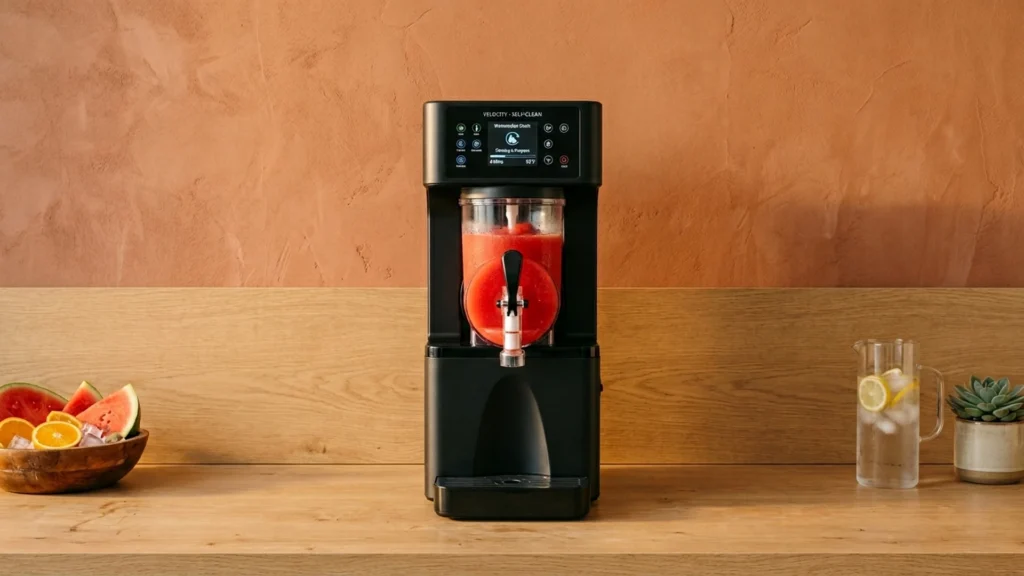
Self-cleaning slushie machines add an internal rinse or flush step so you do not have to scrub frozen syrup residue by hand. For this sub-category, buyers mainly need clean tanks, a repeatable way to refresh the mix, and controls that make the cleaning cycle simple. The goal is fewer sticky parts at the end of service and less downtime between batches.
Picking one is harder than it looks because the cleaning feature trades off against core serving needs. Some machines clean well but have smaller tanks or fewer liters per batch. Others hold slush evenly but require more hands-on steps during setup and draining. You also have to match the machine to your voltage and counter space, since footprint and weight affect where the unit can run day after day.
Looking for all types? See our Best Slushie Machines.
Quick Overview
Our Top Picks
#1. Mojgar 30L 2-Tank Slushie Machine

Specifications
| Brand | Mojgar |
|---|---|
| Number Of Tanks | 2 |
| Tank Capacity | 8 gal |
| Cooling System | Compressor Cooled |
| Power | 1100 W |
| Weight | 92 lb |
Pros
- Faster consistent freezing
- Larger batch size
- Simple controls, clear indicators
Cons
- Heavy and hard
- Bulky footprint
The Mojgar 30L 2-Tank Slushie Machine stands out in self-cleaning slushie machines because it is built for real repeat use, not just short runs. With compressor cooling and a 2-tank setup, it keeps slush at a steady serving texture while you rotate flavors. The self-cleaning angle matters when you run batches back to back, since you want the tanks to stay clean without long drain and scrub sessions.
There is a trade-off. At 92 lb and with a bulky footprint, it is harder to move and store than smaller units. This makes it a better fit for a dedicated corner in a cafe, bar, or event setup where frequent cleaning and steady output matter more than portability.
#2. WETIE 82 oz Slushie Machine

Specifications
| Brand | WETIE |
|---|---|
| Tank Capacity | 0.51 gal |
| Cooling System | Compressor Cooled |
| Power | 180 W |
| Weight | 17.2 lb |
| Housing Material | Stainless Steel |
Pros
- Simple controls, clear indicators
- Strong features for price
- Faster consistent freezing
Cons
- Average durability, snug fit
- Small batch volume
- Conditional slush timing
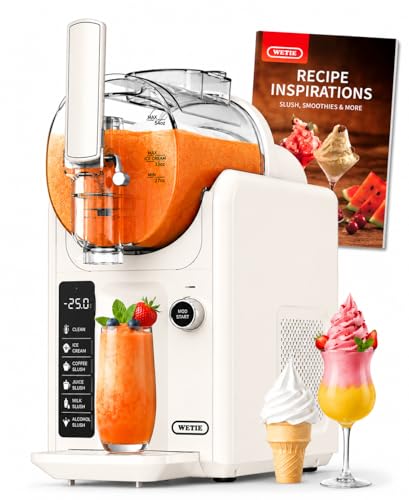
The WETIE 82 oz Slushie Machine stands out in the self-cleaning slushie lane because it keeps daily cleanup simple after each batch. It is designed to run with clear controls and indicators, which helps you move from freezing to rinsing without guesswork. Performance is solid for a home or small setup, with faster, more consistent freeze so you get a steady slushy texture instead of thin, icy layers. That combination matters most when you are cycling flavors often and want the machine ready again quickly.
The main trade-off is batch size and timing. With a listed 0.51 gal tank, it is better for smaller runs than high-volume parties. Some users may also notice slush timing can be conditional, so you will want to watch for the point when the mix hits serving texture. Durability and fit are only average, so treat seals and parts gently during cleaning to avoid wear over time.
#3. GreenPan Frost Slushie Machine

Specifications
| Brand | GreenPan |
|---|---|
| Tank Capacity | 2 gal |
| Cooling System | Compressor Cooled |
| Power | 150 W |
| Weight | 25.4 lb |
Pros
- Simple controls, clear indicators
- Strong features for price
- Creamier texture consistency
Cons
- Slow cool-down between pours
- Low freezing power
- Limited output for parties
For a self-cleaning slushie setup, the GreenPan Frost Slushie Machine stands out more for day to day handling than for raw output speed. Controls are simple and the status indicators are easy to read, so you can switch flavors and start cleaning without guesswork. The slush texture also stays creamy and steady for its size, which helps when you are running repeated pours during a small event.
The main trade-off is freezing speed. Cool-down between pours can be slow, and the unit has limited serving punch for parties. This makes it a better match for light, home use or small gatherings where you expect breaks between refills, rather than a steady stream of drinks for a crowd.
#4. HiCOZY F3 Slushie Machine

Specifications
| Brand | Hicozy |
|---|---|
| Voltage | 110-220 V |
| Dimensions | 11 x 19.3 x 16.9 in |
| Weight | 28.7 lb |
Pros
- Smaller footprint
Cons
- Limited output for parties
- Average durability, snug fit
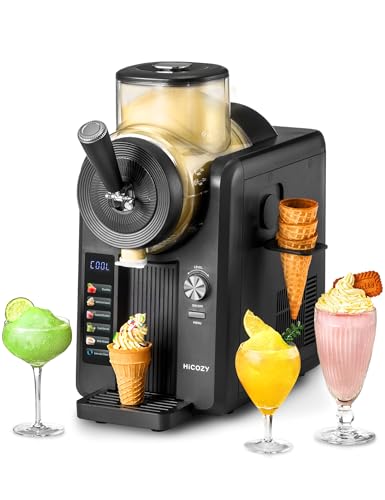
The HiCOZY F3 is notable in the self-cleaning slushie machine niche mainly because it is designed to take up less space. That smaller footprint matters if you are trying to keep one machine in a home kitchen, bar cart area, or tight party setup, without turning cleanup into a whole project. For daily use, self-cleaning is the difference between a quick rinse cycle and leaving syrupy residue to harden before it gets cleaned.
The trade-off is practical capacity. With limited output for parties, it is better for small groups and repeat, shorter serving sessions than for large events. Build quality feels average, and the snug fit of parts can be slightly fussy during cleaning and reassembly, so plan on a little care rather than a fast, throw-it-back-and-go routine.
What to Look For
Performance holding and recovery: Focus on how steadily the machine freezes slush after the first batch. A self-cleaning cycle only helps if the unit also returns to the right serving texture without melting or separating during back-to-back use.
Tank count and usable batch size: Check both the number of tanks and the practical amount you can serve. For parties, drive-thru style service, or multiple flavors, a larger total capacity with two tanks usually reduces refill frequency.
Build quality where residue collects: Look at the tanks, seals, and dispenser zone. Self-cleaning helps most when these parts can be cleaned thoroughly without leaks, warping, or hard-to-remove residue over time.
Ease of cleaning steps: Confirm the cleaning method actually fits your routine. You want a clear drain and refill flow, access to the areas that touch syrup, and controls that do not turn cleaning into a separate project.
Value for the capacity you need: Compare price to real serving volume and the durability of the tank and housing. A smaller, simpler unit can be a better value if you rarely run multiple flavors and you do not need high output for long sessions.
How We Picked
Products were identified through broad research across review sites and buyer forums, then filtered to only those that qualify as Self-Cleaning Slushie Machines.
Scoring used the same objective pillar framework as the main Slushie Machines post, allowing direct comparison of products within this sub-category.
Frequently Asked Questions
What does a self-cleaning slushie machine actually do after use?
It runs a cleaning cycle that flushes out leftover syrup and drink mix. Some models also help rinse the internal lines and parts you use most. After the cycle, you still wipe the drip area and remove parts the brand lists as removable. This keeps daily cleaning faster and more consistent.
Do self-cleaning machines fully clean tank corners and the auger area?
They clean well, but they still may not reach every corner. Tanks and freezing surfaces can need a quick manual check, especially after thick flavors. If you switch flavors often, run the self-clean cycle right after closing time. Then do a brief wipe down for any residue you see.
How often should I run the self-clean cycle during the day?
Run it when you finish serving or switch flavors. If you notice the mix getting thicker or the flavor tasting older, clean sooner. For busy events, schedule a cycle between batches. Always follow the machine steps so you do not leave cleaning liquid in the lines.
How do I choose between a 1 tank and a 2 tank self-cleaning slushie machine?
Choose 1 tank if you serve one flavor most of the time. Choose 2 tanks if you want two flavors ready at once or need faster recovery between batches. More tanks usually mean more cleaning work if you have to sanitize both. But they can reduce downtime during parties.
When should I choose a different type of slushie machine instead of a self-cleaning one?
Choose a non self-cleaning model if your use is light and you do not mind wiping and rinsing by hand. Self-cleaning units fit best when you serve often and want less daily hassle. If you rarely switch flavors, the extra cleaning steps may not feel worth the cost. Think about how many times per day you will use it.
How does a self-cleaning slushie machine compare to other slushie machines in setup and upkeep?
Self-cleaning models usually take less time to return to clean condition after serving. They also help reduce leftover taste when you change flavors. Other types may require more manual scrubbing and line rinsing. In return, self-cleaning machines often cost more and still need basic wipe down and part checks.


