




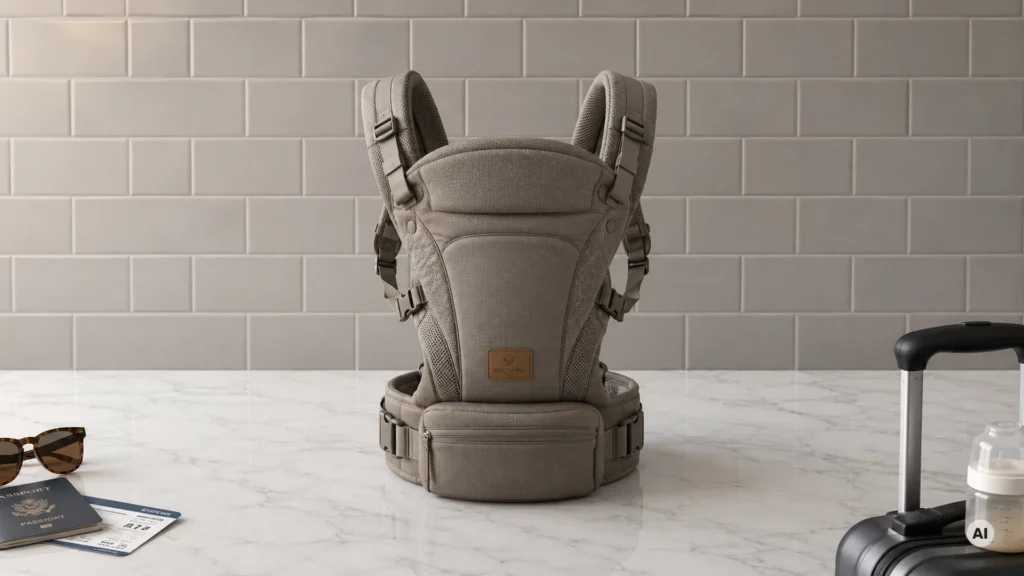
Outward-Facing Travel Baby Carriers are carriers that let your baby face outward while you are on the move. For this sub-category, buyers usually want a secure seat for long walks, easy putting on and taking off at airports, and comfort that does not build up pressure on your back and shoulders.
Choosing one is harder than it sounds. Outward-facing can shift weight higher on your body, which can tire you faster. It also raises the bar for safety and fit, since an incorrect seat position or loose harness can leave your baby unsupported.
Looking for all types? See our Best Travel Baby Carriers.
Quick Overview
Our Top Picks
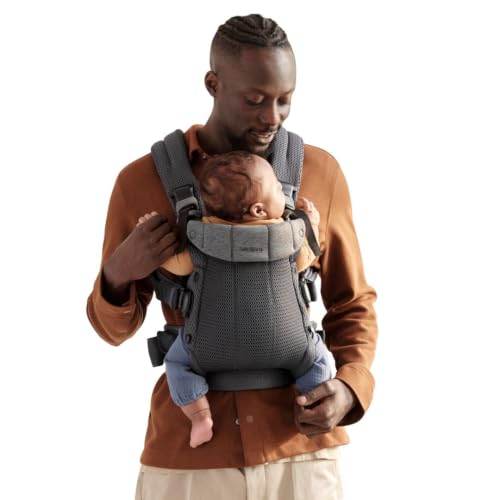
#1. BabyBjörn Harmony Baby Carrier
Specifications
| Brand | BabyBjörn |
|---|---|
| Carrier Type | Soft-Structured Carrier |
| Carry Positions | Front Inward, Front Outward, Back Carry |
| Recommended Age Range | 0-36 months |
| Max Child Weight | 40 lb |
| Material | Mesh |
| Care Instructions | Machine Washable |
Pros
- Reliable support, no slipping
- Even weight, cozy fit
- Sturdy build, smooth adjustments
Cons
- Fit adjustment learning
- Limited knee-pit reach
- Seat depth restriction
This soft-structured carrier stands out for outward-facing travel days because it stays put and keeps baby supported without constant readjusting. In real walks and errands, the secure fit helps prevent slipping, and the even weight distribution keeps the load from feeling lopsided. Breathable mesh adds comfort when you are moving through warmer stations or terminal lines. Smooth, reliable adjustments also help you dial in the carry quickly between stops.
The main trade-off is that dialing in the fit can take a little practice, especially to get the right seated position every time. It also has limits in how far the baby can come down and how much knee-pit reach you get, which may matter for families who want a very deep, snug seat for long stretches. This is a strong match for travelers who want stable outward-facing carry days and are willing to spend a few tries getting the adjustments right.
#2. BabyBjörn One Air Baby Carrier

Specifications
| Brand | BabyBjörn |
|---|---|
| Carry Positions | Front Inward, Front Outward, Back Carry |
| Recommended Age Range | 0-36 months |
| Material | Polyester |
| Care Instructions | Machine Washable |
Pros
- Even weight, cozy fit
- Light and travel-friendly
- Sturdy build, smooth adjustments
Cons
- Runs smaller fit
What sets this outward-facing travel carrier apart is the balance between secure support and day-to-day comfort. The BabyBjorn One Air spreads the load well across the wearer, with a cozy fit that stays stable during walks, errands, and public transit. Its breathable feel also helps when you are stuck in warm terminals or on crowded sightseeing days. In the “outward-facing” travel mindset, that stability matters because you want baby held upright and close, not slumped while looking around.
There is one trade-off to plan for. This model can run smaller, so sizing may feel tight for some babies or wearers. If you are between sizes or you want lots of room for thicker layers, consider checking fit carefully before you rely on it for a trip.
#3. Tula Explore Baby Carrier

Specifications
| Brand | Tula |
|---|---|
| Carrier Type | Soft-Structured Carrier |
| Carry Positions | Front Inward, Front Outward, Back Carry |
| Recommended Age Range | From Birth |
| Max Child Weight | 45 lb |
| Carrier Weight | 0.5 lb |
| Material | Mesh |
| Care Instructions | Spot Clean Only |
Pros
- Snug, supportive fit
- Reliable buckles, no slipping
- Higher weight limit
Cons
- Hard to clean
- Setup learning curve
- Back strap clipping
For outward-facing travel days, the Tula Explore stands out because it stays secure when your child wants a front view. It supports a snug, supportive fit and uses reliable buckles that do not loosen during normal walking and stop-and-go errands. The comfort story is strong too, with an even carry feel across the wearer’s back thanks to well-balanced straps, plus a higher 45 lb weight limit that helps it keep working as your child grows.
The trade-off for travel is the learning curve. Getting it set up quickly takes practice, and the back strap clipping can slow you down when you are in a hurry. It is also harder to keep spotless, since care is Spot Clean Only, so plan for more maintenance if you carry it on messy days.
#4. LILLEbaby Complete All Seasons Baby Carrier

Specifications
| Brand | LILLEbaby |
|---|---|
| Carrier Type | Soft-Structured Carrier |
| Carry Positions | Front Inward, Front Outward, Hip Carry, Back Carry |
| Max Child Weight | 45 lb |
| Carrier Weight | 1.3 lb |
| Dimensions | 11 x 14 x 4 in |
Pros
- Snug, supportive fit
- Reliable buckles, no slipping
- Higher weight limit
Cons
- Comfort is fit-dependent
- Insert positioning hassle
- Setup complexity
If you want an outward-facing option for travel without giving up firm, secure support, the LILLEbaby Complete All Seasons stands out for how reliable it feels in motion. It has reliable buckles that hold tight with no slipping, plus a higher max child weight of 45 lb. That matters when you travel longer days and need the carrier to stay stable as baby grows.
The main trade-off is comfort depends on getting the fit and the insert positioned correctly. Setup can take a few tries, and the insert positioning adds an extra step before you can wear it comfortably for long walks. This is best for travelers who do not mind taking a little time to dial it in, especially if you plan to use front outward or other multiple carry positions during the same trip.
What to Look For
Safe outward seat positioning: Prioritize carriers that hold your baby’s hips in a supported, seated position when facing outward. Look for clear fit guidance so your baby does not slump or slide down in real use.
Secure harness and hardware: Outward-facing wear needs dependable buckles and straps. Check for simple, consistent fastening and sturdy seams that do not loosen over time, especially after repeated on and off during travel.
Comfort that stays even during walks: Choose carriers with supportive shoulder straps and a waist support system that distributes weight more evenly. If the carrier feels like it pulls your shoulders forward or your back takes the load, it will be a poor fit for buses, terminals, and long errands.
Travel-friendly setup and size: Focus on how fast you can get a secure fit before you reach the gate. Lighter, packable designs and straightforward adjustments reduce friction when you are juggling luggage, strollers, and weather.
Breathable, low-chafe materials: Outward-facing often means more surface contact on warm days. Look for breathable primary fabrics and padding that does not rub when you walk for an hour or more.
How We Picked
Products were identified through broad research across review sites and buyer forums, then filtered to only those that qualify as Outward-Facing Travel Baby Carriers.
Scoring used the same objective pillar framework as the main Travel Baby Carriers post, allowing direct comparison of products within this sub-category.
Frequently Asked Questions
Are outward facing baby carriers good for travel, or do they get uncomfortable fast?
They can work well for short rides, like visiting a museum or a quick walk. Comfort depends on how well the seat supports your baby from hip to knee. Choose a carrier with wide, adjustable straps and a secure back support for you. If you plan longer outings, you may prefer inward facing to reduce strain.
What should I check before using outward facing for my baby?
Check that your baby sits high enough so the chin does not tip down toward the chest. Look for a seat that supports the hips in a spread position. Make sure all straps sit snugly and do not shift during movement. When in doubt, switch back to inward facing.
How do I set up an outward facing carry for the safest fit during travel?
Start by tightening the waist first, then adjust shoulder straps so the carrier feels level. Pull the fabric or panel so your baby is close to your chest, then follow the outward facing instructions for seat height. Confirm there is no slack at the back and that buckles and clips feel firm. Do a quick standing test before you walk outside.
How should I clean and store an outward facing travel carrier between trips?
Many travel carriers handle spot cleaning well after outings, like wiping drool and sunscreen. Follow the care label for full washing, since some parts need air drying. Let it dry completely before packing to prevent odors. Store it flat or loosely folded so straps do not get twisted.
When should I choose a different type of Travel Baby Carrier instead of an outward facing carrier?
Choose inward facing if your baby is very young or you expect long stretches of walking. Consider a different type if your baby cannot hold a comfortable supported posture for outward facing. You may also switch if you feel shoulder strain during warm weather. Use outward facing as a short, optional mode.
How do outward facing travel carriers compare to other travel carriers in portability?
Outward facing structured carriers usually pack in a similar way to other structured options. They are often faster to put on than wraps, but they may still feel bulky in a day bag. Look for a design with a simple strap system and light materials. If you travel often by plane, prioritize quick setup and easy cleaning over extra features.


