Finding the right open-ear headphones can feel overwhelming: there are so many models, conflicting reviews, and technical specs that don’t always translate into real-world comfort or sound. I’m here to make that search simpler and more confident. Over the years I’ve focused on impartial, practical buying advice so readers end up with products that truly match their needs — whether that means long walks, bike commutes, or hands-free calls while staying aware of your surroundings.
To earn your trust, I base recommendations on both scale and depth. I’ve analyzed thousands of customer reviews to spot consistent wins and recurring issues — fatigue points that show up across dozens of reports, and standout features that users keep praising. I also directly compare specs and real-world performance across competing models: fit and comfort, open-ear soundstage, ambient awareness, battery life, connectivity stability, and build quality. Where possible, I combine that research with hands-on testing to confirm how a pair performs in daily use, from urban noise to longer listening sessions.
My goal with this guide is straightforward: help you quickly find open-ear headphones that deliver high-quality sound, safe situational awareness, and lasting comfort without wasting time or money. I’ll highlight who each option is best for, call out trade-offs, and point you toward models that consistently get great results. Read on — I’ve done the homework so you don’t have to.
Quick Overview
Top Picks
Best Overall

Specifications
| Brand | Shokz |
|---|---|
| Battery Life | 7 Hours |
| Material | Silicone, Plastic |
| Dimensions | 1.94 x 1.72 x 0.75 inches |
| Weight | 0.586 Ounces |
Pros
Cons
Shokz OpenFit earns the Best Overall spot by nailing what most people actually want: comfort, awareness, and dependable sound. The open-ear, compact earbud design with ultra-soft silicone cushions feels like it disappears after a few minutes, so you can wear them for long walks or all-day use without fiddling. DirectPitch technology delivers surprisingly full, clear audio for an open-ear form factor, so music and podcasts come through with good body while your ears stay free.
Where these shine is the balance between staying connected to your surroundings and enjoying quality sound — perfect for commuting or running where situational awareness matters. The ergonomic, flexible ear hook and balanced weight keep them secure without pressure. Battery life is solid: about seven hours per charge and up to 28 hours with the case, plus a useful five-minute quick charge trick.
On the flip side, because they’re open-ear, expect average passive noise isolation and middling call isolation compared with in-ear ANC models. Overall, they’re a comfortable, practical pick.
Best Premium

Specifications
| Brand | Bose |
|---|---|
| Battery Life | 7.5 Hours |
| Material | Plastic (PC-ABS), Metal, Silicone, Gold Plating |
| Dimensions | 1.04 x 2.56 x 1.65 inches |
| Weight | 2.12 Ounces |
Pros
Cons
Placed in the Best Premium slot, the Bose Ultra Open Earbuds earn that spot by delivering a rare mix: the freedom of an open-ear fit with surprisingly rich, immersive sound. Bose’s OpenAudio and Immersive Audio make music feel spacious and present without isolating you from your surroundings, and the flexible, light-as-air fit actually stays put for long walks or commutes. Multipoint Bluetooth, SimpleSync with Bose speakers, and the app-driven updates all reinforce the premium experience, and the charging case extends usability far beyond a single outing. IPX4 protection and acoustic mesh add practical durability for everyday use.
There are a few trade-offs to note. Immersive mode trims battery life to around four hours, IPX4 is splash-resistant rather than fully waterproof, and open-ear designs inherently give up some bass punch and can leak sound compared with sealed in-ear options. Still, for anyone prioritizing situational awareness, comfort, and class-leading spatial audio, these earbuds justify their premium position.
Best Value For Money

Specifications
| Brand | Soundcore |
|---|---|
| Battery Life | 10 Hours |
| Material | PC, ABS, LSR |
| Dimensions | 2.24 x 1.54 x 0.56 inches |
| Weight | 3 Ounces |
Pros
Cons
These AeroFit 2s feel like a thoughtful compromise built around comfort and practicality. The open-ear, air-conduction design with a double-curved surface and soft adjustable hooks makes them easy to forget you’re wearing them — great for long commutes, outdoor runs, or desk days when you still need to hear traffic or conversations. That openness is the point, though it also means they won’t isolate you from loud surroundings the way in-ears or ANC cans would.
Where they shine is the sound and everyday usability: the racetrack drivers plus BassTurbo and LDAC deliver surprisingly full, clear audio for open-ear buds, with respectable low end, crisp mids and airy treble. Battery life (10 hours, 42 with the case) and wireless charging keep them fuss-free, and the four beam-forming mics plus AI filtering make calls reliable even outdoors. For anyone valuing comfort, situational awareness, and solid audio without breaking the bank, AeroFit 2 is a strong value pick — just don’t expect sealed-in bass or noise cancellation.
Best Battery Life

Specifications
| Brand | OpenRock |
|---|---|
| Battery Life | 19 Hours |
| Material | Silicone, Plastic |
| Dimensions | 5.51 x 3.94 x 2.28 inches |
| Weight | 0.917 Ounces |
Pros
Cons
If long runtimes are your priority, the OpenRock Pro really delivers where it counts. The claimed 19 hours of playback at 70% volume on a single charge is impressive for open-ear headphones, and the additional 27 hours from the portable charging case means you can realistically get up to around two days of heavy use without hunting for an outlet. That combination of solid on-device stamina and a substantial backup pack makes these a reliable choice for long commutes, full workdays, or multi-day outdoor trips.
Beyond the battery, they pack sensible extras: a comfortable open-ear fit that stays airy during extended wear, aptX 576 kbps support and TubeBass tech for fuller low end than you’d expect from open designs, and a quad-mic cVc 8.0 setup for clearer calls. A couple of caveats are typical — actual runtime will vary with volume, usage and codec — but overall the battery performance, paired with the practical charging case, is what earns these a top spot in the Best Battery Life category.
Best Bone Conduction

Specifications
| Brand | Shokz |
|---|---|
| Battery Life | 10 Hours |
| Material | Nickel-Titanium Alloy, Silicone, Plastic |
| Dimensions | 9.45 x 27.17 x 0.98 inches |
| Weight | 1.02 Ounces |
Pros
Cons
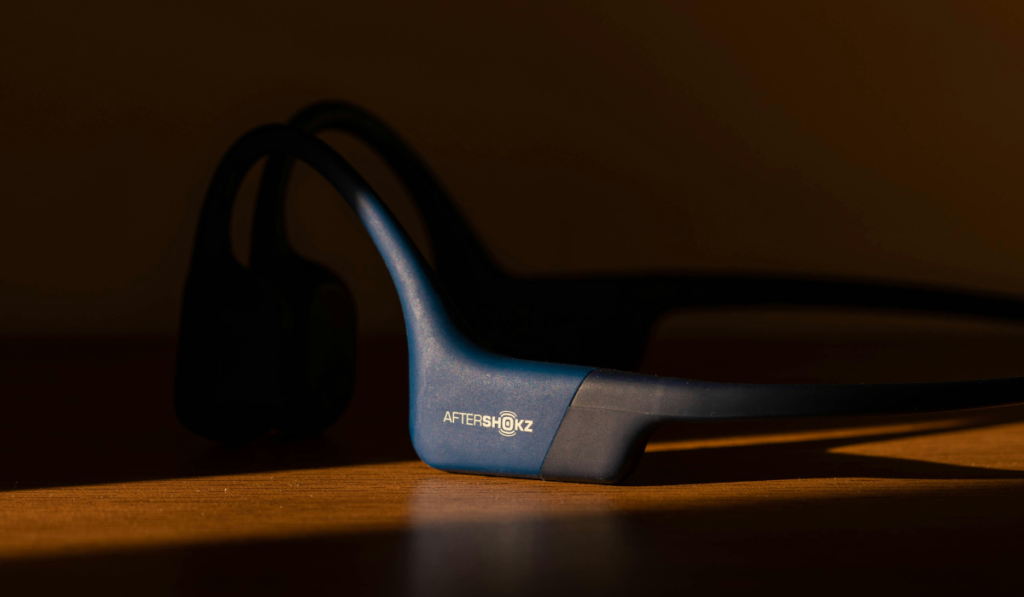
These headphones are a great pick if you want the benefits of bone conduction without fiddling with buds. The OpenRun Pro nails comfort with a bud-free, open-ear design and an included Shokz headband that helps them stay put through sweaty workouts. Because they sit outside the ear, you retain awareness of your surroundings — a real plus for runners and cyclists who need to hear traffic.
Where they stand out is sound and fit: Shokz’s ninth-generation bone conduction and TurboPitch tuning deliver clearer mids and surprisingly punchy bass for this category, and the lightweight titanium frame keeps the headset stable during intense sessions. Battery life is a solid 10 hours and a 5-minute quick charge for 1.5 hours is genuinely useful. The trade-offs are the usual ones for open-ear devices — you won’t get the isolation or absolute low-end impact of sealed in-ears or over-ears, and battery life is competitive but not class-leading. Overall, a top choice for safe, comfortable active listening.
Best Water Resistance

Specifications
| Brand | Shokz |
|---|---|
| Battery Life | 8 Hours |
| Material | Nickel-Titanium Alloy, Silicone, Plastic |
| Dimensions | 9.45 x 27.17 x 0.98 inches |
| Weight | 0.917 Ounces |
Pros
Cons
If you’re ranking headphones by water resistance, the OpenRun (Aftershokz Aeropex) is an easy pick for workouts where sweat and weather are a concern. The IP67 rating means it’s fully protected against dust and can handle immersion up to a meter — in everyday terms, it won’t panic in a heavy downpour or during an intense, sweaty run. I also like the moisture-detection alert that prevents charging when wet — a small but thoughtful safety feature that actually matters.
The open-ear, wraparound design stays put and dries quickly, and bone-conduction transmits sound without blocking your ears, so you stay aware of surroundings in wet conditions. Battery life is solid at eight hours, with a 10-minute quick charge giving 1.5 hours — perfectly practical, though not class-leading. The one real caveat: despite the strong water resistance, these aren’t for swimming. Overall, for runners and gym-goers who need reliable sweat and rain protection, these are a top choice.
Best For Sports

Specifications
| Brand | Cleer |
|---|---|
| Battery Life | 8 Hours |
| Material | Plastic |
| Dimensions | 5.24 x 3.98 x 1.54 inches |
| Weight | 4.8 Ounces |
Pros
Cons
For anyone who wants safe, comfortable audio while working out, the Cleer ARC II Sport is a very strong pick. The ultra-light, ergonomic open-ear design makes them easy to wear for long runs or gym sessions and, importantly, keeps you aware of traffic and surroundings — a big plus for outdoor exercise.
They surprise with detailed sound thanks to 16.2mm drivers and Snapdragon support for high-res streaming, and the onboard EQ lets you tune the profile to your taste. Multi-point pairing is handy if you switch between phone and tablet mid-workout, and the mic with cVc delivers clear voice for calls or coaching apps. Battery life is excellent — about eight hours per bud and a total of up to 35 hours with the case.
A few realities: open-ear earbuds won’t produce the same chest-thumping bass as sealed in-ears, and IPX5 means sweat- and splash-resistance but not full submersion protection. Overall, they’re a comfortable, safe, and feature-rich choice for active users.
Best Budget-Friendly
Specifications
| Brand | TOZO |
|---|---|
| Battery Life | 15 Hours |
| Material | Plastic, Metal |
| Dimensions | 4.02 x 3.66 x 1.65 inches |
| Weight | 5 Ounces |
Pros
Cons
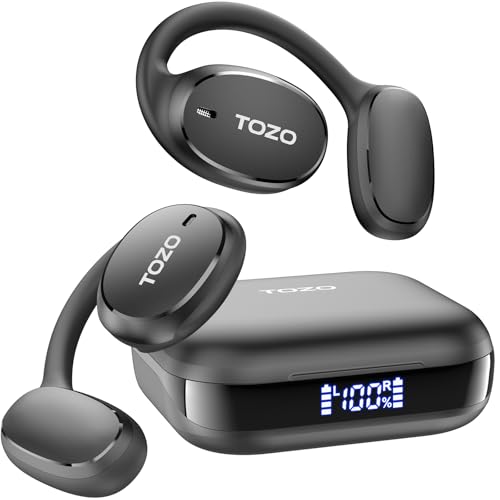
TOZO’s OpenEgo makes a convincing case for a budget-friendly pick. The 16.2mm dynamic driver and TOZO OrigX tuning give surprisingly clear highs and satisfying lows for the price, and the open-ear design is genuinely useful if you want to stay aware while walking or cycling. Call quality benefits from the dual-microphone noise-cancelling setup, and the included ear supports plus IPX5 sweat resistance mean these actually stay put during workouts.
Where it’s more middle-of-the-road is predictable: an open-ear format won’t deliver the same isolation or thumping bass as in-ear sealed buds, so heavy bass heads might notice that trade-off. Still, the TOZO app with 32 EQ presets is a nice customization perk, and the claimed 80-hour total playtime with an LED case readout is excellent for long commutes or workdays. For budget shoppers wanting safety, comfort, and long battery life, OpenEgo is an easy, well-rounded choice.
What To Look For
Open-ear headphones let you hear music while staying aware of your surroundings, but choosing the right pair means balancing comfort, sound and practical features to match how you move and listen.
- Comfort and fit: Since open-ear designs sit against or near the ear instead of enclosing it, a secure, lightweight fit that stays put during movement is essential for long-term comfort and consistent sound.
- Sound profile and clarity: Assess tonal balance, midrange clarity, and bass presence because open designs can emphasize vocals and ambient detail differently than in-ear or over-ear models.
- Ambient awareness and safety: One of the main benefits is environmental awareness, so check how well the design preserves outside sounds for safe urban use without compromising audio enjoyment.
- Noise isolation and sound leakage: Open-ear models typically trade isolation for openness, so consider whether sound leakage will bother others and if low isolation suits your listening environments.
- Driver type and technology: Different driver designs, including bone-conduction versus air-conduction, affect perceived bass, clarity and where sound is projected around the ear.
- Battery life and charging: For wireless options, prioritize real-world battery life and fast charging, since performance can vary widely with active features like EQ processing or ANC emulation.
- Connectivity and codecs: Reliable Bluetooth pairing and support for quality codecs (AAC, aptX, etc.) matter for latency-sensitive use like calls or video and for preserving fidelity.
- Durability and water resistance: Look for robust materials and an IP rating if you plan to use the headphones while exercising or outdoors to avoid sweat or light rain damage.
- Call quality and microphones: Microphone placement and noise-reduction processing determine how well others hear you in busy environments, which is crucial for remote work and phone use.
- Controls, app features and updates: Physical controls should be intuitive and apps can add EQ, firmware updates and customization that noticeably improve usability and sound over time.
Weigh comfort, sound characteristics, situational awareness and practical features like battery life and durability to find open-ear headphones that fit your daily habits.
How We Select Our Products
Choosing the open-ear headphones featured in this post wasn’t a casual scroll-and-pick exercise — it was a deliberate, multi-step process built to give you recommendations you can trust. We started broadly, gathering dozens of contenders from reputable brands, recent releases, and consistently mentioned models in user and expert conversations. From there we narrowed the field by looking at hard data: aggregated customer ratings across major retailers, recurring themes in thousands of user reviews, and verdicts from independent audio reviewers and tech publications.
Next came feature-by-feature comparisons. We assessed comfort and fit for long wear, battery life under realistic use, Bluetooth stability and latency, microphone clarity, IP/sweat resistance, and any unique open-ear advantages like situational awareness. Sound quality was judged not only by subjective listening but by checking reported frequency balance and clarity in reviews; for bone-conduction options we paid special attention to perceived bass and vocal intelligibility. We also considered durability, warranty terms, firmware support, and brand reputation for customer service.
Value for money played a big role — a good headphone can’t just sound great; it should offer meaningful features for its price. To make final picks we blended quantitative scores and qualitative impressions using a weighted system that favors real-world performance and user satisfaction. We excluded outdated models with poor update histories or frequent reliability complaints. Throughout, transparency mattered: we documented sources, flagged trade-offs, and aimed to present not just winners but honest reasons why each choice might suit different needs. The result is a curated list rooted in research, hands-on insights, and a commitment to helping you pick the best open-ear headset for how you live.
Final Thoughts
Choosing the right open-ear headphones can be genuinely transformative if you match the model to your needs. The biggest practical benefit is safety and awareness: because the ears remain uncovered, you can hear traffic, announcements, and conversations while listening to music or podcasts. That makes these designs ideal for runners, cyclists, city commuters, and anyone who wants to stay connected to their surroundings without turning audio off. Open-ear options also tend to be much more comfortable for long wear since they don’t press into or completely surround the ear—people who wear glasses or dislike in-ear pressure often find them a welcome change.
Beyond comfort and safety, open-ear designs can improve hygiene and reduce ear fatigue. Less trapped heat and moisture means fewer irritated ears after extended sessions, which is great for long shifts, desk work, or multi-hour workouts. Many models are optimized for active lifestyles with water resistance, secure fits, and reliable battery life. For those with mild hearing differences, bone-conduction variants can even provide clearer sound through vibration pathways, offering a useful alternative to traditional earbuds.
That said, there are trade-offs: you’ll usually get less passive isolation and weaker bass compared with closed headphones, and some sound leakage is common. The best approach is to prioritize how and where you’ll use them—commuting, exercise, office calls—and compare features like fit, battery, IP rating, and Bluetooth codec. Try before you commit when possible, read real-world reviews, and pick a pair that balances comfort, safety, and sound in the way that matters most to you. Making an informed choice will ensure your open-ear headphones genuinely improve your daily routine.