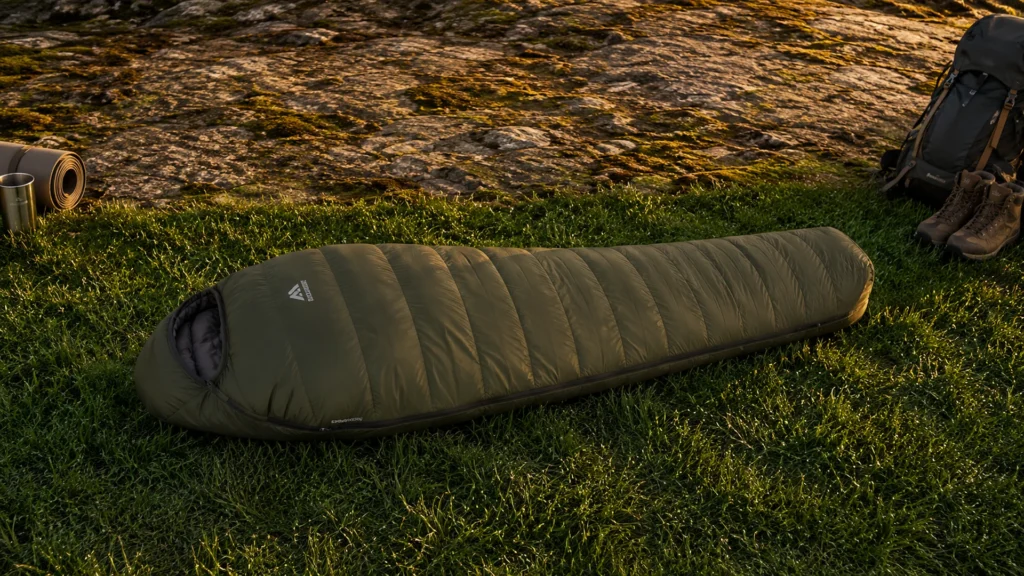
20F sleeping bags are built for nights that push toward freezing, but they are not one-size-fits-all. Buyers in this range usually camp in shoulder season or winter trips where wind and wet ground make drafts and heat loss show up fast. Your job is to match the bag to your expected low temperature, the way you sleep, and how far you carry it.
Picking the right one is hard because key trade-offs stack up. Warmer bags often weigh more and pack bigger. Lighter bags can feel colder than their rating if the zipper baffle and hood seal do not block drafts well. Women specific models may fit better, while doublewide models trade weight and pack size for more space.
Looking for all types? See our Best Sleeping Bags.
Quick Overview
Our Top Picks
#1. Western Mountaineering AlpinLite 20°F Sleeping Bag

Specifications
| Brand | Western Mountaineering |
|---|---|
| Temperature Rating | 20 °F |
| Shape | Mummy |
| Insulation Type | Down |
| Fill Power | 850 fill power |
| Weight | 1.9 lb |
Pros
- Hugs rated temps
- Roomy fit, smooth zipper
- Sturdy shell, reliable zips
Cons
- Overheat risk higher temps
This 20F down mummy bag stands out because it stays warm right where it matters most. Rated for 20 F at just 1.9 lb, it keeps loft and seals well enough that cold drafts are less of a problem. The roomy fit helps too, so you can shift without feeling trapped, and the smooth zipper stays easy to use once you are settled in.
The main trade-off is overheat risk if you run warm or if temps swing upward. If you sleep hot, plan to vent or unzip sooner, especially in shoulder-season trips. For most people seeking a reliable 20F bag for real backpacking nights, the combo of strong warmth, comfort, and solid build makes it an easy top pick.
#2. Western Mountaineering UltraLite 20°F Sleeping Bag

Specifications
| Brand | Western Mountaineering |
|---|---|
| Temperature Rating | 20 °F |
| Season Rating | 3 Season |
| Insulation Type | Down |
| Fill Power | 850 fill power |
| Weight | 1 lb |
| Packed Size | 7 x 13 in |
Pros
- Hugs rated temps
- Roomy fit, smooth zipper
- Sturdy shell, reliable zips
Cons
- Snag-prone lightweight shell
- Moisture sensitivity
- Limited stow convenience
This Western Mountaineering UltraLite 20°F sleeping bag stands out in the 20°F category for how reliably it stays warm near its rating. With 850 fill power down at about 1 lb, it traps heat well without feeling drafty. In real use, the snug, well-sealed hood area and collar help prevent cold air from sneaking in, which is exactly what matters when nights sit right around 20°F.
The trade-off is practical: the lightweight shell can be snag-prone, and down insulation does not like moisture. It also is not the most convenient to stow, so it fits best for trips where you can keep it dry and take care during packing and handling. If you want a warm 20°F bag for backpacking and you treat it gently, this is a strong pick.
#3. Big Agnes Echo Park 20°F Sleeping Bag

Specifications
| Brand | Big Agnes |
|---|---|
| Temperature Rating | 20 °F |
| Season Rating | 3 Season |
| Shape | Semi-Rectangular |
| Insulation Type | Synthetic |
| Weight | 5 lb |
| Max User Height | 78 in |
Pros
- Draftproof and cozy
- Strong performance per dollar
Cons
- Colder-than-rated reports
- Temperature setup sensitivity
Big Agnes Echo Park 20F stands out in the 20F sleeping bag crowd for its draftproof, cozy feel. In cold conditions, the baffling and snug hood help hold onto warm air, so it feels steadier than many bags that leak heat around the face and zipper. Comfort also lands well for a semi-rectangular design, with enough room to shift positions without feeling trapped.
The main trade-off is temperature consistency. Some users report it runs colder than the label, and staying warm can depend on how you set up your sleep system. If you pair it with a solid pad and you tend to sleep on the cooler side, you will likely want extra attention to layering and sealing around the neck and hood.
#4. Marmot Trestles Elite Eco Women's 20°F Sleeping Bag

Specifications
| Brand | MARMOT |
|---|---|
| Temperature Rating | 20 °F |
| Season Rating | 3 Season |
| Shape | Mummy |
| Insulation Type | Synthetic |
| Weight | 1.1 lb |
| Packed Size | 3 x 78.7 x 27.6 in |
Pros
- draft resistance reliability
- damp-condition warmth
- Strong performance per dollar
Cons
- Bottom loft shift
- Position cold spots
The Marmot Trestles Elite Eco Women’s 20°F synthetic bag stands out for cold, damp nights. In this 20°F range, it tends to hold warmth well, and its draft resistance helps stop that chilly air leakage that can make 20°F bags feel colder than expected. At just 1.1 lb, it is also light enough for trips where you still want true three-season coverage.
The main trade-off is how reliably loft stays even after use. Some owners report bottom loft shift, which can turn a steady warmth rating into uneven insulation. That can show up as position cold spots, so it fits best with sleepers who manage the bag and avoid storing it compressed for long periods.
#5. Therm-a-Rest Boost 650 20°F Sleeping Bag

Specifications
| Brand | Therm-a-Rest |
|---|---|
| Temperature Rating | 20 °F |
| Shape | Semi-Rectangular |
| Insulation Type | Down |
| Fill Power | 650 fill power |
| Weight | 2.75 lb |
| Packed Size | 12.5 x 7.5 in |
| Max User Height | 72 in |
Pros
- Roomy fit, smooth zipper
- Easy side shifting
- Ventilation versatility
Cons
- Cold-spot risk
- Side-sleeping cold
- Extra hardware bulk
For colder 20F nights, the Therm-a-Rest Boost 650 stands out for its roomy semi-rectangular feel and easy zipper use, which makes it easier to stay relaxed when temperatures drop. Sleepers can shift their position along the length without wrestling the bag, and that matters when you are trying to settle in after a long day. At just 2.75 lb with a 12.5 x 7.5 in packed size and 650 fill power down, it hits a nice balance between warmth and carry comfort for backpacking-style 20F trips.
The main trade-off is cold-spot risk, especially for side sleepers. If you sleep on your side, insulation can compress where the bag bends, which can pull you off the comfort zone near the 20F mark. The extra hardware also adds a bit of bulk for a bag this light, so it is best for users who want maneuverability in the bag more than they want the slimmest pack volume.
#6. Kelty Cosmic 20°F Sleeping Bag

Specifications
| Brand | Kelty |
|---|---|
| Temperature Rating | 20 °F |
| Season Rating | 3 Season |
| Shape | Mummy |
| Insulation Type | Down |
| Fill Power | 550 fill power |
| Weight | 2.4 lb |
| Packed Size | 16 x 9 in |
| Max User Height | 66 in |
Pros
- Sturdy shell, reliable zips
- Strong performance per dollar
Cons
- Draft management concerns
- Fit restrictiveness issues
- Bulky pack, average rebound
The Kelty Cosmic 20°F stands out in the 20F sleeping bag group with a good mix of warmth and durability for a down bag. At 2.4 lb and a 16 x 9 in packed size, it is easier to carry than bulkier 20F options. Its sturdy shell and reliable zippers also matter at 3-season temps, where bags get stuffed, cinched, and taken in and out often.
The trade-off is draft control and fit. Some sleepers notice cold air sneaking in around the hood and zipper area, and the mummy shape can feel restrictive for larger folks or side sleepers. If you sleep with solid insulation habits and want a dependable down bag, this one is a strong pick. If you run cold, or you need a roomier cut, you may want to look elsewhere in the 20F range.
#7. Kelty Tru.Comfort Doublewide 20°F Sleeping Bag

Specifications
| Brand | Kelty |
|---|---|
| Temperature Rating | 20 °F |
| Shape | Double |
| Insulation Type | Synthetic |
| Weight | 9 lb |
| Packed Size | 15.5 x 28 in |
| Max User Height | 78 in |
Pros
- Roomy fit, smooth zipper
- Colder rated warmth
Cons
- Heavy and slow to loft
- Heavier synthetic insulation
- Bulky when packed
The Kelty Tru.Comfort Doublewide 20 F is notable in the 20 F sleeping bag space because it trades some efficiency for an easier night’s sleep. The doublewide layout feels roomy, and the zipper motion is smooth. At the same time, its warmth score is on the colder side of the 20 F promise, so it may not feel as toasty as you expect at the rating.
The main trade-off is portability. At about 9 lb and a 15.5 x 28 in packed size, it is heavy for car camping and slower for long trips. Since it uses synthetic insulation, it can handle damp conditions better than down, but it also tends to loft slowly and stay bulky until you give it time to warm up and fully expand. Best for couples who prioritize comfort and do not mind carrying extra weight.
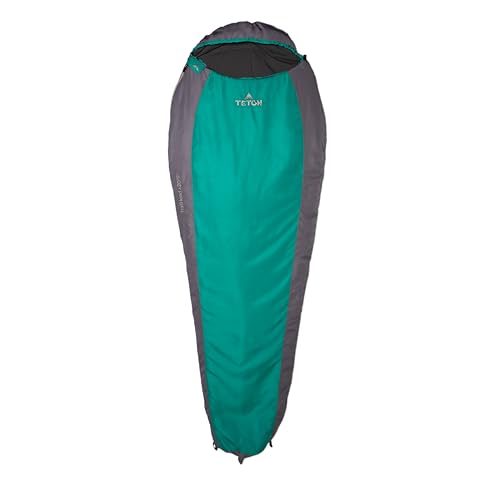
#8. TETON Sports LEEF 20°F Sleeping Bag

Specifications
| Brand | TETON Sports |
|---|---|
| Temperature Rating | 20 °F |
| Shape | Mummy |
| Insulation Type | Synthetic |
| Weight | 3.5 lb |
Pros
- Colder rated warmth
- Better insulation efficiency
- Strong performance per dollar
Cons
- Wearing faster than expected
- Heavy to carry
- Bulky pack, average rebound
With a 20 F rating and synthetic insulation, the TETON Sports LEEF stands out for staying closer to its temperature promise than many bags in this range. In real cold-night use, it tends to feel warmer than expected, and that extra insulation efficiency shows up around the lower body where heat loss often starts. The comfort score also reflects that it sleeps well for a mummy shape, with a hood that helps seal in warmth.
The trade-off is practical, especially if you backpack. It is heavy at about 3.5 lb and packs down bulky, and its rebound after compression is only average. Durability is decent but not the strongest point, with reports of faster wear than you might want for repeated trips. This is a good pick for car camping or anyone prioritizing warmth accuracy over low carry weight.
#9. Kelty Cosmic Women's 20°F Sleeping Bag

Specifications
| Brand | Kelty |
|---|---|
| Temperature Rating | 20 °F |
| Season Rating | 3 Season |
| Shape | Mummy |
| Insulation Type | Synthetic |
| Fill Power | 550 fill power |
| Weight | 2.8 lb |
| Packed Size | 16 x 9 in |
| Max User Height | 72 in |
Pros
- Strong performance per dollar
- Better insulation efficiency
- Continued multi-year use
Cons
- Mildly cooler than rated
- Bulky pack, average rebound
- Tight fit risk
The Kelty Cosmic Women's 20°F Sleeping Bag is a standout option in the 20°F category because it uses synthetic insulation that handles real-world damp or mild moisture better than down. That matters for shoulder-season trips when nights stay cold and conditions can turn. The bag weighs 2.8 lb, making it easier to live with on regular 20°F overnights, and the mummy shape supports steady heat retention rather than letting drafts slip in.
The trade-off is that it can run mildly cooler than the 20°F label, so comfort depends on your insulation layers and how much you seal out air around the hood and zipper. The snug mummy fit is another consideration. If you sleep cold, move a lot, or want more room to shift positions, you may feel tighter than you expect. Still, it is a solid pick for campers who want reliable warmth for multi-year use and do not want to baby their insulation.
#10. TETON Sports Trailhead +20°F Sleeping Bag

Specifications
| Brand | TETON Sports |
|---|---|
| Temperature Rating | 20 °F |
| Season Rating | 3 Season |
| Shape | Mummy |
| Insulation Type | Synthetic |
| Weight | 2.9 lb |
Pros
- Strong performance per dollar
- Better insulation efficiency
- Roomy footbox
Cons
- Temperature-label mismatch
- Bulky pack, average rebound
The TETON Sports Trailhead +20°F synthetic bag stands out for its warmer feel relative to its weight, which matters when you are trying to sleep comfortably close to a 20F night. The roomy footbox helps you relax your legs, and that extra space can make a colder bag feel less restrictive. Durability scores well too, with solid build quality that should handle repeated use in a 3-season rotation.
The main downside is the temperature-label match. It can run cooler than the rating in real conditions, so you may need a warmer sleep pad or more clothing on windy or damp nights. It is also on the bulky side for a 20F class bag, and it does not rebound as sharply after compression. This is a good pick for car camping and casual 3-season trips where comfort and durability matter more than small pack size.
What to Look For
Warmth at 20F: Use the advertised 20 F temperature rating as your starting point, then check for draft control. A good zipper baffle, a well shaped hood, and insulation that does not leave cold seams around the collar matter more than small differences in stated numbers.
Comfort and fit for your height: Confirm the max user height listed for the bag. If the bag is short, you will lose loft near your feet. If it is too tight through the shoulders, you will feel it all night when you turn over.
Insulation that matches your trip: Down generally packs smaller and stays lighter for the same warmth, but it is more sensitive to moisture. Synthetic fills hold up better when damp conditions are likely, even if they pack larger.
Pack weight and packed size: Compare weight and packed size for a 20F bag that you will carry often. If your goal includes backpacking, prioritize smaller packed dimensions and lower carry weight relative to the warmth you need.
Durability where wear starts: Focus on zipper reliability, shell fabric toughness, and how well the fill stays in place after repeated compression. In real use, these are the areas that decide whether a 20F bag feels consistent across multiple seasons.
How We Picked
Products were identified through broad research across review sites and buyer forums, then filtered to only those that qualify as 20F Sleeping Bags.
Scoring used the same objective pillar framework as the main Sleeping Bags post, allowing direct comparison of products within this sub-category.
Frequently Asked Questions
Are 20F sleeping bags warm enough for real nights?
A 20F bag usually works best when the air stays near 20F or warmer. Cold wind and wet weather can make you feel much colder. For best results, use a good sleeping pad and wear a hat or dry base layers. Many people feel safer with a slightly warmer rating than the coldest forecast.
What is the biggest difference between the top 20F bags people choose?
Most differences show up in warmth, comfort, and pack size. Lighter bags often pack smaller, but can cost more. Some bags feel roomier and are easier to turn in. Others focus on fast warmth and tight draft control around the zipper and hood.
How should I pack and store a 20F sleeping bag to keep it fluffy?
Loft matters for warmth, so avoid long-term compression in a tight stuff sack. Use the bag loosely in a large storage bag, or hang it when you can. When traveling, compress it for the trip, then loft it out at camp. Also keep the inside dry to protect the insulation.
How do I compare 20F sleeping bags if one lists a comfort limit and another lists only a temperature rating?
Use the lowest or most clearly stated rating when you compare across brands. If a comfort rating exists, it often reflects how warm you will feel for sleeping more easily. If you run cold or plan to sleep on windy nights, choose the warmer end. When in doubt, size up or go one rating warmer.
Should I pick a different type of sleeping bag instead of a 20F bag?
Consider a warmer bag if you expect temps well below 20F, or if you sleep cold. Choose a lighter or higher rated bag for three-season summer trips, where 20F would be extra weight. If you expect wet weather, focus on bags with strong water resistance and keep your system dry. A good pad can also matter as much as the bag rating.
How do 20F sleeping bags compare to other sleeping bag ratings for weight and packing?
Warmer bags usually weigh more and pack larger because they need more insulation. A 20F bag sits in the middle for shoulder season and cold camping. If you compare two bags, look at the listed weight and packed size for the same comfort goal. The best choice depends on whether you prioritize carrying light or staying comfortably warm.


