1-person inflatable kayaks are built around one seated paddler. Buyers in this sub-category care most about a stable cockpit, predictable tracking, and a pack size that fits real storage and vehicle space. You also want a floor that holds your weight without feeling flimsy.
Picking the right one is harder than it looks. A narrower hull can paddle faster but may feel tippier when you shift or exit. Thicker materials often cost more and can add weight. A quicker-to-set-up kit can mean smaller air chambers or less supportive seating.
If you want broader coverage across sizes and styles, see our Best Inflatable Kayaks.
Quick Overview
Our Top Picks
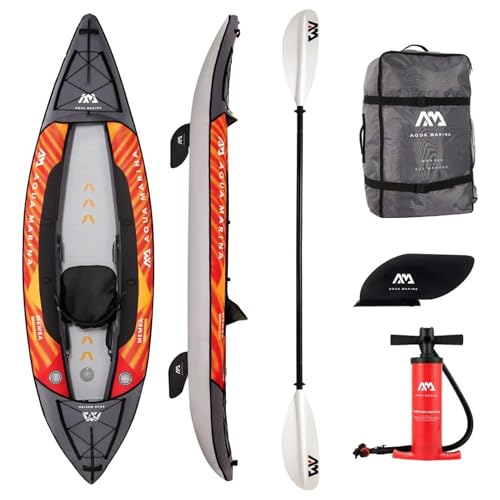
#1. Aqua Marina Tomahawk Inflatable Kayak

Specifications
| Brand | Aqua Marina |
|---|---|
| Kayak Type | Solo |
| Seats | 2 Seats |
| Length | 375 in |
| Weight | 28.7 lb |
| Capacity | 462 lb |
| Material | Drop-Stitch PVC |
| Air Chambers | 3 Chambers |
Pros
- Thick material, solid seams
- Smooth glide, efficient paddling
- Cushioned comfort, easy posture
Cons
- Learning curve instability
- Less forgiving handling
- Delayed setup time
The Aqua Marina Tomahawk stands out in 1-person inflatable kayaking thanks to its efficient feel on the water. At 375 in long with a drop-stitch PVC build and 3 air chambers, it holds shape better than many solo inflatables, so it tracks straighter with less constant correction. The glide feels smooth, and paddling stays efficient, which matters most when you are managing everything alone. It also includes cushioned seating that supports an easy, steady posture for longer stretches.
The main trade-off is control early on. It can feel less forgiving when you start learning how to balance your solo position, especially during turns. Setup also takes a bit longer than some simpler solo models, so plan for that first outing. This is a strong pick for solo paddlers who want calmer-water efficiency and better hull stiffness, and who are willing to practice a little for confident handling.
#2. Aqua Marina Betta Inflatable Kayak

Specifications
| Brand | Aqua Marina |
|---|---|
| Kayak Type | Touring |
| Seats | 2 Seats |
| Length | 162 in |
| Width | 31 in |
| Weight | 29.5 lb |
| Capacity | 507 lb |
| Material | PVC |
| Air Chambers | 3 Chambers |
Pros
- Thick material, solid seams
- Better straight tracking
- Great features for the cost
Cons
- narrow cockpit feel
For solo paddlers who want better straight-line tracking in an inflatable, the Aqua Marina Betta stands out. Its thick PVC build and solid seams feel dependable, and on the water it tracks more cleanly than many 1-person-oriented inflatables. The touring-style layout helps you hold a course with less constant correction, which matters when you are covering longer stretches on calm lakes or slow rivers.
The main trade-off is cockpit space. The narrower feel can make entry, exit, and foot positioning a little tight, especially if you are used to roomier solo kayaks. This one suits paddlers who prioritize tracking and durability over maximum inside comfort, and it is a good pick for steady, efficient outings rather than quick, casual paddling around.
#3. Sevylor QuickPak K1 Inflatable Kayak

Specifications
| Brand | Sevylor |
|---|---|
| Kayak Type | Solo |
| Seats | 1 Seat |
| Length | 87 in |
| Width | 36 in |
| Weight | 20.3 lb |
| Material | PVC |
Pros
- Steady seated confidence
- More stable ride
- Easy to carry
Cons
- Setup hardware annoyance
- Poor tracking performance
The Sevylor QuickPak K1 stands out for one-person paddling by feeling steady once you are seated. At 87 in long and 36 in wide, it gives a more confidence-inspiring platform than many smaller solo inflatables. The ride feels firm enough for calm water sessions, and it stays stable when you shift your weight to reach for something or settle back in. It is also easy to carry at 20.3 lb, which matters when you are doing your own inflating and hauling to shore.
The trade-off is that it does not track as cleanly as you might expect. You may need more frequent steering corrections to keep a straight line. Also, setup can feel a bit fussy due to the hardware, so plan for a little extra time the first few outings. This makes it a good match for solo paddlers who want stability and manageable handling, but prefer relaxed routes over long, arrow-straight runs.
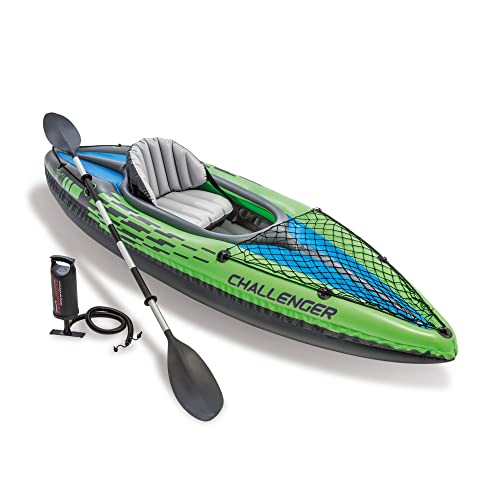
#4. Intex Challenger K1 Inflatable Kayak

Specifications
| Brand | Intex |
|---|---|
| Kayak Type | Solo |
| Seats | 1 Seat |
| Length | 108 in |
| Width | 31.2 in |
| Weight | 26 lb |
| Capacity | 220 lb |
| Material | PVC |
Pros
- Great features for the cost
- Easy to carry
- Stable beginner craft
Cons
- Low payload capacity
- Thin material concerns
- Limited ocean confidence
Intex Challenger K1 stands out in the solo inflatable kayak crowd because it balances easy handling with solid beginner stability. At 108 in long and 31.2 in wide, it feels steady when you get in, paddle, and stop. The 26 lb weight also makes it realistic for one person to carry and launch, which is a big deal for single-seat recreational use.
The trade-off is on limits. With a max capacity of 220 lb, heavier paddlers or added gear may feel tight. You will also want to treat it as a calm-water craft rather than an ocean boat, since some buyers raise concerns about thin material and durability. If you want a simple, stable one-person kayak for lakes and slow rivers, this is a practical pick. If you plan rough water or regular overloading, look elsewhere.
#5. Intex Excursion Pro K1 Inflatable Kayak

Specifications
| Brand | Intex |
|---|---|
| Kayak Type | Solo |
| Seats | 1 Seat |
| Length | 120 in |
| Width | 36 in |
| Weight | 31.1 lb |
| Capacity | 220 lb |
| Material | PVC |
Pros
- More stable ride
- Easy to carry
- Great features for the cost
Cons
- Slower and less efficient
- Less suitable for challenging conditions
The Intex Excursion Pro K1 stands out in the solo inflatable kayak space for its steady, confidence-inspiring feel. At 36 in wide and 31.1 lb, it is easier to balance than many slimmer one-person boats. That stability helps when you are getting in, turning around, or making small paddle corrections on calm lakes and slow rivers.
The main trade-off is efficiency. It tracks well enough, but it feels slower and less “grabby” than more performance-focused solo inflatables. This makes it a better match for relaxed day trips and easy conditions, not for windy water or fast moving routes where speed and control matter more.
What to Look For
Build Quality: Check for reinforced seams and puncture-resistant outer material. Look for reliable valves and a floor design that resists soft spots after inflation. If a kayak is prone to leaks, you will feel it in every trip.
Performance on Flat Water: For solo paddling, tracking matters more than top speed. A kayak that drifts too much forces constant correction. You want a hull shape that holds a straight line with steady strokes.
Stability for Getting In and Out: Solo kayaks should feel steady when you climb in and when you adjust your position. Prioritize models that resist roll and keep balance even if you paddle with light gear or change stance.
Solo Comfort and Cockpit Layout: Seats should support you without forcing a curled posture. Pay attention to back support, leg room, and whether the foot position stays secure while you paddle. Comfort matters because fatigue limits how far you can go.
Portability and Setup Time: Weight and packed size drive how often you use the kayak. Compare how long it takes to inflate and deflate, how compact the bag is, and how easy it is to move to shore and into storage.
How We Picked
Products were identified through broad research across review sites and buyer forums, then filtered to only those that qualify as 1-Person Inflatable Kayaks.
Scoring used the same objective pillar framework as the main Inflatable Kayaks post, allowing direct comparison of products within this sub-category.
Frequently Asked Questions
How long does it take to inflate a 1-person inflatable kayak?
Most 1-person kayaks inflate in about 10 to 20 minutes. You will get faster after one or two setups. Always use the included pump or a hand pump rated for inflatable boats. Check that every chamber reaches the same target pressure.
What is the usual weight limit for a 1-person inflatable kayak?
Many 1-person models list a maximum capacity around 250 to 300 lb. Always compare the limit to your weight plus any gear you carry. If you plan to add dry bags, a cooler, or extra layers, stay safely below the max. This helps with comfort and tracking.
How many air chambers should I look for in a 1-person kayak?
Look for 2 to 3 air chambers for most recreational 1-person kayaks. Extra chambers can improve safety if one area has a leak. A thicker, more stable floor also matters for everyday paddling. More chambers do not automatically mean better speed or comfort.
How do I take care of the kayak material after each trip?
Rinse the kayak with fresh water and let it dry fully. Avoid leaving it in hot sun for long storage periods. Patch tiny scuffs early so they do not turn into leaks. Store it in a cool, dry place, folded loosely in the bag if possible.
When should I choose a tandem inflatable kayak instead of a 1-person model?
Choose a tandem if you want to paddle together or share gear and weight. A 1-person kayak can feel tight when you add a passenger. If you need more room for fishing tackle or a larger dry bag, tandem models often fit better. Solo paddling also works best when the cockpit feels uncluttered.
How do 1-person inflatable kayaks compare to other inflatable kayak types for tracking and speed?
1-person kayaks usually feel easier to steer and faster in calm water. Their shorter layout can reduce drag compared to wider, multi-person boats. Still, tracking depends more on hull shape and the skeg or fin than on seat count. If you paddle long distances, a touring style will typically hold a straighter line than a basic recreational style.


