Specifications
| Brand | Titan Fitness |
|---|---|
| Adjustment Mechanism | Plate-Loaded |
| Handle Material | Steel |
Pros
- Durable and reasonably priced
- Smooth sleeve rotation
Cons
- Cumbersome weight changes
- Setup friction
- Bulky tray, takes room
The Verdict
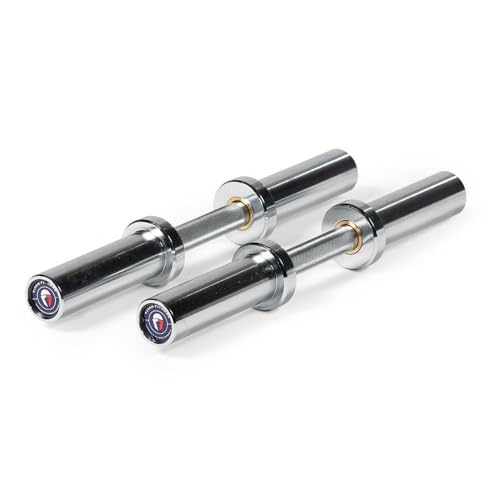
Titan Fitness Titan Loadable Olympic Dumbbells use plate-loaded sleeves, and they score 7.5 overall for this category. They feel durable with a smooth sleeve rotation, but weight changes slow you down, and the bulky tray adds storage friction. Pick them if you mainly train by plate-based jumps and want Olympic-plate convenience in your dumbbell setup.
Who it's for: Lifters who already own Olympic plates and are fine changing load between sets. You accept slower setup and bulkier storage for a steady handle and smooth sleeve movement during presses, rows, and hinge work.
Who should skip it: People who need fast, on-the-fly load changes, or who have limited floor space. If you hate tray-based loading friction, look for an adjustable dumbbell system with quicker switching and a smaller footprint.
In-Depth Review
Performance
Titan Loadable Olympic Dumbbells score 7.6 in Performance. That lands them in the “Quick, secure adjustments” lane only after the plates are already on. The core of the system is plate-loaded, as shown by the spec “Adjustment Mechanism: Plate-Loaded.” In practice, that means there is no fast selector action between sets. You load and unload plates each time.
The spec note “custom weights up to 400 LB per bar” sets the top-end expectations. In other words, the set can reach a serious training ceiling if you have the plates to match. Where the performance drops is the workflow. The listed cons include “Cumbersome weight changes” and “Setup friction.” Those are performance factors, not just annoyances, because they slow down transitions for supersets and shorter rest routines.
The best performance moments come from how the sleeves behave. The pros list “Smooth sleeve rotation.” That matters during presses, rows, and hinging work where you need the sleeve to orient cleanly. Plate-loaded systems can bind if the sleeve movement is rough. Here, the sleeve action is described as smooth, so the dumbbell can stay more consistent as you move through reps.
Build Quality
The build quality score is 7.4, which fits “Mostly durable, slight wobble” as a typical outcome for plate-based dumbbells. The key spec is “Handle Material: Steel,” plus the description of “rust-resistant precision-grade steel (with a chrome finish).” Steel handles usually hold up well under repeated plate loading, and they resist grime and sweat better than soft alloys.
You also get a clue about mechanical reliability from the adjustment style. Since the system is plate-loaded with Olympic-style weight sleeves, the stress points are the sleeve interface and the sleeve rotation. The pros mention “Smooth sleeve rotation.” That implies the sleeve runs cleanly, instead of sticking. A stuck sleeve turns every warmup rep into a fight.
Still, the cons point to real-world friction. “Setup friction” suggests the loading process itself can feel resistant, likely due to how plates sit on the sleeve and tray. That does not automatically mean the parts will wear out quickly. It does mean the mechanism may not feel as effortless as more dialed or pin-based adjustable designs. Overall, the 7.4 score reflects sturdy steel construction, but a mechanism that can add some friction during repeated loading.
Ergonomics
Ergonomics score 7.4, matching “Balanced, hand-friendly feel.” The steel handle is the main driver here. The spec lists “Handle Material: Steel,” and the mini-review notes the “steel handle stays solid in your hands.” A stable feel matters for straight presses and for pulling moves where you need tight wrist control.
Ergonomics is also tied to how the weight sits during the rep. Plate-loaded setups can shift if sleeves do not track well. The pro “Smooth sleeve rotation” supports a more even setup in motion. When the sleeve rotates smoothly, the dumbbell often feels more balanced during transitions from setup to the first rep. That reduces that subtle “twist” some people feel with stiffer sleeves.
Even with that, ergonomics has limits in how the set is used. Plate-loading systems require tray interaction during setup. The cons list “Setup friction” and also “Bulky tray, takes room.” A bulky tray can lead to awkward body positioning while loading, which can affect how comfortably you set your hands on the handle between rounds. The score stays at 7.4 because the grip and balance seem solid, but the loading workflow can disrupt the feel of convenience.
Footprint
Footprint is the lowest score at 6.8. That aligns with “Bulky tray, takes room.” The product experience centers on plate storage and plate loading, so you tend to need space for a tray or loading surface. The cons are direct: “Bulky tray, takes room.” That is the kind of issue that shows up in a home gym corner.
Unfortunately, the spec table provides “Dimensions (L x W x H): -” and “Storage Stand Included: -.” Those blanks mean there is no confirmed measured footprint to judge. But we do know the system is built around Olympic plate storage, as shown by “Adjustment Mechanism: Plate-Loaded” and the reference point that it uses Olympic-style weight sleeves. That typically translates into a larger setup around the dumbbells.
Even without measured dimensions, the score of 6.8 makes sense. A bulky tray impacts not just storage, but also how quickly you can move the dumbbells back into place. If your floor space is tight, the loading surface can become part of the daily routine instead of a hidden station.
Value
Value scores 8.4, landing in “Durable and reasonably priced.” The spec note “custom weights up to 400 LB per bar” is a major value anchor. Range is what makes an adjustable tool last. If you can keep training heavy without replacing the dumbbell system, you get better long-term usefulness from the same frame.
Build and use also support the value score. The steel handle, listed as “Handle Material: Steel,” is a durable baseline for a plate-loaded build. The pros also cite “Smooth sleeve rotation,” which reduces daily frustration when you set up for multiple exercises. In a training week, those small wins matter because you repeat them often.
The main drawback is workflow cost. The cons include “Cumbersome weight changes” and “Setup friction.” Value remains strong because the system targets Olympic plate users and supports a high ceiling, but it does not pretend to be fast. If your workouts depend on frequent, small increments between sets, this is not the quickest adjustable type. The 8.4 score reflects that you still get strong durability and training range for the money, with the trade-off being slower transitions.
Frequently Asked Questions
What plates fit the Titan Loadable Olympic Dumbbells, and how does the plate loaded adjustment work?
These dumbbells use a plate-loaded style with rotating sleeves so you can add and remove weight plates from the ends. The adjustment is done manually by loading plates onto the sleeves rather than changing a dial. The sleeves move smoothly, but you still have to handle plates each time you change weight.
Are the Titan Loadable Olympic Dumbbells made with steel, and will the sleeves feel solid when lifting?
Titan Fitness lists steel for the handle material, which helps the grip feel sturdy. In practice, the main wear points are the sleeve and locking areas, so you should check that plates seat fully and stay tight before each set. Users report smooth sleeve rotation, which usually means less friction during reps.
What is the maximum weight per dumbbell and the total weight range?
Titan Fitness does not provide a specific weight range per dumbbell in the available specs, so you cannot confirm the exact maximum from the listing information shown here. Since it is plate loaded, the real max depends on which Olympic plates you use and how much you can safely load on the sleeves. Verify sleeve length and safe loading before committing to very high weights.
How fast is weight changes during workouts, and is it a hassle for supersets?
Weight changes take longer than true selectorized systems because this is plate loaded. The tradeoff is that setup takes friction, and you have to swap plates one by one. If you run lots of fast supersets, you will likely find the change process slows you down.
Does the bulky tray or storage setup take up a lot of space in a home gym?
The design includes a bulky tray that takes room, according to the reported cons. If you have limited floor space, plan for clear access so you can pick up the dumbbells without bumping the stand or plates. A tighter layout will make returning weights more annoying.
How should I clean and maintain the sleeves and locking area to keep them from sticking?
Wipe the sleeves after sweaty sessions to reduce grit and corrosion around the plate contact points. Inspect the plate fit and any locking surface before heavy sets so plates do not feel loose. A light dry brush and dry storage helps prevent the mechanism from feeling gritty over time.
Final Verdict
These loadable Olympic dumbbells are a solid pick for lifters who want a strong match for Olympic plates and steady sleeve movement. Performance is helped by smooth sleeve rotation, and the build feels durable. Still, weight changes are slow and awkward, and the setup has extra friction. If you train with planned plate jumps and do not mind frequent swaps, they work well.
Go for them if you already own Olympic plates and value reliable sleeves over quick dialing. If you have limited space or want fast adjustments, look elsewhere first. If that fits your routine, this is a sound pick.