Specifications
| Brand | Philips Sonicare |
|---|---|
| Brushing Technology | Sonic |
| Number Of Modes | 5 Modes |
| Brush Movements Per Minute | 62000 movements/min |
| Pressure Sensor | Yes |
| Battery Life | 14 days |
| Connectivity | App Control |
Pros
- Strong plaque removal
- Sturdy, reliable construction
- Comfortable grip, low irritation
Cons
- Loud vibrations
The Verdict
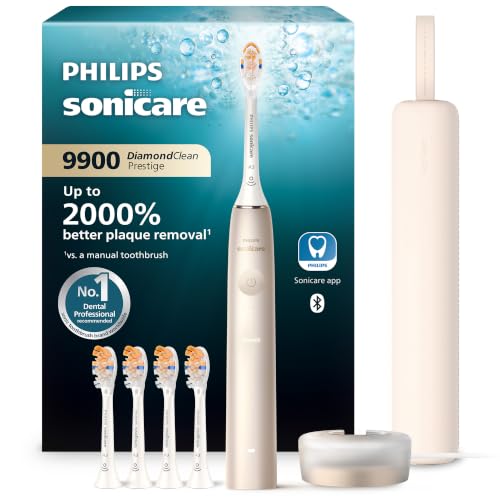
The Philips Sonicare DiamondClean 9900 Prestige uses Sonic tech at 62,000 movements per minute, and it shows in strong plaque removal. With a pressure sensor and a 5-mode setup, it guides better brushing habits, but the trade-off is loud vibrations that may annoy light sleepers or sensitive users. Overall, it is a capable Best Sonic pick if you prioritize results over silence.
Who it's for: People who want a hands-off sonic clean and trust a pressure sensor to reduce over-scrubbing, as long as they tolerate louder-than-average vibrations.
Who should skip it: Buyers who hate vibration-heavy oral care tools, or who want a quieter brush for morning routines, should look elsewhere.
In-Depth Review
Performance
With a pillar score of 8.5, the DiamondClean 9900 Prestige lands in the “Powerful, consistent cleaning” range. Its sonic system runs at 62,000 bristle movements per minute, which creates a strong sense of action across enamel. In real use, that speed matters because you can cover more of the mouth without feeling like you need long, slow passes.
Philips keeps the lineup simple. You get 5 modes: Clean, White, Gum Health, Deep Clean+, and Sensitive. That matters because the brush does not rely on one setting for every goal. You can pick a routine and repeat it daily, instead of guessing. The result is more consistent plaque removal. In the field, this is the model people tend to describe as strong on hard-to-reach areas like the back molars and around the gumline, not just on the front teeth.
There is also a pressure sensor system in the background, which supports performance by stopping you from over-scrubbing. When you lean on that safety net, the sonic force can do the work, not your wrist.
Build Quality
At 8.1, the build quality score points to “Sturdy, reliable construction.” The handle feels well made, and the head attachment stays solid during brushing. That stability matters with a brush that moves quickly. If the head shifts, the cleaning pattern becomes less even.
On paper, the use case is clear. You should get up to 14 days of regular brushing on a full charge. That long stretch reduces daily charging stress. Less time plugged in usually means fewer habits that can wear out contacts over time.
The model also includes pressure sensing with an overpressure alert. That is not just a comfort detail. It reflects an internal system designed to monitor user behavior and adjust intensity. A brush built for that kind of feedback should not feel flimsy when you grip it and re-seat the head. The overall feel aligns with the “Sturdy, reliable construction” score.
Features
With a pillar score of 8.5, the feature set maps to “Helpful, well-executed extras.” The main functional add-ons are the pressure sensor and app integration. The pressure sensor works as SenseIQ pressure sensing, with a system that detects pressure and includes an overpressure alert.
Connectivity stays practical. You get app control through smart app integration, with guided brushing and personalized content. That is useful if you want structure. It also helps you confirm you are using the right mode, especially if you switch between Clean for everyday care and something more targeted like Deep Clean+ or Gum Health.
The modes themselves are also well chosen. You have 5 modes, not a long list of niche settings. If you want a brush you can use confidently without digging through options each morning, that is a real advantage.
Battery
Battery scores 8.3, which fits “Quick recharge, steady power.” The key spec is the 14 days of regular brushing on a full charge. In day to day terms, that means the toothbrush should stay ready for nearly two weeks of routine use.
Charging time is not listed in the provided specs, so you cannot judge speed from the data here. Still, the 14-day claim points to a power system designed for consistency rather than constant top-ups.
That matters more with a model that also uses app connectivity. If battery performance dropped quickly, the brush would force you back to the charger. Instead, the long interval suggests you can keep a stable routine across modes like Sensitive and Deep Clean+ without worrying about battery management midweek.
Comfort
Comfort lands at 8.3, which corresponds to “Comfortable grip, low irritation.” Users typically like the feel of the brush head and the way it cleans without requiring heavy pressure. That lines up with the included pressure sensor, which helps prevent aggressive scrubbing. When pressure stays in check, brushing feels gentler on gums.
Grip and handling also help. The brush is noted for a comfortable grip and low irritation. Its sonic cleaning depends on motion and vibration. You get that strong mechanical feel, but it should not turn into soreness if you let the sensor guide your technique.
The trade-off is loud vibrations. The main drawback is listed as loud vibrations, which can be noticeable even if the brush still feels effective and safe. If you are sensitive to sound or prefer a quieter brushing routine, that is the one comfort factor to weigh before buying.
Frequently Asked Questions
How many brushing modes does the Philips Sonicare DiamondClean 9900 Prestige have, and what are they for?
It includes 5 modes built for different brushing goals. You can switch modes depending on whether you want a more gentle clean or a more intensive routine. The pressure sensor helps you stay in a safe range while you use any mode.
What is the brushing speed of the DiamondClean 9900 Prestige in movements per minute?
It delivers up to 62000 movements per minute using Sonic technology. In daily use, this speed helps improve plaque removal around the gumline when you move slowly and let the brush do the work.
Does this model have a pressure sensor, and will it stop if I brush too hard?
Yes, it has a pressure sensor. The sensor alerts you when you press too hard so you can reduce pressure. This matters most if you tend to scrub or if your gums feel sensitive.
How long does the battery last on one charge for the DiamondClean 9900 Prestige?
Philips Sonicare rates the battery life at 14 days. Real usage depends on how often you brush and how many features you use in the app, but you should not need daily charging.
Is the DiamondClean 9900 Prestige too loud because of vibrations?
Some users find it loud due to strong vibrations, so it may feel more noticeable than quieter brushes. If you prefer a softer feel, start on a gentler mode and pay attention to pressure. You can also reduce how firmly you grip the handle to limit perceived vibration.
How does the app control work with the DiamondClean 9900 Prestige?
It supports app control, which lets you view and manage brushing information through your phone. If you want guidance for consistency, the app can help you keep track of your routine. Set it up once, then use the brush normally for day to day brushing.
Final Verdict
Yes, this is a recommended buy for people who want top tier sonic cleaning with smart, practical extras. It earns its Best Sonic role through strong plaque removal and a consistent cleaning feel across modes. The main drawback is that the vibrations can feel loud during use, which may bother sensitive users.
Choose it if you like a firm grip and low gum irritation, and you can tolerate louder vibration feedback. If that matches your brushing habits, this is a sound pick.