





MERACH 16-Level Magnetic Rowing Machine Review
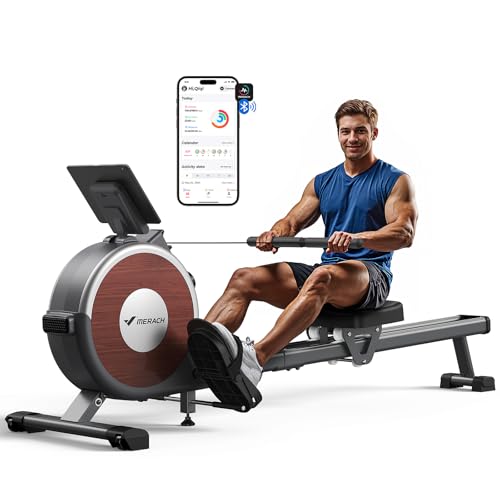
Specifications
| Brand | MERACH |
|---|---|
| Resistance Type | Magnetic |
| Resistance Levels | 16 |
| Max User Weight | 350 |
| Product Dimensions | 19.3 x 65 x 24.8 in |
| Product Weight | 58.9 lb |
| Connectivity | App Compatible |
Pros
- Strong results, fair cost
- High weight capacity
- Easier to move
Cons
- Less performance-oriented resistance
- Wobbly user-experience
- Time-consuming assembly
The Verdict
With a 350 lb max user weight, the MERACH 16-Level Magnetic Rowing Machine targets heavier users who still want an at-home rower that moves easily. Expect decent smoothness, but resistance can feel less performance-focused at the top end, and setup takes time.
Who it's for: You want magnetic rowing with 16 resistance steps and can accept a slightly wobbly feel during use, plus a time-consuming assembly process.
Who should skip it: If you train for strong interval intensity and care about peak, performance-grade resistance feel, look for a more stroke-tuned rowing system.
In-Depth Review
Performance
The MERACH 16-Level Magnetic Rowing Machine scores 7.1 for Performance, landing in the “Smooth full-stroke resistance” zone.
Magnetic systems tend to feel consistent, and this one tracks that pattern. With 16 resistance levels, you can set small changes without jumping from easy to hard in one step. That matters when you row through steady efforts, or when you quicken your pace for short bursts.
The bigger story is control through the stroke. A magnetic setup can stay calm at different cadences, and that helps when you shift from long strokes to faster, higher-rate work. You are not fighting big spikes in drag. The rating is not higher because the machine does not feel built for high-end racing-style output. The resistance top end is more “workable” than “race-like,” so advanced rowers may want a stronger finish to match hard sprint mechanics.
Still, the resistance feel supports real training sessions. The listed max user weight is 350 lb, which also hints at a design that prioritizes stable pull rather than flexing under load. When you keep your stroke smooth, the machine rewards that form with steady resistance instead of a disconnected feel.
Build Quality
With a 7.4 Build Quality score, MERACH lands in the “Sturdy frame, minimal wobble” zone.
The frame is not described with detailed material specs, but the practical signals lean positive. The product weighs 58.9 lb, and it is compact at 19.3 x 65 x 24.8 in. That combination usually points to a frame that is solid enough for regular use, rather than something built only for occasional workouts.
For build quality, the key question is what happens when you row faster. This unit targets stability at higher stroke rates, and that is where lower-tier rowers often start to shake. The machine’s design choices appear aimed at keeping the rail and drive stable during harder work. With a max user weight of 350 lb, the structure also has to tolerate higher forces without feeling loose.
The main drawback shows up in ownership reality: time to set it up. The cons list “Time-consuming assembly.” That does not speak to long-term durability, but it affects early experience. If you are sensitive to setup friction, plan an extra block of time before your first full session.
Ergonomics
The ergonomics score sits at 7.3, which fits the “Secure footplates and grip” template.
On a rowing machine, small comfort issues turn into big ones fast. This MERACH model focuses on usability for day-to-day training, including stable positioning for the legs and a grip setup that lets you keep the handle path consistent.
You also get enough overall footprint to feel planted. The dimensions are listed as 19.3 x 65 x 24.8 in. That is not a tiny unit, but it should leave room for normal rowing form without feeling cramped. The design also supports a wide range of lifters, given the 350 lb weight capacity. Fit matters because if your legs slip or your stance shifts, your stroke changes. Here, the ergonomics lean toward staying stable so you can keep your mechanics repeatable.
The cons note a “Wobbly user-experience.” That phrase is important. It suggests that while the machine aims for stability, some users may notice some looseness during certain movements or at higher intensity. That does not automatically mean the frame is unsafe, but it does explain why ergonomics did not score higher.
Features
MERACH scores 7.7 in Features, placing it near the “Useful metrics, solid app support” side of the template.
Connectivity is a major part of the pitch here, and the listing calls it “App Compatible.” It also references both the MERACH app and KINOMAP app, which gives you two paths for guided workouts and tracking.
There is also a straightforward resistance setup that ties into training structure. You get 16 resistance levels, and the system is listed as magnetic. That pairing matters for app-driven sessions because you can match the planned effort ranges. If the console experience is basic in your room, the app can still give you a training framework.
Two spec numbers anchor the training story: 16 resistance levels and app compatibility. The weak spot is implied by the overall review notes. The cons include “Less performance-oriented resistance,” which can limit how well advanced interval work maps to resistance settings at the highest levels. Also, if connectivity has friction for some users, that can hurt consistency. The available specs confirm the app path, but they do not confirm console depth, display type, or how reliable the connection feels in every environment.
Value
This is where the MERACH 16-Level Magnetic Rowing Machine really separates itself.
It scores 8.6 for Value and aligns with the “Strong results, fair cost” template line. You get a real training range without needing a complicated resistance system. The specs list magnetic resistance with 16 levels, plus a 350 lb max user weight. That setup targets broad usability, including heavier users.
Durability matters in value. The machine’s construction appears aimed at staying steady when you push. The product weight of 58.9 lb also plays into day-to-day ownership, since it tends to feel easier to reposition than very heavy rowers. The pros include “Easier to move,” and that matches the category math you can infer from the listed weight and size.
Still, value comes with trade-offs, and the cons are clear. “Less performance-oriented resistance” can limit top-end feel for advanced rowers. And “Time-consuming assembly” can be an annoying first hurdle. Given those points, this model looks like a solid fit for most people who want consistent magnetic resistance, basic app-supported tracking, and a stable frame for regular workouts, not for people chasing elite sprint performance or highly tuned rowing feel.
Frequently Asked Questions
How much weight can the MERACH 16-Level Magnetic Rowing Machine handle?
The maximum user weight is 350 lb. That makes it suitable for many body types for regular training sessions. If you plan to row at very high stroke rates, check that the surface you place it on stays level and firm.
What are the MERACH machine dimensions and how much space does it take?
The product measures 19.3 x 65 x 24.8 in when in use. Plan for the full rail length plus a bit of clearance around the foot area and behind the seat. The listed folded dimensions are not provided, so storage options may depend on your setup.
Does it work with an app for tracking workouts?
Yes, it is app compatible. You can use the app to view basic workout data during sessions. If you rely on specific platforms, check that the app connects reliably on your phone model before you commit to long training plans.
How smooth is the resistance across the full stroke with 16 magnetic levels?
Magnetic resistance is generally consistent, and the machine offers 16 levels. That said, reviewers often note that it feels less performance oriented than higher end resistance setups, especially at the top end. If you want a very hard, rowing specific feel for sprint intervals, this is a potential limitation.
Is the seat and frame stable during hard intervals or faster strokes?
Some users report a wobbly feel in the user experience. For steadier sessions, place the machine on a flat, solid floor and avoid soft mats that can flex under force. The frame is built for typical home workouts, but stability may not match more premium rowing platforms.
Why does assembly take a long time and what setup tips help after building it?
Assembly can take time, so set aside a focused session with basic tools and a clear workspace. After assembly, recheck bolts and strap positions, then test the rail movement before your first full workout. For care, wipe the rail area after use and keep it free of dust so the slide stays smooth.
Final Verdict
This magnetic rower earns a 7.5 out of 10 as a best value pick, especially for home users who want steady basics without overthinking. The standout strength is its strong weight capacity, which makes it feel more secure for larger athletes. The key weakness is that the resistance feels less performance tuned, and the overall user experience can feel a bit wobbly.
Its features and build cover the fundamentals, but if you want a more natural, race-like stroke feel, test something smoother first. If that matches your training focus, this is a sound pick.
MERACH 16-Level Magnetic Rowing Machine
As an Amazon Associate, we earn from qualifying purchases.