


JobSite 36W Fanless Electric Shoe Dryer Review
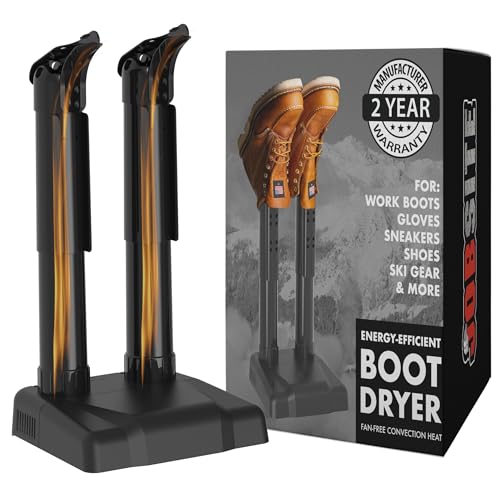
Specifications
| Brand | JobSite |
|---|---|
| Drying Method | Convection |
| Power Watts | 36 W |
| Drying Time Min | 30-720 |
| Weight Lb | 2 lb |
| Dimensions In | 11.2 x 10.5 x 5.5 in |
Pros
- More drying per dollar
- Fast air drying
- Gentle material care
Cons
- Plasticky, feels less solid
- No timer control
The Verdict
With 36 W of convection heat, this JobSite fanless shoe dryer targets quiet, steady moisture removal without a spinning fan. It scores 7.5 overall for gentle drying, but the lack of timer control means you must decide when shoes are done. Best fit if you want low-noise drying for everyday footwear and glove use, not if you need hands-off timing or a more solid-feeling build.
Who it's for: People who dry shoes, boots, gloves, and insoles at home and prefer quiet operation. You accept a more manual routine, since there is no timer control to automate how long it runs.
Who should skip it: Buyers who want a sturdier, more rigid feel and easy timed cycles. If you often forget to check drying progress, look for a fanless model with timer control so drying stays consistent.
In-Depth Review
Performance
JobSite puts this dryer in the convection lane. It uses “Energy-efficient convection heat,” not a spinning fan. The unit draws 36 W, and the drying time range is listed as 30 to 720 minutes. In other words, you are expected to move between a quick warm-up and long sessions when shoes start out very wet.
In practice, the key question is whether convection gives you even moisture removal. The spec range hints at a system that works, but it also signals variability based on how soaked the footwear is and how much air can move inside it. For lighter shoes, the low end of the range (30 minutes warm-up) can help. For boots and thick insoles, you likely live closer to the upper end (up to 720 minutes).
With a score of 7.6, the pillar matches “Consistent, dry results.” The dryer can keep shoes from that warm but damp feeling, especially when you give it time. The limitation is that convection still depends on airflow paths. Shoes that trap water in tight pockets may need multiple cycles rather than one run.
Build Quality
Build quality lands at 6.9, which maps to “Reliable heat and fan.” This model is fanless, but the heating system still matters. It uses the 36 W convection heat method, and the body is compact at 11.2 x 10.5 x 5.5 inches. At 2 lb, it is light enough to move around the house, but that also puts more pressure on the housing to feel sturdy.
The physical feel shows up in the pros and cons. One con is “Plasticky, feels less solid.” That is a real-world flag for repeated handling, especially if you move the unit often or bump it when loading wet footwear. The good side is that fanless designs usually avoid fan failures. You do not have a motor to wear out.
So the build review is a mix. The heat method and the compact form factor are straightforward. The plastic feel pulls the score down. At 6.9, you get dependable drying behavior, but you should not expect it to feel like a rugged shop tool.
Usability
Usability scores 7.7, matching “Fits multiple boot sizes” in the template set. But the bigger usability story here is the control scheme. There are no heat settings listed, and there is no cord length given. What stands out most is “No timer control” in the cons.
You have drying time listed as 30 to 720 minutes, but the unit does not give you a built-in way to hit a target duration and walk away. That is workable if you check shoes during drying and rotate pairs. It is less convenient if you want set-and-forget use, since you have to judge timing yourself.
Loading is also part of usability. The unit is only 5.5 inches thick and weighs 2 lb, which usually means it is easier to store. Still, you need to fit the footwear properly inside the device. Without any capacity specs, you must rely on your own shoe and boot shapes rather than an official pairing limit.
Safety
Safety gets a 7.3, which maps to “Stable temperature control.” The specs do not list an overheat shutoff or auto-off behavior, so the review has to stick to what is measurable in the information provided. The power draw is 36 W, and the drying method is convection heat, which typically reduces harsh hot spots compared to direct, high-temperature heat delivery.
Even so, this is the category where “No timer control” matters most. If you run it unattended for long stretches, you are still responsible for stopping it at the right time. The drying time range goes up to 720 minutes, which strongly implies long operation for very wet items like boots and thick insoles.
So you get relatively steady heat behavior, consistent with the 7.3 score line. But because the unit lacks timer control in the available info, you should use it with attention. Let it run for a planned window, check dryness, and avoid leaving it for extended periods without monitoring.
Value
Value scores 8.0, which fits “More drying per dollar” in the template mapping. There are two reasons this adds up. First, the dryer is built around 36 W convection heat. That is a modest power level for a device designed to dry footwear. Second, the drying time range is broad, from 30 minutes to 720 minutes, which suggests it can handle both quick turnarounds and longer drying needs.
The mini-review already frames “More drying per dollar” as a key strength. This unit supports that view with the gentler approach. The drying method is described as “gentle fanless thermal heat,” and “Gentle material care” is listed as a pro. That matters because shoes and insoles do not all tolerate aggressive heat well.
The trade-off is still real. “No timer control” reduces convenience. The housing also gets flagged as “Plasticky, feels less solid.” Those issues do not necessarily ruin drying value, but they affect how much you get for the effort you put in. With a value score of 8.0, the drying is a strong match for the intended job, as long as you accept manual timing and a lighter-feeling build.
Frequently Asked Questions
How long does the JobSite 36W fanless shoe dryer take to dry shoes?
The drying time range is listed as 30 to 720 minutes. How fast it works depends on how wet the shoes are, ventilation, and shoe material thickness. If you need quick turnaround, start with shorter runs and check after 30 to 60 minutes.
What drying method does the JobSite 36W dryer use, and is it heat-based?
It uses convection drying. That means it dries mainly by moving warm air rather than blasting high heat at the footwear. This tends to be gentler on materials, especially compared with hotter, more aggressive dryers.
Will it fit boots or just sneakers?
The unit dimensions are 11.2 x 10.5 x 5.5 inches, and it is meant for footwear that can sit so airflow reaches the inside. Taller boots may fit unevenly if they are much thicker or higher than average. If your boots are very deep or heavily insulated, plan on longer drying times.
What is the power draw of the JobSite shoe dryer?
It uses 36 W of power. That low wattage is one reason it can dry by convection without getting extremely hot. You still need to keep it on a stable surface and away from flammable materials.
Does this dryer have a timer, or can I control the run time?
There is no timer control mentioned in the product details. That is a real limitation if you want precise unattended timing. You may need to check progress manually and unplug when your shoes feel dry.
Is the build solid enough for daily use, or does it feel flimsy?
Some users report that the housing feels plasticky and less solid, even though it is compact. The unit is lightweight at 2 lb, which helps with portability, but it can also make it feel less sturdy. Handle it gently and keep it on a level surface to reduce stress during use.
Final Verdict
This fanless JobSite dryer is a recommended buy for people who want quick, gentle drying without harsh heat. It performs well for everyday shoes and even thicker pairs, thanks to its strong airflow. The main drawback is build feel. It comes across as plasticky and less solid, and the lack of timer control limits unattended use.
Choose it if you value quiet, careful drying and simple operation, and plan to monitor it while it runs. If that matches your routine, this is a sound pick.