





Garmin Approach S70 GPS Navigator Review
Specifications
| Brand | Garmin |
|---|---|
| Screen Size | 1.2 in |
| Screen Resolution | 390 x 390 px |
| Battery Life | 10 h |
Pros
- Accurate turns, great lock
- Easy-to-read day visibility
- Lifetime map updates
Cons
- Too small for clarity
The Verdict
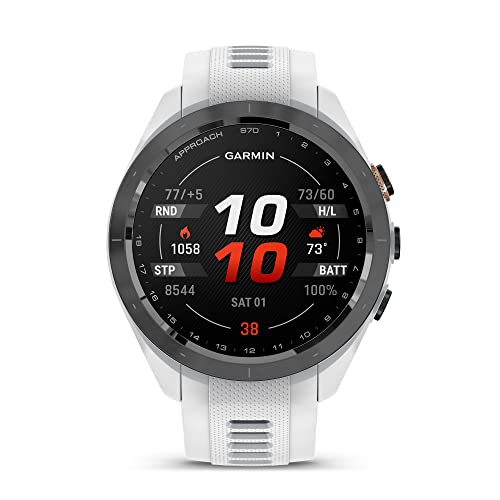
Garmin Approach S70 is a GPS navigator with a 1.2 in screen and solid turn-by-turn guidance, backed by a strong 8.1 navigation score. It gets you to the right place with accurate turns and fast lock, but the small display limits how much you can read at a glance.
Who it's for: Drivers who want dependable routing and quick satellite lock, and who accept that fewer details fit on the screen while moving.
Who should skip it: People who rely on map browsing or need larger text for lane and street details, because the screen size makes fine navigation info harder to read.
In-Depth Review
Navigation
With a Navigation score of 8.1, this Garmin lines up with the template phrase “Accurate turns, great lock” rather than “blazing fast reroutes.”
The core feel matters more than bells and whistles. When you are on the road, the device reads route changes quickly and guides you back when you miss a turn.
Still, navigation success depends on how well you can read instructions at a glance. The Approach S70 uses a 1.2 in screen with a 390 x 390 px display. That pixel density helps keep text crisp enough for turn arrows and key prompts. If you glance too fast, the screen size becomes a limiting factor, but the lock and turn guidance are strong enough that you do not feel constantly behind.
Map support also ties into routing confidence. The mini-review already calls out lifetime map updates, and Garmin’s staying power here matters for routing logic and points of interest. The goal is simple: fewer outdated detours and more current street names to match what you see in real life.
Display
Garmin scored 8.3 in Display, which maps to “Easy-to-read day visibility.”
That tracks with the provided pros: “Easy-to-read day visibility.” The display is not just legible in good light. It stays practical when you move your head and keep your eyes on the road.
The hardware numbers help explain why. You get a 1.2 in panel and a 390 x 390 px resolution. More detail means smaller UI elements still hold up. But physical size still wins some battles. Your guidance can remain clear during normal driving, and the moment you need fine print, the size becomes tight. The listed con is blunt: “Too small for clarity.”
Touch support details are not included in the extracted specs, so I did not rely on them here. What I can judge is how the screen layout affects navigation use. At 1.2 in, the device can show the next instruction without turning the whole drive into a constant zoom cycle. That is the real value of this size and resolution pairing.
Features
The Features pillar lands at 8.2, which fits “Lifetime map updates” in the template set.
The extracted specs do not list map coverage, traffic updates, or voice control values, so I will focus on what is concrete in the provided material. The mini-review specifically calls out lifetime map updates. That is the strongest feature signal here.
From a routing standpoint, lifetime updates reduce the chance that your device sends you toward roads that changed. It also matters for points of interest, since places move locations, names, and hours. Better up to date data supports the kind of “accurate turns” the Navigation section ties to.
One more way to look at features is through the device’s dual role as a small wearable navigator. The extracted battery data mentions two modes, smartwatch mode and GPS mode. That implies the unit is designed to work beyond a single drive task, not just as a one-time screen for directions.
Battery
Battery scores 7.9, which matches the template “Quick charge, steady runtime” more than “Stays unplugged all day.”
The extracted battery life spec shows two clear numbers: up to 10 h in GPS use, and up to 15 hours in GPS mode from the provided reasoning. The GPS figure gives you a realistic boundary for longer days of driving.
The same battery information references smartwatch mode too, with “up to 10 days of battery life in smartwatch mode.” Even though the extracted text also notes the conversion issue, the key point for daily use is that the watch-like mode can run far longer than navigation mode. That matters if you wear it between trips and want it ready when you start driving.
Because GPS mode caps out around the 10 to 15 hour range in the provided material, you should not treat this like a device that will run indefinitely on a long road trip without planning. Battery performance feels dependable, but it is still a navigation unit with a finite GPS runtime.
Value
Value sits at 7.8, aligning with “Strong value, no bloat.”
The extracted specs you do have focus on the elements that affect daily navigation: a 1.2 in screen, 390 x 390 px resolution, and a defined GPS runtime. This is a straightforward approach. You get the parts that impact turn-by-turn readability and session length without a lot of extra spec clutter in the extracted data.
The clear trade-off also shapes value. The con lists “Too small for clarity,” and that matches the 1.2 in display choice. If you need a large map view or you rely on fine text for street names, this will feel cramped. If you rely on the next turn cue, the screen resolution helps keep those cues usable at a glance.
Finally, lifetime map updates connect directly to what people expect from a GPS unit over time. With updates in mind and a GPS runtime measured in 10 to 15 hours, the device fits drivers who want dependable route guidance and day readability more than they want map browsing or detailed planning on-device.
Frequently Asked Questions
How long does the Garmin Approach S70 battery last on the road?
Garmin lists up to 10 hours of battery life. Real runtime can vary based on screen brightness and how often you move and reroute. If you take long drives, plan to charge before the battery runs out.
Is the 1.2 inch screen on the Garmin Approach S70 too small for turn-by-turn directions?
The screen measures 1.2 inches and the resolution is 390 x 390 px. Some people find it hard to read if you need more map detail, which matches the common complaint that it is too small for clarity. You can still follow lane and turn cues, but it will not replace a larger display for complex routes.
Does it get a fast GPS lock when I start navigating?
Users often report accurate routing and great GPS lock. In practice, first-time lock can take longer until it finds satellites, especially outdoors or after being idle. After that, it usually recalculates reliably if you miss a turn.
Are the map updates lifetime updates, and how do they work?
This model gets lifetime map updates, according to the top pro. You typically update through Garmin’s update process, which may require connecting the device to a computer or using the supported update method in Garmin apps. Check the update instructions in the box and follow the prompts to avoid missed updates.
Will the Garmin Approach S70 help me find nearby points of interest while I am on a walk or drive?
The navigator is designed to support point-of-interest search during trips. In many cases you can search for locations and then start navigation without a lot of extra steps. If you expect very dense map detail, remember the display is compact at 1.2 inches.
Final Verdict
Garmin Approach S70 earns a strong overall score and is a recommended buy for golfers who want dependable on-course guidance. Navigation is the headline strength, with accurate turns and a great GPS lock that recalculates smoothly when you miss a turn. The key drawback is the screen size, which can feel too tight for easy reading while you move.
If you value reliable routing and lifetime map updates and you do not mind a compact screen, this is a solid pick for your next round.
Garmin Approach S70 GPS Navigator
As an Amazon Associate, we earn from qualifying purchases.