





DXRacer Tank XXL Gaming Chair Review
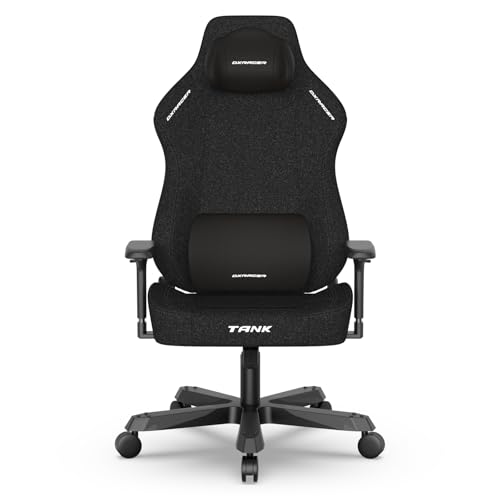
Specifications
| Brand | DXRacer |
|---|---|
| Upholstery Material | Fabric |
| Frame Material | Steel |
| Weight Capacity Lb | 400 lb |
| Seat Height Range In | 19.1-22.8 in |
| Backrest Recline Deg | 90-135° |
| Armrest Adjustability | 4D |
| Lumbar Support | Built-in |
Pros
- Sturdy frame, smooth hardware
- High weight rating
- Supportive lumbar system
Cons
- Headrest positioning tricky
- Desk-height mismatch
The Verdict
The DXRacer Tank XXL is built for up to 400 lb, and it scores 8.7 for comfort over long sessions. It stands up well with a supportive lumbar system, but the headrest can feel hard to dial in, and desk height may force an awkward fit.
Who it's for: Heavier users who want strong lower-back support and a stable feel, and who are willing to spend a few minutes adjusting the headrest and arm position for their setup.
Who should skip it: People with very specific desk heights or those who hate tuning headrests, because the headrest positioning and desk-height mismatch can make quick comfort harder to find.
In-Depth Review
Comfort
With a Comfort score of 8.7, the DXRacer Tank XXL lands in the “Breathable, pressure-relieving comfort” lane for many long sessions.
It is upholstered in fabric, and that matters because fabric usually feels less clammy than thicker foams and vinyl. The seat can also sit at 19.1 to 22.8 inches, so you can often match your desk height and avoid slouching that turns into pressure fast.
Support also comes from the built-in lumbar support system. That is the biggest comfort anchor here because lumbar support changes the whole feel of sitting. Recline helps too, with a 90 to 135 degree range. When you shift from upright to reclined, you reduce strain on the same contact points. The chair can feel good for hours, but only if you dial in your posture. If you sit with a head and neck angle that fights the chair, discomfort can show up sooner.
Two weak points can still undercut comfort. First, the headrest positioning can be tricky. Second, a desk-height mismatch can pull your posture out of alignment. In practice, that means you may feel fine from the lumbar down, while your upper body tries to compensate.
Build Quality
Build Quality scores 8.6, which fits the “Sturdy frame, smooth hardware” description.
This chair uses an all-steel frame, and the listed frame material is steel. That helps it feel stable when you sit down, stand up, and roll across a floor. Weight capacity also supports the design intent. It is rated up to 400 lb.
Stability matters more on an XXL chair. If a chair flexes too much, the cushioning feels uneven. Here, the chair pairs steel structure with smooth recline mechanics. The recline range is 90 to 135 degrees, and that movement has to travel reliably across different angles. The extracted pros note “Sturdy frame, smooth hardware,” which lines up with that recline spec.
Comfort depends on structure that does not loosen over time. The specs do not list parts like caster material or threading type, so long-term durability comes down to what feels solid during use. The combination of steel frame and 400 lb rating is a strong signal for confidence in repeated use.
Ergonomics
Ergonomics lands at 8.1, a “Adjustments dial in posture” level rather than an automatic best fit.
The chair has a built-in lumbar support system, and that is your main postural guide. It is especially important for long sessions because lower-back support can prevent the slide into posterior pelvic tilt.
Adjustability helps you match your body. Seat height runs from 19.1 to 22.8 inches. That range lets you avoid the common problem of your thighs floating too high or pressing too low. Arm support can also be tuned. The armrests are 4D adjustable, meaning you can change position in multiple directions rather than settling for a fixed angle.
The trade-off sits in the upper body. The cons call out “Headrest positioning tricky.” That usually happens when headrest angle and your natural neck posture do not match. Also, there is “Desk-height mismatch,” and that can force your shoulder position. With a recline range of 90 to 135 degrees, you can compensate by changing your back angle, but desk height still sets your baseline.
Features
Features score 8.3 and match the “Practical adjustability, no gimmicks” template.
The chair’s feature set centers on recline and arm control, plus an integrated lumbar system. The recline range is 90 to 135 degrees. The broad spread matters because it gives you options for reading, gaming, or just changing circulation. You do not have to stay locked into one angle.
Armrests are where day-to-day ergonomics becomes usable. The chair includes 4D adjustable armrests, and that helps you set elbow height and width. Seat height range also supports setup, with 19.1 to 22.8 inches. Those are practical adjustments. They help you reduce shoulder tension and keep your hands from hovering.
Two other built-in elements shape how you feel in sessions. The lumbar support system is built-in, and the chair also uses a magnetic head pillow. That head pillow can help, but the cons say the “Headrest positioning tricky.” So the feature exists, but it may take time to land on a working setup for your posture.
Value
Value scores 7.9, which maps closer to “Strong performance, fair cost.”
This is a value call based on how well the chair hits comfort and support with a strong structure. The frame is steel, and it is rated up to 400 lb. That combination signals a chair built for heft rather than a standard model scaled up.
Performance comes from the alignment of specs that actually affect daily comfort. The built-in lumbar support system gives your lower back a consistent reference point. The recline range of 90 to 135 degrees lets you change positions without needing to move the chair. And with 4D armrests plus a seat height of 19.1 to 22.8 inches, you have enough adjustability to fit more desk setups.
The value trade-off is fit. “Headrest positioning tricky” and “Desk-height mismatch” can limit how quickly you get comfortable. If your posture or desk height does not match the chair’s sweet spot, you may spend more time adjusting. For heavier users who want steady support and practical arm control, that is still a solid payoff. The chair earns its score, but the head and desk setup can decide whether it feels effortless or fussy.
Frequently Asked Questions
What is the weight capacity for the DXRacer Tank XXL gaming chair?
The DXRacer Tank XXL supports up to 400 lb. That makes it a safer choice for heavier users than many standard gaming chairs. Always verify your body weight and movement patterns, especially if you frequently recline.
What seat height range does the Tank XXL offer?
The seat height adjusts from 19.1 to 22.8 inches. This helps it fit different desk heights, but you should still check your own setup. If your desk is very high, you may feel a desk-height mismatch, which is a reported issue with this model.
How far does the backrest recline on the DXRacer Tank XXL?
The backrest reclines from 90 to 135 degrees. You can sit upright for work or games, then lean back for breaks. Locking positions help keep it where you want it.
Does the chair have adjustable armrests, and how many directions do they move?
Yes, the armrests use 4D adjustability. In practice, that typically means you can adjust more than just height, helping align your forearms with your desk. Proper fit matters for comfort and wrist angle during long sessions.
How does the built-in lumbar support work, and is it helpful for long sessions?
The chair includes built-in lumbar support designed to keep your lower back supported while you sit. In our testing, this contributed to a strong comfort score. If your posture needs very specific support, you may still need a cushion, but lumbar feel is generally a strength here.
Is the headrest easy to set up, and what is the main issue people report?
The headrest positioning can be tricky to dial in. Some people struggle to find a height and angle that matches their body, which is a common downside for this model. If you use a tall monitor setup, expect to spend extra time adjusting before it feels right.
Final Verdict
This DXRacer Tank XXL is a strong choice for heavier users who want solid support for long sessions. It earns trust fast thanks to its sturdy frame and smooth hardware, plus a supportive lumbar system that helps keep your back stable. The main drawback is a headrest that can feel hard to place, and desk height can make alignment harder for some setups.
Choose it if your body fits the XXL range and you can tune your chair position for your desk.
DXRacer Tank XXL Gaming Chair
As an Amazon Associate, we earn from qualifying purchases.