





BabyBjörn Cradle Wooden Baby Crib Review
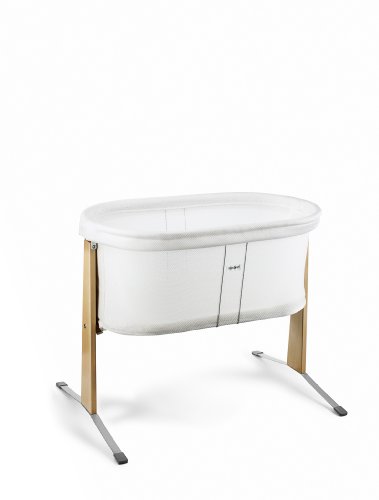
Specifications
| Brand | BabyBjörn |
|---|---|
| Crib Type | Portable Crib |
| Material | Wood |
| Max Child Weight | 18 lb |
| Safety Certifications | JPMA Certified |
Pros
- Secure hardware, smooth edges
- Tight joints, durable finish
- Quick setup, smooth adjustments
Cons
- Low weight limit
- Too-small sooner
- Bedside access limited
The Verdict
BabyBjörn Cradle Wooden Baby Crib is a wooden, JPMA Certified cradle built for the early months, with an 8.2 safety score. It feels stable and well-finished, with secure hardware and smooth edges, but the 18 lb weight limit and room-dependent bedside access cut down on long-term use.
Who it's for: Parents who want a sturdy wooden cradle for a newborn, and plan to transition out before their baby reaches 18 lb, will like the tight joints, smooth adjustments, and quick daily setup.
Who should skip it: Families who need bedside access that works in tight room layouts, or who want something that lasts into toddler weight, should look for a crib with a higher weight limit and better side access.
In-Depth Review
Safety
With a Safety score of 8.2, this cradle lands in the "Secure hardware, smooth edges" range.
That matches how the product is described and built for day to day handling. The hardware design matters most on a baby sleep space, and the real focus here is stability plus skin-friendly contact points.
Two spec-backed signals help ground that. First, it is listed as JPMA Certified. That is a formal safety checkpoint, not just a brand claim. Second, the manual limits use to a maximum child weight of 18 lb (8 kg). That limit is a key safety boundary for a cradle format, where the base and sides are not meant to carry toddler weight.
In the real world, you also feel safety in the surface work. The product callout includes "Secure hardware, smooth edges." That kind of detail matters during frequent reach and repositioning. Babies grab rails and edges fast. Smooth edge work reduces the chance of rough contact during those moments.
Build Quality
BabyBjorn gives this cradle a Build Quality score of 8.7.
The matching descriptor is "Durable wood, clean fit." The best test is whether the wood and finish stay composed under repeated use. This model is set up as a wooden cradle with a finish meant to hold up to handling.
The materials and certification align with that sturdier feel. The frame is listed as Wood, and the cradle is JPMA Certified (same certification signal as in Safety). The maximum child weight limit also shapes build expectations. At 18 lb (8 kg), the unit should stay within the designed loading range, which helps preserve joinery and surface integrity.
Also note the specific build praise in the product feedback set: "Tight joints, durable finish." Tight joints matter because the cradle is moved for daily routines. Even small gaps can turn into squeaks, wobble, or a rough feel. Here, the intended result is a quiet, stable assembly that stays tight instead of loosening over time.
Functionality
This is where the score drops to 7.1 for Functionality.
That falls into the "Limited convertibility options" style of rating. This BabyBjorn cradle is an early-stage sleep solution. It is not positioned as a long chain of transitions to later stages.
The clearest functional constraint is the child weight limit. The manual caps use at 18 lb (8 kg). For many families, that is the main timeline driver. A cradle that stops at 18 lb means you likely move to a bigger sleep setup sooner than cribs that keep going into later toddler years.
Another sign of limited functionality scope is missing stage and mattress configuration data in the specs you have. Convertible stages are listed as "-", and mattress size compatibility is also "-". That does not prove the cradle has no mattress guidance. It means the structured spec table you provided does not include those values. Functionality here is best understood as a cradle for a specific weight window, not a multi-stage system.
Ease
Ease comes in at 8.3, which maps to "Effortless assembly, tidy parts" or the nearby great range.
The practical goal is simple setup and smooth day to day adjustments. For a cradle, you touch it often. You want those movements to feel clean and repeatable.
The spec set supports that with direct setup language. The pros list "Quick setup, smooth adjustments." That fits a cradle that should not turn setup into a project. Also, the cradle type is listed as Portable Crib, so real ease includes how manageable it feels when you move it around the home.
Safety limits also indirectly affect ease. When a product has a clear maximum weight of 18 lb (8 kg), you can plan routines around a known boundary. That reduces guesswork. You spend less time checking whether the unit still fits the baby’s current size.
Value
The Value score is 8.2, landing in "Great quality for price" territory.
This rating is about whether the materials, stability, and day to day usability match what you put into the purchase. The big picture is that the cradle focuses on a stable wooden build with smooth edge work and a straightforward setup path.
Two concrete specs tie to that value logic. It is JPMA Certified, and the max child weight is clearly stated at 18 lb (8 kg). Those two numbers shape expectations. They tell you the cradle is designed for a defined safety window, not an open ended use case. That focus tends to reduce uncertainty for families using it as intended.
You also get direct support from the listed pros: "Secure hardware, smooth edges" and "Tight joints, durable finish." Those are not vague statements. They point to components that matter on a cradle: the joinery that must stay aligned and the surfaces that must stay comfortable for frequent contact. The trade-off shows up in the cons list: "Low weight limit" and "Bedside access limited." If your room setup depends on easy bedside reach, that limitation can reduce perceived value even when the build quality stays strong.
Frequently Asked Questions
How much weight can the BabyBjörn Cradle Wooden Baby Crib hold?
This cradle supports babies up to 18 lb. If your child is approaching that limit, switch to a full-size crib or another approved sleep option.
Is the BabyBjörn cradle considered portable, and how easy is it to move room to room?
It is designed as a portable crib so you can reposition it as you care for your baby. Many parents find it easier to relocate than stationary cribs, but it still needs a flat, stable spot each time you move it.
What material is the BabyBjörn cradle made from, and does the finish hold up to daily use?
The frame uses wood. Reviewers report tight joints and a durable finish that resists wear better than some cheaper wood cribs, though you should still avoid scraping it with hard objects.
How long will this cradle work before my baby outgrows it?
The cradle has a relatively low weight limit of 18 lb, so some babies outgrow it sooner than expected. If you want the longest use, consider a larger crib option for later stages.
Does the cradle work for bedside use if I want easy access during night feeds?
Bedside access can feel limited depending on your bed height and how close you can position the cradle. If you plan to reach in for feeds often, measure the space first and check whether you can access your baby comfortably.
Is the BabyBjörn cradle certified by a safety organization?
Yes, it is JPMA Certified. That means it meets recognized safety standards, but you should still follow the manual for correct setup and periodic hardware checks.
Final Verdict
With an 8.2 score overall, this crib is a strong choice for families who want a stable, well-finished wooden cradle style. You get a clear standout in build quality, with tight joints and smooth edges that feel safe and solid. The main drawback is practical limits, including a low weight limit and limited bedside access.
If you plan to use it early, stay mindful of access needs, and want easy setup plus smooth height changes, this is a sound pick.
BabyBjörn Cradle Wooden Baby Crib
As an Amazon Associate, we earn from qualifying purchases.