





How to Clean and Dry a Pet Bed Without Damage
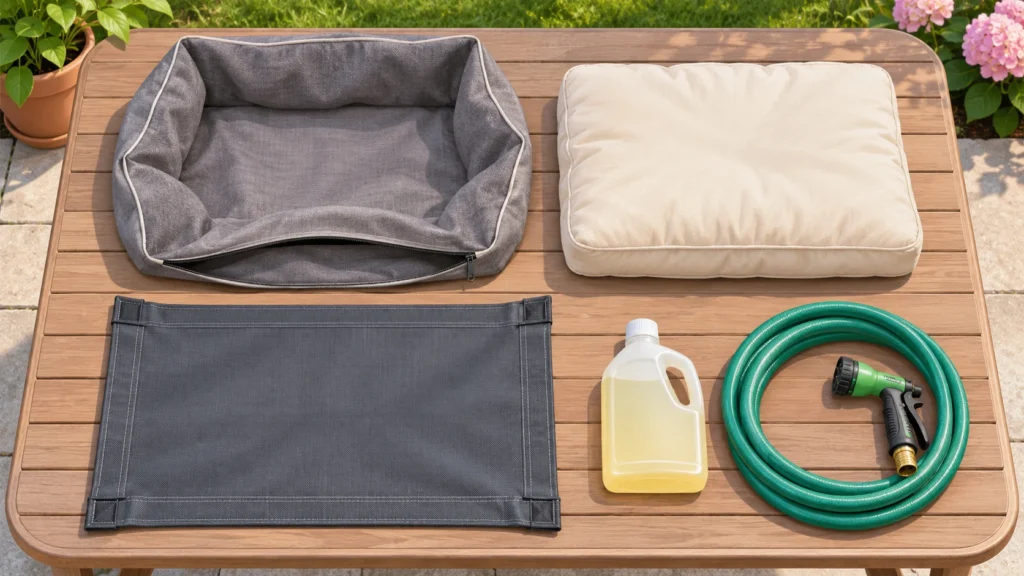
Pet beds can combine several materials that need different care: a removable cover, a cushion or foam insert, and sometimes a separate waterproof layer. The safest method is not to wash the whole bed by default. Identify each part, check its care instructions, and clean only in ways those instructions allow. That helps avoid a shrunken cover, damaged fill or a damp insert put back into service.
This guide covers the cleaning decision and drying process. For help choosing a bed in the first place, see TheTopZone’s pet-bed Top Picks.
Start with the bed’s care instructions
Look for a sewn-in label, the packaging or the manufacturer’s instructions for the exact bed. Check each component separately: instructions for the cover do not necessarily apply to the cushion, foam, liner or frame. Note whether the item is machine washable, spot-clean only, or intended to be rinsed. Also check any stated water temperature, detergent limits and drying method. If the instructions are missing or unclear, contact the maker rather than assuming a removable part is machine-safe.
Removable does not automatically mean washable. A zipper may let you take a cover off for access, but it does not establish that it can go in a washer or dryer. Likewise, a washable cover does not mean its insert can be soaked. Keep the parts separate while you clean, and set aside any component whose instructions you cannot confirm.
For a bed with a separate liner, check that layer’s instructions too. A cover’s washing directions do not establish how to clean the liner underneath it. If the cover and liner are attached or difficult to separate, avoid forcing them apart; use the manufacturer’s instructions for that construction.
Remove hair and loose debris first
Before adding water, take the bed apart as directed and remove loose fur, crumbs and dirt. Shake out parts outdoors if practical, or use a lint roller or vacuum attachment if appropriate for the material. Clearing loose debris first makes it easier to see stains and reduces the amount of material you send through a wash. Avoid pulling at snagged threads or using a tool that catches the fabric.
For a spot-clean-only cushion, start with the least aggressive approach allowed by its instructions. Apply a small amount of the recommended cleaning solution to a cloth rather than saturating the fill. Blot the affected area; do not scrub hard or soak the cushion unless the manufacturer says that is safe. Follow the product’s directions for the cleaner, and do not combine cleaning products. If a stain remains, check the bed maker’s advice before trying a stronger treatment.
Choose the cleaning method by component
Removable covers
Wash a cover only if its own instructions permit it. Follow the stated cycle, water temperature and detergent directions, and close zippers or fasteners if the instructions call for that. Do not add bleach, fabric softener or other products unless the care directions allow them. A product-specific example: NBC Select says Ruggable’s pet-bed covers should be washed in cold water with detergent, without fabric softener or bleach, and tumble-dried on low. That is guidance for that bed—not a general rule for every cover. Read NBC Select’s Ruggable pet-bed cleaning details.
If a cover has a zipper, open it carefully and remove the insert only as directed. Check for loose threads, damaged seams or a fastener that could catch during washing. These are practical checks, not a substitute for the care label; if you cannot confirm that the cover is washer-safe, do not infer permission from its design.
Foam and other cushion fills
Keep foam and other inserts out of the washer and away from a dryer unless instructions for that exact component explicitly permit those methods. If the maker allows only spot cleaning, clean the affected area and avoid saturating the fill. If a cushion gets wet, follow the maker’s drying instructions and do not put a cover back over it while it is still damp. A removable outer cover can make routine cleaning simpler, but it does not make the hidden insert washable.
When an accident or spill reaches the insert, check the manufacturer’s directions before choosing a treatment. Do not assume a surface-cleaning method for the cover is suitable for the fill, or that a waterproof layer is present unless the bed’s documentation confirms it.
Elevated-bed fabric
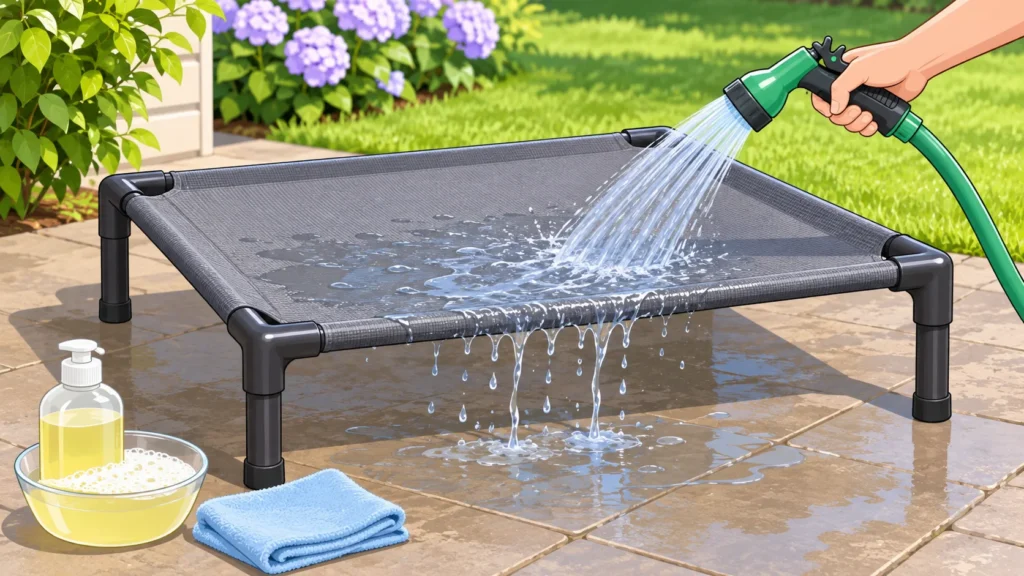
An elevated bed may have a fixed, tensioned fabric surface rather than a removable cover. Follow the care instructions for that bed and avoid treating its fabric like a laundry item. For its Original Elevated Dog Bed, Coolaroo says to rinse dust and pollen with a garden hose or use mild soap and water on stubborn spots; it says not to machine wash, tumble dry, bleach or iron the fabric. Those directions apply to that product, not to every elevated bed. Check Coolaroo’s Original Elevated Dog Bed care instructions.
After cleaning an elevated surface, let it dry as its instructions direct before use. Do not remove fabric from a frame or adjust tension unless the bed’s assembly or care instructions tell you to. If cleaning reveals a tear, loose attachment or other damage, pause and consult the maker before putting the bed back into use.
Dry every part before reassembly
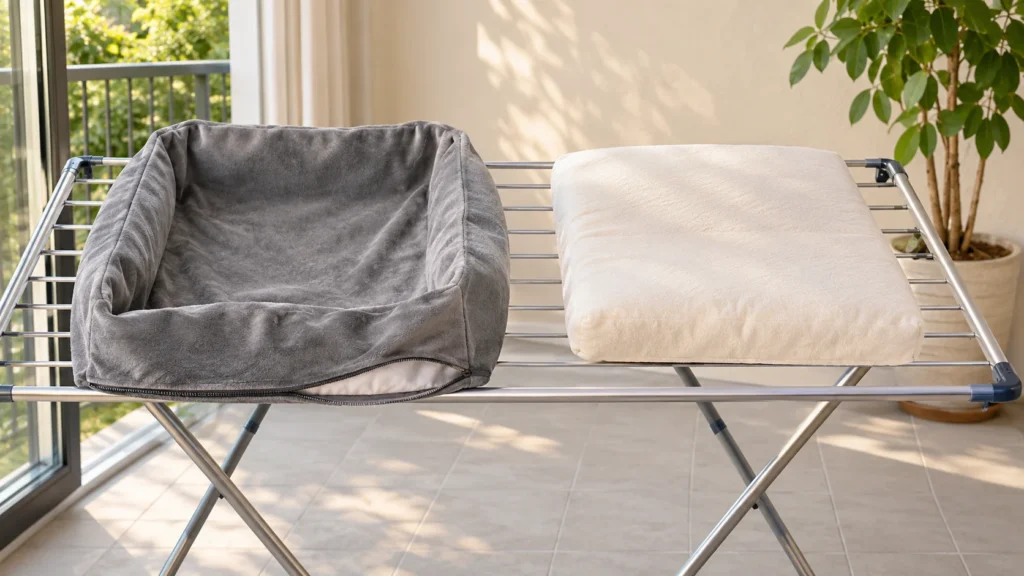
Drying is part of cleaning, not an afterthought. Use only the method allowed for each component: the care label may permit a dryer, specify a low setting, or require air drying. Do not apply heat on the assumption that it will speed things up safely. For a bed that must air dry, place components where air can reach them and turn or reposition them as appropriate. Allow enough time for thicker inserts to dry throughout; a surface that feels dry does not confirm the inside is dry.
Keep wet covers and inserts separate so moisture is not trapped between layers. Before reassembling, check the cover, cushion and any liner individually, including seams and thicker areas. If a part still feels damp, smells musty, or has moisture inside, continue drying it. If you cannot tell whether it is dry or the instructions give no suitable drying method, ask the manufacturer before putting it back together.
A dryer is not automatically the best shortcut: use it only if the exact component’s instructions allow it, and follow the stated setting. For example, NBC Select reports low-heat tumble drying for the Ruggable covers it describes; that does not establish that another bed’s cover, cushion or liner can use the same method. See the product-specific Ruggable washing and drying guidance.
Reassemble and check the bed
Once all parts are dry, put them back together as the maker directs. Make sure inserts sit correctly inside their covers, zippers are closed, and any liner or fasteners are in their intended position. For an elevated bed, check that the fabric and frame are assembled as instructed before allowing a pet to use it. Do not use a bed if cleaning has left a torn seam, damaged fabric, loose part or other problem that could affect its safe use.
A practical cleaning decision
Suppose a bed has a removable cover over a foam cushion, but you cannot find care instructions for the cushion. The cover’s zipper alone is not enough to decide how to wash either part. Check whether the cover has its own label; wash it only by the method stated there. Keep the foam separate and use only a cleaning method confirmed for that insert—if the instructions remain unavailable, contact the maker instead of machine-washing or soaking it. This component-by-component approach is safer than assuming the entire bed shares one care method.
The same decision applies when a bed combines a washable-looking cover with a fixed liner or an elevated surface. Identify the part that needs cleaning, find instructions for that specific part, and stop if its permitted method is unclear. The Coolaroo example shows why bed type matters: its cited elevated fabric is rinsed or wiped, not machine washed, while the Ruggable cover instructions are specific to that product. Neither example is a universal rule.
For routine care, keep the instructions with the bed’s details and check them before each new cleaning method. Bed designs and materials differ, so there is no single wash-and-dry routine that suits every cover, fill and elevated surface.