We’ve all been there—tossing and turning at 3:00 AM, trying to find that elusive “sweet spot” on a bed that either feels like a pile of bricks or a giant marshmallow. Choosing a new bed is a major investment in your health, but the sheer number of options can feel paralyzing. If you are currently hunting for the best mattresses on the market, you’ve likely realized that the most critical factor isn’t the brand or the price tag; it’s the firmness.
Firmness is entirely subjective. What feels like a supportive cloud to one person might feel like a literal floor to another. Because we spend about a third of our lives asleep, getting this right isn’t just about comfort—it’s about spinal alignment, pressure relief, and long-term physical health. In this guide, we’re going to break down everything you need to know to navigate the firmness scale like a pro.
Understanding the Mattress Firmness Scale
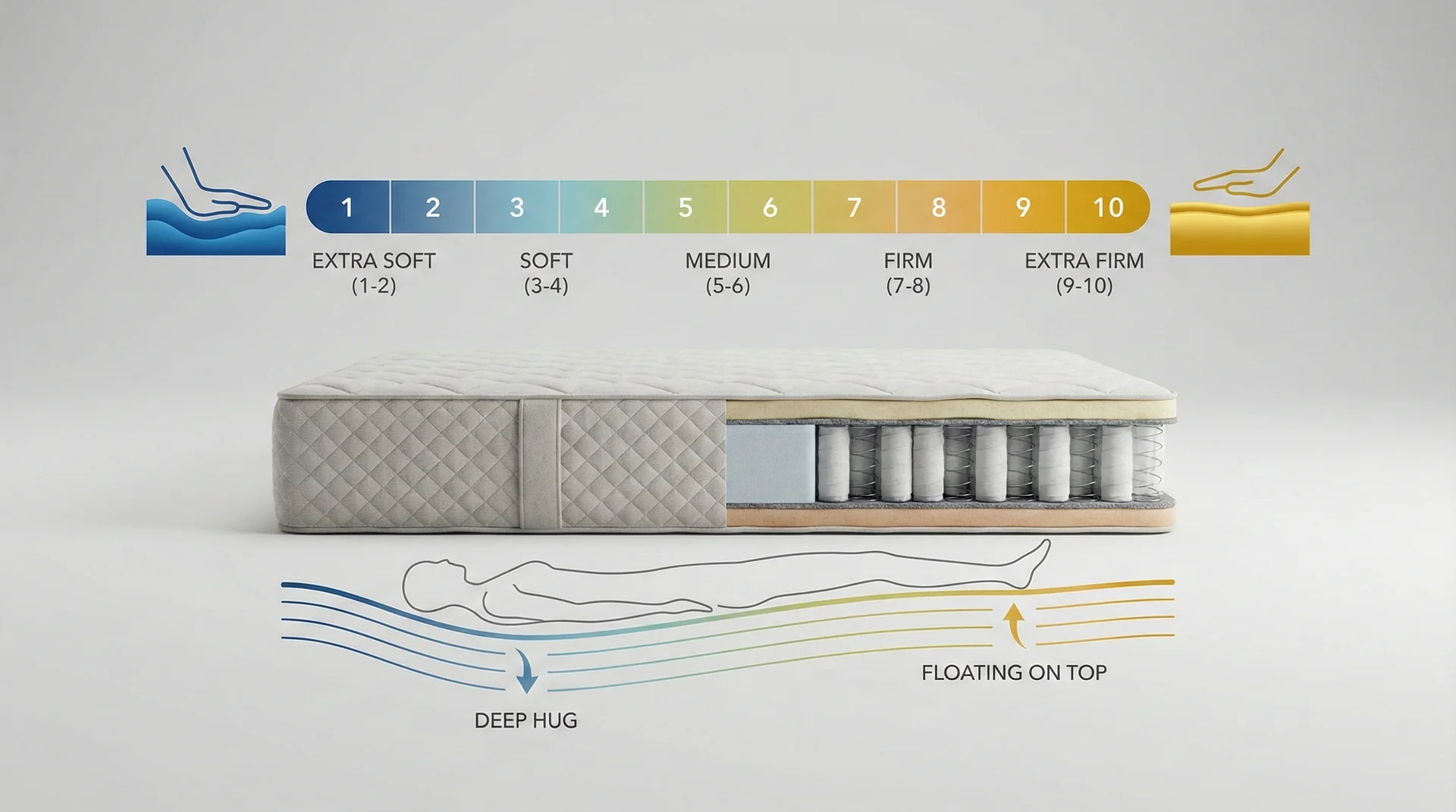
The mattress industry typically uses a scale of 1 to 10 to rate how a bed feels. While not every brand uses the exact same metrics, this universal scale provides a solid benchmark for consumers. Here is how the numbers usually break down:
- 1-2 (Extra Soft): These are incredibly plush. You’ll feel a deep “sink-in” sensation. These are rare because they often lack the support necessary for most adults.
- 3-4 (Soft): These offer significant body contouring and a deep hug. They are popular for those who like to feel “in” the mattress rather than “on” it.
- 5-6 (Medium): This is the “Goldilocks” zone. It offers a balance of soft comfort and foundational support. Most “universal comfort” mattresses fall here.
- 7-8 (Firm): These have much less sinkage. You’ll feel like you’re floating on top of the bed. They are great for stability and ease of movement.
- 9-10 (Extra Firm): These feel very hard with almost no give. They are specialized for specific medical needs or very heavy sleepers.
Firmness vs. Support: The Crucial Difference
One of the biggest mistakes shoppers make is confusing firmness with support. They are not the same thing. Firmness refers to the initial feel of the top layers of the mattress—how soft or hard it feels when you first lie down. Support, on the other hand, refers to how well the mattress keeps your spine in a neutral alignment.
A soft mattress can be supportive if it has a high-quality core (like pocketed coils or high-density foam). Conversely, a firm mattress can be unsupportive if it doesn’t allow your heavy points (hips and shoulders) to sink in just enough to keep your back straight. When looking for the best mattresses, you want a combination that matches your specific body profile.
Why Spinal Alignment Matters
The goal of any mattress is to maintain the natural curve of your spine. If your mattress is too soft, your hips will sag, creating a “hammock” effect that strains your lower back. If it’s too firm, your shoulders and hips will be pushed upward, creating pressure points and forcing your spine into an unnatural arch. Both scenarios lead to waking up with aches, pains, and stiffness.

Choosing Firmness Based on Sleeping Position
Your primary sleeping position is the single most important factor in determining the firmness level you need. Your position dictates where the pressure is applied to your body and how much contouring you require.
Firmness for Side Sleepers
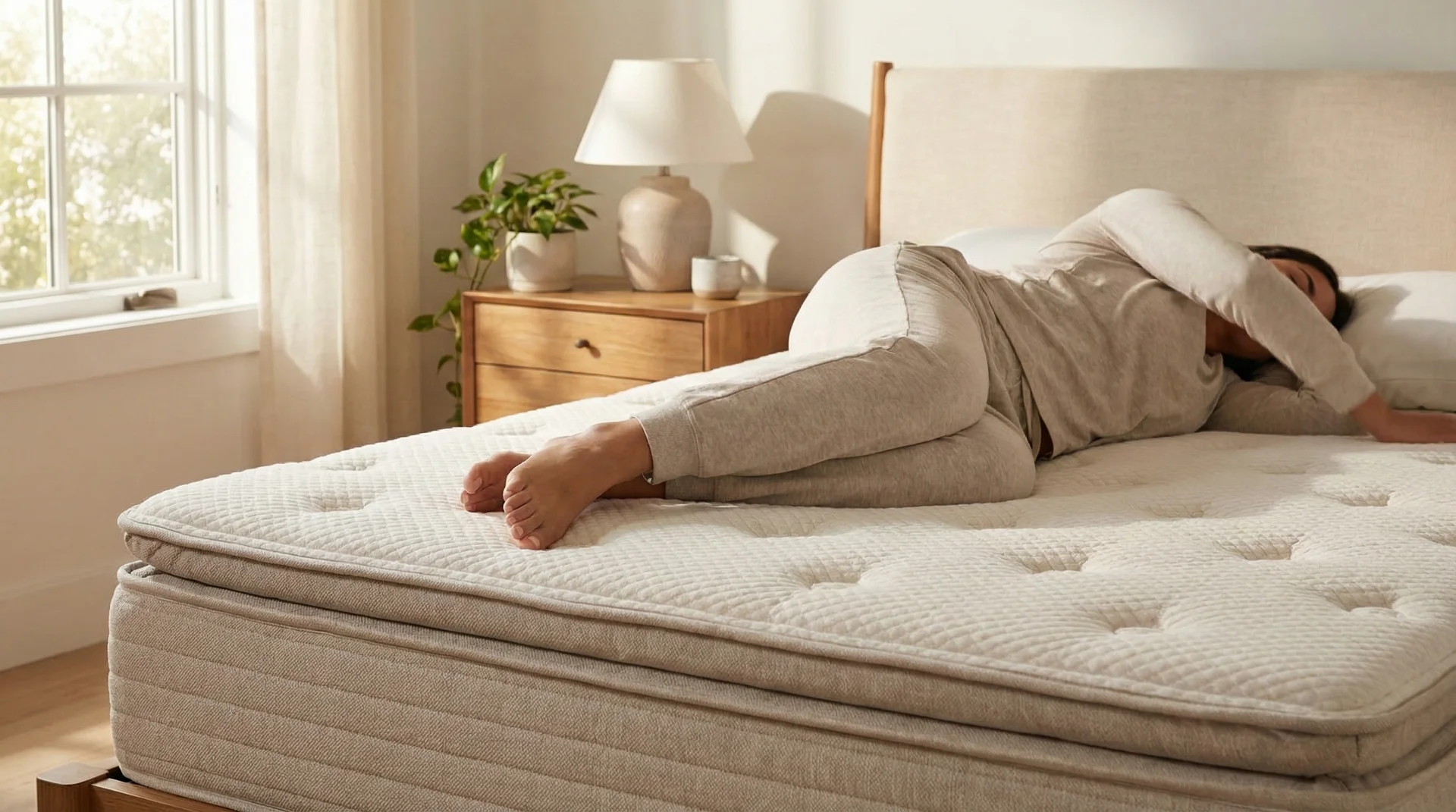
Side sleepers are the most common, but they also have the most specific needs. When you sleep on your side, your shoulders and hips bear the brunt of your weight. If the mattress is too firm, these areas will experience intense pressure, leading to numbness or joint pain.
Recommended Firmness: 4-6 (Soft to Medium). Side sleepers need enough cushioning to allow their shoulders and hips to sink in, which helps keep the spine level from head to toe.
Firmness for Back Sleepers
Back sleepers need a surface that supports the natural “S” curve of their spine. They need enough firmness to prevent the lower back (lumbar region) from collapsing, but enough softness to fill in the gap between the small of the back and the mattress.
Recommended Firmness: 6-7 (Medium-Firm). This provides the necessary push-back to keep the torso elevated while still offering a touch of comfort for the tailbone and shoulder blades.
Firmness for Stomach Sleepers
Stomach sleeping is generally considered the hardest on the back. If the mattress is even slightly too soft, the hips will sink deeply into the bed, causing the lower back to over-arch. This is a recipe for chronic lumbar pain.
Recommended Firmness: 7-9 (Firm to Extra Firm). Stomach sleepers need a very stable, flat surface to keep their hips in line with their shoulders.
Firmness for Combination Sleepers
If you switch positions throughout the night, you need a mattress that is versatile. You also need something with a bit of “bounce” so you don’t feel stuck when you try to roll over.
Recommended Firmness: 5-7 (Medium to Medium-Firm). A medium-firm mattress is usually the safest bet for combination sleepers as it provides a middle-ground for all positions.
How Body Weight Impacts Feel
Weight plays a massive role in how firmness is perceived. Because physics dictates how much pressure is applied to the foam or coils, two people of different weights will experience the same mattress differently.
Lightweight Sleepers (Under 130 lbs)
If you are on the lighter side, you won’t sink into the mattress layers as much. A “medium-firm” mattress might feel like a “firm” or even “extra firm” to you. Lighter sleepers often benefit from softer mattresses (in the 3-5 range) to actually experience the pressure-relieving benefits of the top layers.
Average Weight Sleepers (130 to 230 lbs)
Most mattresses are designed with this weight range in mind. The standard 5-7 firmness scale usually feels exactly as described for people in this bracket. You can follow the general sleeping position recommendations with confidence.
Plus-Size Sleepers (Over 230 lbs)
Heavier individuals apply more pressure, meaning they will sink through the comfort layers more quickly. If a mattress is too soft, they might “bottom out” against the hard support core. Generally, plus-size sleepers should look for mattresses that are 1-2 points firmer than the standard recommendation to ensure they get the support they need. Hybrid mattresses with reinforced coils are often the top choice for this category because they provide durable support.

The Role of Mattress Materials
The materials inside the bed change how the firmness “behaves.” It’s not just about the density; it’s about the response time and temperature regulation.
- Memory Foam: Known for its “hug.” It is excellent for pressure relief but can sometimes feel softer than it actually is because of how it reacts to body heat.
- Innerspring: These are traditionally firmer and offer a lot of “push-back.” They don’t contour as well as foam, which is why many people find them too stiff.
- Latex: This material is naturally responsive and bouncy. It provides a “lifted” feeling. A medium-firm latex mattress will feel much firmer and more supportive than a medium-firm memory foam mattress.
- Hybrids: These combine coils and foam. They are excellent because they offer the deep support of an innerspring with the customizable firmness of foam top layers.
Final Tips for Making Your Decision
Before you hit that “buy” button, keep these three things in mind to ensure you don’t end up with buyer’s remorse:
The Trial Period is Your Best Friend
Never buy a mattress that doesn’t offer at least a 90-night sleep trial. It takes your body 2-4 weeks to adjust to a new sleeping surface. What feels “too firm” on night one might feel perfect on night twenty once the materials have broken in and your muscles have relaxed.
Consider Your Partner
If you sleep with a partner who has different firmness needs, don’t compromise! Compromise usually leads to both people being unhappy. Look for “split king” options or mattresses with dual-sided firmness. Many of the best mattresses in the direct-to-consumer market now offer internal customization.
Address Specific Health Concerns
If you suffer from chronic back pain, don’t automatically assume you need the firmest bed available. Recent studies suggest that medium-firm mattresses are actually better for lower back pain than extra-firm ones because they allow for the natural curvature of the spine while providing support. If you have hip bursitis or shoulder issues, lean toward the softer side of the scale for better cushioning.
Choosing the right mattress firmness is a journey, not a sprint. By understanding your sleeping position, accounting for your weight, and respecting the difference between firmness and support, you are well on your way to the best sleep of your life. Sleep well!