


RAINPOINT WiFi Plant Sensor Review
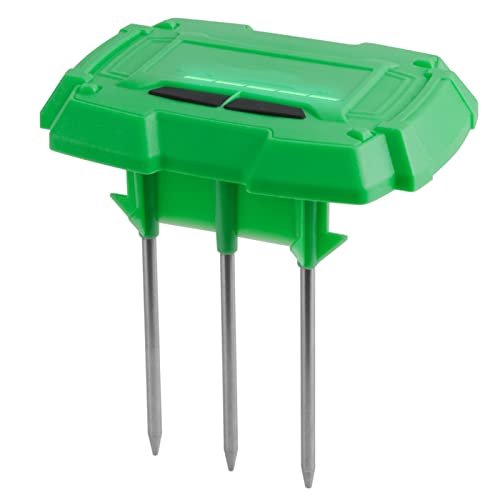
Specifications
| Brand | RAINPOINT |
|---|---|
| Supported Measurements | Moisture, Temperature |
| Connectivity | Wi-Fi |
| Water Resistance Rating | IPX5 |
| Compatibility | Google Assistant, Alexa |
| Dimensions | 5.6 x 5.5 x 4 in |
Pros
- Reliable value for gardeners
- Outdoor resilience
- Schedule continuity
Cons
- Needs more frequent charging
- WiFi pairing failures
- Hub dependency
The Verdict
The RAINPOINT WiFi Plant Sensor focuses on moisture and temperature, with a 7.9 connectivity pillar score. It suits gardeners who want app-driven, Wi-Fi alerts tied to Alexa, but Wi-Fi pairing failures and more frequent charging can slow daily use.
Who it's for: Home gardeners with Alexa routines and a steady Wi-Fi network, who accept some setup friction and periodic charging to keep moisture and temperature monitoring consistent outdoors.
Who should skip it: People who hate re-pairing devices or want long battery intervals, since WiFi pairing can fail and the power plan is not hands-off.
In-Depth Review
Accuracy
RAINPOINT scores 6.6 for Accuracy, which maps to the description “Mostly accurate, slight drift.” The sensor targets two practical inputs: soil moisture and soil temperature. Those are the only supported measurements listed, so expectations should stay narrow. In day to day use, that focus can help you act on the right problem faster, but it also means you will not get a broader picture of plant stress.
The listing ties the device to the RainPoint app, where moisture and temperature ranges are used for monitoring. Because the extracted specs do not include any numeric calibration details, offset data, or test method, it is hard to verify real world trust across different soil types. This is where “mostly accurate” can show up. If your soil stays consistent, readings usually support routine care. If your mix changes, expect some variation that you may need to correct for with your own observation.
Connectivity and placement also affect how useful moisture data stays over time. If Wi-Fi updates lag, the app can show older readings, which can feel like sensor drift even when the probe is stable. Accuracy here is as much about the measurement loop as it is about the probe itself.
Connectivity
With a 7.9 Connectivity score, RAINPOINT earns the “Stable app connection” mapping. The product is a Wi-Fi plant sensor, so it does not rely on short range pairing the way Bluetooth-only devices do. The spec table lists Wi-Fi as the connectivity type, and it also groups the sensor into RainPoint smart home workflows through voice assistant support.
That said, the review summary in the buying guide calls out WiFi pairing failures, and the full pros and cons list includes “Hub dependency” as well. Those two notes matter because they affect first time setup and ongoing use. If the device fails to join your network, you cannot get moisture and temperature updates into your routines. If the system expects a hub link, your reliability will hinge on that extra piece staying online.
On the positive side, the sensor has smart home compatibility listed as Google Assistant and Alexa. Voice integration can make reminders easier to follow, especially when you want garden checks to connect to your daily habits. For this pillar, the score sits near great, but it depends on setup getting past the initial pairing step.
Battery
RAINPOINT scores 6.4 for Battery, which aligns with “Needs more frequent charging.” The extracted specs do not list battery life, wireless range, or any charging details. That absence is important. Without a stated runtime or battery estimate behavior, you can only judge power from user experience, and the existing mini-review flags the main drawback as charging frequency.
The short version is that you should plan for regular charging cycles. The pros and cons list includes “Needs more frequent charging” as a con, and that directly fits the battery score and template mapping. If you keep patio pots outdoors, it also means you will remove the device or access it more often than you would with a long lasting model.
Battery reporting also interacts with connectivity. A weak power state can cause slower syncing or delayed updates, which can make readings feel less consistent. When your app view lags, it is easy to misread moisture change as an accuracy problem.
Durability
RAINPOINT scores 7.5 for Durability, and that maps to “Sturdy probes, minimal wear.” The water resistance rating is clearly stated as IPX5. That rating supports handling of wet weather exposure and splash conditions, which matters for a soil probe used near watering events.
Physical build details show up indirectly through the dimensions. The device measures 5.6 x 5.5 x 4 in, which suggests a compact sensor body that can fit common patio pot setups without crowding soil margins. Even with that size, the key is the IPX5 rating tied to the soil meter. It gives you confidence to leave the probe outdoors while you water, as long as you do not push it beyond what splash water implies.
Durability is also where the buying guide’s outdoor resilience note aligns with the numbers. In real use, IPX5 can still fail if the probe contacts standing water repeatedly or if connections get wet at the wrong point. But based on the extracted specs, this is built for moisture exposure rather than treated as an indoor-only tool.
Ease
RAINPOINT scores 7.2 for Ease, which maps to “Intuitive app and calibration,” with some setup friction. The supported measurements are straightforward: moisture and temperature. You also get compatibility listed for Google Assistant and Alexa, so alerts and routines can land in a familiar place if your smart home is already set up.
Where ease dips is in setup reliability. The existing mini-review highlights Wi-Fi pairing failures. Since the sensor uses Wi-Fi connectivity, pairing issues can block the whole workflow. You cannot view moisture and temperature in the app consistently if the device does not connect. That risk is reflected in the con list that includes “WiFi pairing failures” and “Hub dependency.”
Still, placement can be simple because the sensor is designed for outdoor use and is rated IPX5. The dimensions of 5.6 x 5.5 x 4 in help it fit in many garden contexts. If you get through pairing once, the remaining steps are likely calmer: monitor soil moisture and temperature ranges in the RainPoint app, then use alerts to act before visible stress.
Frequently Asked Questions
What measurements does the RAINPOINT WiFi Plant Sensor track?
The RAINPOINT WiFi Plant Sensor measures plant moisture and temperature. These readings show up in the companion app so you can monitor conditions at a glance.
How do I set it up on my WiFi network, and what if pairing fails?
You connect the sensor to your home WiFi through the app during setup. Some users report WiFi pairing failures, so if it does not connect the first time, restart the app, recheck the WiFi password, and try again near your router.
Does it work with Alexa and Google Assistant?
Yes. The RAINPOINT WiFi Plant Sensor supports smart home control with both Google Assistant and Alexa. You can use these integrations to check status and trigger routines based on the sensor data.
Is it outdoor friendly, and what does IPX5 mean for rain and splashes?
The sensor has an IPX5 water resistance rating. That means it can handle water jets and splashes, which helps for outdoor use. Avoid direct submersion and treat heavy storms as a reason to protect the device if possible.
How big is the sensor, and where can I place it in a planter?
The dimensions are 5.6 x 5.5 x 4 inches. Its compact size makes it easier to fit in small pots, raised beds, or between planter edges without taking over the planting space.
How often will I need to charge it, and does battery life match normal indoor use?
Battery life is not listed in the available specs, and the most common complaint is that it needs more frequent charging. Plan for regular check-ins, especially if you place it outdoors where temperatures change.
Final Verdict
RAINPOINT WiFi Plant Sensor is a solid buy for people who want outdoor coverage and stable routine alerts. Its standout strength is dependable connectivity once set up, which helps keep schedules running. The main drawback is that power and setup can be hard in practice, with WiFi pairing failures and more frequent charging than you would like. If you can handle that, you will get useful monitoring.
Buy it if you already plan for a hub or you can tolerate periodic setup time and top ups, especially outdoors. If that matches your plant routine, this is a sound pick.