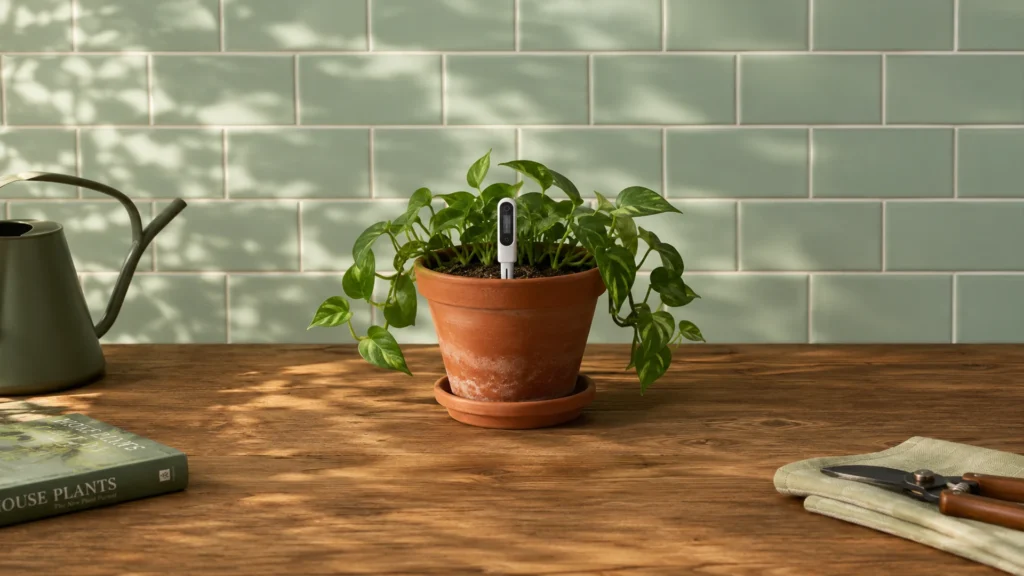
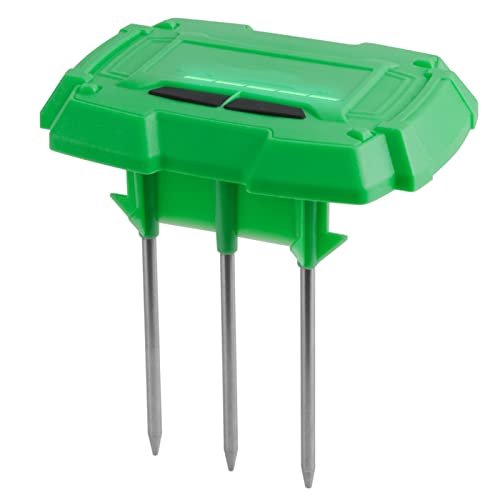
Smart Plant Sensors for Automated Irrigation are the sensors you use to decide when to water. In this sub-category, the job is mainly moisture control, with optional support from light, temperature, humidity, pH, or EC to improve watering decisions for specific plants and soil mixes.
Picking one is harder than it sounds. You trade off reading accuracy against calibration needs. You also trade off connectivity stability against range and app friction. Power and durability matter too, since sensors often stay in soil or near sprinklers for months at a time.
Use this guide to compare sensors by measurement trust, wireless reliability, battery life, and build quality, then narrow down based on how you will automate irrigation with the data. Looking for all types? See our Best Smart Plant Sensors.
Quick Overview
Our Top Picks
#1. Gardena Soil Moisture Sensor Plant Sensor

Specifications
| Brand | Gardena |
|---|---|
| Supported Measurements | Moisture |
| Connectivity | Bluetooth |
| Power Source | AA Battery |
| Battery Life | 12 months |
| Compatibility | Gardena Water Control systems Flex, Select, Bluetooth, Master |
| Dimensions | 6 x 3 x 3.3 in |
Pros
- Long-lasting battery
- Automatic irrigation control
- Seamless ecosystem setup
Cons
- Limited sensing
- Single connectivity type
- Hard-to-maintain power
Gardena Soil Moisture Sensor Plant Sensor stands out for automated irrigation because it plugs into Gardena Water Control systems and uses moisture readings to help drive watering decisions. Setup is straightforward, and the long battery life of about 12 months reduces the maintenance work that often comes with outdoor sensor installs. Once paired over Bluetooth, it fits well in a routine where you want fewer guessing moments between watering cycles.
The main trade-off is that it measures only moisture, so you get less insight than multi-sensor options. It also relies on a single connectivity type, Bluetooth, which usually works best when your phone or hub is nearby during syncing. Finally, the AA battery approach is reliable, but replacing batteries periodically can be harder if the sensor is installed in a tight or hard-to-reach spot.
#2. Gardena Smart Control Sensor Plant Sensor

Specifications
| Brand | Gardena |
|---|---|
| Supported Measurements | Moisture, Temperature, Light |
| Power Source | AA Battery |
Pros
- Watering automation support
- Root-zone placement accuracy
- Intuitive app and calibration
Cons
- Needs more frequent charging
- Limited sensing
- Ecosystem dependency
Gardena Smart Control Sensor Plant Sensor stands out for automated irrigation because it targets the conditions that drive watering decisions: soil moisture, plus temperature and light. Root-zone placement matters most for irrigation, and this sensor is built around getting you closer to what the plant actually experiences rather than using vague ambient readings. In practice, that makes it easier to set up smarter watering schedules with fewer guesswork moments, especially for potted plants and small garden zones.
The main trade-off is power and scope. The sensor runs on AA batteries and can need more frequent charging than some competitors, so you may want a plan for periodic swaps or recharging. It also focuses on a smaller set of measurements, so if you want deep water quality control or broader soil analytics, you will likely need additional sensors. Best fit: gardeners who want solid moisture-centered irrigation help, and who are comfortable working within the Gardena app and its ecosystem.
#3. RAINPOINT WiFi Plant Sensor

Specifications
| Brand | RAINPOINT |
|---|---|
| Supported Measurements | Moisture, Temperature |
| Connectivity | Wi-Fi |
| Water Resistance Rating | IPX5 |
| Compatibility | Google Assistant, Alexa |
| Dimensions | 5.6 x 5.5 x 4 in |
Pros
- Reliable value for gardeners
- Outdoor resilience
- Schedule continuity
Cons
- Needs more frequent charging
- WiFi pairing failures
- Hub dependency
If you want a sensor that fits real outdoor irrigation routines, the RAINPOINT WiFi Plant Sensor stands out for weather-ready placement and steady monitoring of core planting needs. It tracks Moisture and Temperature, then pushes updates over Wi-Fi so you can check conditions without being next to the garden bed. With an IPX5 water resistance rating, it is a practical match for automated irrigation setups that run year-round, including periods of rain or sprinkler overspray.
The main trade-off is power and connection reliability. Users report it needs more frequent charging, so it is best for gardens where you can access power or you plan around recharge time. Wi-Fi pairing can also be hit or miss, and it works best when you keep the system stable, since there is a dependency on the hub or ecosystem for smooth automation. This is a good choice for gardeners who want Wi-Fi convenience outdoors, but want to be ready to manage charging and setup once.
#4. RAINPOINT Smart Soil Moisture Meter Plant Sensor

Specifications
| Brand | RAINPOINT |
|---|---|
| Supported Measurements | Moisture |
| Connectivity | Wi-Fi |
| Wireless Range | 853 ft |
| Water Resistance Rating | Water Resistant |
| Dimensions | 2.2 x 1.4 x 8.3 in |
Pros
- Reliable value for gardeners
- Multiple connection methods
- Long wireless reach
Cons
- Needs more frequent charging
- Limited sensing
- Setup hub dependency
This sensor stands out for automated irrigation planning because it focuses on soil moisture while still staying practical to place. You get long wireless reach of 853 ft with Wi-Fi connectivity, which helps when your irrigation control area is far from the garden beds. In real use, that matters because stable readings make it easier to decide when watering should turn on and off, especially across multiple zones.
The main trade-off is power and setup. It needs more frequent charging than many buyers expect, and pairing depends on a hub setup. This makes it a better fit for gardeners who do not mind periodic maintenance and who already want a more managed system, rather than someone looking for a totally hands-off sensor that runs for long stretches.
#5. Soildrops Smart Moisture Sensor Plant Sensor

Specifications
| Brand | Soildrops |
|---|---|
| Supported Measurements | Moisture |
| Power Source | Battery |
| Battery Life | 24 months |
| Dimensions | 4.7 x 2.1 x 1.9 in |
Pros
- Reliable value for gardeners
- Long-lasting battery
- Compact sensor size
Cons
- Average longevity indoors
- Limited sensing
- Sensor sold separately
Soil moisture control is the core of automated irrigation, and this sensor sticks to that job well. The Soildrops Smart Moisture Sensor is compact and runs for up to 24 months on its battery, which helps reduce maintenance between watering decisions. It also scores solidly on connectivity and ease, so you can place it in the soil and start using its readings without a long setup process.
The main trade-off is sensing depth and room dependence. Users see average longevity indoors, and the sensor support looks limited to moisture in this lineup, so it will not help you cross-check irrigation needs with other signals like light or temperature. It also notes the sensor is sold separately, so you will want to confirm what you need for your app or setup before buying if you are building an irrigation routine.
What to Look For
Soil moisture accuracy for irrigation decisions: Look for sensors that keep readings steady across supported moisture ranges. For automated watering, consistent values matter more than a wide feature list.
Connectivity you can rely on during automation: Check whether the sensor uses Bluetooth or Wi-Fi and how quickly it syncs. For irrigation control, dropped connections create gaps in watering logic, so favor setups with fewer pairing issues and stable links.
Battery life that matches your watering schedule: Select a model with long battery life if it will be in a planter or outside access is limited. Also verify that the app reports battery status clearly so you do not lose data mid-season.
Durability around soil, humidity, and watering: Prioritize water resistance and probe build quality. Sensors used near sprinklers or moist soil need strong splash and moisture protection to avoid drift or early failure.
App and measurement clarity: Choose a sensor whose app presents moisture and related readings in a way you can act on. For irrigation, you want clear thresholds or at least easy-to-interpret moisture trends without frequent recalibration.
How We Picked
Products were identified through broad research across review sites and buyer forums, then filtered to only those that qualify as Smart Plant Sensors for Automated Irrigation. The filter focused on sensors meant to guide watering decisions, not just general plant monitoring.
Scoring used the same objective pillar framework as the main Smart Plant Sensors post, allowing direct comparison of products within this sub-category. Accuracy carried the most weight, followed by connectivity, then durability, battery, ease, and value to reflect what matters for automated irrigation use.
Frequently Asked Questions
What moisture reading should I trust when setting up automated irrigation?
Start by calibrating the sensor for your soil type and pot mix. Then compare the app reading with a simple finger test for a week. If the numbers stay consistent when the soil dries and wets, you can trust the schedule. If readings jump a lot, use longer watering cycles and recheck placement depth.
Where should I place the sensor probe for best irrigation control?
Place the probe in the root zone, not near the edge of the pot. Keep the sensor depth steady across pots so readings match over time. Avoid direct contact with stones or dry pockets. For outdoor beds, install it where irrigation water reaches reliably.
How often do I need to clean or maintain a smart moisture sensor?
Wipe the probe and sensor body after heavy dirt buildup. Check for soil crusting on the probe tip, since it can block moisture contact. If the sensor uses a removable probe, follow the manufacturer cleaning guidance. In general, inspect monthly during peak growing season.
Do I need Wi-Fi or Bluetooth for automated irrigation to work reliably?
Bluetooth often works well for nearby control and quick setup. Wi-Fi can help if you want remote monitoring or automation away from home. Either way, prioritize stable connections and clear alerts. If the app frequently disconnects, your irrigation logic may not update on time.
When should I choose a different smart plant sensor type instead of a moisture sensor for irrigation?
If your biggest problem is nutrient imbalance, choose sensors that measure pH or EC. If light is the main limiter, use light sensors and pair them with irrigation timing. For humidity and airflow issues, humidity sensors can help you decide when to water less or ventilate more. Use moisture sensors when dry and wet timing is the main challenge.
How do smart plant sensors for automated irrigation differ from general plant monitoring sensors?
Irrigation-focused sensors aim for consistent soil moisture readings that you can use for watering schedules. They often emphasize stable measurement, easy calibration, and long battery life. General monitoring sensors may track more room conditions, but they may not integrate as well into watering decisions. If you want automated watering, prioritize moisture accuracy and reliable alerts.


