


AIPER Scuba V3 Robotic Pool Cleaner Review
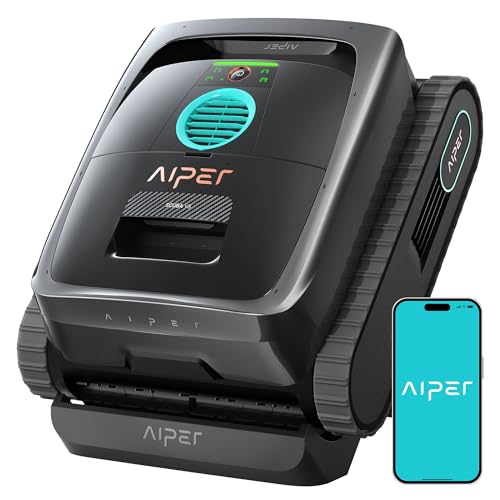
Specifications
| Brand | AIPER |
|---|---|
| Power Source | Cordless Battery |
| Filtration Level | 3 microns |
| Weight | 18.1 lb |
Pros
- Fine debris filtration
- Dependable cleaning value
- Light for easy handling
Cons
- Wear shows after months
- Sinking risk
- App limited underwater
The Verdict
The AIPER Scuba V3 targets fine debris with 3-micron filtration, and its navigation aims to reduce missed spots compared with random cleaners. It is a good fit if you want strong dust and sand pickup and you can watch for wear over time. Durability is the weak point, with reports that it can show wear after months and needs careful handling to avoid sinking.
Who it's for: Pool owners who want better-than-random coverage and extra fine-debris capture, and who accept that they may need closer monitoring for wear and careful storage handling.
Who should skip it: Buyers who want a hands-off robot for long-term reliability, and who do not want to manage trade-offs like handling risk and durability wear after months.
In-Depth Review
Performance
With a Performance score of 8.0, the AIPER Scuba V3 sits in the “Handles fine debris well” range. The standout spec is its 3 microns filtration. That is the level that targets sand and dust that larger bags and screens often let slip through.
In real pool cleaning, fine debris matters because it causes that gray film on the floor and makes water look dull. A 3 micron layer gives the robot a better chance to capture the stuff that does not feel like big debris but still builds up fast. This cleaner is also built around cordless operation, using its cordless battery power source, so it can spend more time cleaning instead of relying on a constant tether.
Performance stays strong in typical cycles when the robot can keep drawing from the same suction stream. But the product still needs careful handling. The cons mention a sinking risk, and if the unit takes on water during handling, cleaning results can drop. So performance is better than basic, but it depends on how reliably the robot is managed outside the pool.
Navigation
Navigation scores 7.9, which maps to “Few stalling moments” for this segment. The model targets improved coverage versus random movement. In practice, navigation is where robotic cleaners either save time or create errands. The value proposition here rests on getting fewer obvious misses across the floor.
However, the specs provided do not list a stated mapping system or navigation method, so you should not expect proof of systematic coverage from the spec table alone. What you can use from the data is weight and power setup. At 18.1 lb, the robot has enough mass to be stable when you lower it in. Stability helps it start cleaning in the intended spot, which can reduce early confusion and repeated rescues.
Also consider the app note. The cons state the app is limited underwater. That matters because navigation issues often show up late in the cycle. If you see a miss while it is submerged, you cannot correct it easily from underwater. You might still rely on manual repositioning, even if stalling moments are fewer than basic models.
Durability
Durability scores 6.8, which fits “Wear shows after months.” The company’s long-term track record is not captured in the spec list, but the cons do. “Wear shows after months” signals that seals, moving parts, or housings may not stay like new over repeated cycles.
There is no stated battery runtime or warranty detail in the extracted specs. What we do know is the cleaner uses a cordless battery power source, and it weighs 18.1 lb. Those two facts shape how durability shows up. Battery degradation can slow cleaning over time, and heavier robots take more strain during lifting. If seals do begin to fail, water intrusion can also increase the “sinking risk” mentioned in the cons.
The filtration spec, 3 microns, also hints at a maintenance trade-off. Fine filtration can capture more material. If the filter area needs rinsing more often, neglect can accelerate wear in parts that interact with airflow and flow. Durability here looks workable if you keep up with routine checks, not if you treat maintenance as optional.
Ease
Ease scores 7.9, mapping to “Simple controls, tidy storage.” The clearest spec signal is weight: 18.1 lb. That is heavy enough to feel solid, but light enough for most owners to lift during setup and retrieval. The power source also matters for handling. Cordless battery operation eliminates an external cord drag during the cycle.
Filtration also affects ease. The cleaner uses 3 micron filtration, which usually means you cannot ignore the cleaning output. You will likely want to rinse the filter media more often than a coarser unit. Even with “easy handling” in the pros list, maintenance becomes part of the routine when fine debris gets trapped.
One practical limitation stands out from the cons: “App limited underwater.” That impacts how you manage the robot mid-cycle. If you notice a corner miss or a transition problem, underwater adjustment is not realistic. Instead, you may need to wait, then intervene after retrieval.
Value
Value scores 8.0, which matches “Dependable cleaning value.” The pros list includes “Dependable cleaning value,” and the filtration level supports why. A 3 microns filtration spec targets sand and dust that many basic filters leave behind. When that fine debris load is reduced, the pool floor looks cleaner sooner.
The value picture also ties to repeatable use. Cordless battery operation reduces setup friction and removes cord management from the daily routine. That matters because many owners judge value by how often they will actually run the robot, not only how it performs in a single test.
Still, durability concerns can change value over time. The cons call out “Wear shows after months” and “Sinking risk,” and those risks shift the practical ownership cost toward attention and careful storage. If you handle the unit with care and keep it dry and clean after cycles, the 3 micron filtration and cordless operation support strong cleaning results relative to the segment.
Frequently Asked Questions
How fine is the AIPER Scuba V3 filter, and will it pick up sand?
The AIPER Scuba V3 uses 3 micron filtration, which helps capture very fine dust and sand. In practice, it works best when sand is not packed deeply into corners. If sand piles up, you may still need an occasional manual skim before running the robot.
What is the battery runtime and cleaning cycle time on the AIPER Scuba V3?
AIPER does not list a specific battery runtime or cycle time in the available specs. That means runtimes can vary based on pool size, debris load, and how long the robot runs to cover the full floor. Check your app and run a full cycle once to learn your pool’s typical timing.
Is the AIPER Scuba V3 hard to lift and handle since it weighs 18.1 lb?
At 18.1 lb, it is light enough for most people to lift without using two hands all the time. Still, you should rinse it before lifting out to reduce drips and to make the filter area easier to access. Store it where it stays dry to help it last longer.
Does the AIPER Scuba V3 work well in pools with steps or ladders?
This model’s navigation scores well, but robots can still get delayed around transitions like steps and ladders. Expect it to cover corners, but be ready for occasional rescues if your layout creates tight angles or frequent obstructions. The app helps you check progress and restart if needed.
What should I know about the app limitations when using the AIPER Scuba V3 underwater?
The app is limited underwater, so you cannot rely on live control once the cleaner is in the pool. Plan to set the mode or start the cycle from the deck, then use the app mainly to check status afterward. If you need to reposition the robot, do it after retrieving it.
How fast does wear show up on the AIPER Scuba V3, and what can I do to reduce it?
Wear can start to show after months, which matches reports from the main drawback. To slow down degradation, rinse the unit after use and keep it out of direct sun when stored. Also check the moving parts and seals regularly for early signs of damage.
Final Verdict
AIPER Scuba V3 is a solid choice for owners who want strong fine debris pickup and smooth daily cleaning. Its navigation stays systematic for most standard pool shapes, and it is easy to lift and handle. Still, durability takes a hit over time, with noticeable wear after months. The app also feels limited once you need underwater guidance.
If you want reliable floor cleaning and you can accept some long-term wear risk, this is the right robot for you.