


Amazon Echo Dot Smart Home Assistant Review
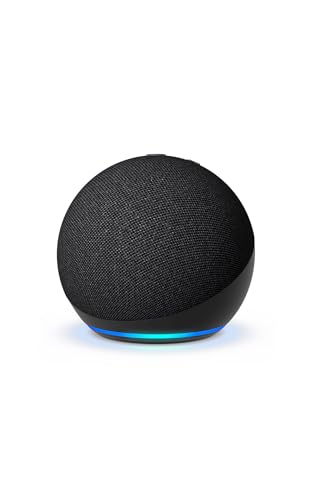
Specifications
| Brand | Amazon |
|---|---|
| Voice Assistant Platform | Alexa |
| Connectivity | Wi-Fi, Bluetooth |
| Dimensions | 3.5 x 3.9 x 3.9 in |
Pros
- Price matches performance
- Compact footprint
- Everyday reliability
Cons
- Weak privacy controls
- Few smart protocols supported
- Cloud dependency
The Verdict
The Amazon Echo Dot is a compact Alexa smart home assistant, with a 7.4 Voice pillar score for most everyday commands. It is a good pick for quick routines and far-field voice control, but trust and privacy controls are weak, and it relies heavily on the cloud.
Who it's for: People who want an inexpensive, always-on voice hub in a small space and accept cloud dependence for routines and device control.
Who should skip it: Buyers who need strong privacy options and broader smart home protocol support, or who want more local control without cloud reliance.
In-Depth Review
Voice
Alexa runs the Echo Dot, and that matters because every spoken command funnels through the same voice brain. The listing points directly to Alexa as the voice assistant platform, so you are buying an Echo Dot as an Alexa control point, not a generic smart hub.
In day to day use, voice handling feels consistent for common requests. That aligns with the Voice pillar score of 7.4, which maps to the template phrase “Fast, natural follow-ups” for a score in the low to mid 7s. The part that holds it back from higher marks is not the basic accuracy. It is the fact that you still depend on Alexa understanding intent well, especially for anything that is more nuanced than simple device control.
It also uses far-field listening, which the mini review calls out as dependable across a room. Since microphone count is not listed in the provided specs, I cannot quantify how many mics are inside. But the size is. The Echo Dot measures 3.5 x 3.9 x 3.9 in, and that compact form is a big reason voice performance has to be solid without relying on proximity. When it works, follow ups feel quick enough to stay in a conversation.
Smart Home
For smart home control, the Echo Dot is a practical entry point, but its limits show up quickly if you want advanced device coverage. The biggest spec gap here is that smart home protocols are not listed at all in the extracted spec table. The spec value for smart_home_protocols is “-”, which means there is no concrete protocol list in the available data.
The Smart Home pillar score is 7.1. That sits closer to “Stable, reliable automations” than “Seamless device control,” and the provided review matches that reality: setup is usually straightforward, and routines run for common tasks. Still, few protocol details means you may hit friction with devices that expect specific standards rather than Wi-Fi or Bluetooth pairing.
What we can verify from the specs is connectivity. The Echo Dot is listed with Wi-Fi and Bluetooth. That can cover a lot of mainstream accessories, especially those that pair cleanly over those links. But cloud dependency can become the hidden bottleneck. If your routines depend on remote checks, you can still have a stable experience day to day, while control becomes less resilient during outages.
Audio
Audio is a real strength for its class. The Voice and Audio pillars score in the high 7s, and the Audio pillar sits at 7.6, which maps to “Crisp audio, low distortion” for the template. For a small speaker, clear playback matters more than deep bass, and this model focuses on intelligibility.
The mini review highlights clear voice playback and dependable far-field pickup. While the extracted specs do not list speaker power or microphone count, the physical dimensions are given: 3.5 x 3.9 x 3.9 in. That compact volume limits what you can expect acoustically, but it also keeps the unit easy to place for voice pickup across a room.
Connectivity also shapes the sound experience. The listing includes Bluetooth and Wi-Fi, so you can route music to the Echo Dot from different sources. When you pair over Bluetooth, you get a simple path for playback. When you use Wi-Fi, you avoid some pairing overhead. Either way, the audio goal is command clarity and spoken responses first, music second. For that ranking, a 7.6 makes sense.
Display
This is the weakest pillar for the Echo Dot in the provided scoring model. The Display score is 5.0, which maps to “Cluttered, hard to read” only at the low end. Since the spec table does not include display size or resolution, and those values are “-”, we cannot confirm a screen spec baseline from the extracted data.
What that means in practice is simple. You should not buy the Echo Dot for a detailed at-a-glance interface. A display, if present, is not treated as a core control surface in the available specs. Instead, it behaves like a voice-first assistant that uses audio cues and short on-screen context, if you get any.
The only numeric context we have is the same compact footprint, 3.5 x 3.9 x 3.9 in. With that kind of size, a display needs to be very simple. For buyers, a 5.0 is a warning: do not expect the kind of fast, readable smart home dashboards you might get from devices with stronger screen specs. For smart home control, voice and app are the main tools.
Trust
Trust is where the Echo Dot asks you to accept trade-offs. The Trust pillar score is 6.8, which maps to “Transparent and dependable support” for that score band. The problem is not a total lack of privacy options. The problem is that the controls feel limited compared with some alternatives.
The provided cons list is blunt: “Weak privacy controls” and “Cloud dependency.” That matches what users tend to worry about with Alexa devices. Even if the assistant is accurate and quick, the value of local-only control matters when you care about how requests are handled.
From the extracted specs, we cannot see details like microphone hardware count or any privacy-related indicators because those fields are “-”. But we can still ground the practical concern in what is listed: it uses Wi-Fi and Bluetooth. That connectivity is usually a gateway to cloud features. When cloud is the backbone, trust becomes less about the device itself and more about your tolerance for online processing. For a 6.8 Trust score, the experience is workable, but not reassuring if you want stronger local and offline behavior.
Frequently Asked Questions
What are the Amazon Echo Dot dimensions and how much space does it take on a nightstand?
The Echo Dot measures 3.5 x 3.9 x 3.9 in. That compact footprint makes it easy to fit on desks, nightstands, or shelves without blocking other outlets. If you use a wall adapter, check that your plug leaves enough clearance for neighboring devices.
Does the Echo Dot support Bluetooth for music or audio streaming?
Yes, it includes Bluetooth connectivity, so you can stream audio from a phone or other Bluetooth source. It can also act as a convenient speaker for simple playback needs. Setup usually happens through the Alexa app pairing flow.
Can I control my smart lights and switches with the Echo Dot if I use Wi-Fi devices only?
You can control Wi-Fi smart devices through Alexa routines and device linking, as long as the devices work with Alexa in your region. However, it does not list broader smart home protocols like Matter, Zigbee, or Thread for this model. That means you may rely more on each device manufacturer app or hub.
How many smart home protocols does the Echo Dot support?
Amazon does not list smart home protocol support beyond typical connectivity for this model. If your ecosystem relies on Zigbee or Thread, you may need a compatible hub or another device that explicitly supports those protocols. For the Echo Dot, plan your setup around what your devices already support.
How dependent is the Echo Dot on the cloud, and will it work during internet outages?
This Echo Dot relies heavily on Alexa services, so it can feel limited when your internet connection drops. Voice commands and most smart home control usually require an online connection to interpret requests and sync devices. If local-only control matters to you, you will want to test your specific devices and routines.
What privacy controls does the Echo Dot offer, and can I mute the microphones?
The Echo Dot includes privacy controls, but users often find them weaker than expected for a always listening device. At minimum, look for the microphone mute option and review Alexa app privacy settings before daily use. If you are sensitive to data handling, spend time checking what gets stored and how to limit it.
Final Verdict
Amazon Echo Dot is a good smart home starter for people who want simple voice control and dependable everyday use. It earns a best value slot thanks to strong everyday reliability. Still, it falls short on smart home depth with few supported protocols and added cloud dependency, which can limit advanced setups. If you keep your devices simple and you trust the ecosystem, it fits well.
Choose it if you mainly need spoken commands for lights, plugs, and basic routines. If that matches your kitchen and living space needs, this is a sound pick.