





Sensi Wi-Fi Smart Thermostat ST55 Review
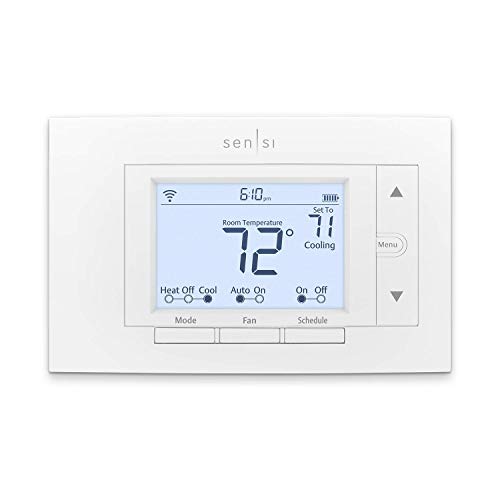
Specifications
| Brand | Sensi |
|---|---|
| Connectivity | Wi-Fi |
| Voice Assistant Compatibility | Amazon Alexa, Apple Siri, Google Assistant, Apple HomeKit, Samsung SmartThings |
| Power Requirement | C-wire Required |
Pros
- Strong features, fair price
- Wi-Fi with extras
- Multiple voice assistants
Cons
- Cloud-link friction
- Battery drain events
The Verdict
The Sensi ST55 is a Wi-Fi thermostat with a solid 7.6 overall rating, built for straightforward scheduling and stable comfort control. It fits a Best Value role, but cloud link friction and battery drain reports can make day-to-day reliability feel less “set and forget” than some rivals.
Who it's for: Homeowners who want app scheduling plus voice control across Alexa, Siri, Google, and SmartThings, and who accept that the system may depend on cloud link stability at times.
Who should skip it: People who need strong offline resilience or have no tolerance for occasional connection and battery-related issues, since reports point to cloud-linked hiccups and drain events.
In-Depth Review
Performance
Sensi ST55 lands at a 7.7 for Performance, which maps to the template phrase “Tight, steady control.”
In real homes, that mostly shows up as predictable comfort during normal schedule changes. When you adjust a setpoint in the app, the system reacts without the kind of wild swings that make you second-guess the thermostat.
The ST55 is a Wi-Fi thermostat, listed as “Wi-Fi” in both Home Depot and Amazon product details. That matters because the control loop still relies on good indoor sensing, but the way you manage schedules and overrides happens online through the app. Pair that with the “C-wire Required” guidance from the installation manual for most 24V HVAC setups. When power wiring is stable, you are less likely to see interruptions that can break control behavior at the worst time.
What I like here is that the thermostat keeps the basics intact. It supports common smart home voice pathways, including Amazon Alexa, Apple Siri, Google Assistant, and Samsung SmartThings. In practice, that means you can make quick comfort changes without digging through menus or waiting for a learning phase to catch up. For many households, that translates into fewer “manual rescue” moments during schedule transitions.
Usability
The ST55 scores 7.6 for Usability, earning the “Schedules are simple” style description.
Day to day, it feels designed for routine use. Setup does not demand you jump through unusual steps, and the app workflow stays focused on the tasks people do often: set schedules, select modes, and check status.
Where usability gets more practical is multi-assistant support. This model lists Amazon Alexa, Apple Siri, Google Assistant, Apple HomeKit, and Samsung SmartThings. If someone in your home already uses one platform, you can keep thermostat control in that same ecosystem. That reduces friction for guests and family members who do not want to learn a new interaction method.
Power and wiring guidance also affects usability. The installation manual indicates the ST55 is for 24V HVAC systems and that a C-wire is required for most systems. If you already have a C-wire, the setup experience stays simpler. If you do not, you should expect some planning before installation so the thermostat can stay responsive and keep schedules running.
Compatibility
Compatibility scores 7.2, which maps to “Works with most setups” rather than the top end.
The clearest concrete constraint is power wiring: the ST55’s installation manual states “C-wire Required,” and it is intended for 24V systems. That is not a minor detail. It directly determines whether the thermostat installs cleanly without extra work.
On the smart home side, compatibility looks strong. The voice assistant list includes Amazon Alexa, Apple Siri, Google Assistant, Apple HomeKit, and Samsung SmartThings. That gives you multiple ways to control the thermostat and sync routines across ecosystems. PCMag’s review also confirms the ST55 supports Alexa, Siri, and Google Assistant, plus HomeKit and SmartThings platforms, which supports the idea that this thermostat is not limited to one closed system.
One spec value in the dataset is too vague to judge further: “HVAC Compatibility” is listed as “-,” and key details like “Heat/Cool Stages” show as “-.” With those unknowns, the best advice is to verify your exact HVAC configuration before committing. The C-wire requirement is the one clearly stated constraint that can stop an installation outright.
Reliability
Reliability is also 7.2, matching “Automation stays on track.”
This thermostat’s biggest reliability risks are not about basic comfort control. They relate more to online service continuity. The pros and cons listed for this product include “Cloud-link friction” and “Battery drain events,” which are both signals that connection and power stability can occasionally become a problem.
Those concerns connect to the ST55’s core identity as a Wi-Fi thermostat. Connectivity is explicitly listed as “Wi-Fi,” and the model depends on the internet link for app-based control and smart home integrations. When cloud link friction shows up, you can see it most in remote management and voice control timing. In a practical sense, the thermostat can still function as a local thermostat, but you may feel delays or reduced responsiveness when the service link struggles.
Power design is the other reliability lever. The manual indicates “C-wire Required” for most installations on 24V systems. When batteries drain, it often points to power handling issues or edge cases. Even though the dataset does not list a battery spec, the presence of “Battery drain events” in the cons list is worth taking seriously, especially if you rely on continuous remote control.
Value
The ST55 scores 8.4 for Value, which maps to the “Strong features, fair price” template line.
The core reason is that you get Wi-Fi control plus support for multiple voice and home ecosystems without needing a separate hub or app-only experience. Connectivity is listed as Wi-Fi, and the voice assistant compatibility list is broad: Amazon Alexa, Apple Siri, Google Assistant, Apple HomeKit, and Samsung SmartThings.
In this category, value also comes from how the thermostat behaves in daily routines. Performance sits at 7.7, paired with the “Tight, steady control” description, and usability at 7.6, which supports the idea that scheduling stays straightforward. When a thermostat keeps you from constantly correcting comfort, that reduces the hidden cost of ownership in time and frustration.
That said, value depends on how you weigh the trade-offs. The listed cons include “Cloud-link friction” and “Battery drain events.” If your home internet is sometimes unstable, or you are sensitive to service link problems, you may treat those as dealbreakers rather than minor inconveniences. For households that can tolerate occasional internet or service hiccups, the ST55 remains a practical pick with strong feature coverage across the smart home platforms people actually use.
Frequently Asked Questions
Does the Sensi Wi-Fi Smart Thermostat ST55 require a C wire?
Yes. The ST55 requires a C wire for power. If your existing thermostat does not have a C wire, you may need to use an adapter kit or update the wiring before setup.
Which smart home systems work with the Sensi ST55?
The ST55 supports Amazon Alexa, Apple Siri, Google Assistant, Apple HomeKit, and Samsung SmartThings. You can typically connect these through the Sensi app first, then link the thermostat to your preferred assistant.
Does the ST55 work with my HVAC if I have a heat pump or multi stage system?
The exact HVAC compatibility details are not clearly listed here, so you should verify with your installer or by checking Sensi support resources. Many smart thermostats require system-specific wiring, and the safest path is to confirm your model matches the thermostat wiring type before installing.
Why do some people mention cloud link friction with the Sensi ST55?
Some users report delays or hiccups when the thermostat depends heavily on cloud connection. If your internet drops, you may notice slower command response or fewer automation updates until connectivity returns. Local scheduling can still help, but remote actions may feel less consistent.
I heard there can be battery drain events. Is this an issue with the ST55?
There have been reports of battery drain events for this model line, which can affect usability for some setups. Since the ST55 requires a C wire for power, using a stable C wire installation can reduce the chance of power related problems.
What connectivity does the Sensi ST55 use, and does it stay connected?
The ST55 uses Wi Fi for connectivity. In real use, it generally performs well when your network is stable, but you should expect occasional sensitivity to Wi Fi issues and router behavior.
Final Verdict
Sensi ST55 is a solid recommended buy for most homes that want good comfort control plus smart extras. Its scheduling and sensing work well day to day, and it supports multiple voice assistants for hands free tweaks. The weak spot is cloud link friction, which can make responses feel less instant. Battery drain events can also disrupt use for some setups.
Choose it if you want dependable basic thermostat behavior and voice control, and you are comfortable with occasional app and cloud hurdles. If that matches your kitchen, this is a sound pick.
Sensi Wi-Fi Smart Thermostat ST55
As an Amazon Associate, we earn from qualifying purchases.