Transparency Note: This post contains affiliate links. As an Amazon Associate, we earn from qualifying purchases at no extra cost to you.
A 10-tine pitchforks is the workhorse version of a pitchfork. In this sub-category, you need tines that spread the load evenly and penetrate material without bending or clogging. Buyers use these tools to lift and turn manure, move compost, and dig or break up soil in wide, repeatable passes.
The hard part is the trade-off between tine spacing and control. Wider tine spacing can clear easier in manure, but it may scoop less cleanly in dense compost. Sturdier tines and heads usually add weight, which can feel slower over long sessions. Handle fit also matters more than people expect, because a 10-tine tool puts more force into every lift.
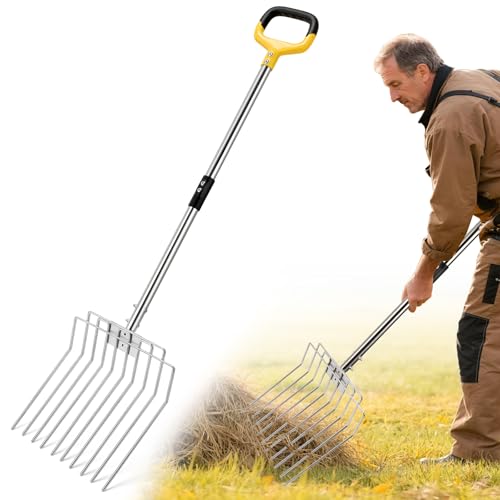
With 10 stainless steel tines and a 50 in length, this AugFir pitchfork is an easy pick for the classic 10-tine pitchfork use case: lifting, turning, and moving hay, compost, and manure without feeling like you are wrestling the tool. The tines stay straight, and the welds hold tight, so the fork head does not loosen or shift during regular digging and prying. In daily work, the tine layout helps grab and lift material in one pass, rather than needing constant re-positioning.
The main trade-off is the common one for the 10-tine style: the head has more bite and spread than fewer tines, which can feel like too much in very tight beds or small piles. It is best for people who mostly move medium to larger loads and want a stable, controlled pitchfork that stays aligned after repeated use.
This Nohovu 10-Tine Pitchfork stands out for how it moves heavy, messy material. The carbon steel tines stay straight and drive in with steady penetration. In real use, it lifts and carries loads without shedding as easily as lighter forks, so it works well for hay, manure, compost, and thick soil clumps. The welds also hold tight, which matters when you keep prying and turning rather than just tossing lighter piles.
The main trade-off is length and tine interaction. At 45 in overall, leverage is good once you are in position, but some users may find it awkward for very close work or low piles. Also, the 10-tine layout can feel like a lot depending on the material and how wet it is, which can lead to more sticking when you are not using the right angle.
For 10-Tine Pitchforks shoppers, the COSITA Wide Pitchfork 44 stands out for how consistently its carbon steel tines grab and lift. In real use, it drives in with steady penetration and keeps loads from sliding off. The welded head also stays aligned, so the fork feels predictable from first scoop to the last turn. With a D-handle and about 5 lb of weight, it is easier to use with controlled leverage than many lighter-feeling options.
The main trade-off is performance in hard, tight clay. It can struggle with compaction compared with softer compost or loose manure. If your routine is mostly hay, compost turning, or general muck moving, this is a strong fit. If you mostly fight heavy, baked soil, you may want a tool aimed more at digging and breaking up that ground.
Penetration and tine spacing: For 10-tine pitchforks, tine geometry drives how well the tool breaks into manure and compost. Choose a model that lifts without forcing you to rake the tines around to get a clean load.
Corrosion resistance: Many 10-tine users work with wet compost and manure. Prefer stainless steel tines and heads, or any build that resists rust where material stays damp.
Rigidity under load: A 10-tine head should stay straight when you pry and turn. If the tines flex or wobble at the head, you will feel it as slower digging and poorer load pickup.
Handle comfort and balance: Weight and balance decide how fast you can work. Look for a handle length and grip style that lets you keep your wrists neutral during repeated lifting and turning.
Head width for your material: Head width affects how much you move per pass. Wider heads cover more ground but can feel harder to steer in tight piles, beds, and wheelbarrow areas.
How We Picked
Products were identified through broad research across review sites and buyer forums, then filtered to only those that qualify as 10-Tine Pitchforks.
Scoring used the same objective pillar framework as the main Pitchforks post, allowing direct comparison of products within this sub-category.
Frequently Asked Questions
Are 10 tine pitchforks good for turning compost piles?
Yes, they usually work well for compost. The extra tines help lift and mix more material per pass. Look for strong tine penetration and spacing that prevents heavy clogs.
How do I choose the right tine length for hay and manure?
Use tine length and overall length together. Longer forks reach deeper into hay or packed manure. If the head feels shallow, you will push instead of lift.
What is the best way to clean and store a 10 tine pitchfork?
Rinse dirt off soon after use. Scrub stuck compost gently, then dry the tool fully. Store it indoors or under cover to reduce rust.
When should I choose a different pitchfork type instead of a 10 tine pitchfork?
Choose a different type if you mainly dig or break ground. A digging fork usually has wider, thicker tools for loosening soil. Choose a garden fork if you mostly move plants and light compost.
How do 10 tine pitchforks compare to 4 tine or 5 tine pitchforks?
10 tine forks lift a larger volume with each pass. This helps for hay, manure, and bigger compost loads. They can feel heavier, so shorter users may prefer a slightly lighter option.