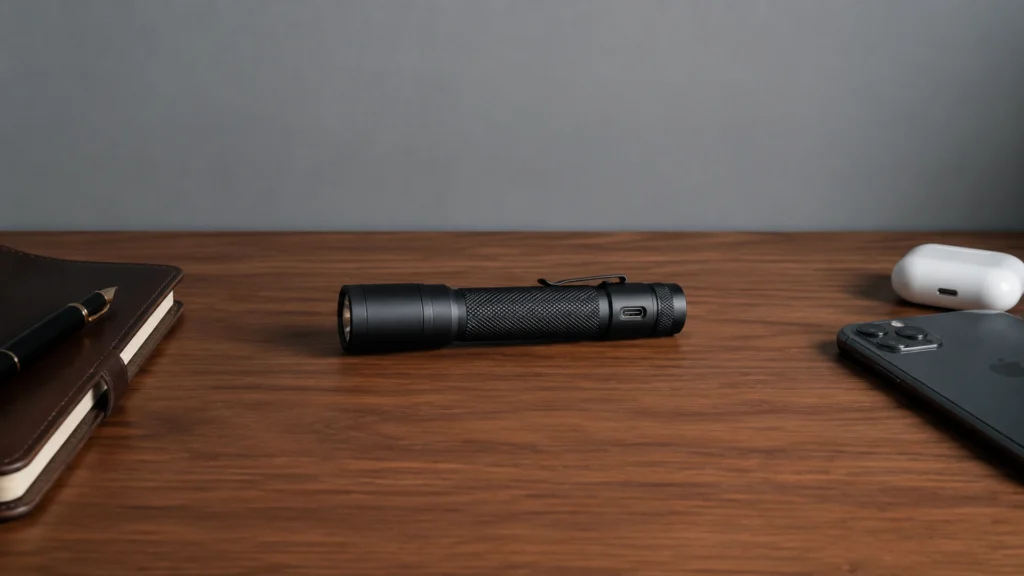
USB-C rechargeable flashlights are handheld lights that charge through USB-C, either with a built-in battery or a cell that the light charges internally. For this sub-category, the key need is simple daily power. You want a light you can top up from a laptop, power bank, or car charger, without hunting for a separate dock or proprietary charger.
Picking the right one is harder than it looks. Many models list a high max output, but you need sustained brightness after the first few minutes. Bright modes also create heat, and poor thermal control can step down the output when you most need steady light. You also trade size and weight against usable beam distance and battery capacity.
To keep the buying process grounded in results, use the criteria below and then match a top-ranked model to your use case. Looking for all types? See our Best Flashlights.
Quick Overview
Our Top Picks
#2. Nitecore EDC29 Flashlight

Specifications
| Brand | Nitecore |
|---|---|
| Brightness Lumens | 6500 lm |
| Beam Distance Ft | 1214.8 ft |
| Runtime Hr | 61 hr |
| Mode Count | 6 Modes |
| Battery Type | Built-in Lithium-Ion |
| Charging Port | USB-C |
| Waterproof Rating | IPX8 |
| Weight Oz | 6.4 oz |
Pros
- Laser-like throw
- High output brightness
- USB-C or magnetic charging
Cons
- Emitter non-independence
This Nitecore EDC29 stands out for USB-C convenience paired with serious reach. It uses a built-in lithium-ion battery and charges over USB-C, so you can top it up like any phone. The beam is tuned for throw, hitting up to 1214.8 ft, and it pushes 6500 lm at peak for quick visibility at distance.
The main trade-off is emitter independence, which can matter if you prefer perfectly even output across modes. For everyday carry, it is a strong pick when you want one light that stays ready and does more than just close-range work. With 6 modes and IPX8 waterproofing, it fits well for commuting, job sites, and outdoor walks where you may need both bright bursts and sustained use.
#3. Nitecore EDC27 UHi Flashlight

Specifications
| Brand | Nitecore |
|---|---|
| Brightness Lumens | 3100 lm |
| Beam Distance Ft | 333 ft |
| Runtime Hr | 55 hr |
| Mode Count | 5 Modes |
| Battery Type | Built-in Lithium-Ion |
| Charging Port | USB-C |
| Weight Oz | 4.8 oz |
Pros
- Laser-like throw
- High output brightness
- Tight fit, dependable switch
Cons
- Lockout switch unreliability
- UI/state clarity issues
This Nitecore EDC27 UHi stands out in USB-C rechargeable flashlights for its tight, far-reaching throw. It is rated at 3100 lm and a beam distance of 333 ft, which makes it feel more like a focused long-range light than a typical everyday USB-C carry. In real use, that beam shape helps you pick out distant details, while the usable output stays strong across the modes.
There are trade-offs for daily carry. The lockout switch can be unreliable, so pocket management needs attention. The UI also makes it harder to confirm the current mode at a glance. This is best for people who value long throw and one-handed control, and who are willing to learn the mode behavior and double-check lockout before trusting it fully.
#4. ThruNite Archer Mini Flashlight

Specifications
| Brand | ThruNite |
|---|---|
| Brightness Lumens | 405 lm |
| Beam Distance Ft | 285 ft |
| Runtime Hr | 7.5 hr |
| Mode Count | 3 Modes |
| Battery Type | Built-in Lithium-Ion |
| Charging Port | USB-C |
| Waterproof Rating | IPX8 |
| Weight Oz | 1.2 oz |
Pros
- Tight fit, dependable switch
- USB-C or magnetic charging
- Highly water resistant
Cons
- Low brightness output
- Weak beam focus
- Non-serviceable battery
For USB-C rechargeable flashlights, the ThruNite Archer Mini stands out because it combines USB-C charging with a tight, dependable switch and strong water resistance (IPX8). At just 1.2 oz, it is easy to carry and quick to use one-handed. You also get only three modes, which helps you avoid mode hunting when you need light fast. With 405 lm and a stated 285 ft beam distance, it is a practical option for everyday tasks and short range checks.
The trade-off is output. Reviews and real use can feel dimmer than the max number suggests, and the beam focus is not very tight. If you want a pocket light for close work and charging convenience, it makes sense. If you need punchier brightness or a harder throw, look elsewhere in the USB-C rechargeable category.
What to Look For
Real sustained output: Focus on how the light holds brightness across the runtime, not only the max lumens figure. A good USB-C model keeps a useful level for the situations you will actually use it, like walking, repairs, and campsite tasks.
Beam reach you can see: Check beam distance alongside the brightness level. A longer reach matters for finding things in the distance, but only if the hotspot stays usable and does not collapse into a dim flood after step-down.
Charging convenience with USB-C: Verify the charging port is USB-C and look for clear indicators while charging. USB-C matters in this category because it should work with the chargers you already own.
Thermal step-down behavior: Pay attention to whether the flashlight manages heat in a predictable way. The best options step down smoothly or maintain output longer, so the light stays practical during extended use.
Carry comfort and controls: Choose a size and weight you can use one-handed. Also check switch placement and mode behavior so you do not have to cycle through modes to reach the level you need.
How We Picked
Products were identified through broad research across review sites and buyer forums, then filtered to only those that qualify as USB-C Rechargeable Flashlights.
Scoring used the same objective pillar framework as the main Flashlights post, allowing direct comparison of products within this sub-category.
Frequently Asked Questions
What makes a USB-C rechargeable flashlight different from one that uses disposable batteries?
USB-C rechargeable lights let you charge the light directly with a USB-C cable. You do not need to buy or store extra cells for normal use. Built-in charging also helps when you travel or hike.
How do I choose between a USB-C light with step-up modes versus one with fewer modes?
More modes can help you pick the right brightness for walking, working, or signaling. Still, look for useful steps like low, medium, and high. Also check if the light keeps output steady so it does not drop too fast.
How should I care for the charging port and battery on USB-C rechargeable flashlights?
Keep the USB-C port clean and dry. Wipe it with a dry cloth before charging. Avoid charging in dusty or wet conditions, since debris can block the connector.
Should I buy a USB-C rechargeable flashlight, or choose a flashlight that uses standard replaceable batteries?
Choose USB-C if you want fast daily charging and easy ownership. Choose replaceable batteries if you will be away for weeks. That option can also reduce wait time if a battery pack fails.
How do USB-C rechargeable flashlights compare to other flashlight types for everyday use?
USB-C rechargeable models are usually easier for daily carry and simple home charging. They fit well in bags because they rely on a common cable. You trade some runtime freedom for convenience compared to big battery systems that use cells you can swap.