Surfboards with removable fins use fin boxes or fin systems that let you change fin type or position without tools every session. For buyers, the goal is simple: keep the same board feel while adjusting looseness, hold, and turn shape for the waves you get.
The hard part is trade-offs. Softer boards often use removable fins for easy setup, but you may give up drive and edge hold. Removable systems also add parts that can loosen, leak water, or wear out faster if you travel often. You also need the right fin layout for the board type and your level.
To match the full range of boards and wave styles, compare this guide with our broader picks in the main post, like this: Looking for all types? See our Best Surfboards.
Quick Overview
Our Top Picks
#1. Softech Roller 6'6" Soft Top Surfboard

Specifications
| Brand | Softech |
|---|---|
| Length | 78 in |
| Width | 22.2 in |
| Thickness | 3 in |
| Volume | 61 L |
| Board Type | Funboard |
| Fin Setup | Tri (x3 VFS Fin Setup) |
| Fin System | VFS |
Pros
- Well-shaped, precise build
- Proper length range
Cons
- Unstable width
- Too thin for comfort
- Mis-matched volume
This is a standout pick in removable-fin surfboards because the Softech Roller uses a VFS thruster setup that stays easy to adjust. The 6'6" funboard shape and 61 L volume make it simpler to paddle into waves and stand up quickly, while the tri-fin layout helps it hold a line and turn without feeling twitchy. Build quality also looks right for the category, with a well-shaped, precise board that feels stable once you commit to the rail.
The trade-off is in the comfort and feel. At 3 in thick and 22.2 in wide, it can feel a bit thin for some riders, and the listed width does not always translate to a super stable platform. It is also a little volume-mismatched for people who need more float. This one fits best if you want a removable-fin board for learning and progressing in varied, everyday conditions, and you are comfortable riding with a controlled, not overly cushy stance.
#2. Giantex 6' Foam Surfboard
Specifications
| Brand | Giantex |
|---|---|
| Length | 72 in |
| Width | 20 in |
| Thickness | 3 in |
| Construction | EPS |
| Fin Setup | 2+1 |
Pros
- Strong value for specs
- Durable composite build
- Beginner traction
Cons
- Somewhat sluggish underfoot
- Tends to feel limited
- Turn initiation effort
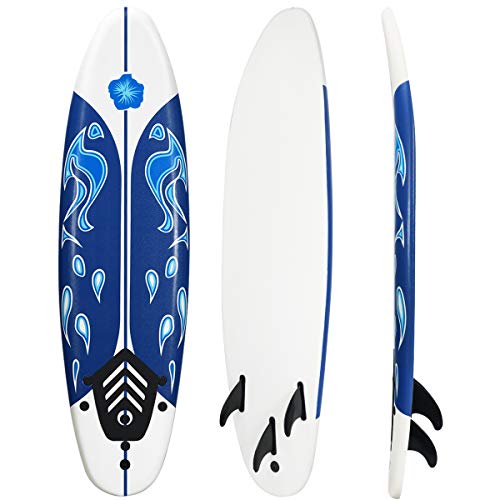
This Giantex 6' foam surfboard stands out in removable fin setups because it uses a 2+1 fin layout with a board that is built to be easy to live with. The EPS foam underfoot gives it a softer feel for practicing pop-ups and simple turns, while the removable fins let you swap what you ride as your skills grow. At 72 in long, 20 in wide, and 3 in thick, it has enough stability to stay on line when you are still learning how to place your weight on the rail.
The trade-off is that it can feel a bit sluggish underfoot, especially when you want quick turn starts. It also tends to ask for more effort to initiate turns than livelier boards. This is a better pick for newer surfers who want a forgiving platform and the flexibility of removable fins, rather than riders chasing fast, tight maneuvers in steeper surf.
#3. GYMAX 6' Body Board
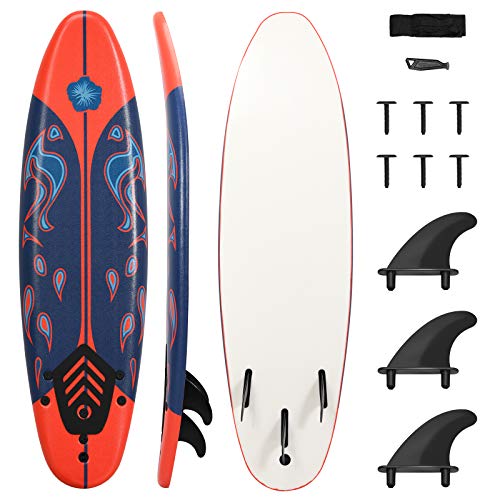
Specifications
| Brand | GYMAX |
|---|---|
| Length | 72 in |
| Width | 20 in |
| Thickness | 3 in |
| Construction | Foam |
| Fin Setup | 3-Fin |
Pros
- Strong value for specs
- Beginner-friendly handling
Cons
- Chips and dents sooner
- Inconsistent unit quality
- Somewhat sluggish underfoot
The GYMAX 6' Body Board stands out in the removable-fins surfboard space because it is built for easy fin swapping, which matters when you are dialing in feel for different riders and day-to-day conditions. With a 3-fin setup, it tends to be beginner-friendly, helping you stay on the face and turn without fighting the board. At 72 in long and 20 in wide, it also feels stable underfoot for learning basic trimming and stance control.
The trade-off is durability. It can chip and dent sooner than tougher boards, and some units may show inconsistent build quality. In the water, expect a bit of sluggishness underfoot, so aggressive, fast-lane surfing may feel harder than it should. This board fits best for newer riders who want simple fin changes and steady handling, not for people who travel hard or treat their board like gear that has to take a beating.
What to Look For
Fin system that stays tight: Check that the board uses a common fin box system (like Futures, FCS, or a single tab style) or a well-fitting removable tab design. A removable system only helps if fins mount without extra play. If the listing does not name the system, treat it as a risk for fit and water intrusion.
Fin layout for the ride feel: Favor layouts that match typical “learn and turn” use. Single fin usually makes the board feel smooth and forgiving, twin and thruster layouts add more hold and direction, and quad setups tend to loosen the feel. Pick based on how you want the board to track on rail versus how quickly you want to pivot.
Board type and wave range: Removable fin boards here are mainly soft tops or entry-level foam styles. These boards work best for small, weaker surf and for riders building basics. Choose length, width, and thickness that match your paddling strength and your need for stability, not just your height.
Construction that can handle travel: Look for soft-top foam builds with consistent shaping and clean seams around the fin area. Removable fins create stress points at the box or plugs. If the construction is described as lightweight or entry-level only, expect more dents from rocks and boards racks.
Value versus performance: Use the features that matter in this sub-category: removable fin convenience, a stable fin fit, and enough stiffness to keep control. If a board is priced close to better-finished boards with a clearer fin setup, it is usually the stronger choice for daily use.
How We Picked
Products were identified through broad research across review sites and buyer forums, then filtered to only those that qualify as Surfboards with Removable Fins. Only boards that clearly support removable fin mounting were included, even if the board also targets beginners or uses a soft-top build.
Scoring used the same objective pillar framework as the main Surfboards post, allowing direct comparison of products within this sub-category. Performance and versatility weighed most for how the board rides once fins are installed. Construction and durability addressed build quality around the fin area and how well the board holds up. Value then checked whether the price matches the real-world setup stability and ride control you get.
Frequently Asked Questions
What fin systems should I look for on a surfboard with removable fins?
Most removable fin boards use a standard fin box and matching fin tabs. Check that the fin system matches the fins you want to buy later. Common options include FCS and Futures style boxes, plus simpler universal systems depending on the board. If the boxes and fins do not match, swapping can be hard or impossible.
Do removable fins help me adjust the board for different wave conditions?
Yes. You can often change how much the board holds a line by choosing different fin sizes or setups. More fin area usually gives more hold and easier control in weak waves. Less fin area can feel looser and turn faster in punchier surf. Always start with a setup that matches your skill level.
How do I care for removable fins so they do not get stuck or leak water?
Rinse salt and sand off the fin area after every session. Dry the board and fins before storage, especially around the fin box. Use light pressure when installing or removing fins to avoid damaging the box. A quick visual check for cracks or loose hardware helps catch problems early.
When is it better to choose a different surfboard type instead of a removable-fin setup?
If you want the simplest learning curve, a soft top or all-in-one beginner board can be easier. If you surf mostly small, clean waves and do not want to swap parts often, a fixed fin setup may be enough. If you plan to ride long, stable nose waves, a longboard with a classic fixed setup can feel more natural. Choose based on how often you want to change your setup.
How do removable-fin surfboards compare in performance versus boards with fixed fins?
Removable fins give you more options for tuning speed, grip, and turn shape. Fixed fins can feel more consistent because the setup never changes. You trade that consistency for flexibility, since removable setups require more care and occasional re-fitting. In practice, the right fin choice can improve control and confidence.