




Air circulator household fans are built to keep air moving across a room. In this sub-category, buyers usually want a fan that pushes steady airflow and helps even out hot and cool spots. These models focus on whole-room circulation, not just a blast of air aimed at one spot.
The pick gets hard because the trade-offs are real. Strong circulation often costs more. Quiet operation can limit airflow at low speeds. And size choices affect how far the airflow reaches, how much the fan takes up, and whether the base stays stable at higher settings.
Looking for all types? See our Best Household Fans.
Quick Overview
Our Top Picks
#1. Vornado 630 9” Air Circulator Fan
Specifications
| Brand | Vornado |
|---|---|
| Fan Type | Pedestal Fan |
| Fan Size | 9 in |
| Speed Settings | 3 Settings |
| Noise Level | 52 dB |
| Power Consumption | 38-53 W |
| Dimensions | 13.6 x 8.2 x 12 in |
Pros
- Consistent airflow
- Quiet at low speed
- Useful oscillation options
Cons
- Limited speed options
- Smaller low-output size
- Limited convenience features
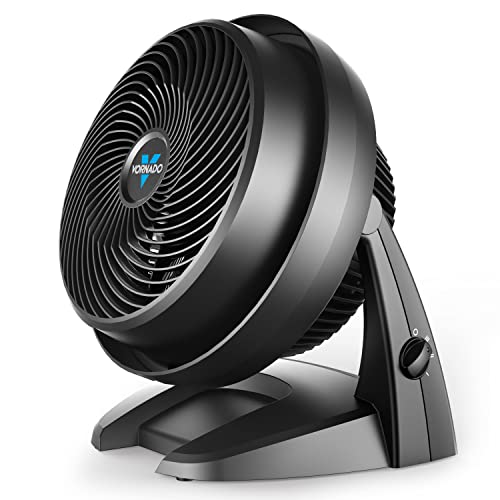
If you want an air circulator that feels even and steady, this Vornado 9 in model stands out. Airflow stays consistent across its three speed settings, and the oscillation helps move air across a wider slice of a room than a fixed fan. At low speed, it is also relatively quiet, so it works well for daily use in living spaces and bedrooms.
The main trade-off is that the speed range is limited to three steps, so fine tuning can feel a bit coarse. It is also a smaller low-output option, so it makes the most sense for personal comfort or mid-sized spaces rather than big rooms. If you prefer smooth circulation over lots of control options, this is a strong pick in the Air Circulator Household Fans category.
#2. Vornado 660 Large Air Circulator Fan

Specifications
| Brand | Vornado |
|---|---|
| Fan Type | Pedestal Fan |
| Fan Size | 10 in |
| Speed Settings | 4 Settings |
| Oscillation Angle | 90° |
| Noise Level | 54 dB |
| Power Consumption | 45 W |
| Dimensions | 15 x 11.8 x 13.5 in |
Pros
- Consistent airflow
- Quiet at low speed
- Useful oscillation options
Cons
- Smaller low-output size
- Turbo noise tradeoff
The Vornado 660 stands out in the air circulator category for one simple reason: its airflow feels steady and consistent. In real rooms, that means you get noticeable cooling where you are, not just a blast at close range. It also includes 90° oscillation options, so you can spread that airflow across a wider area without moving the fan.
The main trade-off is size on the low end. At its smallest output, airflow can feel less forceful, which matters in larger rooms or if you run it on lower speeds for long stretches. Also, the jump to turbo makes more noise, even though low speed stays relatively quiet around 54 dB, so it is better for sleeping or working when you do not need maximum power.
#3. Vornado VFAN Vintage Air Circulator Fan

Specifications
| Brand | Vornado |
|---|---|
| Fan Type | Pedestal Fan |
| Speed Settings | 3 Settings |
| Dimensions | 9 x 15 x 14 in |
Pros
- Consistent airflow
- Solid, well-balanced
- Worth the price
Cons
- Base stability concern
- Speed-dependent noise
- Limited speed options
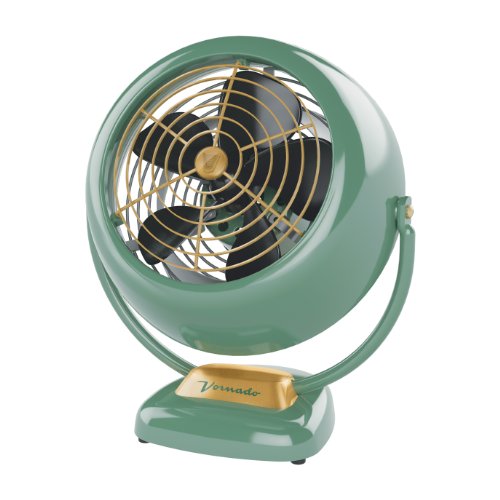
In the air circulator fan category, this Vornado stands out for how steady its airflow feels. It is designed to keep air moving through a space instead of only pushing air at nearby people. Across its 3 speed settings, the flow stays consistent, and the fan body feels solid and well-balanced.
The main trade-off is comfort at higher speeds. Noise rises as you crank it up, so it is better for daytime use than quiet rooms. Also, some buyers may notice base stability issues, and the speed range stays simple with only 3 settings.
#4. Lasko Wind Machine 20” Floor Fan

Specifications
| Brand | Lasko |
|---|---|
| Fan Type | Pedestal Fan |
| Fan Size | 20 in |
| Speed Settings | 3 Settings |
| Airflow Cfm | 2000 CFM |
| Noise Level | 35 dB |
| Dimensions | 10.1 x 25.8 x 23.8 in |
Pros
- Strong cooling airflow
- Worth the price
Cons
- Noticeable motor hum
- Limited speed options
- No timer feature
For an air circulator-style household fan, the Lasko Wind Machine 20 in is notable for its strong cooling airflow. At higher settings it moves a lot of air across a room, so it feels useful for everyday circulation, not just close-range comfort. The pedestal design also helps it sit at a steady height for whole-room airflow.
The trade-off is sound and control. You will notice a motor hum, and it is not the quietest option for night use or workspaces. It also limits you to 3 speed settings and has no timer, so you may need to turn it off manually. Best fit: people who want noticeable air movement and a simple setup, and do not mind the extra fan noise at stronger speeds.
#5. XPower FC-200 13” Industrial Floor Fan

Specifications
| Brand | XPOWER |
|---|---|
| Fan Type | Pedestal Fan |
| Fan Size | 13 in |
| Speed Settings | 4 Settings |
| Airflow Cfm | 1300 CFM |
Pros
- Tolerable white noise
Cons
- Weak airflow performance
- Flimsy feel
- Missing oscillation spec
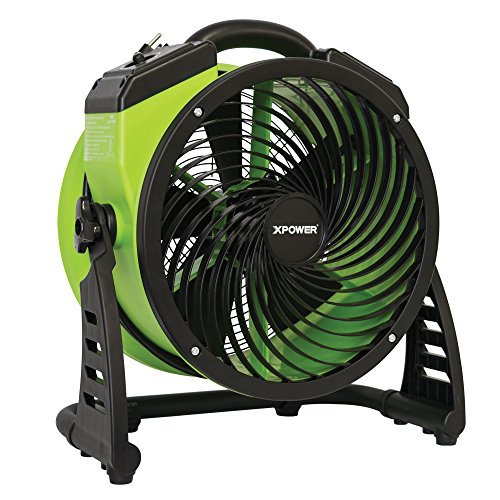
For air circulation at home, the XPower FC-200 stands out because it is an industrial-style pedestal fan in a 13 in size. It uses four speed settings and is rated for up to 1300 CFM, which sounds promising for pushing air across a room. In everyday use, though, the airflow does not feel as strong or far-reaching as the rating suggests, so it can end up working best when you are close or when the room is small.
Noise is more manageable than many floor fans, with only tolerable white noise during operation. Build quality feels a bit light and can wobble slightly in handling, which makes it less ideal for people who want a very solid, long-term fixture. It is also missing clear oscillation details, so if you need wide, side-to-side circulation, confirm that function before buying.
What to Look For
Airflow that holds up across the room: Look for strong airflow ratings and consistent results at multiple speeds. For air circulators, effective coverage matters more than a fan that only feels powerful up close.
Noise you can live with: Check stated noise levels in dB and judge how that maps to your use case. If you run the fan at night or while working, you want a smooth sound profile, especially at low and medium settings.
Build that stays stable when the fan is strong: Air circulators move enough air to reveal wobble. Prioritize solid bases, well-fitted grills, and stable controls. A stable fan also helps keep airflow aimed where you want it.
Oscillation that actually spreads airflow: If the model oscillates, confirm the angle in degrees. Wider oscillation can help circulate more of the room, but it should not come at the cost of uneven airflow or extra noise.
Value for the airflow and finish you get: Compare price to rated airflow, noise level, and build quality. In this sub-category, you should feel the difference in circulation and steadiness, not just the brand name.
How We Picked
Products were identified through broad research across review sites and buyer forums, then filtered to only those that qualify as Air Circulator Household Fans.
Scoring used the same objective pillar framework as the main Household Fans post, allowing direct comparison of products within this sub-category.
Frequently Asked Questions
What is the main job of an air circulator fan in a home?
An air circulator fan moves air across a room, not just at one spot. It helps even out temperature by pushing air farther from the fan. Many models also oscillate to cover more of the space.
How do I choose between a smaller air circulator fan and a larger one?
Pick a smaller fan for bedrooms, offices, and tight living areas. Choose a larger fan when you want stronger airflow across a wider space. Match the fan size to your room and how far the airflow needs to reach.
Do air circulator fans need special care or cleaning?
You should dust the grille regularly to keep airflow strong. For most models, turn the fan off and unplug it first. Use a soft brush or cloth, and avoid pushing dust into the motor.
How quiet are air circulator fans, and what affects the noise level?
Noise usually changes a lot by speed. Higher speeds often sound harsher, even if the fan still moves air well. A stable base and well-balanced blades usually reduce rattling and vibration.
When should I switch to a different type of household fan?
Choose a desk, tower, or pedestal fan when you need direct cooling at close range. Choose an air circulator when you want whole-room air movement and better air mixing. If you need strong airflow right next to you, a direct fan may feel better.
How do air circulator fans compare to standard household fans in airflow reach?
Air circulator fans focus on pushing air farther across the room. Standard fans often feel stronger near the front but spread less overall. If you want airflow to travel and mix air, an air circulator is usually the better fit.


