




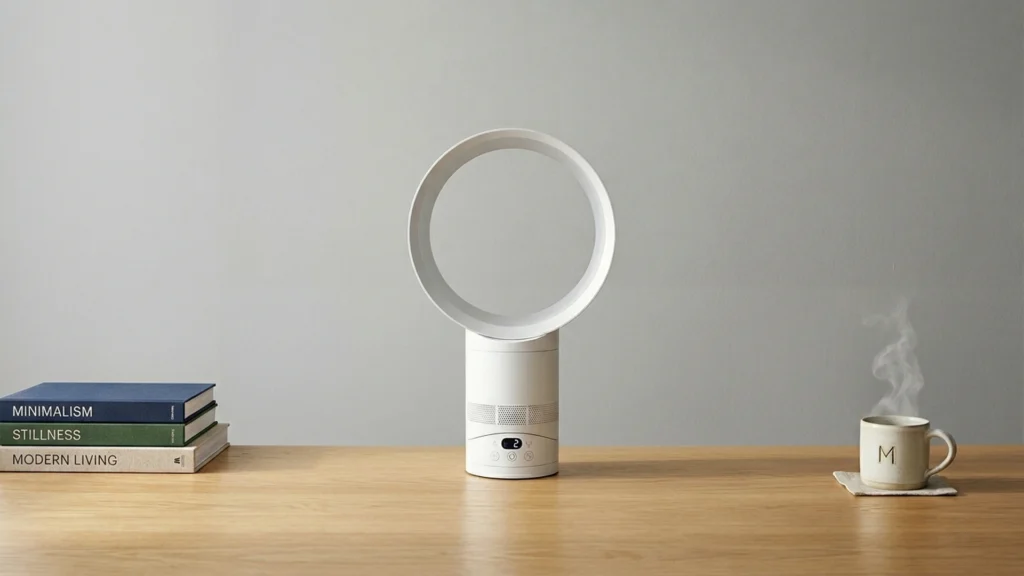
Ultra-Quiet Household Fans focus on low sound during real use. The goal is steady airflow that you can run at night or in a home office. These fans also need smooth speed changes, so the noise stays controlled when you move off the highest setting.
Picking the right one is harder than it looks. Quiet performance often costs airflow, especially at low and medium speeds. Oscillation can also add noise, so coverage depends on how well the fan balances airflow and sound. Finally, many “quiet” models still use plastics that can wobble, which turns into extra rattling over time.
Use this guide to match your room size and noise tolerance to the fan type you will live with every day. Looking for all types? See our Best Household Fans.
Quick Overview
Our Top Picks
#1. Dreo PolyFan 704S 40-45” Tower Fan

Specifications
| Brand | DREO |
|---|---|
| Fan Type | Tower Fan |
| Fan Size | 40-45 in |
| Speed Settings | 9 Settings |
| Airflow Cfm | 1473 CFM |
| Oscillation Angle | 90° |
| Noise Level | 20 dB |
Pros
- Consistent airflow
- Quiet at low speed
- Larger effective airflow
Cons
- Plastic arm failure risk
- Cheap-feeling base
This Dreo tower fan stands out in the ultra-quiet household category because it keeps air moving without turning your room into a noise problem. Even at low speed, it stays smooth and unobtrusive, while still delivering consistent airflow across its 9 settings. With 90-degree oscillation and a tall, 40-45 in profile, it is easier to spread cooling through a wider space than smaller fans.
The main trade-off is durability feel. Some buyers note a risk of plastic arm failure over time, and the base can feel a bit cheap for the size. If you are using it daily in a bedroom, living room, or home office, it is a strong pick. If you tend to move fans around often or want the most robust build, you may want to handle it carefully.
#2. LG PuriCare AeroTower Air Purifier Fan

Specifications
| Brand | LG |
|---|---|
| Fan Type | Tower Fan |
| Speed Settings | 10 Settings |
| Noise Level | 23 dB |
| Dimensions | 44.1 x 10.4 x 10.4 in |
Pros
- Consistent airflow
- Quiet at low speed
- More speed control
Cons
- Slow clearing time
- App dependency preferences
This LG PuriCare AeroTower stands out for ultra-quiet use because it stays calm when you run it at lower speeds. With a listed 23 dB noise level and smooth sound, it works well for bedrooms, home offices, and areas where you want steady airflow without a constant motor hum. Airflow feels consistent across its 10 speed settings, so you can fine tune comfort without the fan turning harsh or uneven.
The trade-off is that it may take longer to noticeably clear air in a room, especially if you expect fast results at the same quiet settings. It also leans on app control for some convenience, which may not be your favorite if you prefer simple button-only operation. If you want a quiet tower-style unit that you can run for long stretches, it is a strong fit.
#3. Rowenta Turbo Silence Extreme 53” Fan

Specifications
| Brand | Rowenta |
|---|---|
| Fan Type | Pedestal Fan |
| Fan Size | 16 in |
| Speed Settings | 3 Settings |
| Airflow Cfm | 2436 CFM |
| Oscillation Angle | 110° |
| Noise Level | 35 dB |
| Power Consumption | 70 W |
Pros
- Consistent airflow
- Quiet at low speed
- Useful oscillation options
Cons
- Limited speed options
The Rowenta Turbo Silence Extreme is a strong pick for anyone prioritizing quiet day to day comfort. At low speed, it stays smooth and calm, and the sound level is listed around 35 dB, which is low enough for work, reading, or light sleep. Airflow also feels consistent as you move between settings, and the fan uses useful oscillation up to 110 degrees to spread cooling across a wider area.
The main trade-off is control simplicity. With only 3 speed settings, you may find fewer middle steps than you want. Still, if you like a clear low, medium, and high approach, this pedestal fan fits well in a bedroom, living room, or any space where you want steady air without harsh noise.
#4. Levoit Classic 42” Smart Tower Fan

Specifications
| Brand | LEVOIT |
|---|---|
| Fan Type | Tower Fan |
| Fan Size | 42 in |
| Speed Settings | 5 Settings |
| Airflow Cfm | 1472 CFM |
| Oscillation Angle | 90° |
| Noise Level | 22 dB |
| Power Consumption | 27 W |
| Dimensions | 42.4 x 6.3 x 6.7 in |
Pros
- Quiet at low speed
- Useful oscillation options
- Worth the price
Cons
- Smart reliability unverified
Quiet operation is the standout for this 42 in Levoit tower fan. At low speed, it stays calm enough for sleeping or working, with a smooth sound profile instead of a loud motor hum. It also has practical 90-degree oscillation, so the breeze reaches more of the room without you standing right in front of it.
The trade-off is that the smart side of the experience feels less proven than the airflow. If you mainly want an ultra-quiet tower fan with reliable daily control, this fits well. If you depend on app or smart routines, consider that long-term smart reliability is not fully verified yet.
What to Look For
Low-speed noise consistency: Check how the fan sounds at low and medium settings, not just its best-case rating. Ultra-quiet buyers usually run speeds most of the evening and early morning, so the sound should stay smooth and non-rattly across those modes.
Airflow that still works when quiet: Look for models that move enough air at the speeds you will actually use. High CFM at maximum speed is less useful if the fan drops off sharply at lower settings where noise is acceptable.
Oscillation coverage without added buzz: Prefer a wide but well-balanced oscillation range for better room reach. If oscillation introduces ticking, vibration, or noticeable pitch changes, it will feel louder than a steady, non-oscillating fan.
Build quality and stable base: Tower fans need a rigid stance to prevent wobble. Pay attention to how the unit sits on the floor and how solid the controls and grill feel, since movement and loose parts are common sources of quiet-room noise.
Useful quiet-friendly features: Choose features that help daily use, like a timer, remote control, and multiple speed settings. Avoid extra modes that make the fan harder to set at your preferred low-noise level.
How We Picked
Products were identified through broad research across review sites and buyer forums, then filtered to only those that qualify as Ultra-Quiet Household Fans. We focused on tower and bladeless-style options that are commonly used for sleep and quiet rooms.
Scoring used the same objective pillar framework as the main Household Fans post, allowing direct comparison of products within this sub-category. Performance weighted airflow and practical cooling, noise weighted low and medium speed sound smoothness, build quality weighted stability and durability, features weighted everyday controls, and value balanced the results against the typical price.
Frequently Asked Questions
What makes an ultra-quiet fan feel quieter in daily use?
Look for low motor hum at sleep and work speeds. Smooth airflow usually sounds steadier than rough blade noise. A stable base also reduces rattles on floors or desks.
How do tower fans and bladeless fans differ for noise and airflow?
Tower fans often use a traditional fan design inside a tall housing. Bladeless fans use airflow through a cover, which can feel smoother. Both can be quiet, but they may spread air differently across the room.
How should I set up an ultra-quiet fan for best cooling with minimal noise?
Place it so air moves across your seating area, not directly at a wall. Use a medium speed first, then go higher only if the room stays warm. Keep the fan on a flat, firm surface to prevent vibration sounds.
Do I need to clean ultra-quiet household fans more often than regular fans?
Yes, dust can increase noise over time, even for quiet models. Unplug the fan and wipe the intake and grille area regularly. For deeper cleaning, follow the manual and avoid getting moisture in the motor.
When should I choose a different type of household fan instead of an ultra-quiet one?
Choose a more powerful style if you need fast cooling in a large room. Ultra-quiet fans focus on smooth airflow and low sound, not maximum blast power. For very wide areas, a different fan layout may cool better.
How does an ultra-quiet fan compare to a regular fan in airflow reach?
Ultra-quiet models still move air, but they may do it more gently. Many have wide oscillation angles to cover more of a room. Regular fans can push air farther, but they often sound louder on higher speeds.


