Specifications
| Brand | Rain Bird |
|---|---|
| Sprinkler Type | Pop-Up |
| Spray Radius Ft | 25-50 ft |
| Watering Pattern | Adjustable Arc |
| Operating Pressure Psi | 15-45 psi |
| Flow Rate Gpm | 0.73-9.63 GPM |
Pros
- Consistent spray reach
- Sturdy, season after season
- Easy pattern adjustment
Cons
- Low water delivery
- Nozzle mismatch risk
The Verdict
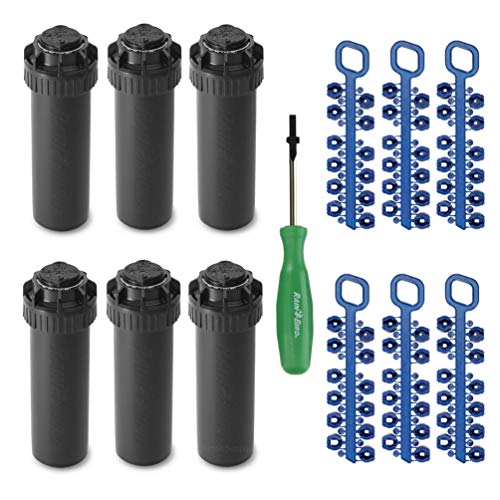
With a 8.6 Performance score, this Rain Bird 5000 Series pop-up rotor aims for a steady, repeatable arc that helps water land more like a curtain. It fits medium zones where you can dial the arc and accept that water delivery runs on the light side, so it may take longer to soak deep.
Who it's for: Homeowners with moving water pressure in the 15 to 45 psi range who want consistent throw and easy arc tweaks, and who accept lower GPM when planning run times.
Who should skip it: Buyers who need heavy, fast soaking for thirsty lawns, or who do not want to manage nozzle matching, since low water delivery and nozzle mismatch risk can leave dry or uneven spots.
In-Depth Review
Performance
Rain Bird rates here with a 8.6 Performance score, landing between “great” and “excellent.” The core reason is the rotor’s steady output at normal homeowner pressure. The sprinkler is designed to run from 15 to 45 psi, which lines up with the way most systems swing from early to late season and even from day to day.
Reach also stays predictable. The advertised spray radius sits in a 25 to 50 ft band. In practice, that range matters more than a single number. It lets you plan spacing between heads without guessing wildly when pressure is not perfectly stable. The watering pattern is an adjustable 40 to 360 degree arc, and that helps you avoid intentional overlap or leave-you-guess gaps.
Still, performance has an edge you should understand before you buy. The biggest functional trade-off is low water delivery. The listing for this family shows a wide flow rate range of 0.73 to 9.63 GPM. With lower delivery, you often run longer to hit the same soil depth. The spray can look uniform while the irrigation effort takes more time.
Durability
For durability, the Rain Bird 5000 Series rotor earns an 8.0 Durability score, which matches the template “sturdy, season after season.” This type of rotor head is built for repeated lift and pop-up cycles, and the “rock solid” feel tends to show up most around moving parts that see stress every season.
What we can ground in the specs is the operating pressure window: 15 to 45 psi. That range tells you it is meant for real systems, not idealized test benches. When a rotor is designed around that band, it typically tolerates normal pressure changes better than models that only behave in a narrow range. It also matters that the spray radius is intended to stay usable from 25 to 50 ft. Consistent throw implies consistent internal function over time.
There is one caveat tied to reliability, even if it is not a “material failure” issue. The listed con calls out nozzle mismatch risk. When you are mixing and matching parts, that can create uneven spray behavior that feels like a durability problem. Use matched components and you reduce the chance that wear shows up in the wrong place.
Setup
Setup gets an 8.3 Setup score, and the closest template match is “easy pattern adjustment.” This head is built around arc control. You adjust the pattern using an adjustable 40 to 360 degree part-circle, with arc changes made from the top. That design usually keeps fine tuning simple once the head sits at the right spot.
Placement also becomes easier when the reach range is clear. With a 25 to 50 ft spray radius, you can map zones using spacing that matches your yard scale. That matters because rotor setup often fails when people guess throw distance and then compensate later with too much overlap.
Setup still has a practical pressure reality. If your system runs on the lower end, the head must work inside that 15 to 45 psi band. If it does, you can get the repeatable arc behavior you want. If it does not, you may spend time rechecking adjustments and spray placement. The sprinkler’s arc control helps, but it does not remove the need for correct system pressure.
Value
Value comes in at a 7.8 Value score, which fits “worth every penny” to “great coverage for price,” but with the reminder that output limits affect how long you run cycles. You get a rotor that targets medium-sized coverage, with throw rated from 25 to 50 ft and arc control from 40 to 360 degrees. That is a flexible way to cover lots of layouts without jumping to multiple head types.
The watering math is where value lives or dies. The family is rated at 0.73 to 9.63 GPM, and that aligns with the real con: low water delivery. If your lawn needs heavy soaking, you may run longer even if the spray pattern looks controlled. That reduces the “set it and forget it” feeling.
So the best fit for value is a yard that benefits from consistent coverage rather than high immediate flow. The sprinkler’s setup and repeatable spray reach help you manage gaps between heads and zones. If you want quick, heavy watering in short cycles, this rotor may feel less efficient. If you want controlled distribution across a 25 to 50 ft radius with fine arc tuning, it tends to make sense.
Frequently Asked Questions
What spray radius does the Rain Bird 5000 Series rotor have?
The sprinkler is rated for a spray radius of 25 to 50 ft. In practice, reach depends on your water pressure and the nozzle setup you choose. If you run it at the low end of the pressure range, expect the shorter radius.
Will this rotor work if my water pressure is around 25 psi?
It operates in a 15 to 45 psi range, so 25 psi falls within spec. You should still fine tune the arc and confirm that the stream stays consistent across the lawn. If your pressure drops during peak use, you may see reduced coverage.
How much water does it use, based on the flow rate range?
The published flow rate range is 0.73 to 9.63 GPM. Your actual use will depend on the nozzle and how wide you set the coverage arc. If you have a small water supply, the higher end can stress flow and reduce reach.
Is the adjustable arc enough to prevent overspray on a small yard?
The watering pattern uses an adjustable arc, so you can aim the coverage where you need it. However, rotor sprinklers can still send water beyond the target if the arc settings do not match your layout. Plan for wind and slope, and verify coverage from multiple spots.
What is the biggest issue with this sprinkler, and how can I handle it?
Some users report low water delivery, which can mean the lawn does not get enough water in a typical run time. Start by setting the arc correctly and running the sprinkler long enough to reach your desired soak. If you notice dry spots at the far edge, increase run time before increasing the arc.
Do I need to worry about nozzle mismatch with the Rain Bird 5000 Series rotor?
There is a nozzle mismatch risk, so the wrong nozzle for your pressure and radius can lead to weaker performance. Use the nozzle options intended for the arc and throw you want, and keep the model parts paired as directed in the instructions. If spray looks uneven right after setup, check the nozzle first.
Final Verdict
This Rain Bird rotor is a solid buy for people who want reliable coverage and easy dial-in over time. It delivers consistent spray reach and has a sturdy build that holds up across seasons. The weak spot is low water delivery, which can leave thirsty areas, and there is a risk of nozzle mismatch if parts do not line up with your setup.
Choose this if you value steady throw distance and simple pattern changes, and verify nozzle compatibility before install.