





Wüsthof Classic 8″ Chef’s Knife Review
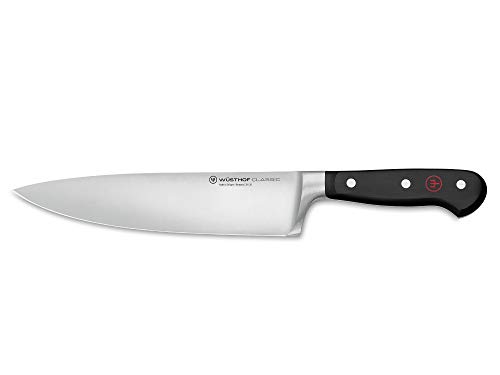
Specifications
| Brand | Wüsthof |
|---|---|
| Blade Length | 8 in |
| Weight | 8.5 oz |
| Blade Material | High Carbon Stainless Steel |
| Hardness | 58 HRC |
| Handle Material | Composite |
| Construction | Forged, Full Tang |
Pros
- Sharp out of the box
- Edge-retaining steel
- Comfortable for long prep
Cons
- Full bolster sharpening
The Verdict
The Wüsthof Classic 8-inch is a forged, full-tang chef knife built for stable control, with 8.6 in the Build Quality pillar score. It starts sharp and stays that way for typical home prep, but the full bolster makes sharpening more work than on simpler designs.
Who it's for: Home cooks who do lots of chopping and pushing cuts accept extra effort at the sharpening step to get a solid, comfortable handle feel during long sessions.
Who should skip it: People who want easy maintenance or quick sharpening routines, since the full bolster changes how much time and care it takes to keep the edge truly fresh.
In-Depth Review
Cutting
With a Cutting score of 8.1, the Wusthof Classic 8-inch lands in the “Sharp out of the box” tier. The key reason is simple: this is a forged knife with a 8 in blade that comes ready to work. The grind and geometry matter, and Wusthof uses high carbon stainless steel as the blade material. That helps the edge start sharp and stay clean during regular board work.
In practice, cutting starts with control at the tip and stability along the edge. This model uses forged, full-tang construction. Even if you only feel that indirectly, it usually shows up as less blade wobble when you rock for herbs or push through firmer veg. The hardness is listed at 58 HRC, which is high enough to keep the edge keen without needing constant touch-ups for basic home prep.
Knife feel also comes from mass. At 8.5 oz, this is not a lightweight chef knife. The added weight supports push cuts and steady chops. It also helps when you switch between slicing onions and rougher tasks like crushing garlic with the side of the blade.
Edge Retention
Edge Retention gets a 7.6 score. That maps best to “Dull slowly, rarely chips.” The reason is tied to the listed steel and hardness. The blade is high carbon stainless steel, tempered to 58 HRC. That combination tends to resist rapid edge breakdown under normal household use, so the bite stays usable longer between sharpenings.
Just as important, the knife is not a fragile edge design. It is forged from a single block and built as a full tang. That helps the blade stay consistent in the hand over time. Even tiny changes in stiffness can affect how an edge behaves during repeated passes. Here, the construction supports predictable cutting patterns.
One trade-off does show up, but it is not about edge life. The cons call out “Full bolster sharpening.” This means you will spend more time when sharpening becomes necessary. So edge retention can be solid, but maintenance can take more effort than with a simpler profile.
Build Quality
Build Quality scores 8.6, which fits the “Tight fit, clean grind” template. The specs back up that impression. The knife is forged, full tang, and made from high carbon stainless steel. Those choices matter for both durability and daily consistency.
Balance and rigidity often come from full-tang construction. When the tang extends through the handle, the knife usually feels more unified. That stability affects cutting accuracy, especially when you grip farther forward for precision cuts. The listing also includes a blade length of 8 in, which is the classic chef size. With that blade length, a well-made grind and a stiff core keep the edge line true while you work through herbs, proteins, and denser vegetables.
Fit and finish also connect to how you live with a knife. Wusthof pairs the steel build with a composite handle. The handle material does not change the grind, but it affects how the knife holds up to daily use. The goal is long-term usability, and the listed build choices support that.
Ergonomics
Ergonomics also hits 8.6. That matches the “Comfortable for long prep” template. The composite handle is listed as the handle material, and it is built for secure grip during extended sessions. The weight of 8.5 oz matters here. It is substantial enough to reduce the effort needed for push cuts, but not so heavy that it usually tires you out quickly on routine prep.
Long prep work depends on how the knife balances during different motions. A chef knife should feel steady when you switch from forward slicing to a rocking pattern. The forged, full-tang construction contributes to that consistent feel, because the blade and handle act as one unit rather than as two loosely connected parts.
Comfort is not only about the handle. It is also about how the blade meets your cutting board. With a 8 in blade and 58 HRC hardness, the edge stays responsive. That reduces the force you need per cut, which can lower fatigue over time.
Value
Value scores 7.9, which aligns with the “Okay value, modest perks” template. There is real merit here, but the trade-offs are clear. You get dependable cutting behavior and strong construction inputs. The knife uses forged, full-tang construction and high carbon stainless steel tempered to 58 HRC. That combination tends to produce stable performance for everyday home use.
At the same time, the cons list a specific maintenance downside: “Full bolster sharpening.” That matters when you look at day-to-day ownership, because sharpening is not just about how often. It is also about how hard the process is when you finally do it. A full bolster can make access and technique more demanding than with knives that sharpen more simply.
So the value story is mixed. The knife earns its keep through cutting confidence, stable materials, and ergonomic comfort for longer sessions. But you should know you may spend more time on sharpening when the edge needs serious work. If that is acceptable, the knife makes sense for cooks who want one dependable 8 in chef knife and can commit to proper maintenance.
Frequently Asked Questions
How long is the Wusthof Classic 8 chef's knife blade?
The blade measures 8 inches long. That size suits most everyday chef tasks, like slicing onions and portioning proteins, without feeling too large on a smaller board.
What blade steel and hardness does this Wusthof use?
It uses high carbon stainless steel with a hardness of 58 HRC. This combination aims to balance edge bite with real-world corrosion resistance, though you still need basic drying and safe storage.
Is this knife full tang and forged?
Yes. It is forged with a full tang construction, which helps with stability and durability. The weight is listed at about 8.5 oz, so it feels substantial but not overly heavy.
Does the composite handle stay comfortable for long prep?
Many cooks find the composite handle comfortable for extended sessions because it offers a secure grip and consistent control. The ergonomics score is strong, and the balance works well for both push-cutting and rocking styles.
Can this knife handle daily vegetables and herbs, or does it struggle with thicker items?
It performs well on typical produce, with sharp out of the box cutting and clean slicing for herbs and vegetables. For tougher items like dense squash, you can still do the work, but use proper technique to avoid binding.
Why do people say sharpening is harder on this knife?
The full bolster can make it inconvenient to sharpen on a flat stone or with certain guided systems because the bolster blocks access near the heel. You may need to use a careful angle and technique, or a setup that reaches the area close to the handle.
Final Verdict
Wüsthof Classic 8 is a strong buy for cooks who want dependable control and solid everyday performance. It brings sharp out of the box cutting with clean progress on most prep tasks. The build feels confident in the hand, and edge retention stays steady. The main drawback is that the full bolster makes sharpening more work.
If you plan to use a chef knife heavily and keep it for years, this fits well. Just be ready for the extra effort if you sharpen often.