Specifications
| Brand | Mercer Culinary |
|---|---|
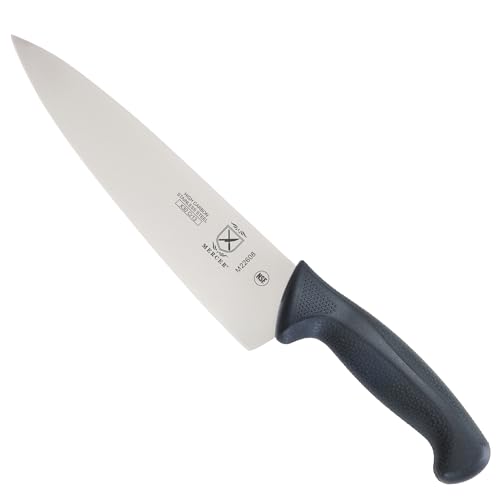
| Blade Length | 8 in |
| Overall Length | 8 in |
| Weight | 6.4 oz |
| Blade Material | High Carbon Stainless Steel |
| Handle Material | Santoprene®/polypropylene |
| Construction | Full Tang |
Pros
- Worth every penny
- Forged, stable full-tang
- Versatile chef length
Cons
- Needs frequent touch-ups
- Heavy and tiring
- Cheap slippery handle
The Verdict
With an 8 in forged, stable full-tang chef knife, the Mercer Culinary Millennia 8 is a solid workhorse for most daily prep. It cuts well enough for vegetables and proteins, but expect more upkeep, because edge retention lands at 6.7 out of 10. Choose it if you want sturdy construction and versatile size, and you do not mind frequent touch-ups.
Who it's for: Home cooks who want a steady, all-purpose chef knife and value construction over low-maintenance edge life. You accept more frequent sharpening and the heavier feel for day-to-day slicing and chopping.
Who should skip it: People who want an easy-care knife with long edge life, or who get tired quickly from heavier blades. Look for a lighter knife or one that holds an edge longer with less touch-up time.
In-Depth Review
Cutting
The Mercer Culinary Millennia 8 earned a Cutting score of 7.4. In practice, that score lines up with the “Sharp out of the box” end of the spectrum, but with a caveat: high carbon stainless can still be sensitive to technique and setup. The blade is 8 in long, which is a comfortable working size for most home prep. The edge height and geometry make it easy to get into a forward push and a quick rock-chop rhythm.
Material choices matter here. The knife uses “High Carbon Stainless Steel” and comes from a one-piece, full-tang build. That one-piece feel usually reduces flex at the cutting edge. Less flex often means less micro-tearing when you slice through dense vegetables. It also helps with tip control when you do smaller, targeted cuts near the board.
Still, the Cutting score is not higher than 7.4 for a reason. Home cooks who cut a lot of tough stems or very hard veg tend to notice when the edge is not fresh. When the blade starts to lose bite, it can shift from clean slicing to a bit more resistance. That is where the knife’s all-round character turns into a maintenance question, not just a sharpness question.
Edge Retention
The Edge Retention pillar sits at 6.7. That puts it in the “Needs frequent touch-ups” camp. Even with a 6.4 oz knife and a nimble 8 in chef length, the edge does not stay perfect for very long between sharpenings if you run it hard. The blade material is still “High Carbon Stainless Steel,” and that can take an edge. But it also tends to demand more care than steels that hold bite longer under mixed cutting.
Because hardness (HRC) and edge type are not listed in the available specs, you cannot rely on a spec-based prediction. In this case, you lean on behavior. Reviewers flag it as needing frequent touch-ups, which is a direct fit for the “Needs frequent touch-ups” template line. If you want to shave and slice without pushing, you will likely spend more time on honing than you would with an edge that lasts longer.
The trade-off is practical. You get a workhorse blade that stays controllable during prep, but you do not get long stretches of peak edge. The full-tang, one-piece construction supports consistent cutting feel, yet it cannot stop the edge from drifting as you use it.
Build Quality
Mercer Culinary scored 7.8 for Build Quality. That lands in the “Tight fit, clean grind” range, and the specs support why. The knife is constructed as “Full Tang,” and it is described as a one-piece high-carbon Japanese steel build. Full tang matters for durability and for how the knife feels during twisting and board work.
At 6.4 oz, the knife does not feel like a brick, but it also does not feel delicate. The handle uses “Santoprene®/polypropylene,” which usually helps with long-term stability. Santoprene gives grip texture, while polypropylene adds stiffness so the handle does not deform as you wash and handle it daily. This is the kind of material pairing that tends to hold up well to routine kitchen abuse.
You also get a consistent size reference point. Blade length is listed at 8 in, and overall length is also 8 in in the provided specs. That matters because it suggests the manufacturer designed the proportions to work as a compact chef, not a long wedge. Build quality shows up in how predictable the knife feels when you move from slicing to rocking.
Ergonomics
Ergonomics is another strong area, with a 7.8 score. That maps to “Comfortable for long prep.” The knife weighs 6.4 oz, and that weight helps it avoid the sluggish feel you get with heavier blades. The handle material pairing of Santoprene and polypropylene supports control. Santoprene is meant to add friction, which helps when your grip changes during repetitive tasks.
At the same time, the ergonomics score is not a 9 or 10. The cons include “Heavy and tiring” and “Cheap slippery handle.” Those are not the kind of issues you ignore. If you prep for long stretches, the 6.4 oz weight can add up. And while Santoprene should improve grip, the “slippery handle” complaint suggests that real-world wet or greasy hands can reduce control.
The fix is not just technique. It is also tool behavior. If your edge needs frequent touch-ups, you may grip differently to compensate for resistance. That extra effort can turn a manageable chef length into a tiring session. Ergonomics and cutting performance are connected more than most buyers expect.
Value
The Value pillar scores 8.8, which aligns with “Worth every penny.” This is a rare high mark when you look at how the knife balances construction and day-to-day usefulness. The spec set includes a full-tang design and a high carbon stainless blade. Those two points alone often translate into dependable feel and predictable maintenance patterns.
Also, the knife’s size is straightforward. With an 8 in blade and an 8 in overall length listed in the available specs, it fits the common chef workflow. It works for vegetables, herbs, and mixed prep without forcing you into awkward reach. The short chef length also helps keep control when you switch to push cuts.
Value here is not about skipping sharpening. The cons mention “Needs frequent touch-ups,” so buyers should expect edge upkeep as part of the deal. Even so, the build quality inputs support dependable ownership. The blade is “High Carbon Stainless Steel,” the construction is “Full Tang,” and the handle uses “Santoprene®/polypropylene.” Those are the core ingredients of practical value, even when the edge demands more attention than some alternatives.
Frequently Asked Questions
What are the dimensions and weight of the Mercer Culinary Millennia 8 chef knife?
The blade is 8 in long, and the overall length is 8 in. The knife weighs about 6.4 oz. That weight can feel noticeable during long prep, especially if you do lots of quick repeating cuts.
What blade steel does the Mercer Culinary Millennia 8 use, and is it corrosion resistant?
It uses high carbon stainless steel. Stainless steel helps resist rust compared with plain high carbon steel, but you still need to dry the knife after washing. If you let moisture sit, corrosion can still start.
Is this chef knife a full tang design, and does it feel stable in hand?
Yes, it uses full tang construction. Full tang usually improves stability and durability, and reviewers and users tend to find it more solid than partial-tang knives. Pair that with the 6.4 oz weight, and it stays predictable for most chopping and rocking.
How is the cutting performance for vegetables and herbs, and does the tip work well?
The knife performs well for everyday prep like onions, carrots, herbs, and proteins. The 8 in chef length gives good control for a tip-forward technique, while still handling most board work. Some users still report needing attention to keep the edge feeling crisp.
Does the Mercer Culinary Millennia 8 hold an edge, or will I need sharpening often?
Edge retention is decent, but many users mention it needs frequent touch-ups. Expect more maintenance than blades that stay sharp for very long stretches. Honing and careful board choice can reduce how often you sharpen.
What should I know about the handle grip since one con is that it can feel slippery?
The handle uses Santoprene and polypropylene, which can feel slippery for some people, especially with wet hands. If your grip slips, try using a lighter pinch grip and keep the handle dry. Also avoid heavy pressure, since that increases the chance of losing control.
Final Verdict
The Mercer Culinary Millennia 8 earns a solid recommendation for home cooks who want a workhorse and like a steady, forged full-tang blade. It cuts well across prep tasks, with confident control on vegetables and proteins. Still, it can feel heavy for long sessions and you may need frequent touch-ups as the edge dulls.
If you prefer firm heft, a stable grip, and you are willing to maintain the edge often, this knife will fit your routine. If that matches your kitchen, this is a sound pick.